Prawn masala – shrimp in tomato-coconut sauce Recipe
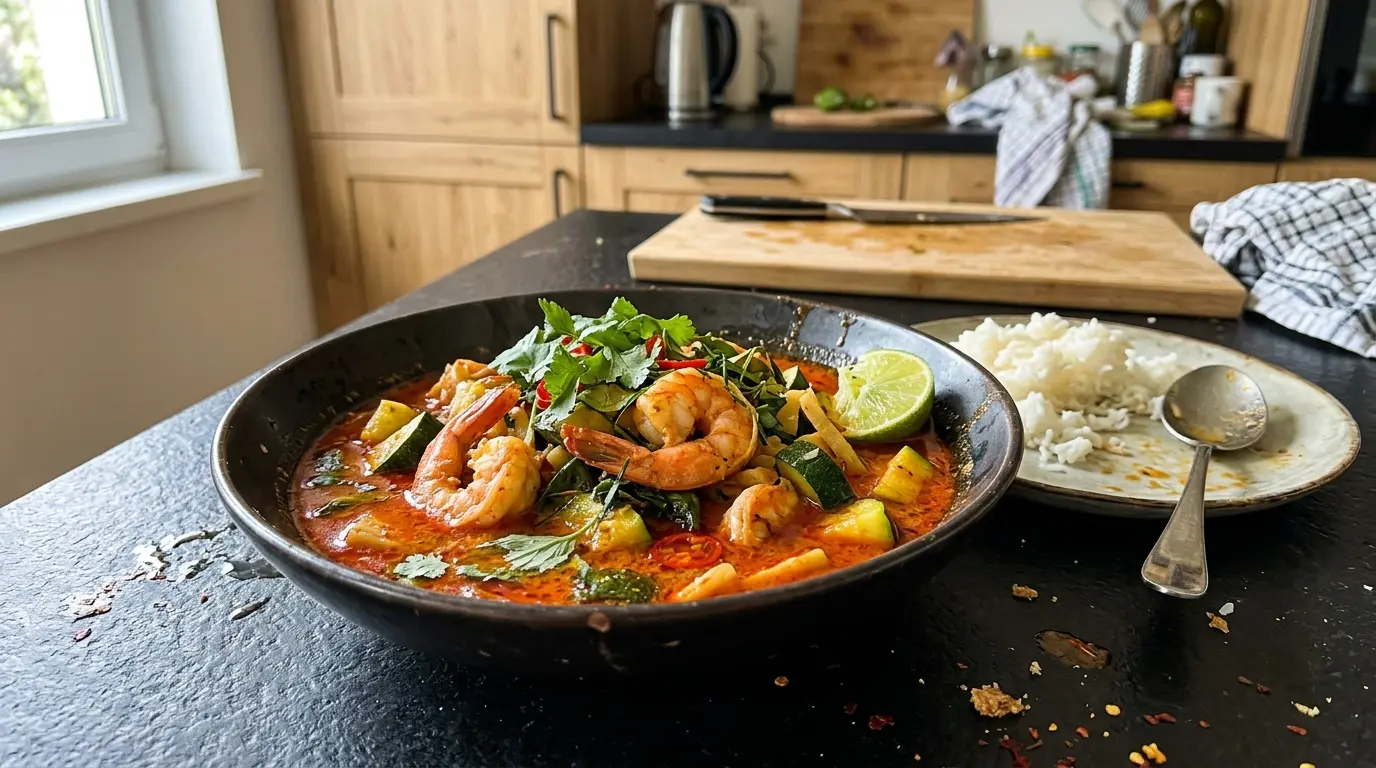
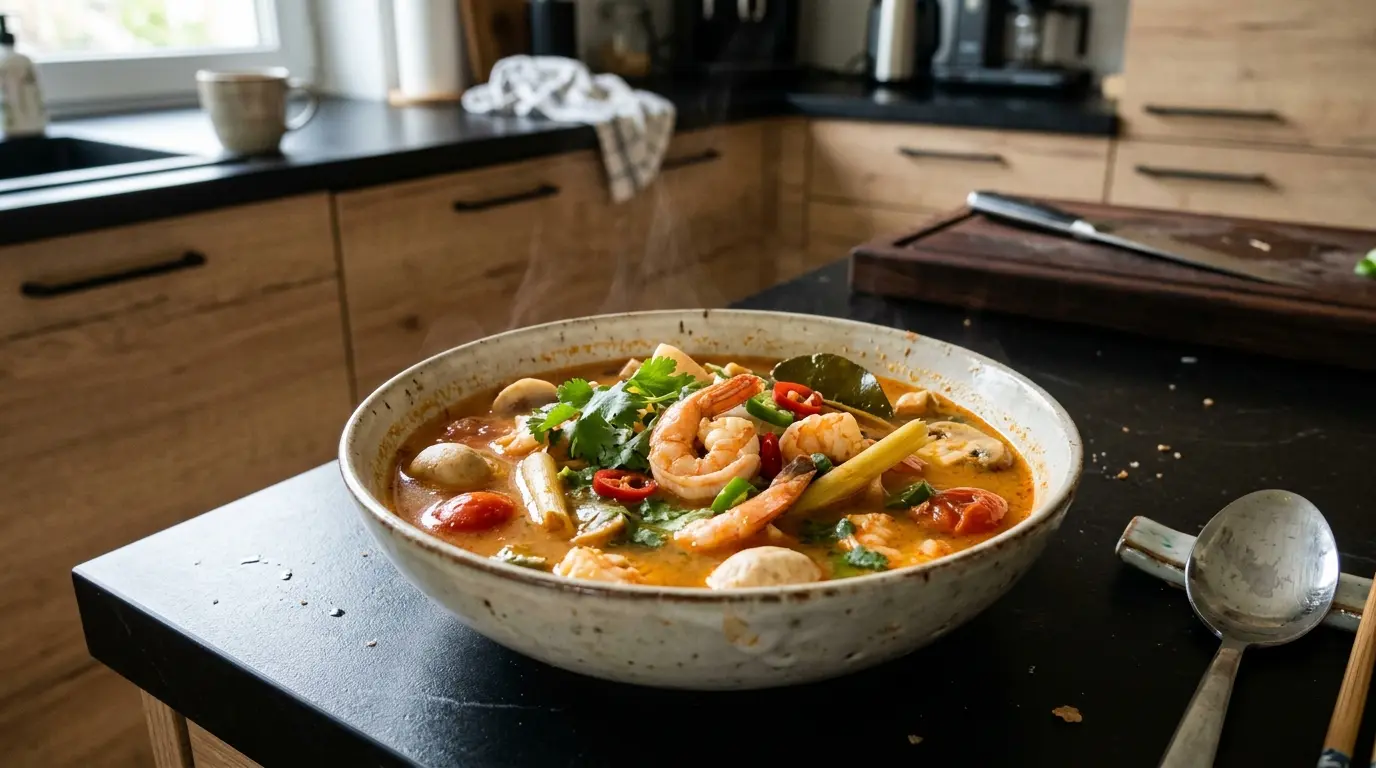
This Indian-style prawn masala pairs medium-large shrimp with a smooth tomato-coconut sauce sharpened by ginger, garlic, green chili, and lime. The onion and tomatoes are cooked until concentrated, then blended before the coconut milk is added, giving the curry its promised silky texture. Adding the shrimp only for the final few minutes keeps them juicy and tender.
Prawn masala is a broad name rather than one fixed regional formula. Tomato, coconut milk, and seafood are common partners in several coastal Indian cooking traditions, although the spice balance and texture vary from place to place. This version is a streamlined, home-style interpretation with a blended sauce.
Blending the deeply cooked onion-tomato base gives this curry a velvety consistency without masking the individual flavors of toasted spices, coconut, lime, and shrimp. The sauce is rich but not heavy, with the chili and ginger providing a clean, warming finish.
Why this version works
- Cooking the onion until golden builds sweetness before the sharper garlic, ginger, and chili are introduced.
- Blooming the ground spices briefly in oil releases their aroma without giving them enough time to burn.
- The tomatoes are reduced until their excess water evaporates, preventing a thin or raw-tasting curry.
- Blending before adding the coconut milk creates a smooth sauce while preserving the coconut milk's fresh, creamy character.
- The shrimp cook only at the end, when the sauce is already finished, so they remain tender.

Chef's tips
Use a wide pan so the shrimp can sit in one layer and cook at the same rate. Before adding them, make sure the finished sauce is slightly thicker than you want to serve it—the shrimp will release a little moisture. If the blended base spits as it cooks, reduce the heat and partially cover the pan while leaving a gap for steam to escape.
How to serve
Serve the prawn masala as soon as it is cooked, with rice to absorb the smooth sauce or with warm flatbreads for scooping. Finish each portion with some of the reserved chopped cilantro.
Watch out for
- Wet shrimp dilute the sauce and are harder to season evenly, so pat them dry before adding the lime and salt.
- Do not leave the lime-coated shrimp for much longer than 15 minutes; prolonged exposure to the acid can affect their texture.
- Ground spices can scorch in seconds. Add the tomatoes promptly if the spice paste begins sticking or darkening.
- Blend the tomato mixture carefully because it will be hot; vent a countertop blender rather than sealing in steam.
- Keep the sauce at a gentle simmer after adding the coconut milk and shrimp. Vigorous boiling can overcook the shrimp and make the sauce look oily.
- Tightly curled O-shaped shrimp are usually overcooked; remove the pan from the heat while they still form loose C shapes.
Substitutions
- Medium or large shrimp both work; adjust the final cooking time according to their size rather than extending it automatically to five minutes.
- For a milder curry, use only part of the green chili or omit it while keeping the ginger and spices unchanged.
- If the tomatoes are especially large, use enough to stay close to 250–300 g total so the coconut and tomato remain balanced.
- The cilantro may be reduced or omitted if its flavor is not preferred.
Ingredients
- shrimp - 400 g
- onion - 1 piece
- tomatoes - 2 piece
- coconut milk - 200 ml
- garlic - 3 cloves
- ginger - 2 cm
- green chili - 1 piece
- ground cumin - 0.5 teaspoons
- ground coriander - 1 teaspoon
- sweet paprika - 1 teaspoon
- turmeric - 0.25 teaspoons
- lime juice - 1 tablespoon
- vegetable oil - 2 tablespoons
- fresh cilantro - 0.25 bunch
- salt
Preparation
- Prepare 400 g medium-large shrimp: peel and devein them if necessary, leaving the tails on or removing them as preferred. Pat them thoroughly dry, toss with the tablespoon of lime juice and a light pinch of salt, and leave for 10 minutes while you prepare the aromatics; do not marinate for longer than 15 minutes.
- Finely slice 1 medium onion, about 140–160 g. Finely chop the 3 garlic cloves, peel and finely chop the 2 cm piece of ginger, and finely chop the green chili. Core and dice the 2 tomatoes, about 250–300 g total. Roughly chop the cilantro leaves and tender stems.
- Heat the vegetable oil in a wide pan over medium heat. Add the sliced onion and cook for 8–10 minutes, stirring regularly, until soft and evenly golden at the edges. If it begins to catch before softening, lower the heat rather than adding liquid.
- Stir in the garlic, ginger, and green chili. Cook for 60–90 seconds, just until the raw garlic smell fades. Add the cumin, coriander, sweet paprika, and turmeric; stir continuously for 20–30 seconds, until the oil is brightly colored and the spices smell toasted but not scorched.
- Add the diced tomatoes and a small pinch of salt. Cook over medium heat for 8–12 minutes, pressing the pieces with a spoon, until the tomatoes have collapsed and the mixture is thick enough that a spoon dragged across the pan leaves a trail for a moment. Tiny beads of oil should appear around the edges.
- For a genuinely smooth sauce, remove the pan from the heat and blend the tomato-onion mixture with an immersion blender until no visible pieces remain. If using a countertop blender, let the mixture cool slightly and vent the lid carefully before blending, then return it to the pan.
- Stir in the coconut milk and bring the sauce to a quiet simmer over medium-low heat. Cook for 4–5 minutes, stirring occasionally, until glossy and thick enough to lightly coat the back of a spoon. Taste and adjust the salt.
- Drain away any liquid released by the shrimp, then arrange them in a single layer in the gently simmering sauce. Cook medium-large shrimp for 3–4 minutes, turning once, until opaque through the center and curled into loose C shapes. Smaller shrimp may need only 2–3 minutes.
- Remove the pan from the heat as soon as the shrimp are cooked. Fold in most of the chopped cilantro, scatter the remainder over the top, and serve immediately.
Storage
Shrimp taste best fresh, so do not keep the dish longer than 24 hours., Reheat very gently over low heat, only until the sauce and shrimp are hot, to avoid overcooking them.
I prefer this curry with the shrimp tails removed because the smooth sauce is easier to eat that way, though leaving the tails on gives the finished dish a more dramatic appearance. The most useful doneness cue is the center of the thickest shrimp: once it has just turned opaque, the pan should come off the heat.