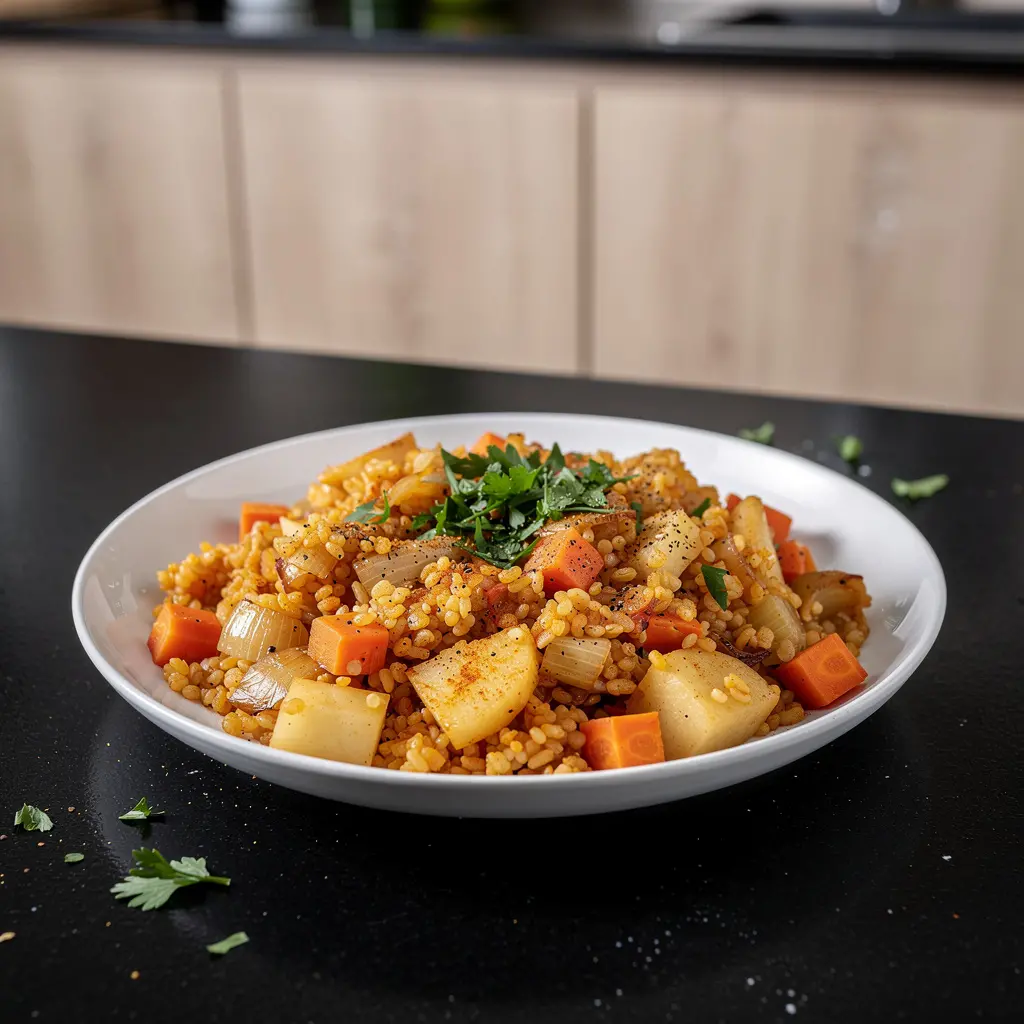
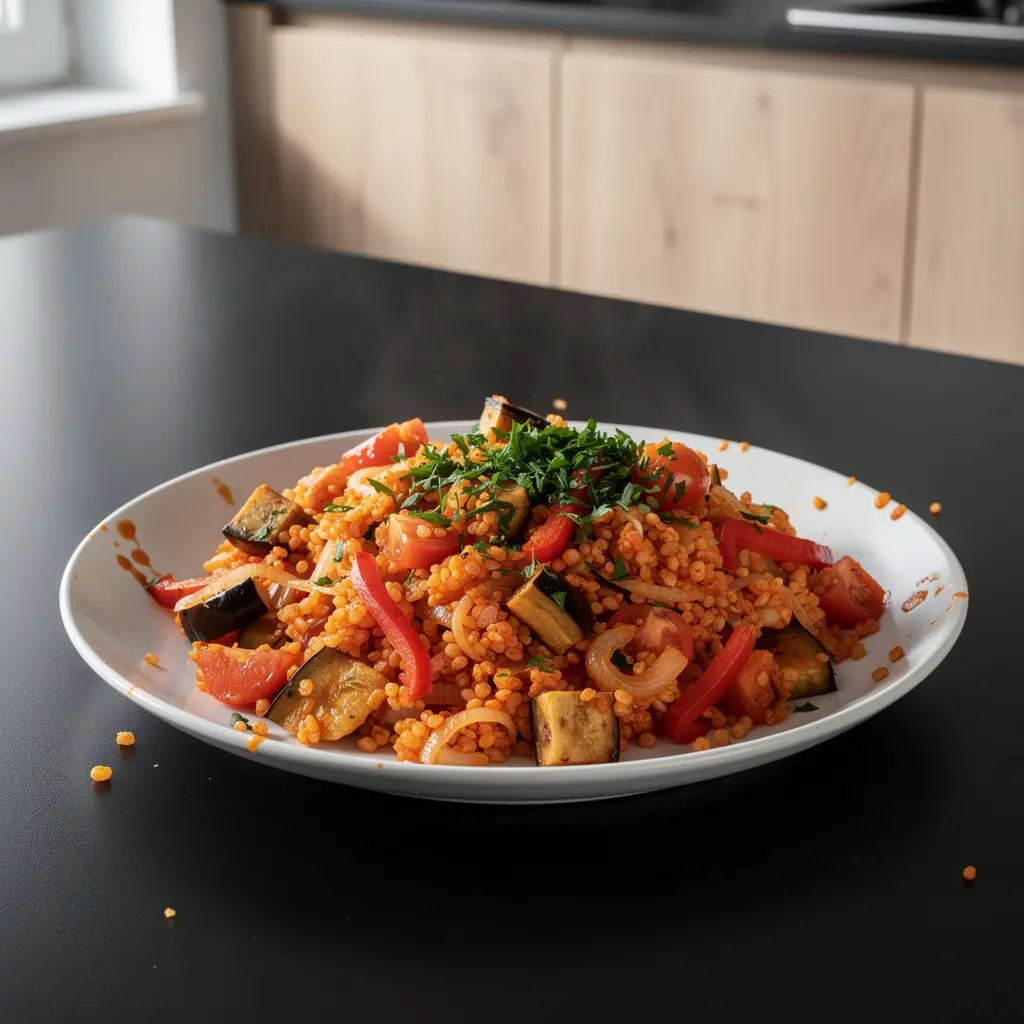
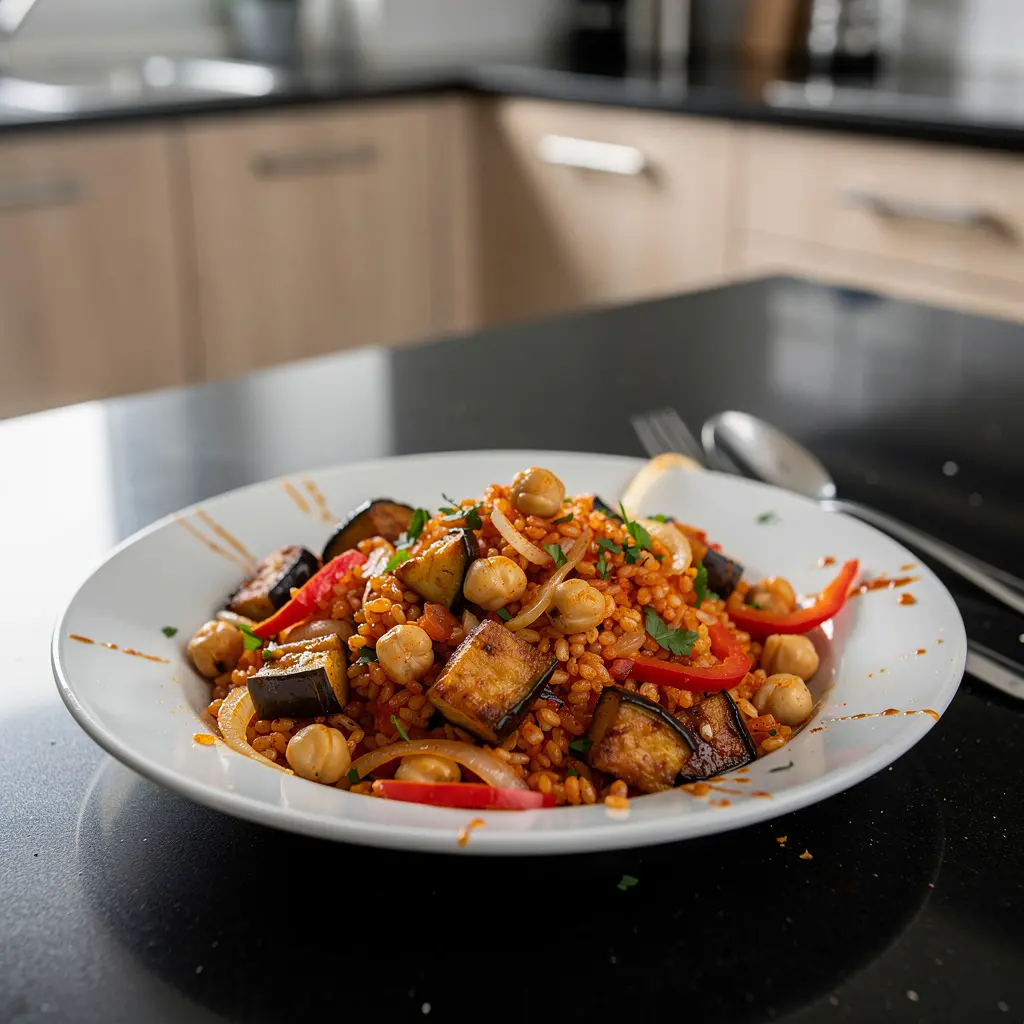
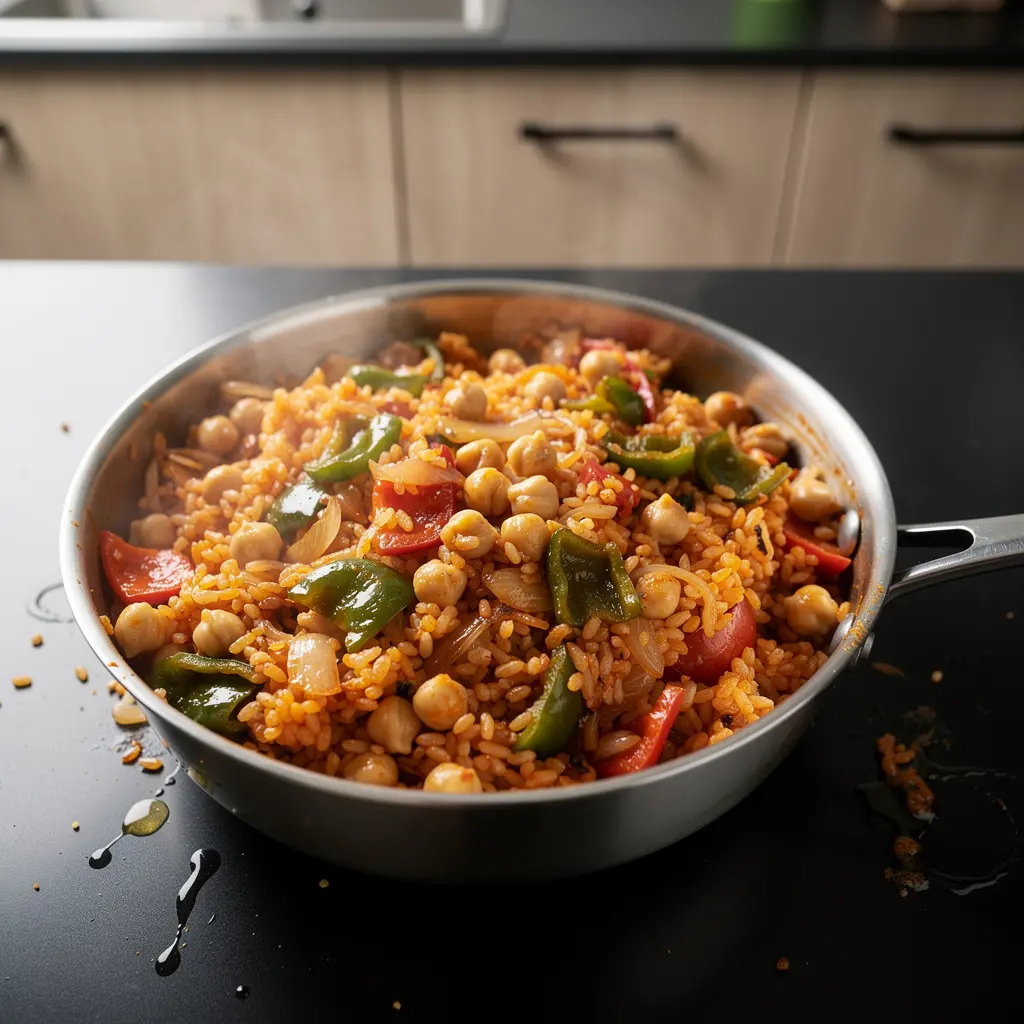
Turkish bulgur pilaf with eggplant Recipe
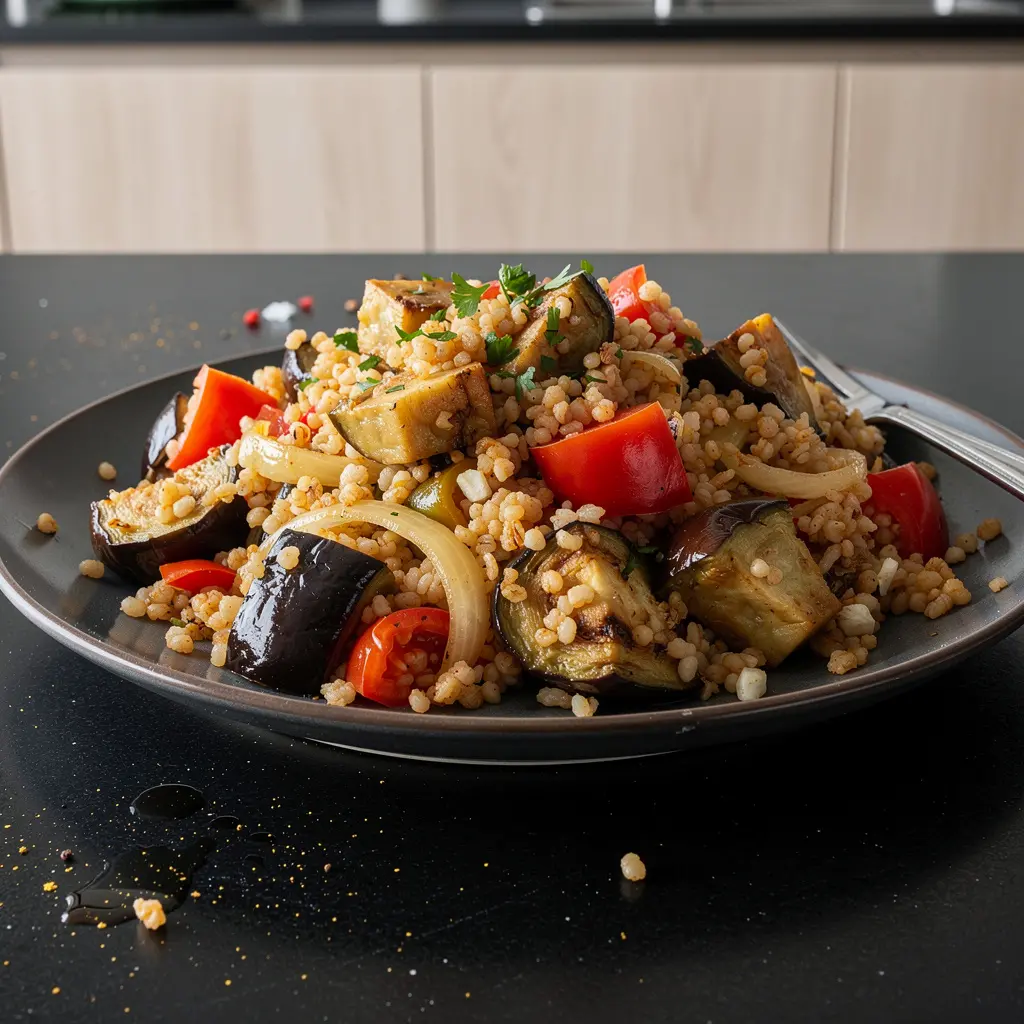
A hearty pilaf where bulgur is cooked together with sautéed eggplant, tomatoes, and spices. In Turkey, dishes like this often replace separately served potatoes or rice – pilaf is both a side and almost a complete meal. The flavor is reminiscent of a thick vegetable leczo combined with grains.
This pilaf combines the creaminess of sautéed eggplant with juicy tomatoes and aromatic spices, creating a dish that is both comforting and light. Cooking the bulgur directly in the vegetable sauce infuses every grain with flavor, so you don’t need many extras to have a complete, satisfying meal.
Chef's tips
Use a flavorful vegetable or chicken stock – the better the stock, the tastier the pilaf. Don’t rush browning the eggplant; well-browned pieces add a deep, almost smoky flavor. If your eggplant absorbs a lot of oil, you can add a splash of water while frying to help it soften without burning.
How to serve
Serve with plain or Greek yogurt sprinkled with a little sumac or dried mint. Add a simple cucumber and tomato salad with lemon for freshness. As a side dish, pair it with grilled chicken skewers, lamb chops, or baked fish. It also works well as part of a mezze-style spread with hummus and flatbread.
Ingredients
- bulgur - 250 g
- eggplant - 1 piece
- tomatoes - 3 pieces
- bell pepper - 1 piece
- onion - 1 piece
- garlic - 3 cloves
- stock - 500 ml
- tomato paste - 1 tablespoon
- olive oil - 4 tablespoons
- cumin ground - 1 teaspoon
- paprika ground - 1 teaspoon
- parsley fresh, chopped - 2 tablespoons
- salt
- black pepper freshly ground
Preparation
- Cut the eggplant into cubes of about 1.5 cm, sprinkle lightly with salt and set aside for 10 minutes to draw out some moisture. Then rinse and pat dry with paper towels.
- Peel the onion and dice finely. Remove the seeds from the bell pepper and cut it into strips or cubes. Scald the tomatoes, peel off the skins, and cut into cubes.
- In a large deep frying pan or wide pot, heat 2 tablespoons of olive oil. Add the eggplant and fry for 8–10 minutes over medium heat until softened and lightly browned. Transfer to a plate.
- In the same pan, add the remaining 2 tablespoons of olive oil, add the onion and fry for 3–5 minutes until soft and slightly translucent.
- Add the bell pepper and fry for another 5 minutes, until it is tender but still slightly firm.
- Add the chopped garlic and fry for about 30 seconds, until it becomes very fragrant.
- Add the ground cumin and paprika, stir quickly, then add the tomato paste and fry for 1 minute.
- Add the chopped tomatoes and the sautéed eggplant, stir and simmer for 5 minutes, until the tomatoes start to break down.
- Add the bulgur, stir, pour in the hot stock, season with salt and pepper. Bring to a boil, then reduce the heat to low.
- Cover the pan with a lid and cook for 15–18 minutes, until the bulgur absorbs the liquid and is tender. If the liquid is absorbed but the bulgur is still firm, add a little hot water.
- Remove from the heat and leave covered for 5–10 minutes to let the bulgur finish steaming.
- Before serving, sprinkle with chopped parsley and gently fluff the pilaf with a fork.
Storage
No storage information available for this dish.
This pilaf is inspired by home-style Turkish cooking, where grains and vegetables are stretched into filling, budget-friendly meals. It’s a great way to use up slightly soft tomatoes or an eggplant that’s been sitting in the fridge, and it reheats beautifully for easy lunches.