Turkish bulgur pilaf with root vegetables Recipe
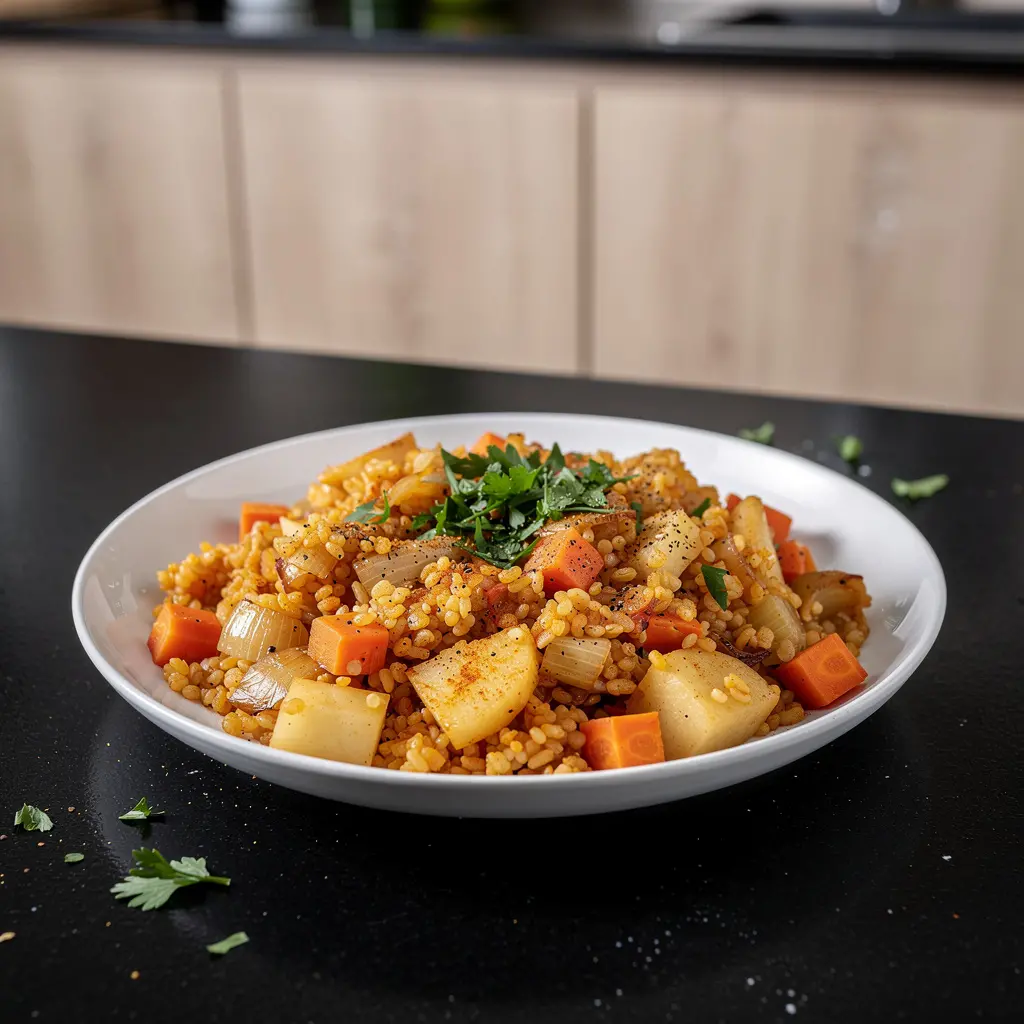
This pilaf is a warming dish made with bulgur, carrot and other root vegetables, simmered together in one pot. In Turkey, bulgur often replaces rice as a side for dinner, but in this version it becomes the main dish. The flavor is a bit like a grain risotto, but with the distinct, slightly nutty character of bulgur.
This dish turns simple bulgur and everyday root vegetables into a fragrant, comforting one-pot meal with minimal effort. Lightly toasting the vegetables and tomato paste builds a deep, almost smoky flavor, while the bulgur stays pleasantly nutty and fluffy.
Chef's tips
Use a wide pot so the bulgur cooks in a relatively thin layer—this helps it cook evenly and stay fluffy. If you like a more pronounced tomato flavor, add an extra half tablespoon of tomato paste and slightly reduce the stock. Letting the pilaf rest off the heat is key: don’t skip this step, as it improves both texture and taste.
How to serve
Serve with plain or garlic yogurt, a simple chopped salad (tomato, cucumber, onion, parsley, lemon) and some pickles. It also pairs well with grilled chicken, roasted vegetables or baked halloumi. For a complete vegetarian plate, add hummus and warm flatbread.
Ingredients
- coarse bulgur - 250 g
- carrot medium - 2 pieces
- parsley root medium - 1 piece
- celeriac piece - 80 g
- onion medium - 1 piece
- tomato paste - 1 tablespoon
- vegetable stock or chicken stock - 600 ml
- vegetable oil or olive oil - 2 tablespoons
- butter optional, for flavor - 15 g
- ground cumin - 0.5 teaspoons
- sweet paprika powder - 1 teaspoon
- salt to taste
- black pepper to taste
- parsley leaves chopped, for serving - 2 tablespoons
Preparation
- Rinse the bulgur in a sieve under running water and set aside to drain. Peel the carrot, parsley root and celeriac and cut into small cubes. Peel the onion and finely chop.
- Heat the oil in a wide pot or deep frying pan over medium heat. Add the onion and sauté for 3–4 minutes, until it softens and becomes slightly translucent.
- Add the diced root vegetables and fry for 5–6 minutes, stirring, until they are lightly browned on the edges. This will give the pilaf a deeper flavor.
- Add the tomato paste, cumin and sweet paprika. Fry for about 1 minute, stirring, until the paste darkens slightly and starts to smell more sweet than sour.
- Add the bulgur, mix with the vegetables, then pour in the hot stock. Season with salt and pepper, stir and bring to a boil.
- Reduce the heat to low, cover the pot with a lid and cook for 15–18 minutes, until the bulgur absorbs most of the liquid and softens. Do not stir too often so the grains don’t break apart.
- When the bulgur is tender, remove the pot from the heat, add the butter, gently stir and leave covered for 5–10 minutes so the grains can “rest” and become fluffier.
- Before serving, sprinkle the pilaf with chopped parsley. Serve as a standalone dish or as a side to meat or vegetables.
Storage
No storage information available for this dish.
This pilaf is inspired by Turkish home cooking, where bulgur is a pantry staple and often replaces rice. I like to make it on colder days when I want something filling but not heavy—root vegetables add sweetness and depth, and the spices bring gentle warmth without being spicy.