Turkish bulgur pilaf with eggplant and chickpeas Recipe
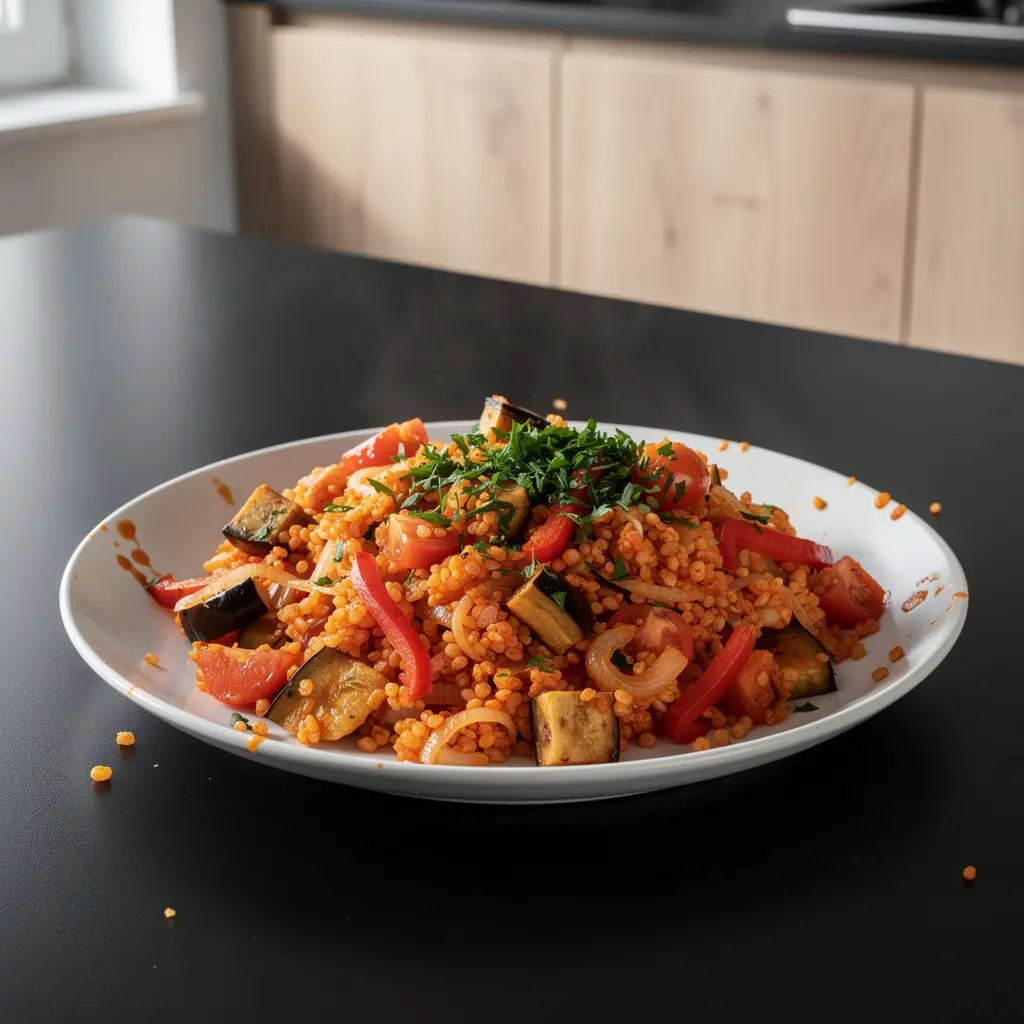
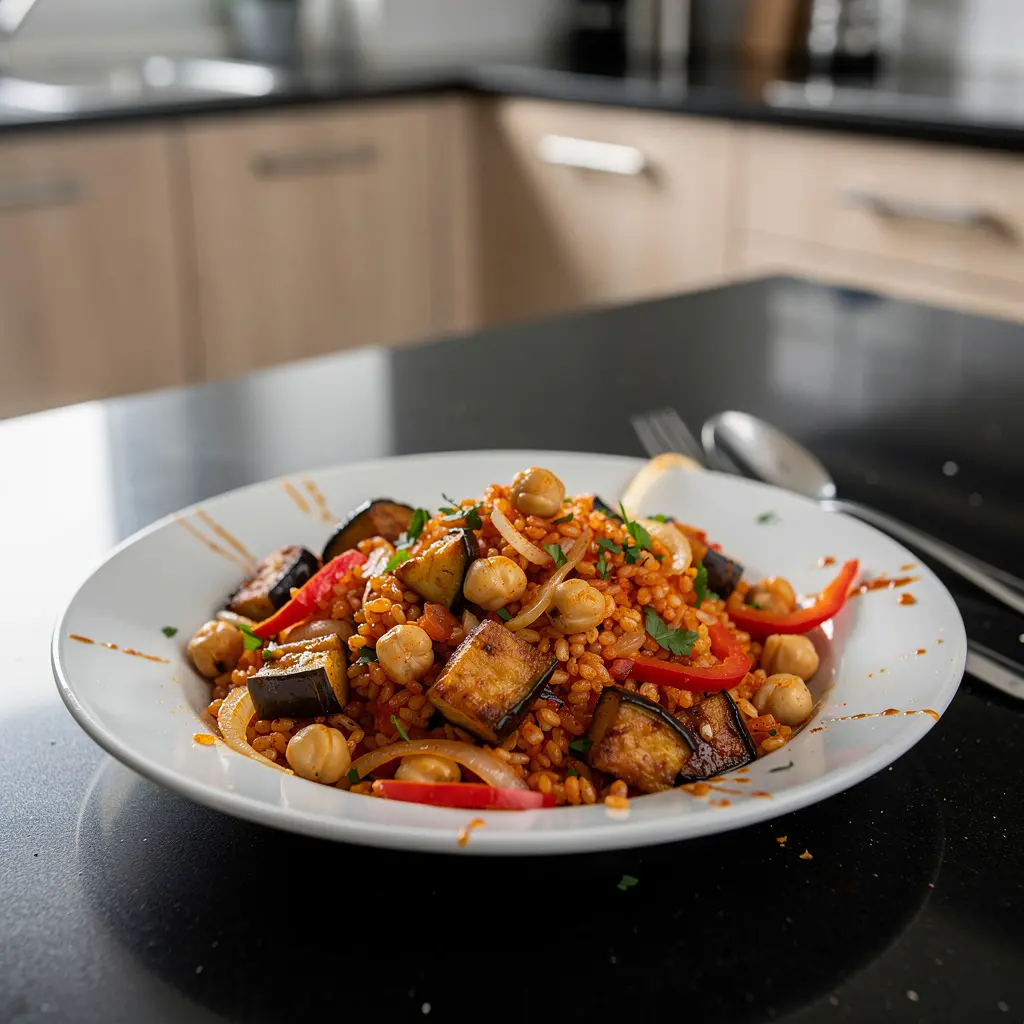
A hearty bulgur pilaf with eggplant, chickpeas, and tomatoes that can easily stand in for a main course. In Turkish homes, one-pot dishes like this often appear on weekdays when you need to feed the whole family with something simple yet filling. The flavor is lightly tomatoey, herby, and pleasantly nutty from the bulgur.
This pilaf brings together classic Turkish flavors in a simple, one-pot format that’s perfect for busy days. The combination of nutty bulgur, silky eggplant, and creamy chickpeas makes it both comforting and satisfying without any meat.
Chef's tips
Toast the bulgur briefly before adding the liquid—this small step really boosts its nutty flavor and helps the grains stay separate. If your eggplant tends to be bitter, don’t skip the salting and rinsing step. Use a good-quality vegetable stock, as it forms the backbone of the dish’s flavor.
How to serve
Serve as a main dish with yogurt and a fresh salad, or as a side alongside grilled meats or halloumi. It also works well as part of a mezze-style spread with hummus, olives, and flatbread.
Ingredients
- bulgur wheat - 250 g
- eggplant - 1 piece
- chickpeas - 200 g
- canned tomatoes - 400 g
- onion - 1 piece
- bell pepper - 1 piece
- garlic - 3 cloves
- vegetable stock - 400 ml
- vegetable oil - 3 tablespoons
- cumin ground - 0.5 teaspoons
- sweet paprika ground - 1 teaspoon
- parsley fresh, finely chopped - 2 tablespoons
- salt to taste
- black pepper freshly ground, to taste
Preparation
- Cut the eggplant into cubes of about 1.5 cm, sprinkle with salt, toss, and set aside for 10–15 minutes to draw out the moisture. Then rinse and pat dry with paper towels.
- Finely dice the onion, cut the bell pepper into strips, and chop the garlic. If using canned chickpeas, drain and rinse them.
- In a large deep frying pan or wide pot, heat 2 tablespoons of oil. Add the eggplant and fry over medium heat for 8–10 minutes, until softened and lightly browned. Transfer to a plate.
- In the same pan, add 1 tablespoon of oil, then the onion, and fry over medium heat for 3–4 minutes, until softened and slightly translucent. Add the bell pepper and fry for another 3 minutes.
- Add the garlic, cumin, and paprika, and fry for about 30 seconds, stirring, until the spices become very fragrant.
- Add the bulgur wheat, stir to coat it in the vegetables, and fry for 1–2 minutes so the grains toast lightly.
- Add the canned tomatoes, stock, fried eggplant, and chickpeas. Season with salt and pepper, stir, and bring to a boil.
- Reduce the heat to low, cover, and cook for 15–18 minutes, until the bulgur has absorbed most of the liquid and is tender. If at any point the pilaf seems too dry, add a splash of water.
- Remove from the heat and leave covered for 5 minutes to let the bulgur finish steaming. Sprinkle with chopped parsley and gently fluff with a fork. Serve warm.
Storage
No storage information available for this dish.
This is one of those dishes that tastes even better the next day, when the flavors have had time to meld. It’s ideal for meal prep and for feeding a crowd without spending hours in the kitchen.