Nohutlu bulgur pilavı – bulgur pilaf with chickpeas Recipe
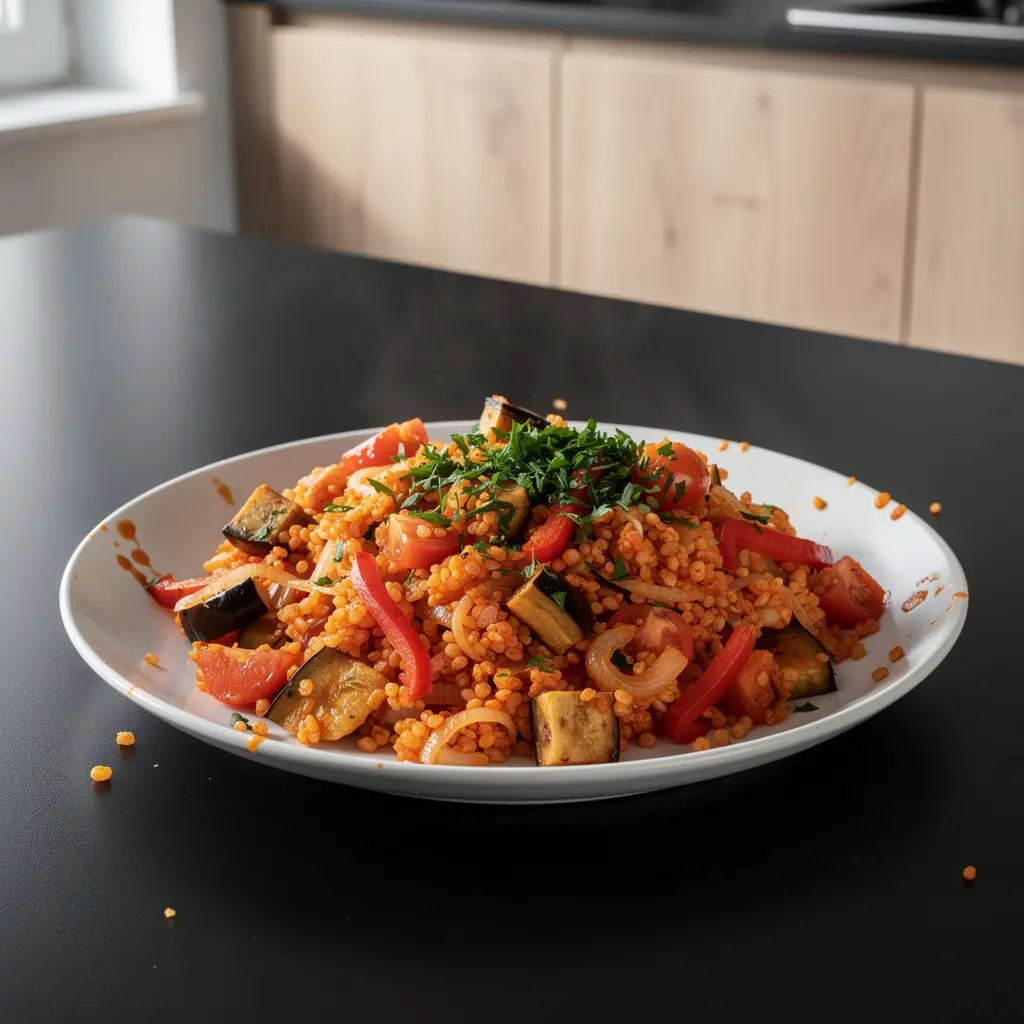
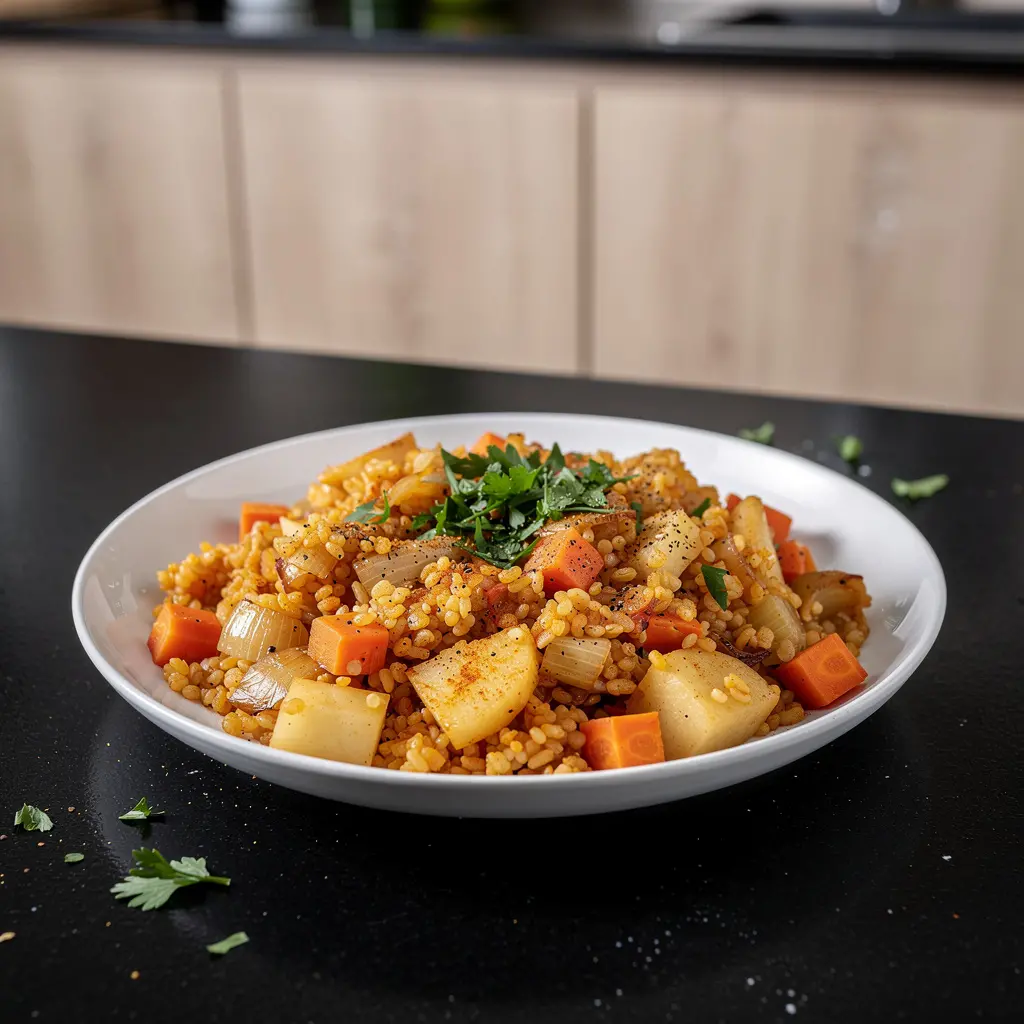
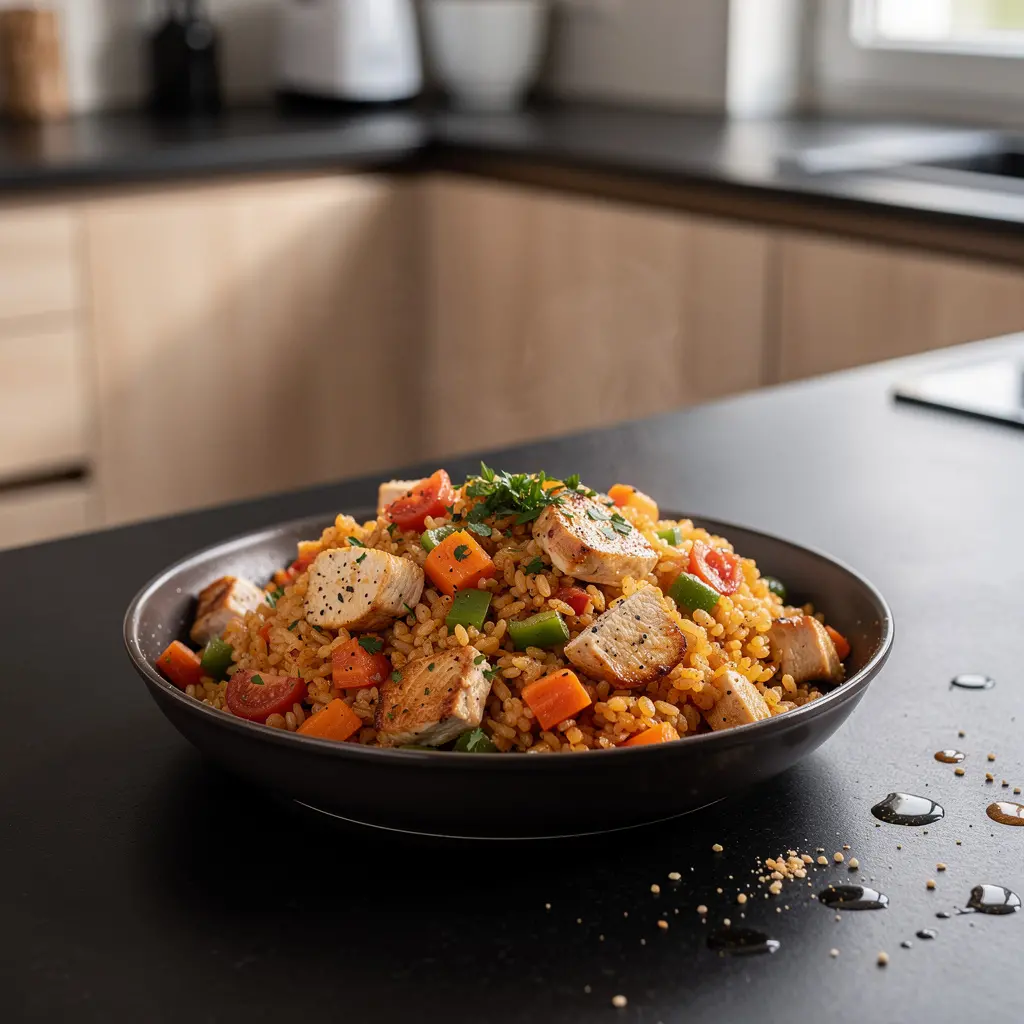
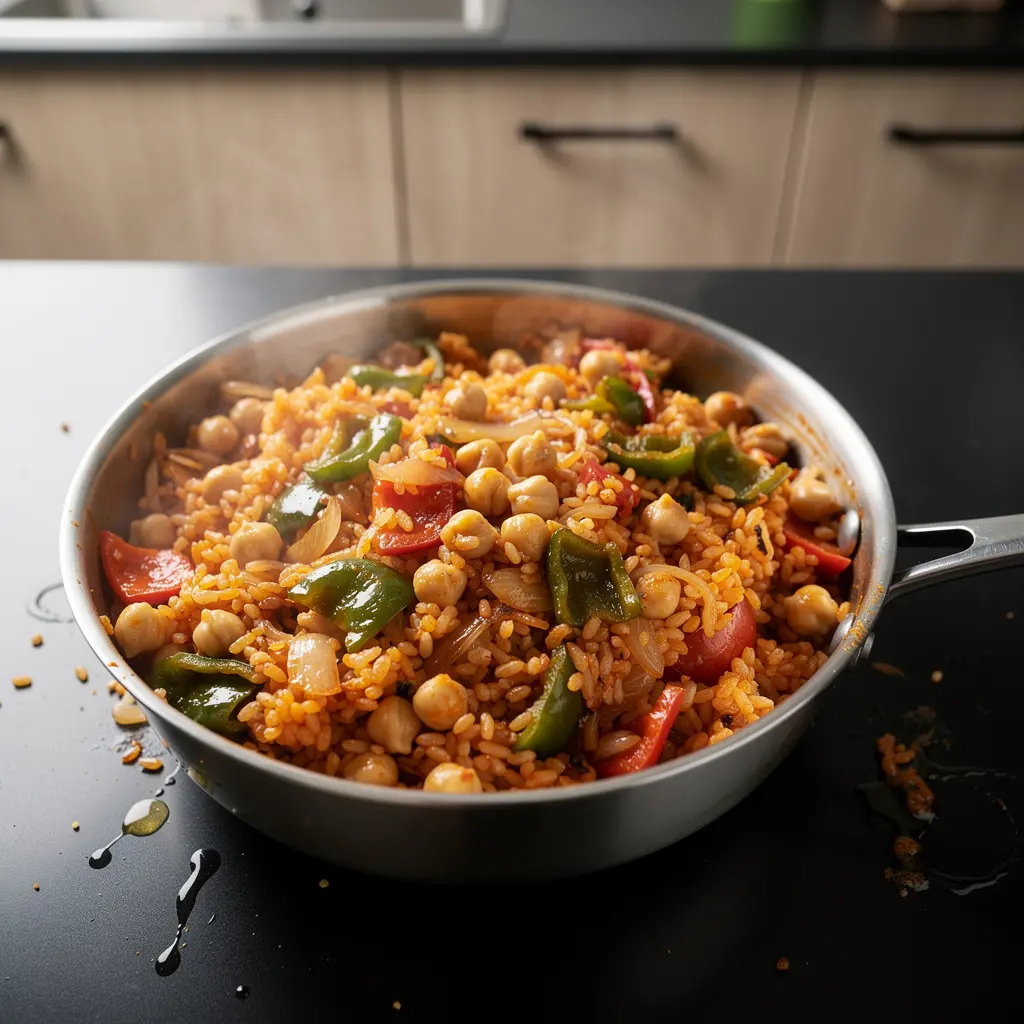
Nohutlu bulgur pilavı is a hearty pilaf made with coarse bulgur and chickpeas, seasoned with tomatoes and spices. In Turkey it’s often served as a standalone dish for a quick home-style lunch or dinner, or as a side to grilled meats. The flavor is similar to vegetable couscous, but more earthy and substantial thanks to the bulgur.
This Turkish-style bulgur pilaf combines nutty coarse bulgur with creamy chickpeas and a tomato-based sauce, creating a filling, one-pot dish that works both as a main and as a side. The spices give it depth while still keeping the recipe simple and accessible.
Chef's tips
Use coarse bulgur specifically for pilaf so the grains stay separate and don’t turn mushy. Toasting the bulgur briefly in the pan with the aromatics is key to getting a fluffy texture and a deeper, nutty flavor. Adjust the amount of hot paprika to your heat tolerance and don’t skip the resting time after cooking – it makes a big difference.
How to serve
Serve warm with a generous spoonful of thick yogurt, a squeeze of lemon, and a simple salad of tomatoes, cucumbers, and onions. It pairs well with grilled chicken, lamb skewers, or roasted vegetables. For a complete vegetarian plate, add a side of grilled eggplant or a fresh herb salad.
Ingredients
- coarse bulgur - 250 g
- cooked chickpeas - 200 g
- onion finely chopped - 1 piece
- green bell pepper diced - 1 piece
- canned tomatoes finely chopped - 200 g
- tomato paste - 1 tablespoon
- vegetable stock - 450 ml
- vegetable oil e.g. sunflower oil - 3 tablespoons
- butter optional, for flavor - 20 g
- sweet paprika - 1 teaspoon
- hot paprika or less, if you don’t like spicy food - 0.5 teaspoons
- ground cumin optional, but goes very well - 0.5 teaspoons
- salt to taste
- black pepper - 0.25 teaspoons
Preparation
- In a wide pot or deep frying pan, heat the oil over medium heat. Add the onion and sauté for 5–6 minutes, until softened and slightly translucent.
- Add the diced pepper and cook for another 3–4 minutes, until it softens slightly.
- Add the canned tomatoes, tomato paste, sweet and hot paprika, cumin, salt, and pepper. Cook for 3–4 minutes, until the sauce thickens slightly.
- Add the bulgur, mix thoroughly with the sauce, and cook for 1–2 minutes so the grains are coated with the fat and spices.
- Pour in the hot stock, add the chickpeas, stir, and bring to a boil.
- Reduce the heat to low, cover the pot, and cook for 15–18 minutes, until the bulgur absorbs most of the liquid and is tender but not mushy.
- Remove the pot from the heat, add the butter if using, gently stir, and leave covered for 10 minutes so the bulgur can rest and become fluffier.
- Before serving, fluff the pilaf with a fork to separate the grains.
Storage
No storage information available for this dish.
This dish is one of those everyday Turkish comfort foods that are quick to make yet feel special. It’s perfect for using up cooked chickpeas and tastes even better the next day, making it ideal for meal prep.