Tamagodon – rice with egg and onion Recipe
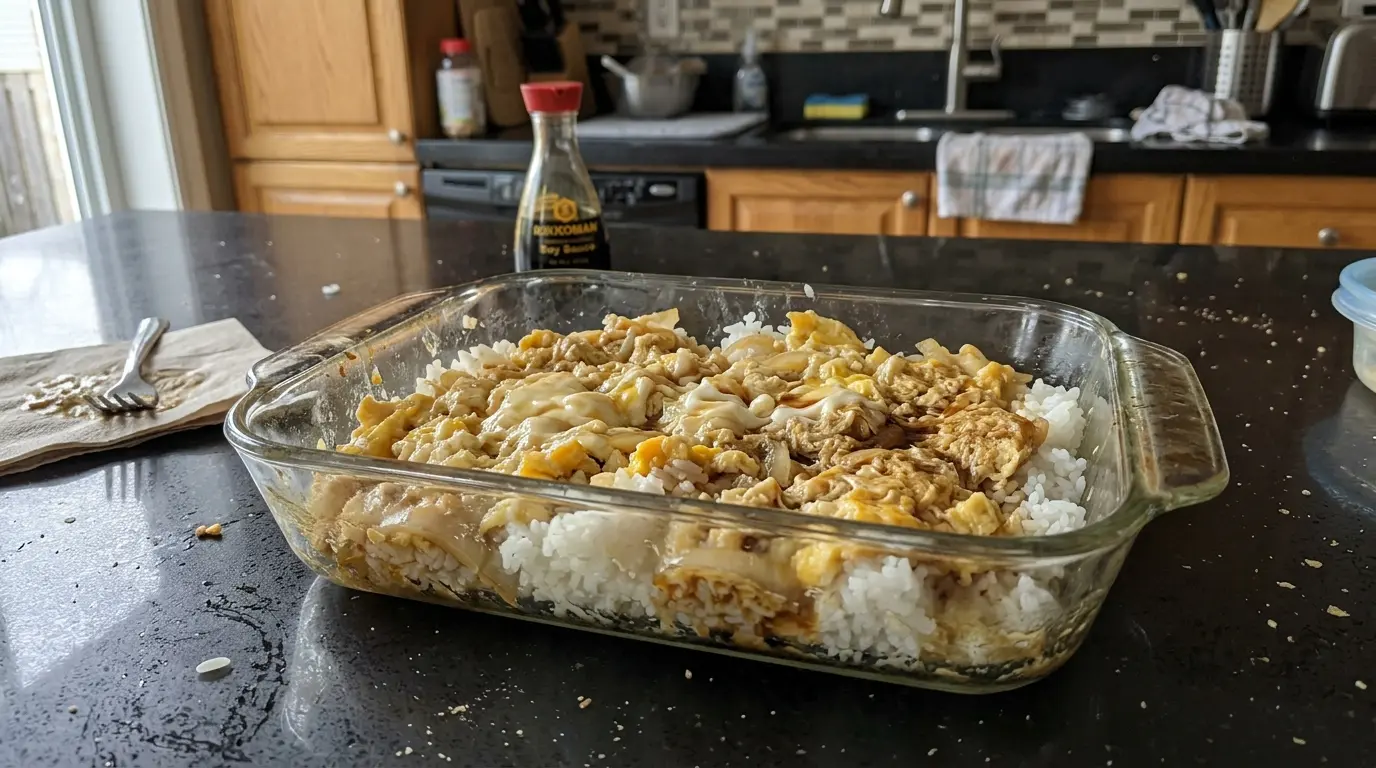
Tamagodon is a bowl of hot rice topped with gently set egg and onion, seasoned with soy sauce and a light broth. In Japan it’s a typical home-style lunch or dinner, made when you need to quickly feed the family with something simple and filling. The flavors are a bit like mild scrambled eggs with onion, but served in a completely different, more “bowl-style” way.
Tamagodon is a simple type of donburi – Japanese rice bowls with toppings – popular as a quick home-style meal. It’s often treated as a lighter, meatless version of oyakodon, where soft eggs and sweet onion take center stage.
This is one of the simplest Japanese rice bowls, based on pantry staples yet full of umami. Soft onions, silky egg and hot rice come together in a comforting, homely dish that’s ready in just a few minutes.
Why this version works
- A small pan keeps the egg layer thicker, which makes it easier to stay creamy.
- Onions stewed until soft turn into a naturally sweet sauce instead of a separate topping.
- Rice cooked by the absorption method is fluffy and soaks up the sauce well.
- Slightly under‑set eggs finish cooking on the hot rice, giving an ideal creamy texture.
Chef's tips
Use good-quality Japanese rice if possible – it will be slightly sticky and hold its shape in the bowl. Don’t overcook the eggs: they should stay soft and a bit creamy inside, which makes them blend beautifully with the rice. Taste the sauce before adding it to the pan and adjust the balance of soy sauce and sugar to your liking.
How to serve
Serve tamagodon very hot, straight from the pan onto freshly cooked rice. Add pickles on the side, such as pickled cucumber or daikon, and a cup of green tea. For a more complete meal, pair it with miso soup and a small salad of shredded cabbage or lettuce.
Watch out for
- Using too large a pan will spread the eggs into a thin layer that dries out quickly.
- Add the eggs only once the onion is completely soft; half‑raw slices will spoil the sauce.
- If you’re unsure about doneness, take the pan off the heat while the center is still glossy – it will finish cooking in the residual heat of the sauce.
Substitutions
- You can replace mirin with 1 teaspoon of sugar and 1 tablespoon of white wine or water to keep the sauce sweet.
- Dashi can be swapped for a light vegetable or chicken broth, which will slightly change the character of the dish.
Ingredients
- rice - 160 g
- water - 200 ml
- egg - 3 piece
- onion - 1 piece
- broth - 120 ml
- soy sauce - 2 tablespoons
- mirin - 1 tablespoon
- sugar - 1 teaspoon
- spring onion - 1 piece
- oil - 1 teaspoon
Preparation
- Rinse the rice in cold water several times until the water is clearly less cloudy. Drain, add the measured amount of fresh water, cover and bring to a boil over medium heat until you see big bubbles and steam escaping from under the lid.
- When the water is bubbling vigorously, reduce the heat to the lowest setting and cook for 10 minutes without lifting the lid. Turn off the heat and leave the rice covered for another 10 minutes – the grains should be soft and fluffy, with no liquid at the bottom and no hard centers.
- Peel the onion and slice it into thin half‑moons so it softens quickly. Finely chop the spring onion, separating the white part (for the sauce) from the green part (for sprinkling), which should stay fresh and crisp.
- In a bowl, mix the broth, soy sauce, mirin and sugar until the sugar dissolves. Taste a drop – the sauce should be distinctly salty‑sweet, as the eggs and rice will mellow the flavor.
- In a small pan or saucepan roughly the same diameter as your bowls, heat the oil over medium heat. Add the onion and the white part of the spring onion and fry for 3–5 minutes, until they are translucent and soft, without browned, caramelized edges.
- Pour in the broth mixture, bring to a boil, then simmer over low heat for 2–3 minutes. The onion should be very tender and starting to break down, and the liquid should come about halfway up the onion, like a light sauce.
- Crack the eggs into a bowl and lightly beat with a fork or chopsticks, leaving visible streaks of white. The mixture should be combined but not completely uniform like for a French omelette.
- Reduce the heat under the pan to low. Pour the eggs in a thin stream over the onions, gently moving the pan so they spread evenly. Don’t stir vigorously – just lightly tidy the edges with chopsticks. Cover and cook for 2–3 minutes.
- The egg is ready when the edges are set but the center still gently “waves” when you move the pan and looks glossy rather than dry. At this point, divide the hot rice between two bowls, gently pressing so the surface is level.
- Use a spatula to divide the egg and onion into two portions and gently slide them onto the rice along with the sauce – the rice should absorb some of it but not be swimming. Sprinkle with the green part of the spring onion and serve immediately, while the egg is still soft and creamy.
Storage
No storage information available for this dish.
Tamagodon is a great introduction to Japanese home cooking: you don’t need many ingredients or special skills, and the result is deeply comforting. It’s my go-to dish when I want something warm and satisfying but don’t feel like spending much time in the kitchen.