Kasutera – Japanese Honey Sponge Cake Recipe
Kasutera is a soft, moist sponge cake with honey that arrived in Japan thanks to Portuguese merchants in the 16th century. Today it is a popular sweet gift and tea-time treat, especially in the Nagasaki region. Its flavor is somewhat like a cross between sponge cake and pound cake, but with a denser, springier texture.
Kasutera arrived in Japan in the 16th century together with Portuguese merchants and quickly became a Nagasaki specialty. To this day it is sold in perfectly even blocks, often packed as an elegant gift, and home bakers try to recreate that shop‑level precision.
Why this version works
- The entire structure relies on long whipping of the eggs with sugar, which gives a tall, springy cake without baking powder.
- The warm mixture of milk, honey, and oil combines easily with the egg foam without deflating it or cooling it down too quickly.
- Sifting the flour and folding it in with a spatula from bottom to top minimizes air loss and the risk of “holes” in the crumb.
- Turning the cake upside down and letting it rest after baking evens out the moisture and smooths the texture, just like in Japanese bakeries.
Chef's tips
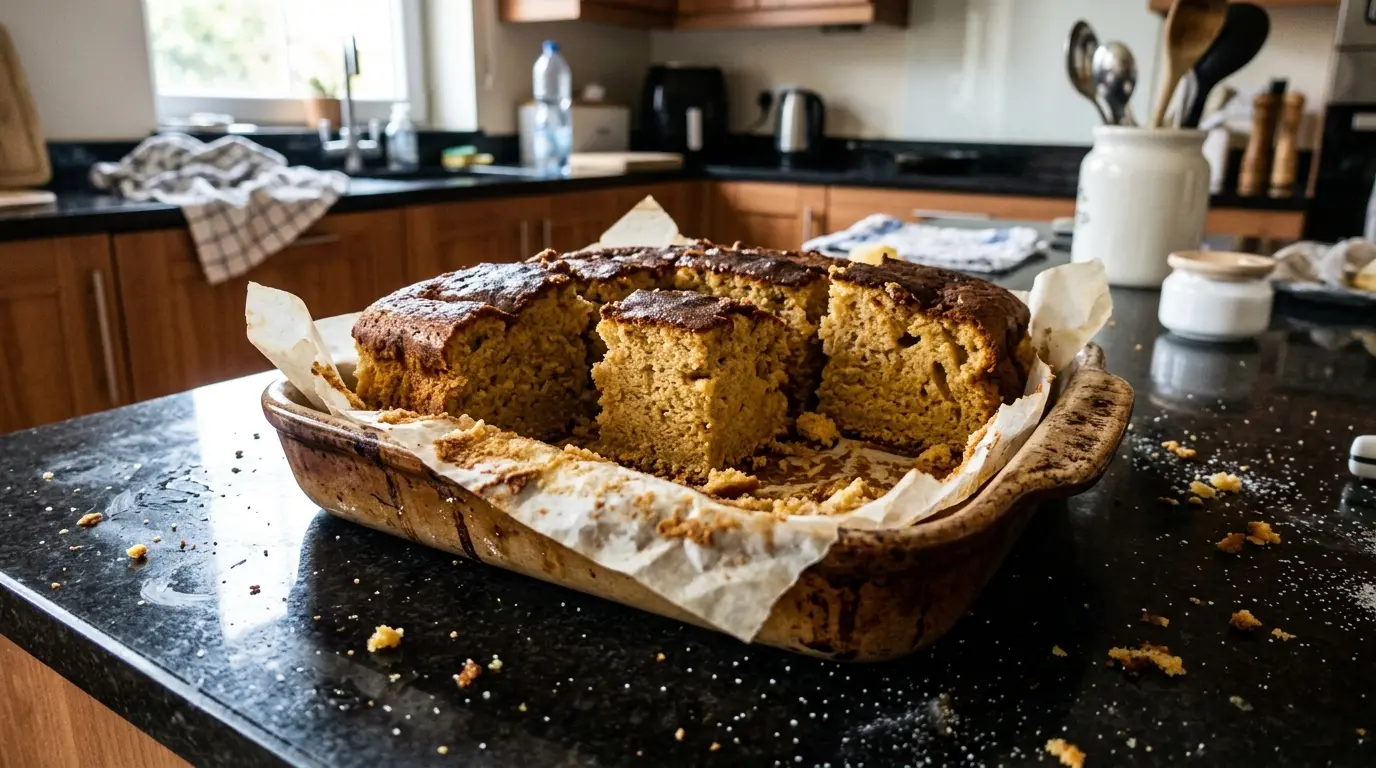
The most common issue is an uneven, “holey” crumb – this usually means the eggs weren’t whipped enough or the flour was added too abruptly. Watch the texture: before you pour the batter into the pan, it should resemble a thick, pourable cream that flows in a wide ribbon, not a thin liquid. If the top browns too quickly, a loosely tented piece of foil will save the color while the inside finishes baking without burning.
How to serve
Kasutera tastes best cut into even 1.5–2 cm slices and served at room temperature with green tea such as sencha or hojicha. For a more dessert‑like version you can add a dollop of lightly whipped cream and fresh fruit, but traditionally it’s served on its own to fully enjoy the texture of the cake and the aroma of the honey.
Watch out for
- If the egg mixture is whipped too briefly it will be runny – when you lift the whisk, the ribbon should clearly draw a line on the surface that stays visible for a few seconds.
- When adding the flour, don’t stir in circular motions like for shortcrust pastry – that movement knocks out the air and flattens the cake.
- Do not open the oven during the first 25–30 minutes, otherwise the center may collapse even if the batter was well whipped.
- Don’t pour the batter into an unprepared pan – the baking paper should be fitted and adjusted before you start whipping the eggs.
Ingredients
- egg - 4 piece
- sugar - 160 g
- honey - 40 g
- milk - 60 ml
- wheat flour - 140 g
- oil - 20 ml
- salt - 1 pinch
- baking paper
Preparation
- Preheat the oven to 160°C (top and bottom heat). Line a loaf pan about 25 cm long with baking paper so that it sticks out above the rim and fully covers the corners – no bare metal should show, otherwise the sides may brown too much.
- Gently heat the milk until it is clearly warm but not hot to the touch. Add the honey and oil, and stir until the honey is completely dissolved – the liquid should be uniform, with no crystals or oily “eyes” on the surface.
- Sift the flour into a bowl, add the salt, and briefly mix. After sifting it should be light and fluffy; if you see lumps, rub them out with a spoon so you don’t end up with white spots in the finished cake.
- Crack the eggs into a large bowl and add the sugar. Beat with a mixer on high speed for 8–10 minutes, until the mixture becomes very pale, thick, and 3–4 times its original volume; the ribbon falling from the whisk should leave a trace on the surface for 3–4 seconds.
- Lower the mixer speed to minimum. In a thin stream, pour in the warm milk and honey mixture, mixing just until combined – the batter should remain fluffy and uniform, without a separate layer of liquid collecting at the bottom of the bowl.
- Set the mixer aside. Add the flour in 3–4 additions, each time gently folding with a wide spatula from bottom to top while rotating the bowl. Stop folding as soon as the streaks of flour disappear – the batter should be thick yet pourable, with no visible lumps or large air bubbles.
- Pour the batter into the prepared pan and smooth the top with a spatula. Tap the pan lightly on the counter a few times – larger air bubbles will rise to the surface; if you see very big bubbles, you can gently pop them with a toothpick.
- Place the pan in the preheated oven. Bake for 40–45 minutes, until the top is evenly golden brown and a skewer inserted in the center comes out dry or with a few moist crumbs; if after about 30 minutes the top is browning quickly, cover it loosely with aluminum foil.
- After removing the pan from the oven, drop it from a height of a few centimeters onto the counter 1–2 times to even out the texture and limit shrinking. Grasp the baking paper, lift out the cake, and immediately invert it onto a rack or board – the bottom should be flat and slightly springy to the touch.
- Cover the inverted cake with a light kitchen towel and leave it to cool completely; when touched, the bottom should be smooth and just slightly moist. Wrap the cooled cake tightly in plastic wrap and leave it for a few hours or, ideally, overnight at room temperature so that the crumb hydrates evenly and the texture becomes uniform.
Storage
No storage information available for this dish.