Chawanmushi – delicate steamed egg custard Recipe
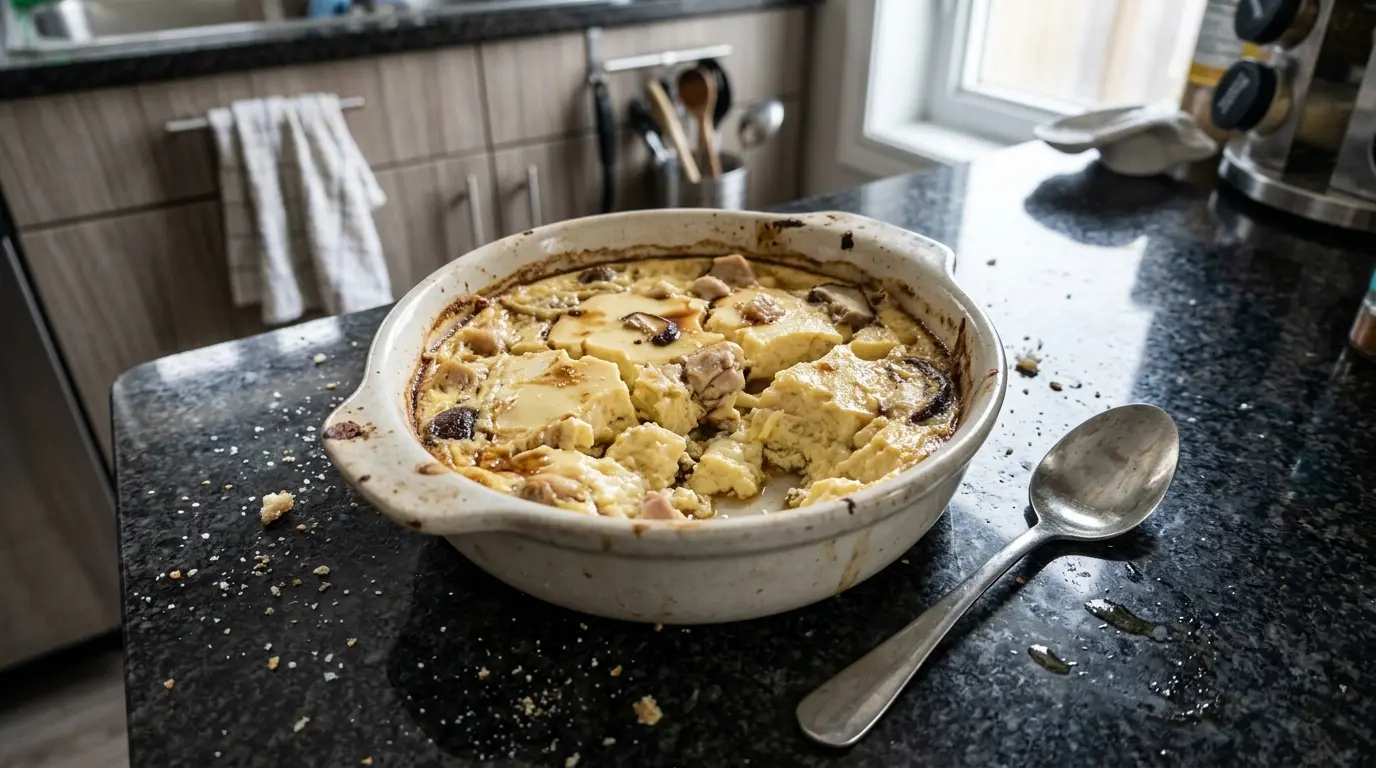
Chawanmushi is a savory “custard” made from eggs and broth, steamed in small cups. In Japan it is often served as an appetizer in sushi restaurants or for festive dinners at home. The texture is silky like flan, but the taste is savory – full of umami from dashi broth, mushrooms, and soy sauce.
Chawanmushi is a classic element of a Japanese kaiseki menu, but it just as often appears at home dinners as a delicate appetizer. In Japan, the toppings change with the seasons, for example to shrimp, ginkgo nuts, or kamaboko.
This classic Japanese dish combines a silky, almost melt-in-the-mouth texture with deep umami flavor in a very light, elegant form. It looks impressive, yet requires only a few simple ingredients and basic steaming.
Why this version works
- Lukewarm, rather than hot stock prevents the eggs from curdling in the bowl and gives a smooth texture.
- Straining the mixture and skimming off the foam ensures a silky texture without lumps or holes.
- Steaming over the lowest heat with covered cups minimizes cracks and craters on the surface.
- Small pieces of chicken and thin slices of mushrooms cook evenly with the egg custard.
Chef's tips
Make sure the broth is only lukewarm before mixing with the eggs – if it’s too hot, the eggs will start to set and the custard will be grainy. Straining the mixture is key to achieving a perfectly smooth texture. Keep the steaming very gentle; vigorous boiling can cause bubbles and holes in the custard.
How to serve
Serve chawanmushi in small cups or ramekins, sprinkled with fresh chives or thinly sliced spring onion. It works beautifully as part of a Japanese-style menu alongside sushi, tempura, or simple grilled fish. You can also serve it as a refined starter for a dinner party, accompanied by green tea or a light, dry white wine.
Watch out for
- If the water under the cups boils vigorously, cracks and craters will form on the surface of the custard.
- Beating the eggs too long and too vigorously creates foam, which later results in a porous, spongy texture.
- Do not fill the cups right up to the rim – the top overheats, dries out, and cracks more easily.
- Do not shorten the time by increasing the heat; it is better to add 3–5 minutes of gentle steaming.
Substitutions
- Instead of homemade dashi you can use a light vegetable broth with a splash of soy sauce.
- You can replace the chicken with peeled shrimp or pieces of firm white fish.
- You can swap the button mushrooms for oyster mushrooms or shiitake, sliced very thinly.
Ingredients
- egg - 3 piece
- dashi broth - 450 ml
- soy sauce - 15 ml
- mirin - 10 ml
- salt - 1 g
- chicken breast - 80 g
- button mushrooms - 60 g
- green peas - 30 g
- chives - 5 g
Preparation
- Cut the chicken breast into very small pieces, about 1 cm. Clean the mushrooms and slice them thinly.
- Pour the dashi broth into a small pot, add the soy sauce, mirin, and salt. Heat until lukewarm without bringing to a boil, then set aside to cool slightly.
- In a separate bowl, gently beat the eggs with a fork or chopsticks, trying not to incorporate too much air.
- Slowly pour the lukewarm broth into the eggs, stirring gently all the time until the mixture is uniform.
- Strain the egg-and-broth mixture through a fine sieve into a jug or bowl with a spout to remove foam and egg white lumps – this will make the custard smooth.
- Prepare 4 small oven-safe bowls or cups. Place a few pieces of chicken, a few mushroom slices, and a few peas on the bottom of each.
- Pour the strained egg mixture into the bowls, leaving about 1 cm of space from the rim, as the custard will rise slightly.
- Cover each bowl with aluminum foil or a small plate so that steam does not drip inside.
- Place the bowls in a pot with a thick bottom, into which you have poured about 2–3 cm of hot water. Cover the pot with a lid, bring the water to a gentle boil, then reduce the heat to the lowest setting so the water only gently simmers.
- Steam for 15–20 minutes. The custard is ready when, after gently shaking the bowl, the center wobbles slightly like jelly but is not liquid. Sprinkle with chopped chives and serve warm.
Storage
No storage information available for this dish.
Chawanmushi is one of those dishes that proves how comforting and refined eggs can be. The first time I tried it in Japan, I was surprised by how delicate yet flavorful it was. At home, I love making it when I want something warm and light that still feels special.