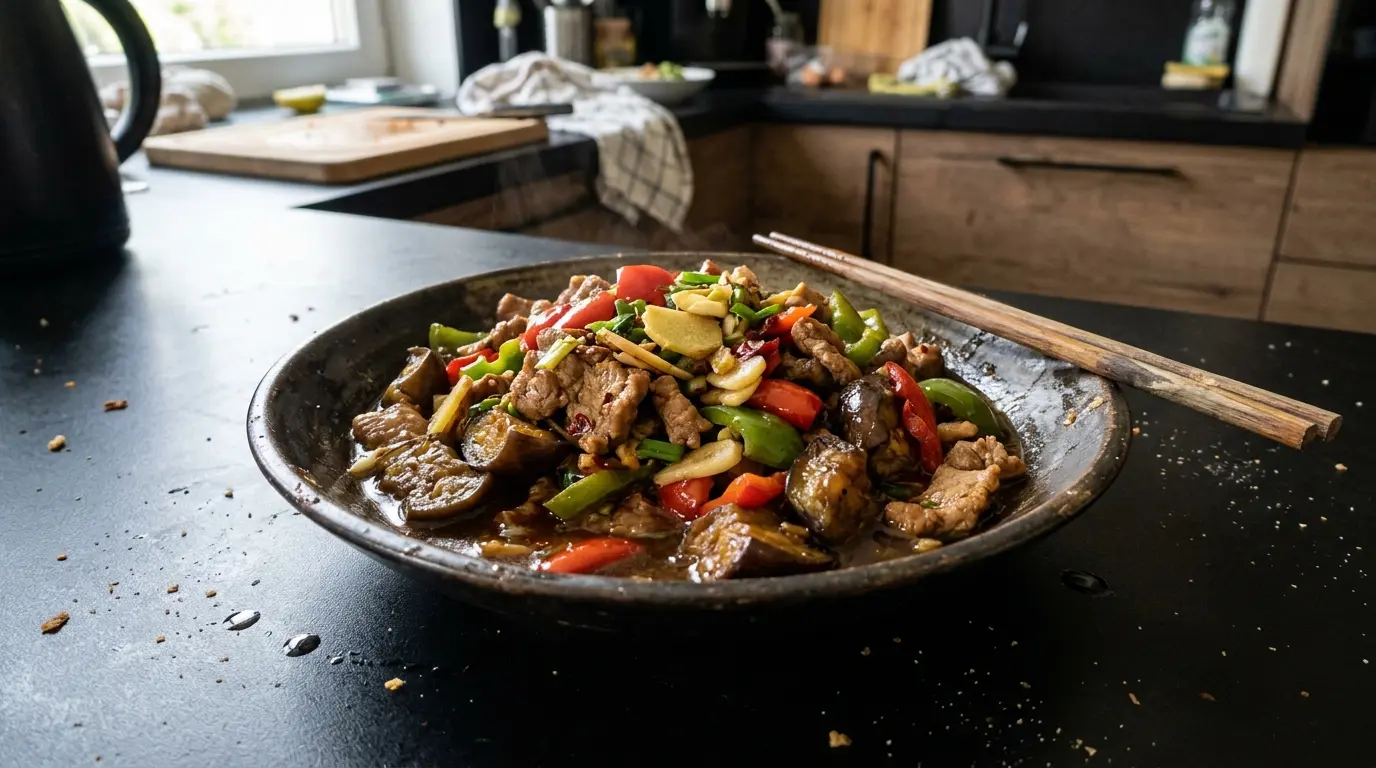
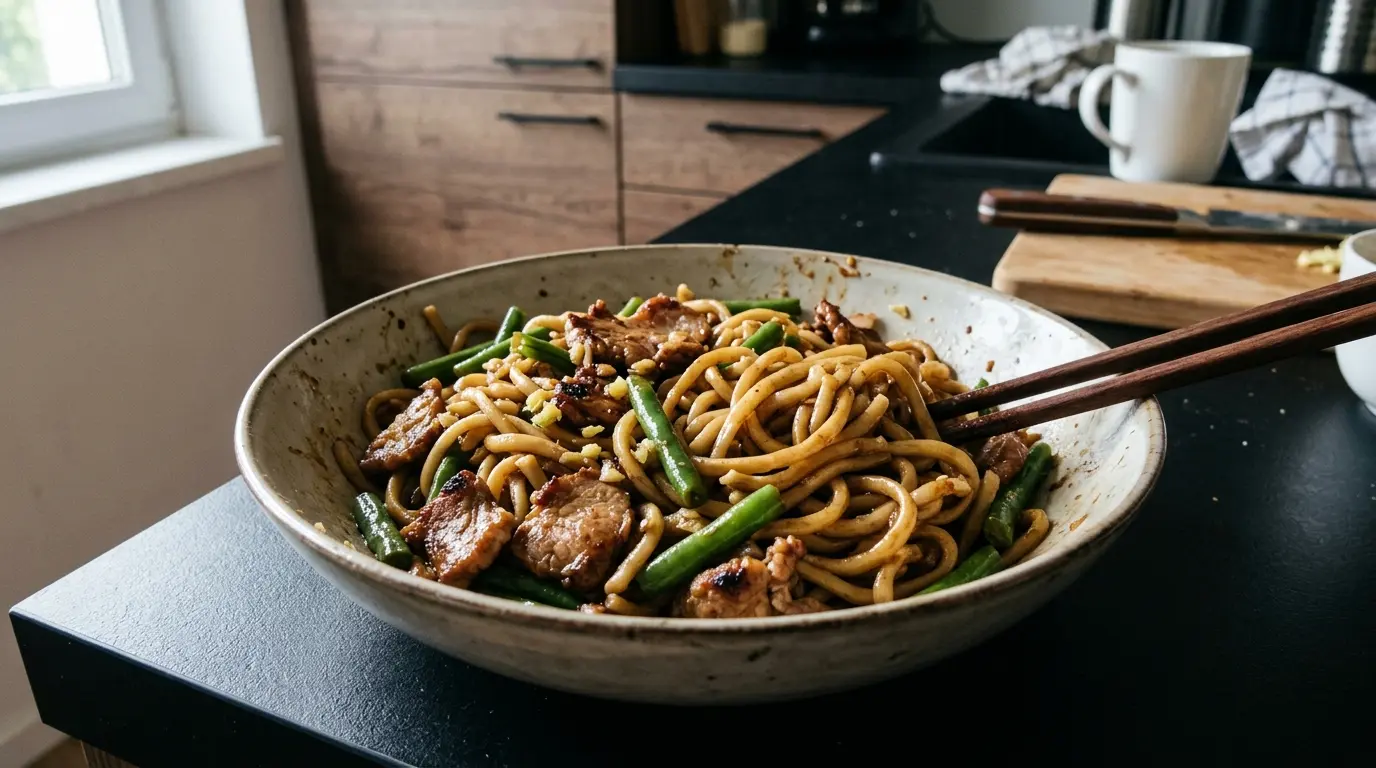
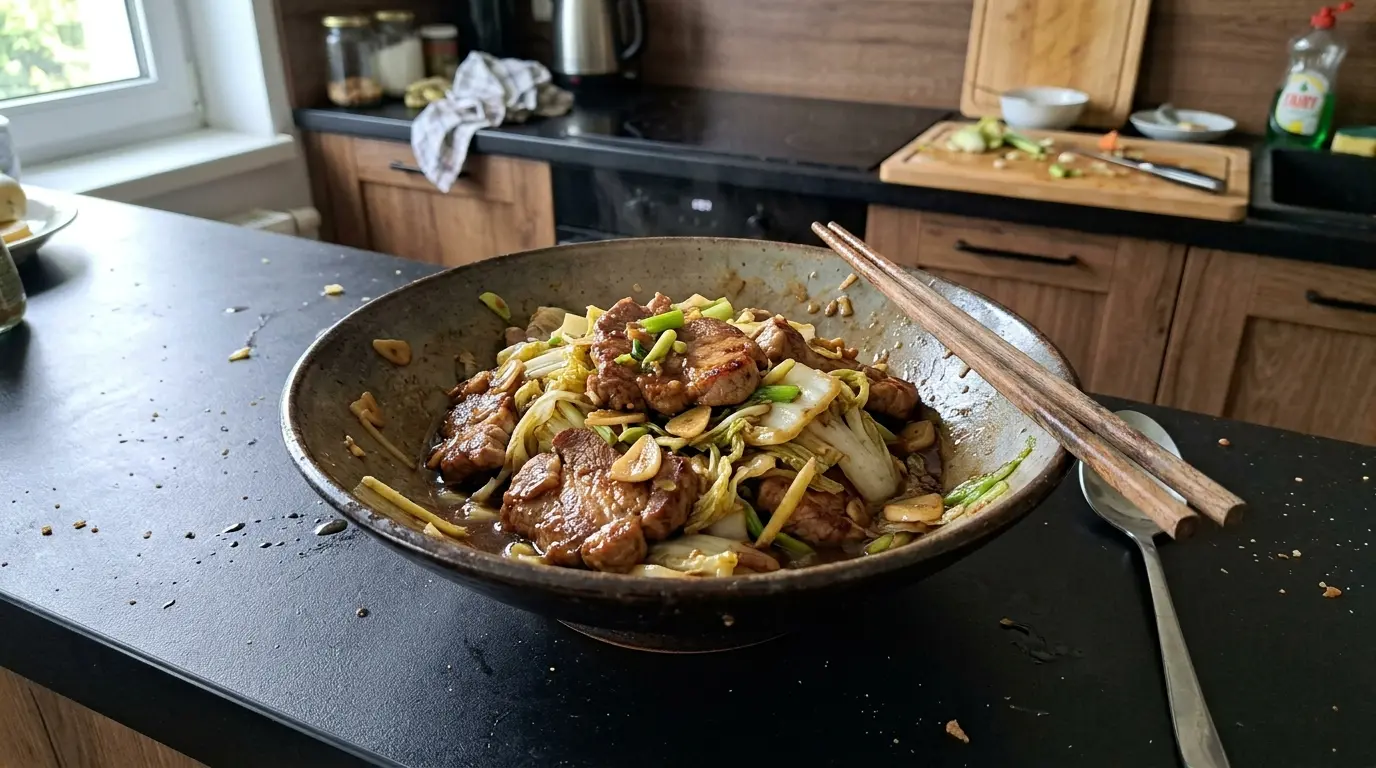
Pork with Peppers in Black Bean Sauce Recipe
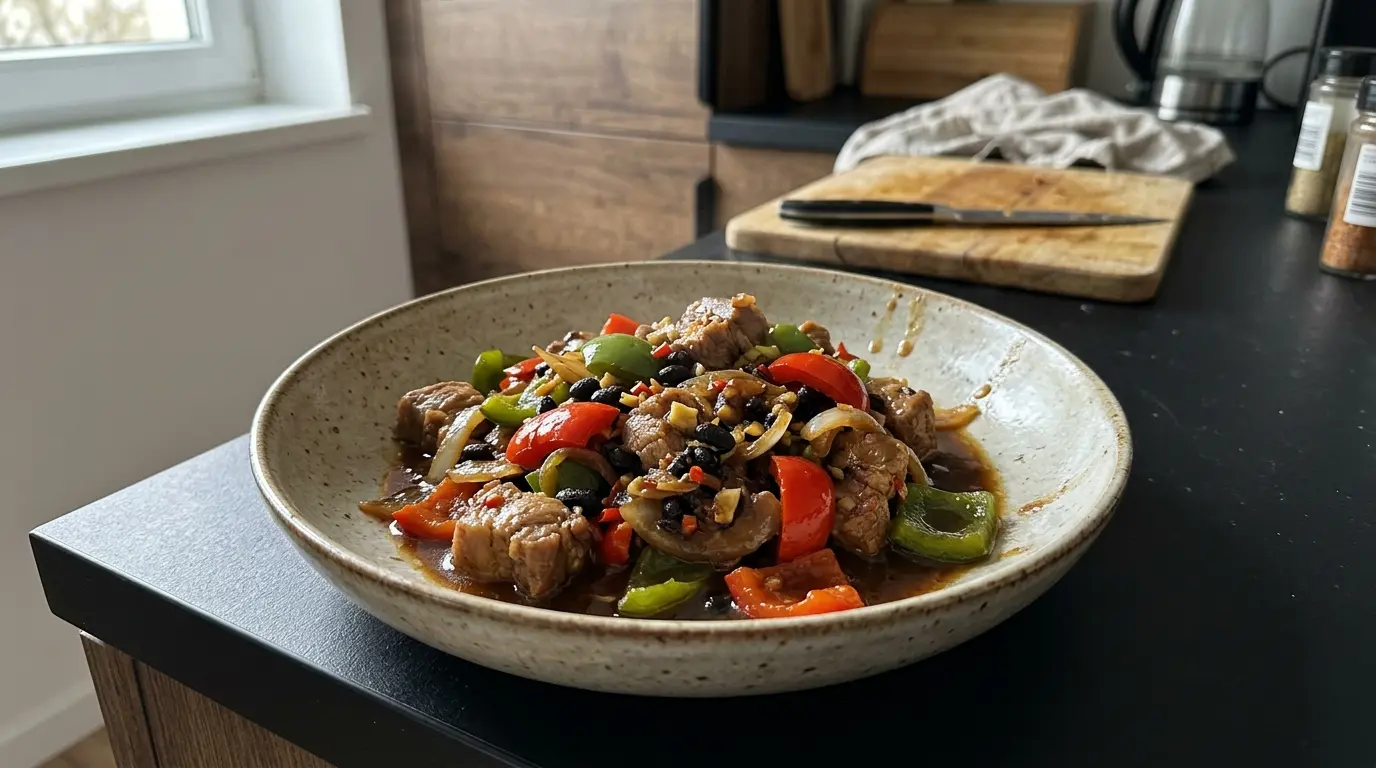
Pork with peppers in fermented black bean sauce is an aromatic dish from southern China. The sauce has a deep, slightly smoky flavor, a bit like a mix of olives and soy sauce. It’s a great alternative to familiar sweet-and-sour–style dishes – more savory and perfect with a bowl of rice.
This dish showcases the unique, deep umami of fermented black beans, which give a complex, slightly smoky flavor very different from typical sweet-and-sour sauces. It’s quick to make in a wok and turns simple pork and peppers into a restaurant-style stir-fry.
Chef's tips
Slice the meat as thinly as possible so it cooks quickly and stays tender. Don’t overcrowd the pan when frying the pork – if needed, do it in two batches so it can brown instead of stewing. Rinse the fermented black beans only briefly so you don’t wash away too much flavor.
How to serve
Serve with steamed jasmine or basmati rice, or with stir-fried rice noodles. Add a side of lightly pickled cucumbers or a crunchy Asian-style slaw. Finish with fresh scallions and, if you like heat, extra chili flakes on top.
Ingredients
- pork loin or pork neck cut into thin strips - 350 g
- red bell pepper - 1 piece
- green bell pepper can be replaced with yellow - 1 piece
- onion medium - 1 piece
- fermented black beans (douchi) if hard to find, use 1 tablespoon miso paste and 1 teaspoon soy sauce as a substitute - 1.5 tablespoon
- garlic - 3 clove
- fresh ginger - 10 g
- soy sauce - 2 tablespoon
- Shaoxing rice wine or dry white wine - 1 tablespoon
- sugar - 1 teaspoon
- water - 80 ml
- potato or corn starch 1 for the meat, 1 for the sauce - 2 teaspoon
- oil - 3 tablespoon
- chili flakes or fresh chili amount to taste - 0.5 teaspoon
Preparation
- Cut the pork into thin strips. In a bowl, mix the meat with 1 tablespoon soy sauce, the rice wine, and 1 teaspoon starch. Set aside for 10–15 minutes.
- Deseed the peppers and cut them into strips. Slice the onion into thin wedges.
- Finely chop the garlic and ginger. Rinse the fermented black beans briefly under running water to remove excess salt, then lightly crush them with a knife or spoon.
- In a small bowl, mix the remaining soy sauce, sugar, water, 1 teaspoon starch, and the crushed black beans.
- Heat a large pan or wok over high heat. Add 1.5 tablespoons oil. Add the pork in a single layer and stir-fry for 2–3 minutes, stirring, until the meat changes color and is lightly browned. Transfer to a plate.
- Add the remaining oil to the same pan. Add the onion and stir-fry over high heat for 1 minute.
- Add the garlic, ginger, and chili flakes. Stir-fry for 30 seconds, until very fragrant but not browned.
- Add the pepper strips. Stir-fry for 2–3 minutes, until slightly softened but still crisp.
- Briefly stir the sauce in the bowl and pour it into the pan. Stir for 1–2 minutes, until the sauce thickens and becomes glossy.
- Add the fried pork and toss everything together for another minute, until the meat is well coated in the sauce and heated through.
- Serve immediately with rice or rice noodles.
Storage
No storage information available for this dish.
I like to keep a jar of fermented black beans in the pantry just for dishes like this – a spoonful transforms everyday ingredients into something that tastes like it came from a good Chinese restaurant.