Chinese Wheat Noodles with Pork and Green Beans Recipe
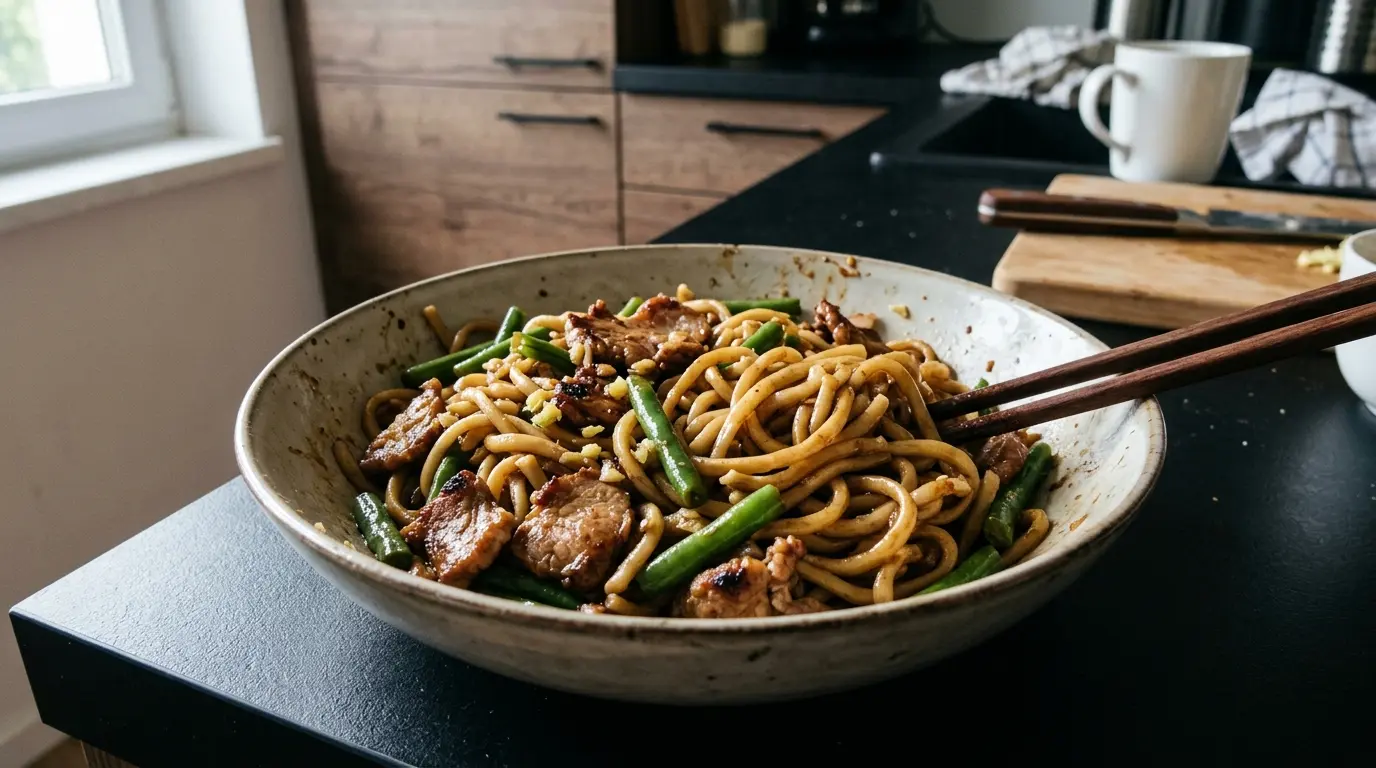
This hearty dish with wheat noodles, pork, and green beans is a typical home-style dinner in northern China. Something between bolognese and a stew – only instead of tomatoes you get soy sauce, ginger, and garlic. Perfect when you want to quickly feed a hungry family with one big wok.
A quick, family-friendly one-wok meal that combines the comfort of a meat-and-pasta dish with the bold flavors of northern Chinese home cooking. The soy-based sauce, ginger, and garlic give it depth without requiring long simmering.
Chef's tips
Do not overcook the noodles at the first stage – slightly undercooked pasta will finish cooking in the wok and better absorb the sauce. If the sauce reduces too much, add a small splash of water and briefly bring back to a simmer.
How to serve
Serve straight from the wok in deep bowls, topped with extra chives or spring onion. Add a side of pickled vegetables or a quick cucumber salad with rice vinegar and sesame oil for contrast.
Ingredients
- Chinese-style wheat noodles or spaghetti cook al dente - 300 g
- ground pork e.g. from pork shoulder - 300 g
- green string beans fresh or frozen, cut into 3–4 cm pieces - 200 g
- onion medium, sliced into thin wedges - 1 piece
- garlic finely chopped - 3 cloves
- fresh ginger about 2 teaspoons finely grated - 10 g
- light soy sauce - 3 tablespoons
- dark soy sauce for color, can be omitted - 1 tablespoon
- vinegar or apple cider vinegar - 1 tablespoon
- sugar - 1 teaspoon
- oil e.g. rapeseed oil - 3 tablespoons
- chili flakes or hot paprika optional, to taste - 0.5 teaspoons
- water for the sauce - 80 ml
- chives for sprinkling - 10 g
Preparation
- Cook the noodles in a large amount of salted water according to the package instructions, but shorten the cooking time by 1 minute so they stay slightly firm. Drain and set aside.
- If using fresh green beans, wash them, trim the ends, then cut into 3–4 cm pieces. If using frozen beans, do not thaw them beforehand.
- Peel the onion and slice into thin wedges. Peel and finely chop the garlic. Peel the ginger and grate it finely. Chop the chives.
- In a small bowl, mix together the light soy sauce, dark soy sauce, vinegar, sugar, water, and chili flakes, if using.
- Heat 2 tablespoons of oil in a large frying pan or wok over medium-high heat. Add the ground pork.
- Fry the meat for 5–6 minutes, breaking it up with a spoon, until it turns light brown and is no longer pink.
- Add the onion, garlic, and ginger. Fry for another 2–3 minutes, stirring, until the onion softens and becomes slightly translucent.
- Add the green beans and 1 tablespoon of oil. Stir-fry for 4–5 minutes, until the beans are tender but still slightly crisp. If using frozen beans, this may take 1 minute longer.
- Pour the prepared sauce from the bowl into the pan. Cook for 2–3 minutes, until it reduces slightly.
- Add the cooked noodles. Stir vigorously for 1–2 minutes over medium-high heat, until the noodles are well coated in the sauce and heated through.
- Sprinkle the dish with chopped chives and serve immediately.
Storage
No storage information available for this dish.
This is one of those dishes that feels like a hug in a bowl – simple, filling, and full of flavor, yet made from everyday ingredients you probably already have at home.