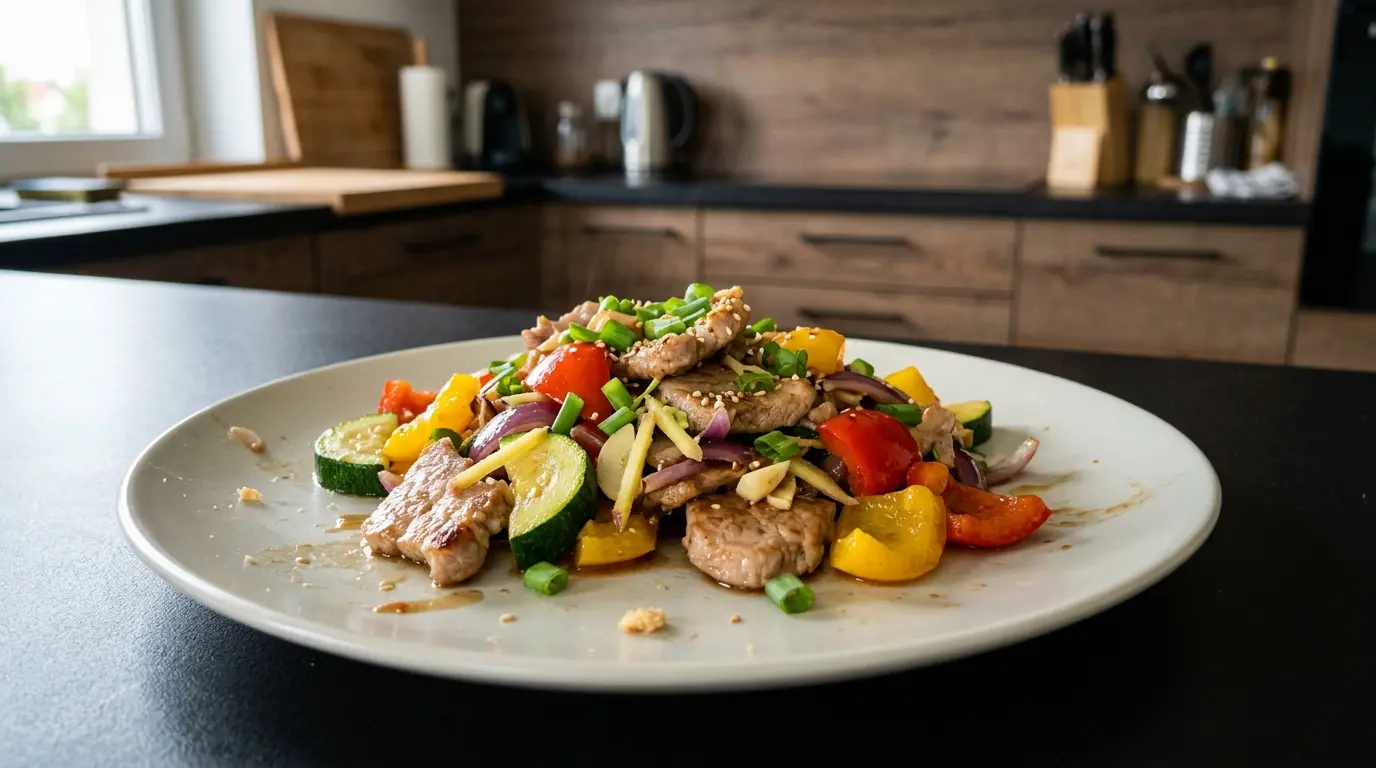
Chinese Stir-Fried Pork with Eggplant and Bell Pepper Recipe
Stir-fried pork with eggplant and bell pepper is a colorful, home-style wok dish that often lands on the weekday table in China – it’s quick to make and tastes great with a bowl of rice. It’s a bit like our Hungarian-style vegetable stew, but in a more Asian, garlicky-gingery version.
This is a loose variation on Sichuan-style stir-fries with eggplant, where the vegetable plays the leading role and soaks up a spicy, garlicky sauce. In Chinese homes, similar dishes are often made from whatever is on hand, so the meat-to-vegetable ratio is easy to adjust to your own habits.
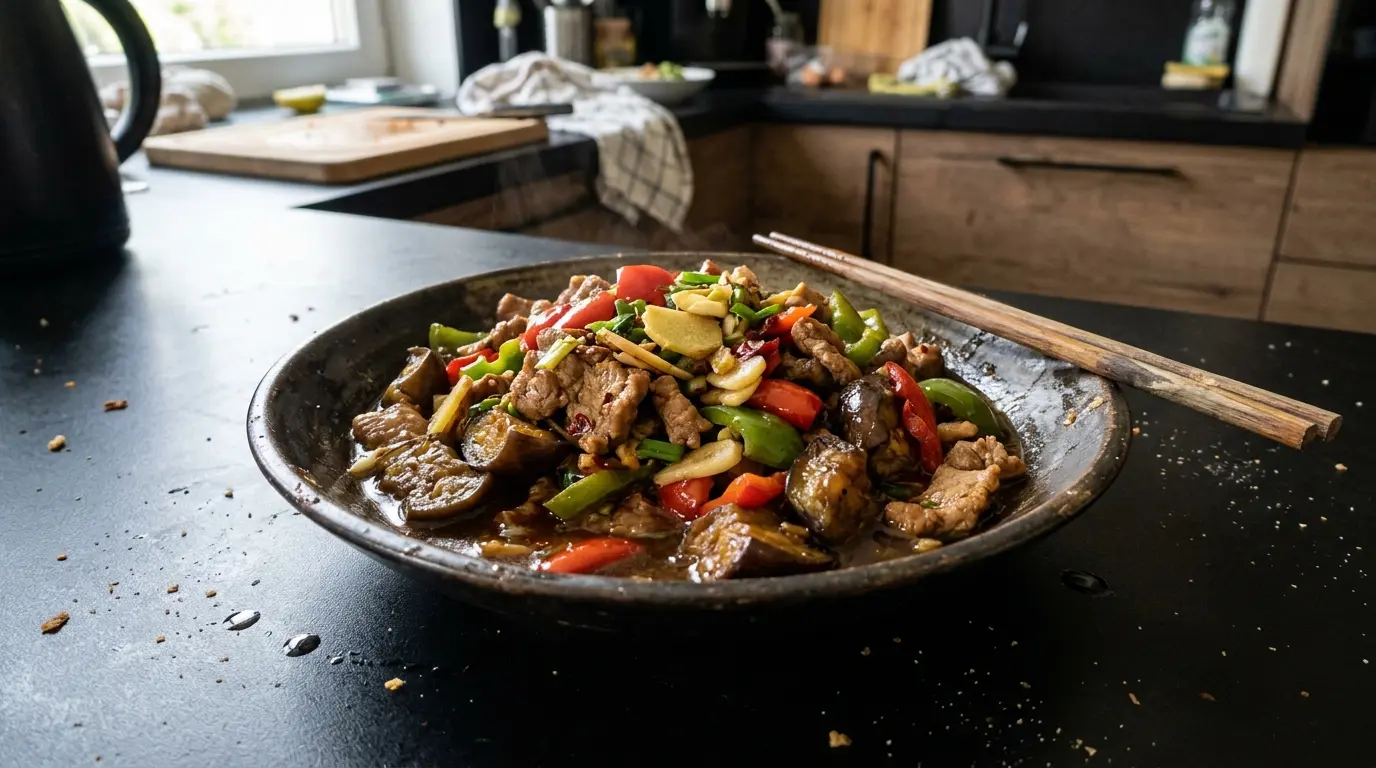
This dish combines the richness of pork with the silky texture of eggplant and the sweetness of bell pepper, all wrapped in a fragrant garlic-ginger sauce. It’s quick enough for a weeknight but flavorful enough to feel like a takeaway-style treat at home.
Why this version works
- A starch marinade coats the meat in a thin layer that protects it from drying out and later naturally thickens the sauce.
- Salting and thoroughly drying the eggplant in advance reduces splattering and oil absorption, while the inside stays creamy.
- You deeply brown the meat and vegetables first and only then add the sauce, so the flavour is built on caramelisation, not just on the liquid seasoning.
Chef's tips
Slice the meat as thinly as you can – it will cook faster and stay more tender. Don’t overcrowd the pan; if needed, fry the meat in two batches so it browns instead of steams. If you like a thicker sauce, dissolve an extra teaspoon of starch in a bit of water and add at the end, bringing the sauce to a brief boil.
How to serve
Serve in deep bowls over freshly cooked jasmine rice, topped with sliced spring onions or sesame seeds. It also pairs well with a side of quick stir-fried greens like bok choy or spinach with garlic.
Watch out for
- Don’t crowd too many ingredients into a small pan at once – instead of frying, they’ll start to steam and release water.
- Lay the meat in clearly hot oil; if it doesn’t sizzle right away, it will turn grey and tough instead of juicy.
- Undercooked eggplant will be spongy and slightly bitter; when ready, it should have golden edges and a soft, buttery centre.
- Don’t add garlic over maximum heat without vegetables or sauce – it burns quickly and turns bitter.
Substitutions
- You can replace oyster sauce with dark soy sauce plus a pinch of sugar and a drop of fish sauce.
- You can swap the pork for chicken breast, shortening the frying time by 1–2 minutes.
- You can replace red bell pepper with yellow or green; just remember green will be a bit more bitter.
Ingredients
- pork loin or pork neck without bone cut into thin strips - 300 g
- eggplant medium, cut into long strips - 1 piece
- bell pepper cut into strips - 1 piece
- onion sliced into thin wedges - 0.5 piece
- garlic cloves finely chopped - 2 piece
- fresh ginger grated or finely chopped - 2 cm
- soy sauce - 2.5 tablespoon
- oyster sauce for vegetarians you can replace it with thick soy sauce with a bit of sugar - 1.5 tablespoon
- rice vinegar or apple cider vinegar - 1 tablespoon
- sugar - 1 teaspoon
- potato starch or cornstarch for coating the meat - 1 tablespoon
- oil e.g. rapeseed oil - 4 tablespoon
- chili flakes or fresh chili pepper amount to taste - 0.5 teaspoon
- water for the sauce - 60 ml
Preparation
- Cut the meat into very thin matchstick-like strips across the grain. In a bowl, mix 1 tablespoon of soy sauce with 1 teaspoon of starch and 1 tablespoon of water, add the meat and massage in the marinade until the pieces look glossy and slightly tacky. Set aside for at least 10 minutes at room temperature.
- Cut the eggplant into long strips or 2 cm cubes. Lightly salt, toss and set aside for 10 minutes, until droplets of juice appear. Quickly rinse, then dry very thoroughly with paper towels until the pieces look matte and feel dry to the touch, with no visible water droplets.
- In a small bowl, mix the remaining soy sauce, oyster sauce, rice vinegar, sugar, water and chili until the sugar fully dissolves. Keep the sauce close to the stove so you can pour it straight onto the hot pan without interrupting the stir-fry.
- Slice the onion into thin wedges, cut the bell pepper into thin strips, finely chop the garlic, peel the ginger and cut it into thin matchsticks or small dice. Prepare all the ingredients before heating the pan – the dish comes together in a few minutes and there will be no time for chopping later.
- Heat 2 tablespoons of oil in a large frying pan or wok over medium-high heat until it starts to shimmer. Add the eggplant and fry for 5–6 minutes, stirring often, until the edges are clearly golden and the centre is soft – a fork should slide in without resistance and the flesh should no longer be spongy.
- Transfer the eggplant to a plate. In the same pan, heat the remaining 2 tablespoons of oil over fairly high heat. Add the pork in a single layer and do not stir for 1 minute, until the bottom is well browned, then fry for another 3–4 minutes, stirring, until the meat is golden and no longer pink anywhere.
- Add the onion, bell pepper, garlic and ginger. Reduce the heat to medium and stir-fry for 3–4 minutes, stirring often. The vegetables should soften slightly but still spring back when pressed with a spoon, and the garlic and ginger should only turn lightly golden, not brown or darken.
- Add the fried eggplant and gently mix with the meat and vegetables. Pour in the prepared sauce and mix everything thoroughly, scraping up the browned bits from the bottom of the pan, until the sauce starts to bubble evenly across the surface.
- Stir-fry everything together for 2–3 minutes over medium heat, stirring, until the sauce noticeably thickens, turns glossy and starts to coat the meat and vegetables. There should be a thin layer of thick, shiny sauce on the bottom, not a watery liquid.
- Taste the sauce and adjust to your liking: if needed, add a little soy sauce for saltiness or a pinch of sugar if the sauce is too spicy. Serve immediately, piping hot, with a bowl of freshly cooked, fluffy rice so the sauce can soak into it.
Storage
No storage information available for this dish.
This is one of those dishes that feels like comfort food but still brings a lot of fresh, bright flavors. Adjust the chili level to your liking – it’s just as good mildly spicy as it is fiery.