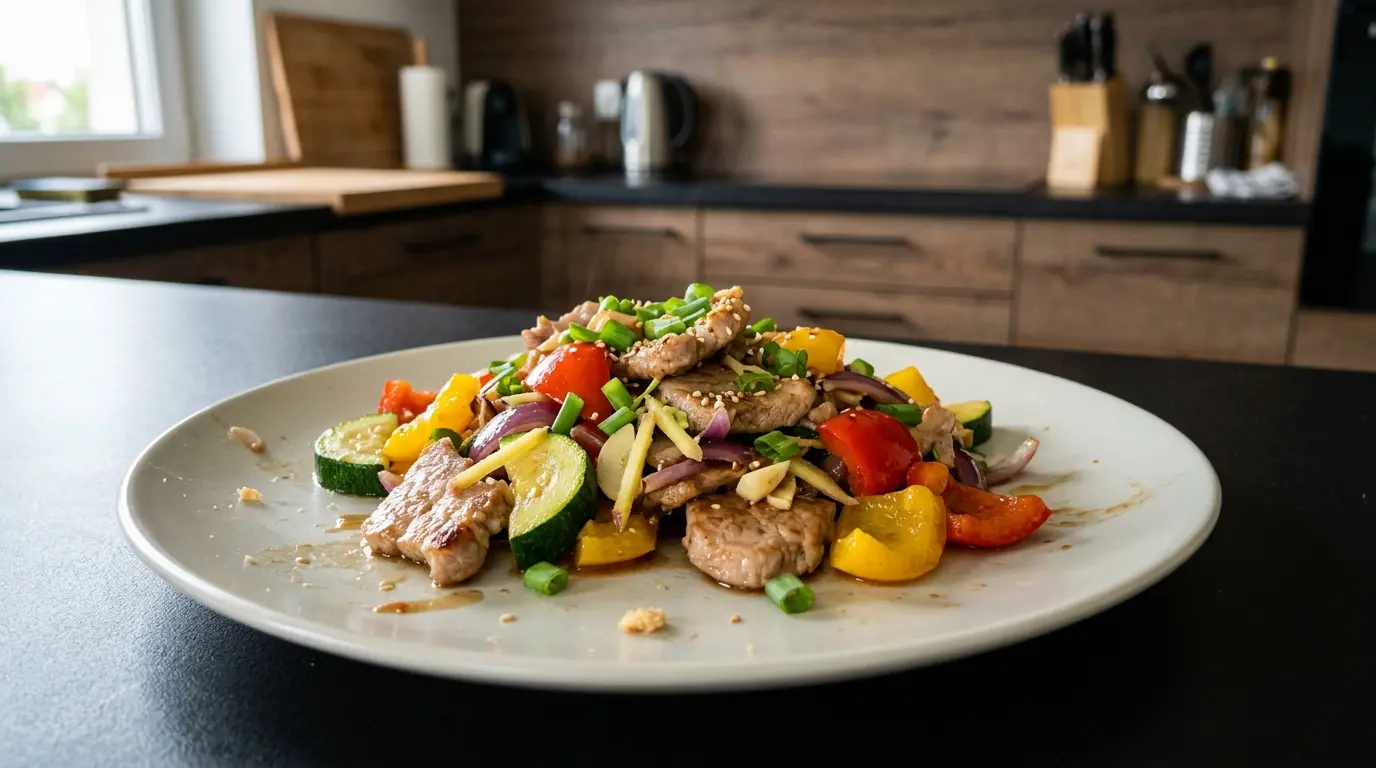
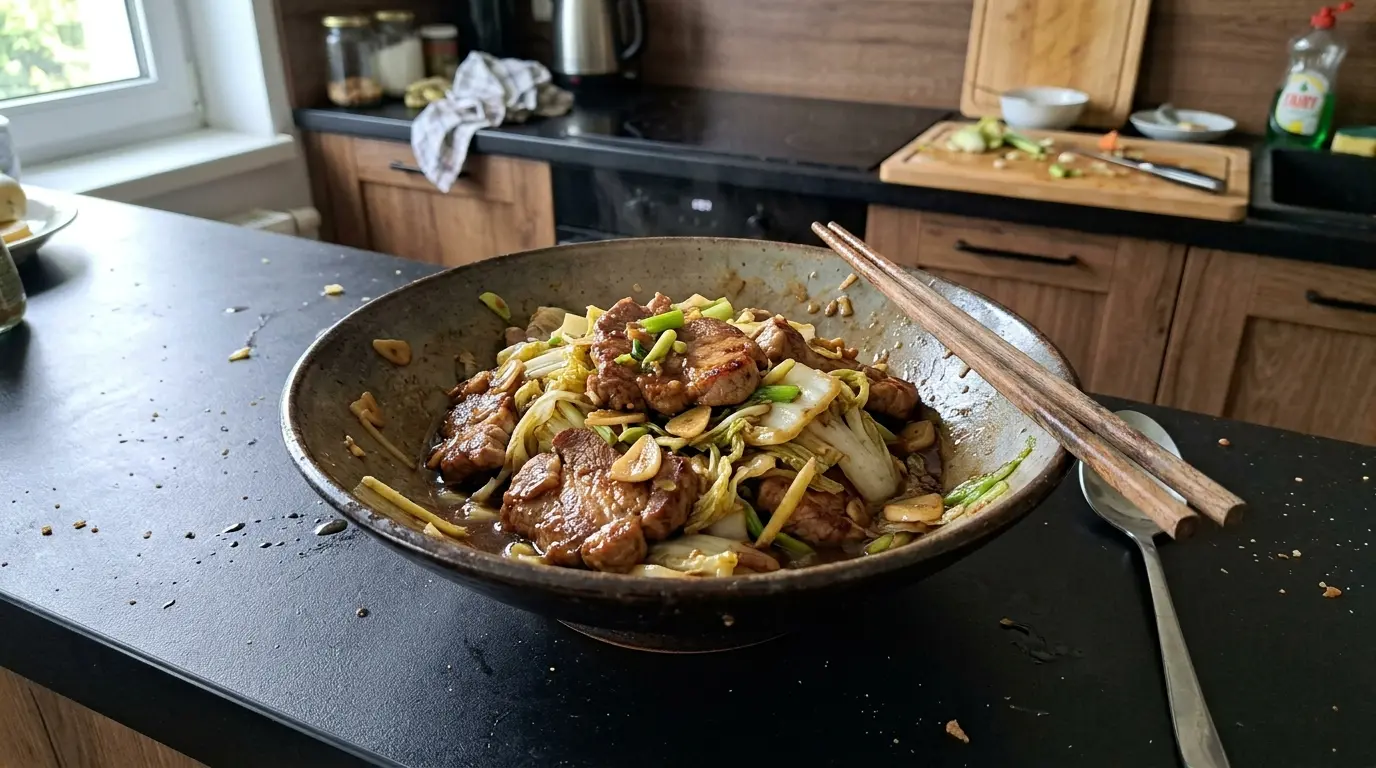
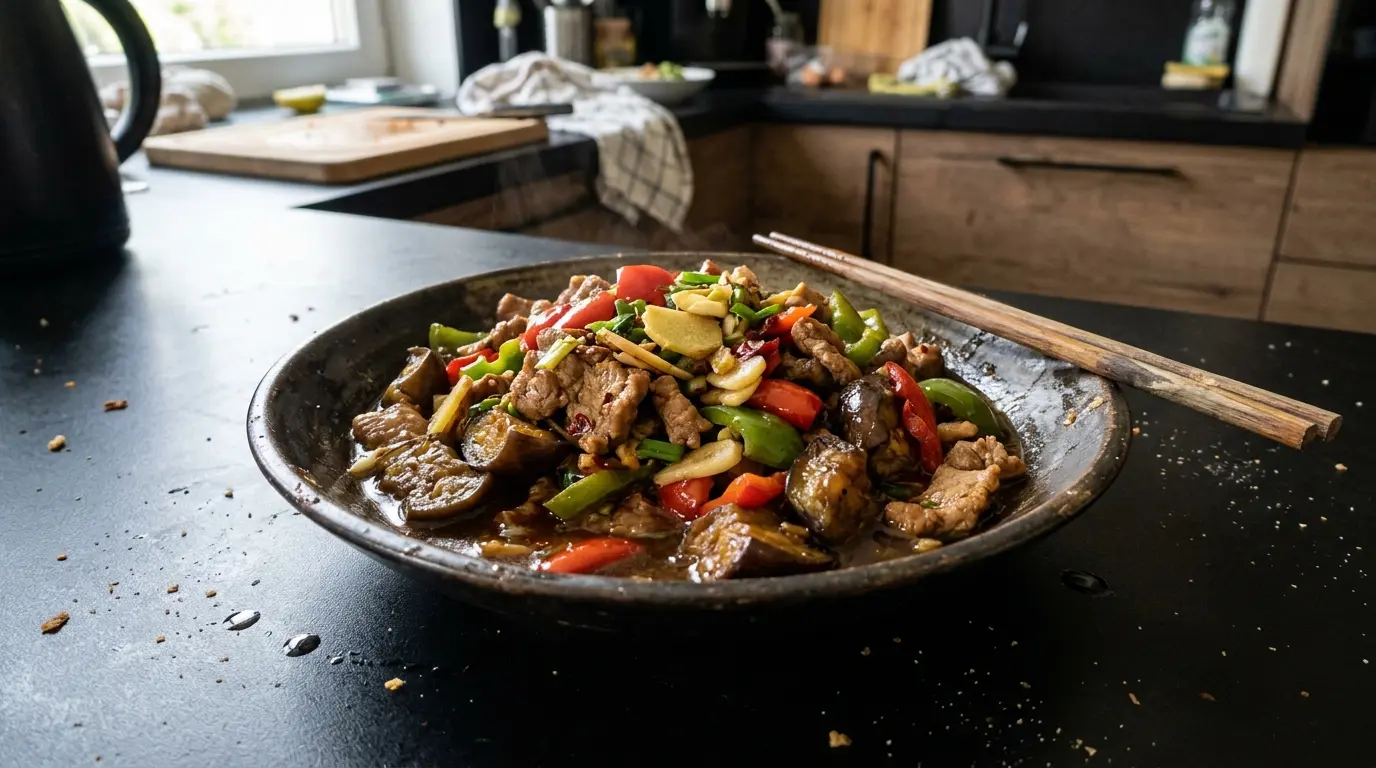
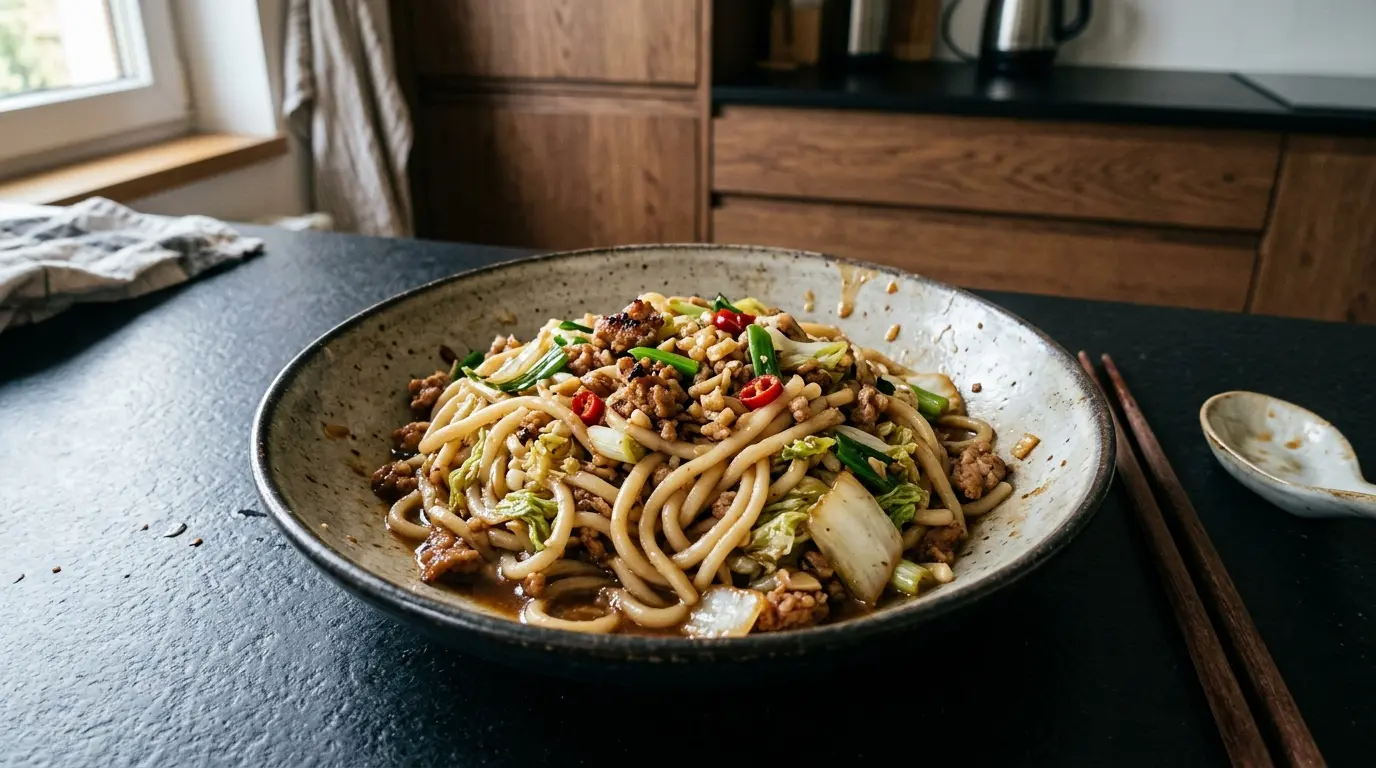
Chinese Stir-Fried Pork with Bell Peppers and Peanuts Recipe
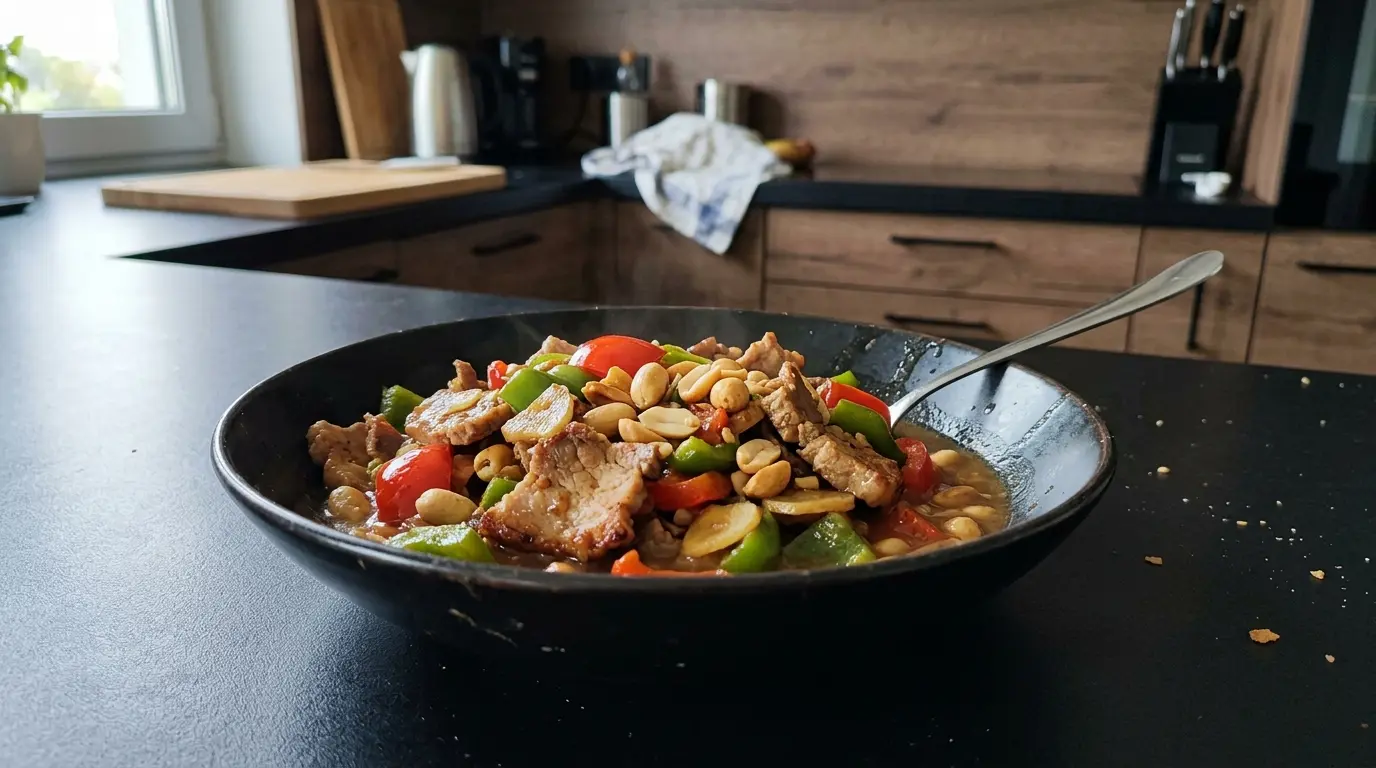
This quick stir-fry combines thin strips of pork, colorful bell peppers, and crunchy peanuts in a lightly spicy sauce. It’s a bit like kung pao chicken, but made with pork and more vegetables. In Chinese eateries it’s often served as a rice dish, perfect for a quick after-work dinner.
This is a home-style variation on Chinese gong bao pork, popular in casual eateries as a rice dish. The original is often hotter and more complex; here the key contrasts of flavors and textures are kept while using ingredients you can find in a regular supermarket.
A simple, weeknight-friendly stir-fry that delivers the flavors of Chinese takeout at home: tender pork, crisp vegetables, and crunchy peanuts in a glossy, lightly spicy sauce.
Why this version works
- Marinating the meat in starch and soy sauce tenderizes it and helps achieve that restaurant-style, juicy texture.
- Mixing the sauce separately lets you stir‑fry over high heat without stopping to think what to add when.
- Toasting the peanuts at the beginning brings out their aroma and keeps them from turning bitter in the thick sauce.
Chef's tips
Slice the pork as thinly as you can so it cooks quickly and stays tender. Have all ingredients prepped before you start frying—the dish comes together fast over high heat.
How to serve
Serve in deep bowls over steamed jasmine rice or with rice noodles. Add a side of lightly pickled cucumbers or a simple Asian-style slaw for freshness.
Watch out for
- If the pan isn’t very hot, the meat will start to stew and release a lot of juices instead of browning.
- Don’t fry the garlic and ginger for too long – once they get very dark, the whole sauce will taste bitter.
Substitutions
- You can swap the pork for chicken breast or boneless thighs, shortening the stir‑fry time by 1–2 minutes.
- Peanuts can be replaced with unsalted cashews, which will give a milder, buttery flavor.
- You can replace rice vinegar with white wine vinegar, reducing the amount by about 1/3.
Ingredients
- pork loin or pork shoulder boneless - 300 g
- bell pepper - 1 piece
- bell pepper - 1 piece
- unsalted peanuts can be roasted - 50 g
- garlic - 2 cloves
- fresh ginger grated - 1 tablespoon
- soy sauce - 3 tablespoons
- rice vinegar can be replaced with apple cider vinegar - 1 tablespoon
- sugar - 1 teaspoon
- potato starch or cornstarch - 1 tablespoon
- oil for frying - 2 tablespoons
- dried chili flakes or fresh hot chili pepper amount to taste - 0.5 teaspoons
- water for the sauce - 80 ml
Preparation
- Cut the pork into thin strips. In a bowl, mix 1 tablespoon of soy sauce with the starch, add the meat and coat it thoroughly. Set aside for 10 minutes.
- Deseed the bell peppers and cut them into strips. Finely chop the garlic and grate the ginger.
- In a small bowl, mix the remaining soy sauce, rice vinegar, sugar, water, and chili flakes.
- Heat 1 tablespoon of oil in a large frying pan or wok over high heat. Add the peanuts and fry for 1–2 minutes, stirring, until lightly golden. Remove them to a small plate.
- Add the second tablespoon of oil to the same pan. Add the pork and stir-fry over high heat for 3–4 minutes, stirring often, until the meat is browned on the outside.
- Add the garlic and ginger and fry for about 30 seconds, until they become very fragrant but not browned.
- Add the sliced bell peppers and stir-fry over high heat for 3–4 minutes, stirring, until the peppers soften slightly but are still crisp.
- Pour in the prepared sauce from the bowl. Cook for 2–3 minutes, stirring, until the sauce thickens slightly and coats the meat and vegetables.
- Finally, add the toasted peanuts, toss everything together, and serve immediately with hot rice.
Storage
No storage information available for this dish.
This is one of those dishes I turn to when I’m craving Chinese flavors but don’t want to spend much time in the kitchen. It’s flexible, forgiving, and great for using up whatever vegetables you have on hand.