Chinese jiaozi dumplings with pork and cabbage boiled in water Recipe
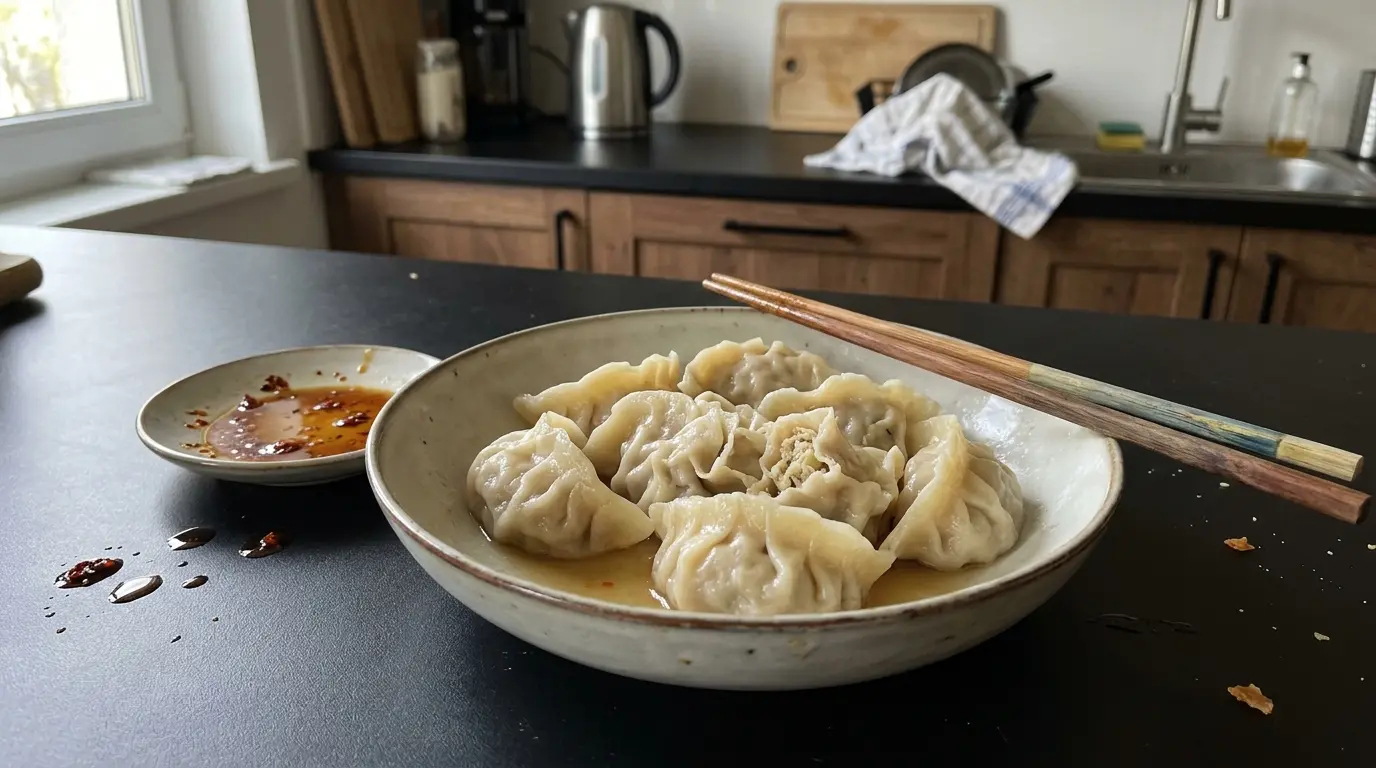
Jiaozi are some of the most beloved dumplings in China. They are often prepared together with family for the New Year, a bit like making Christmas Eve dumplings in Poland. In this version the dumplings are boiled in water – the dough is soft and springy, and the pork and cabbage filling is juicy with a gentle garlic note. Perfect for lunch, dinner, or a gathering with friends.
In China, jiaozi symbolize prosperity because their shape resembles old gold ingots. Families make them together, often hiding a coin in one dumpling to bring good luck to whoever finds it.
These jiaozi combine a delicate, springy dough with a juicy pork and cabbage filling, capturing the essence of a classic Chinese family dish. Boiling them in water keeps them light and tender, and the simple dipping sauce highlights their natural flavor.
Why this version works
- The dough scalded with hot water is as soft as Central or Eastern European dumplings, yet as springy as classic jiaozi.
- Very fine chopping and thoroughly squeezing the cabbage prevents the filling from becoming watery.
- Longer mixing of the filling in one direction binds the proteins and creates a cohesive, juicy texture.
- Cooking at a gentle boil reduces the risk of the dumplings bursting or coming apart.
Chef's tips
Knead the dough long enough so it becomes really smooth and elastic – this is key to getting a good texture. Don’t overfill the wrappers; too much filling makes them hard to seal and more likely to burst while cooking. Always squeeze the cabbage very well so it doesn’t water down the filling.
How to serve
Serve the dumplings immediately after cooking, with individual bowls of dipping sauce for each person. Add a simple clear broth or miso-style soup on the side and a light salad of cucumber or pickled vegetables for a complete meal.
Watch out for
- Don’t roll the wrappers too thick – thick dough will taste floury and heavy; if it’s too thin, it can easily tear during cooking.
- When sealing, push out all the air from inside; otherwise air bubbles can tear the dough in the water.
- Don’t cook too many dumplings at once – when crowded, they easily stick together and to the bottom of the pot.
Substitutions
- You can replace part of the pork with finely chopped shrimp for a more delicate, seafood flavor.
- You can substitute Chinese cabbage with very finely chopped white cabbage, thoroughly squeezed to remove excess juice.
- If you don’t have rice vinegar, use light white wine vinegar and add a pinch of sugar to soften the acidity.
Ingredients
- flour type 450–550 - 400 g
- hot water not boiling, but very warm - 220 ml
- ground pork preferably from shoulder or neck, not too lean - 350 g
- cabbage finely chopped - 200 g
- onion chopped - 3 piece
- garlic finely chopped - 3 cloves
- fresh ginger grated on a fine grater - 10 g
- soy sauce - 2 tablespoons
- sesame oil for aroma, can be omitted - 1 tablespoon
- salt for the filling, plus a pinch for the cabbage - 1 teaspoon
- pepper freshly ground - 0.5 teaspoons
- rice vinegar for the dipping sauce; can be replaced with apple cider vinegar - 2 tablespoons
- soy sauce for the dipping sauce - 2 tablespoons
- chili oil or hot chili paste optional, for the dipping sauce - 1 teaspoon
Preparation
- Put the flour into a large bowl. Gradually pour in hot (not boiling) water, stirring with chopsticks or a fork until there is no dry flour at the bottom and moist crumbs form. When the dough cools slightly, knead for 8–10 minutes until it is smooth and elastic, without cracks.
- Form the dough into a ball, place it in a bowl, cover with a damp cloth or plastic wrap and let rest for 20–30 minutes. After resting, the dough should be noticeably softer and smoother, and you should be able to stretch it into a “ribbon” without tearing; if it still cracks, let it rest a few minutes longer.
- Very finely chop the Chinese (Napa) cabbage, transfer to a bowl, sprinkle with a pinch of salt, mix and set aside for 10 minutes until juices collect at the bottom. Then grab handfuls of cabbage and squeeze hard over the sink – after squeezing it should hold together in a tight ball and feel dry to the touch.
- In a large bowl place the ground pork, squeezed cabbage, finely chopped spring onion, pressed garlic, grated ginger, soy sauce, sesame oil, salt and pepper. Mix with your hand or chopsticks for 2–3 minutes in one direction, until the mixture starts to feel slightly sticky and uniform.
- Divide the rested dough into 4 equal pieces. Shape each piece into a log about 2 cm in diameter and cut into walnut-sized pieces (about 10–12 g). Lightly dust each piece with flour, flatten into a disc, and keep the remaining dough covered at all times so it doesn’t dry out.
- Roll each disc out with a small rolling pin into a thin circle 8–9 cm in diameter, leaving the center slightly thicker than the edges. As you roll, rotate the disc in your hand and roll only the edges; cover the finished circles with a cloth right away so they don’t dry out or crack at the edges.
- Place about 1 level teaspoon of filling in the center of each circle. Fold the dough over the filling into a half-moon and seal the edges firmly, pushing the air out from the center upward – the edges should join in one continuous line with no gaps. You can make pleats from small folds, pressing each one firmly to seal.
- Bring plenty of water with a pinch of salt to a boil in a large pot. Add the dumplings in batches so they can float freely; right after adding them, gently stir with a spoon so they don’t stick to the bottom. When the water returns to a boil, lower the heat to a gentle simmer, without vigorous bubbling.
- Cook for 5–7 minutes from the moment the dumplings float to the surface. The dough should be slightly translucent at the edges, soft but springy when pressed with a spoon, and the filling inside very hot; you can cut one dumpling open to check there is no pink meat. Remove with a slotted spoon.
- Prepare the sauce: in a small bowl mix the soy sauce with rice vinegar and chili oil (if using) until smooth and glossy. Serve the jiaozi hot, immediately after cooking, when the wrappers are at their softest and springiest and steam rises clearly from the filling.
Storage
No storage information available for this dish.
Making jiaozi is a wonderfully communal activity – invite friends or family to help with rolling and folding. Even if the shapes aren’t perfect at first, they will still taste fantastic, and each batch will look better than the last.