Thai Sticky Rice with Mango (Khao Niao Mamuang) Recipe
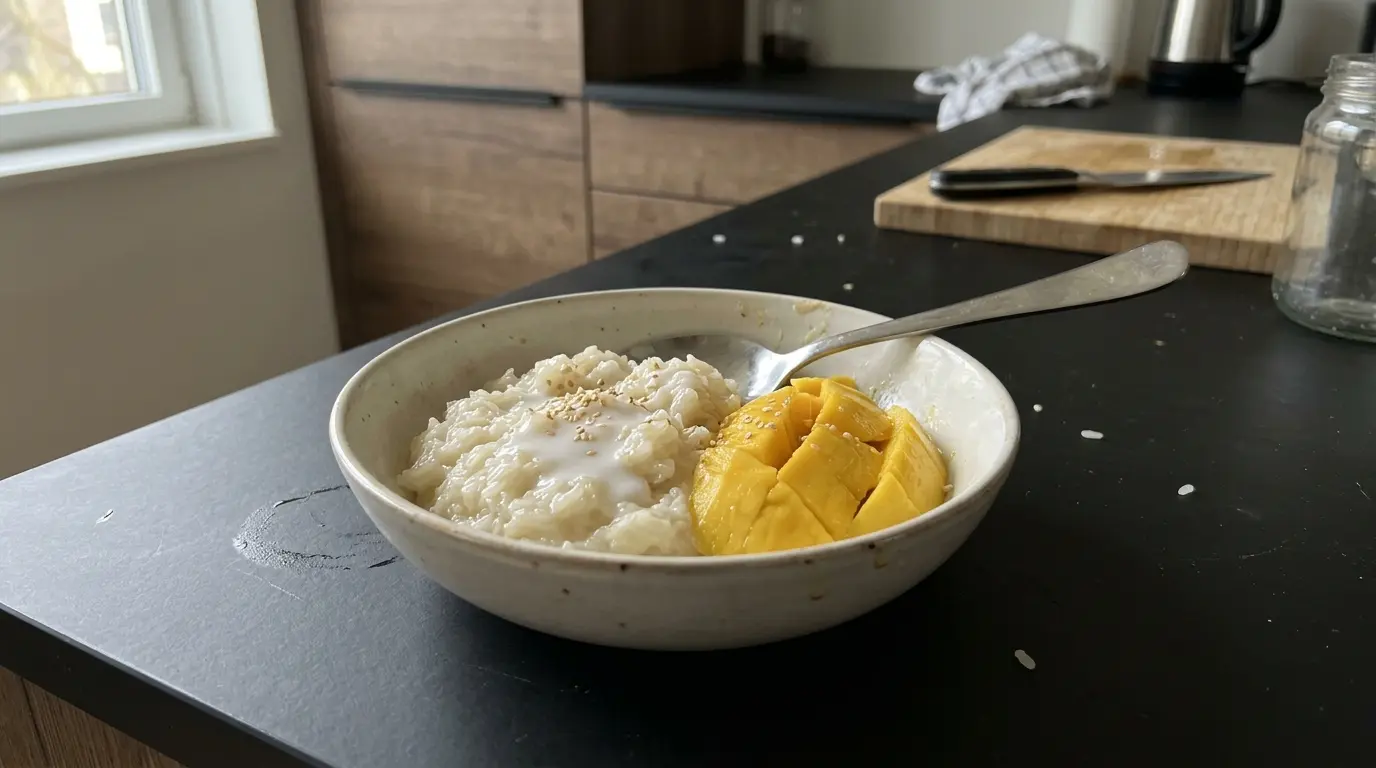
Khao Niao Mamuang is the famous Thai dessert made with sticky rice, sweet coconut milk and ripe mango. In Thailand it’s a classic of mango season – simple yet incredibly satisfying, a bit like a cross between rice pudding and an exotic holiday.
Khao Niao Mamuang combines sticky, delicately salty rice with a thick coconut sauce and juicy, very ripe mango, creating a dessert with a surprisingly complex flavour. It’s a symbol of mango season in Thailand – simple in appearance, but with perfectly balanced sweetness, creaminess and fresh fruitiness.
Chef's tips
The key is the right consistency of the rice: it should be soft and sticky but not overcooked into mush – it’s better to let it rest under a lid for a while than to keep adding water. Choose mangoes that are very soft and fragrant; if they’re firm, it’s better to leave them on the windowsill for 1–2 days than to spoil the dessert with mediocre fruit. Also remember that the coconut sauce should be warm when you mix it with the rice – this way the grains absorb the aroma better.
How to serve
Serve the dessert with the rice slightly warm and the mango chilled – the temperature contrast makes a huge difference. It tastes great with iced jasmine tea or homemade lime lemonade, especially on hot afternoons. It’s the perfect finale to a light grilled lunch on the balcony or a “wow” dessert after a Thai dinner with friends.
Ingredients
- sticky rice (sushi rice or jasmine rice as an emergency substitute) sticky rice is best, but you can use sushi rice - 200 g
- coconut milk well shaken before use - 400 ml
- sugar about 4 tablespoons; you can use less or more to taste - 60 g
- salt - 0.25 teaspoons
- ripe mango preferably soft and very sweet; you can use frozen mango slices - 2 pieces
- cornstarch for thickening the coconut sauce - 1 teaspoon
- water for cooking the rice (or according to the instructions on the packet) - 250 ml
- white or black sesame seeds toasted in a dry pan; optional - 1 tablespoon
Preparation
- Rinse the rice several times in cold water until the water is almost clear. Drain in a sieve.
- Transfer the rice to a pot and pour in the measured water. Cover with a lid, bring to the boil over medium heat, then reduce the heat to low and cook for 10–12 minutes, until the rice absorbs the water. Turn off the heat and leave covered for another 10 minutes to finish steaming.
- Meanwhile, pour 300 ml of coconut milk into a small pot, add the sugar and salt. Heat over low heat, stirring, until the sugar dissolves and the milk is hot but not boiling. Taste and sweeten more if needed.
- Transfer the hot rice to a bowl and pour in about 2/3 of the warm coconut milk. Gently mix with a spoon until the rice absorbs most of the liquid. Cover and set aside for 15–20 minutes so the rice becomes sticky and glossy.
- Mix the remaining coconut milk with the cornstarch dissolved in 1 tablespoon of cold water. Heat over low heat, stirring, until the sauce thickens slightly – it should have the consistency of a thin custard. Set aside to cool slightly.
- Peel the mango, cut the flesh away from the stone and slice into long pieces or cubes.
- On a plate, shape a portion of sticky rice (you can use a small bowl as a mould), arrange the mango slices next to it. Pour the thick coconut sauce over the rice and sprinkle with toasted sesame seeds.
- Serve slightly warm or at room temperature.
Storage
Keep leftover rice and coconut sauce in separate airtight containers in the fridge and add fresh fruit just before serving. Gently reheat the rice and sauce so they soften again.
I usually make this dessert in May, when better mangoes appear in Polish shops – it’s my little ritual for the first truly warm weekend. I always set aside one piece of mango “for the cook” and eat it straight over the sink before the rice has time to soak up the coconut.