Potato dumplings with butter and breadcrumbs Recipe
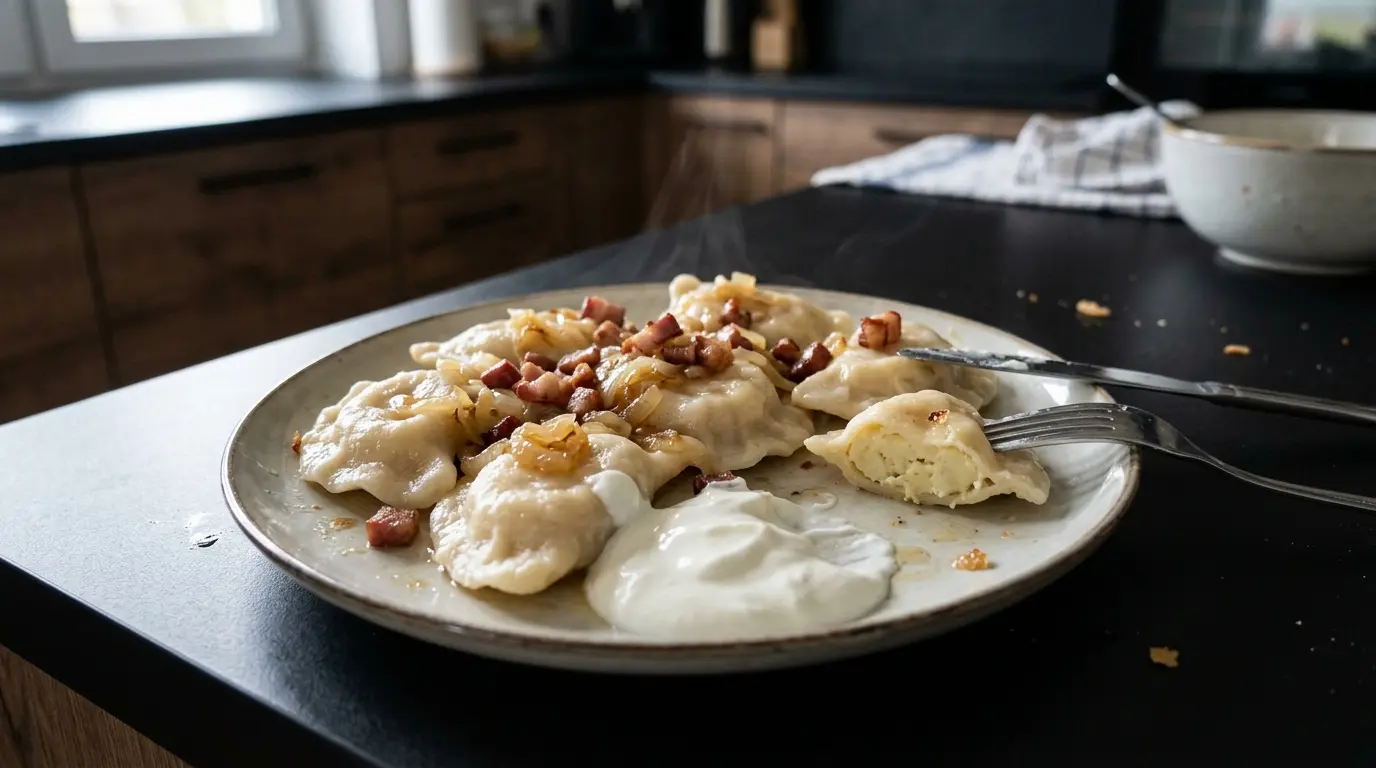
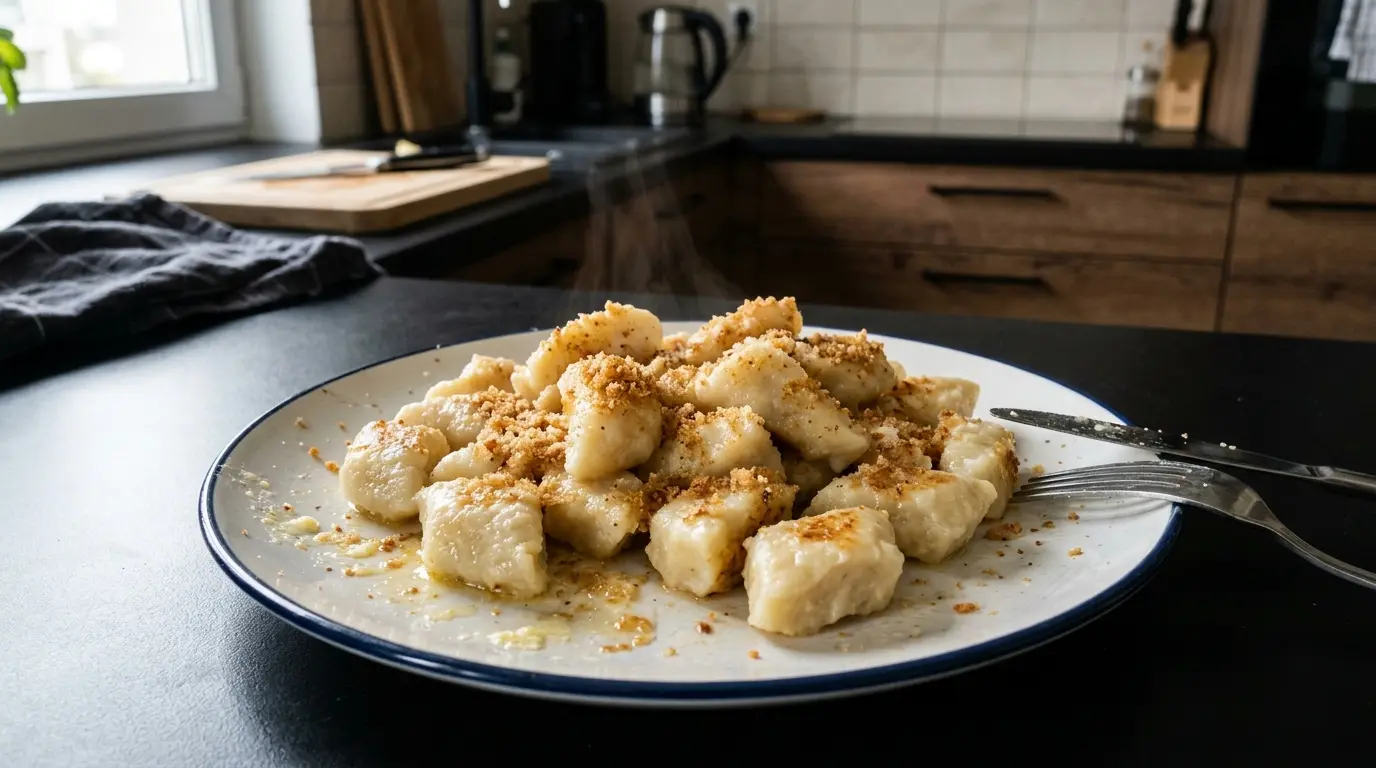
Kopytka are delicate potato dumplings that in Poland are eaten both as a side dish to meat and as a standalone meal. For many people they taste like childhood and Sunday lunches at grandma’s. They’re a bit like Italian gnocchi, but in a Polish version – often served with butter and toasted breadcrumbs.
Kopytka are a close cousin of Italian gnocchi, but in Polish homes they’ve long been the go‑to way to reuse leftover boiled potatoes. They’re most often served with butter, mushroom sauce, or as a side to goulash.
These classic Polish potato dumplings are simple yet comforting, with a soft, delicate texture and a rich, nutty topping of butter and toasted breadcrumbs. They work both as a nostalgic main dish and as a versatile side.
Why this version works
- The “quarter method” matches the amount of flour to the specific batch of potatoes.
- Thoroughly drying and cooling the potatoes reduces how much flour you need to add.
- Short, gentle kneading yields soft, springy dumplings instead of hard ones.
- Browning the breadcrumbs in butter separately and with control gives a nutty aroma without bitterness.
Chef's tips
Use starchy potatoes and make sure they are completely cooled and dry – this way you’ll need less flour and the dumplings will stay light and tender. Knead the dough only until combined; overworking it can make the kopytka dense.
How to serve
Serve immediately after cooking, generously topped with hot butter and golden breadcrumbs. They pair wonderfully with rich meat stews, mushroom ragout, or a simple green salad for a lighter meal.
Watch out for
- Do not use hot or steaming potatoes – they’ll absorb too much flour and turn heavy.
- Do not knead the dough for a long time like yeasted dough, or the dumplings will be rubbery after cooking.
- Do not drop too many dumplings into the pot at once – the water will stop boiling and they may overcook and fall apart.
Substitutions
- You can replace up to 1/3 of the wheat flour with potato starch for a more delicate texture.
- Swap regular butter for clarified butter if you’re worried about burning it while browning the breadcrumbs.
- You can replace breadcrumbs with finely ground oat flakes, dry-toasted in a pan.
Ingredients
- cooked potatoes preferably from the previous day, well cooled - 800 g
- flour approximate amount, add more if needed - 200 g
- egg - 1 piece
- salt for the dough + for the water - 1 teaspoon
- butter for drizzling over the dumplings - 60 g
- breadcrumbs for toasting in butter - 4 tablespoons
Preparation
- Pass the cooked and cooled potatoes through a potato ricer or mash them very thoroughly so there are no lumps. Transfer to a large bowl.
- Level the potatoes in the bowl and divide the mass with a knife into 4 equal parts. Remove one part and fill the empty space with flour – just enough to fill that quarter. This is a simple way to measure the amount of flour.
- Add back the removed portion of potatoes, crack in the egg and add the salt.
- Quickly knead the dough by hand until the ingredients come together. The dough should be soft but not very sticky. If it sticks a lot, sprinkle with a little flour, but don’t overdo it – too much flour will make the dumplings tough.
- Divide the dough into several portions. On a lightly floured surface, roll each portion into a log about 2 cm thick.
- Cut the logs diagonally into pieces about 2 cm long – you’ll get the characteristic “kopytka” dumplings.
- Bring a large pot of water with 1 teaspoon of salt to a boil. Reduce the heat so the water gently simmers.
- Drop the dumplings into the hot water in batches. After they float to the surface, cook for another 2–3 minutes. Remove with a slotted spoon onto a plate.
- Melt the butter in a pan over medium heat. Add the breadcrumbs and fry for 2–3 minutes, stirring, until the crumbs turn golden and smell nutty. Be careful not to burn them.
- Pour the butter with breadcrumbs over the cooked dumplings and serve immediately.
Storage
No storage information available for this dish.
This is one of those recipes that tastes best when made without rushing. Take your time forming the dumplings and toasting the breadcrumbs – the aroma will instantly bring a homely, Polish kitchen to mind.