Pollo alla Cacciatora – Hunter-Style Chicken Recipe
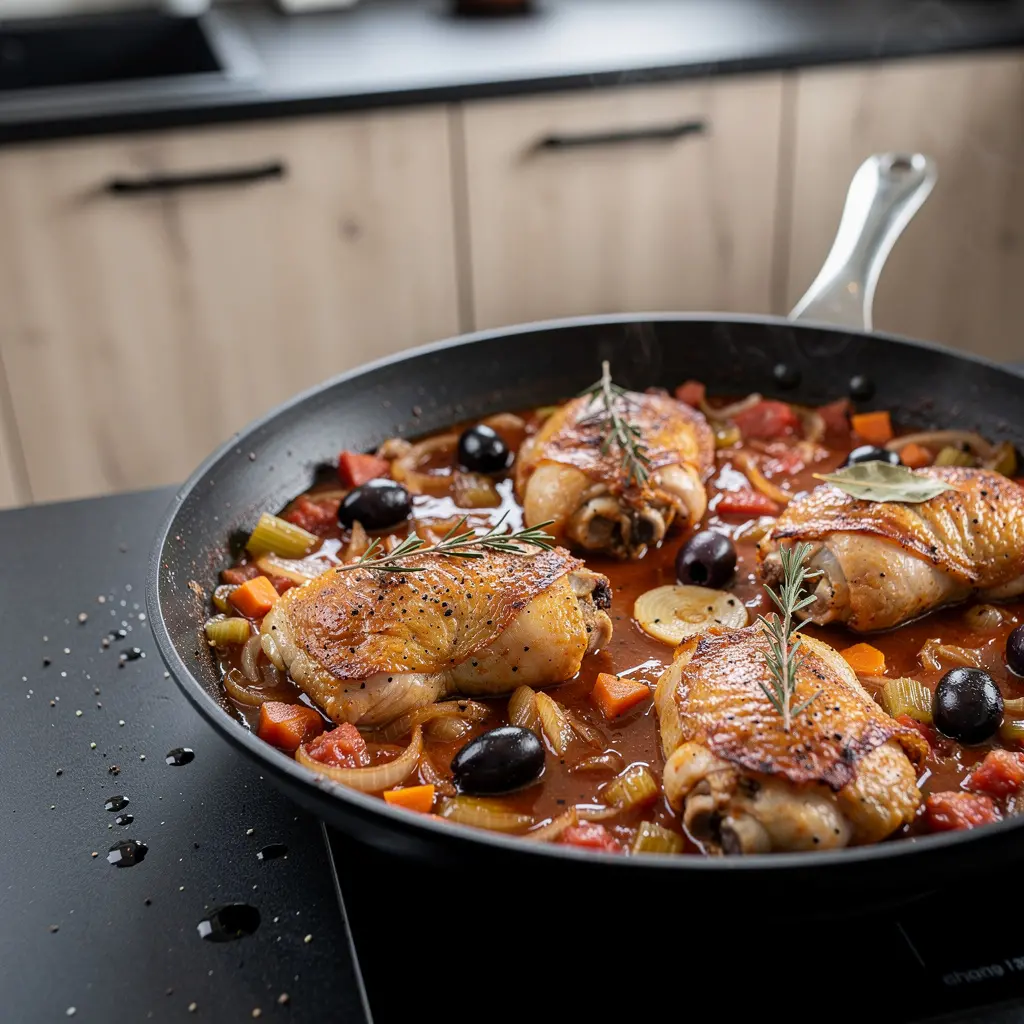
Pollo alla cacciatora, or hunter-style chicken, is a rustic Italian dish of chicken braised in a tomato and vegetable sauce with herbs. It’s something between a stew and roast chicken in sauce – perfect for a family meal when you want one big pot full of flavor.
Pollo alla cacciatora, literally “hunter’s chicken”, comes from the rustic country cooking of central Italy, where poultry was braised with vegetables and whatever wine was on hand. Depending on the region, cooks add different herbs, olives, or capers, but the soffritto base and wine stay constant.
Pollo alla cacciatora is the essence of homely, “hunter-style” Italian cooking – tender chicken thighs braised in an intense tomato and vegetable sauce with plenty of herbs. The combination of onion, carrot and celery (the classic soffritto) with wine and tomatoes creates a sauce with deep, savory umami flavor that coats the meat beautifully. It’s a dish that smells like a long, lazy Sunday lunch, yet it’s made in a single pot.
Why this version works
- Searing bone‑in, skin‑on thighs builds deeper flavor and keeps the meat juicy.
- The soffritto of onion, carrot, and celery gives the sauce a sweet, vegetable backbone.
- Reducing the wine before adding tomatoes removes any raw, alcoholic edge.
- Adding the olives at the end keeps them firm and distinctly salty.
Chef's tips
It’s worth taking the time to brown the chicken thoroughly on all sides – the skin should be really well golden, as it will later release its flavor into the sauce. Don’t rush the braising: cook over low heat until the meat starts to come away from the bone on its own; that’s when you know it’s tender and juicy. Be careful with the salt, as the sauce reduces quite a bit – it’s better to season at the end than end up with an overly salty dish.
How to serve
Serve hunter-style chicken with creamy mashed potatoes, polenta or simply with a piece of crusty baguette to mop up every bit of sauce from the plate. To drink, choose a dry red wine such as Sangiovese or Montepulciano, especially if you’re also using wine in the sauce. It’s a great option for a Saturday lunch for several people – you can bring the pot straight to the table, especially if it’s cast iron, and let everyone help themselves.
Watch out for
- Don’t rush browning the chicken—pale skin means less flavor in the sauce.
- If the heat is too high while braising, the sauce will evaporate and the meat will turn stringy.
- Be careful with salt before the sauce has reduced; season only once it’s close to the final consistency.
Substitutions
- Instead of only thighs you can use a whole chicken cut into pieces on the bone; boneless breast dries out easily.
- You can replace the red wine with a dry white wine for a lighter, paler sauce.
- If you don’t have celery stalks, simply leave them out instead of substituting with celeriac.
Ingredients
- chicken thighs with bone and skin you can also use a whole chicken cut into pieces - 4 piece
- flour for dusting the chicken - 2 tablespoons
- onion sliced into thin wedges - 1 piece
- carrot cut into half-moons - 1 piece
- celery stalk cut into slices - 1 stalk
- garlic chopped - 2 cloves
- chopped canned tomatoes - 400 g
- wine can be replaced with stock - 100 ml
- chicken or vegetable stock - 150 ml
- pitted black olives optional, halved - 60 g
- olive oil - 3 tablespoons
- fresh rosemary or thyme or 1 teaspoon dried - 2 sprigs
- bay leaf - 1 piece
- salt and black pepper to taste
Preparation
- Pat the chicken dry with paper towels, season with salt and pepper, then lightly dust with flour on both sides, shaking off any excess.
- Heat 2 tablespoons of olive oil in a large deep frying pan or wide pot over medium-high heat.
- Place the chicken pieces skin-side down and fry for 5–7 minutes, until the skin is golden and crisp. Turn over and fry for another 3–4 minutes on the other side. Transfer the chicken to a plate.
- In the same pan add 1 tablespoon of olive oil, the onion, carrot and celery. Fry for 6–8 minutes, stirring, until the vegetables soften and take on a little color.
- Add the garlic, rosemary and bay leaf. Fry for about 1 minute, until fragrant.
- Pour in the red wine, bring to a boil and cook for 2–3 minutes, scraping up the browned bits stuck to the bottom with a wooden spoon – that’s where a lot of flavor is.
- Add the canned tomatoes and stock, stir. Return the chicken pieces to the pan, skin-side up. The sauce should come about halfway up the sides of the meat.
- Reduce the heat to low, cover and simmer for 25–30 minutes, until the chicken is tender and comes away from the bone easily.
- Add the olives for the last 5 minutes of cooking. If the sauce is too thin, cook uncovered for a few minutes until it thickens slightly.
- Taste the sauce and season with salt and pepper. Remove the bay leaf and any herb sprigs. Serve hot.
Storage
Store leftovers in the fridge in a sealed container for up to 3 days. The flavors deepen as it rests, and it reheats very well on the stove over low heat or in the microwave.
I most often make this dish when I invite friends over to watch a match – I put the pot on the stove an hour beforehand and later just add bread and salad instead of standing in the kitchen. I sometimes freeze a portion of the sauce without the meat and use it later as a base for pasta during the week.