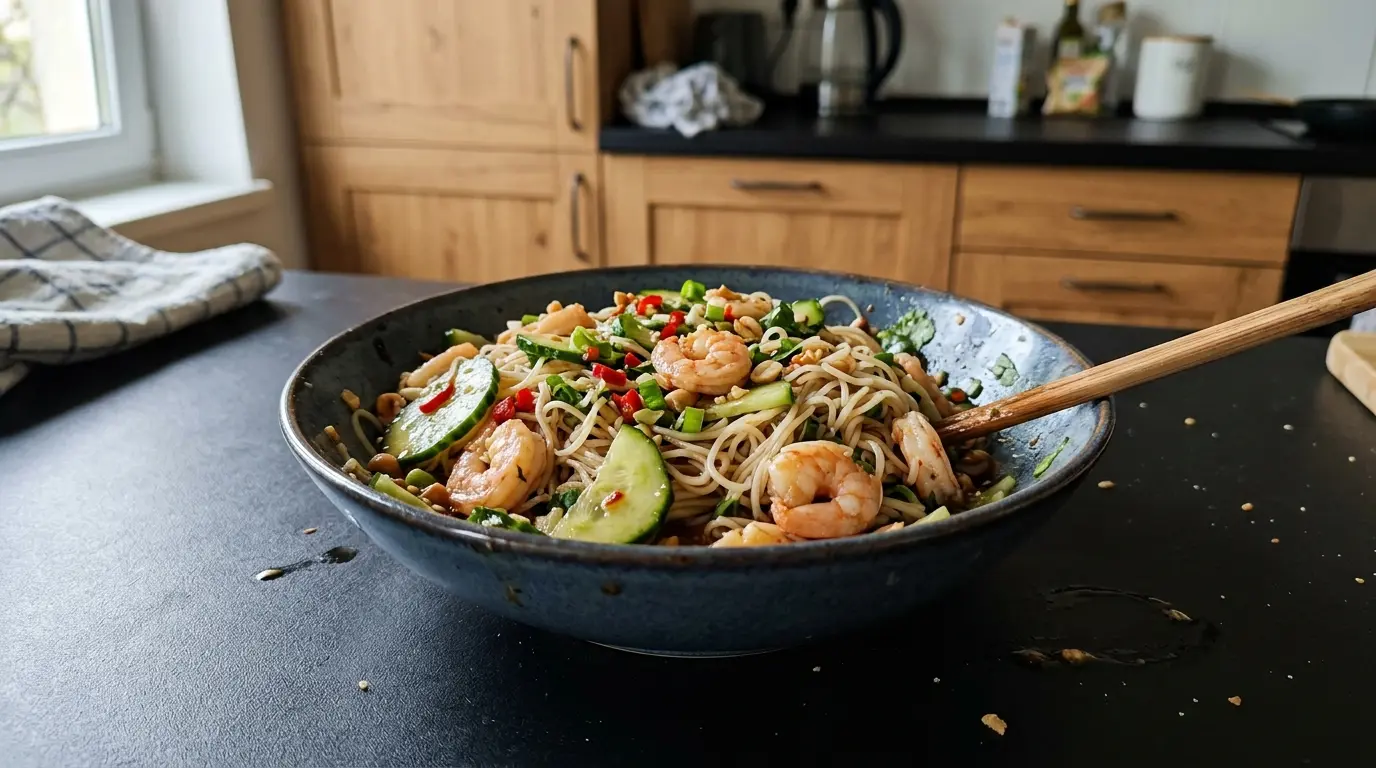
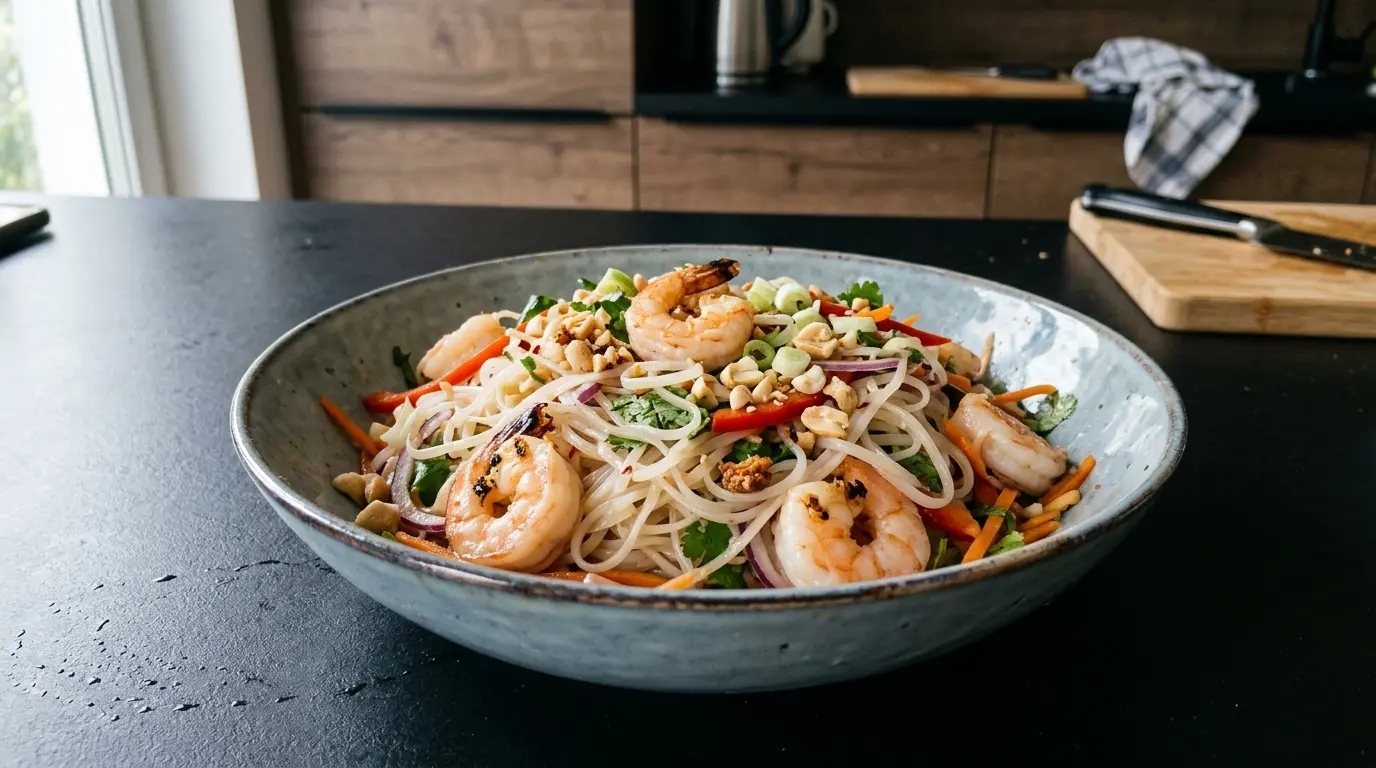
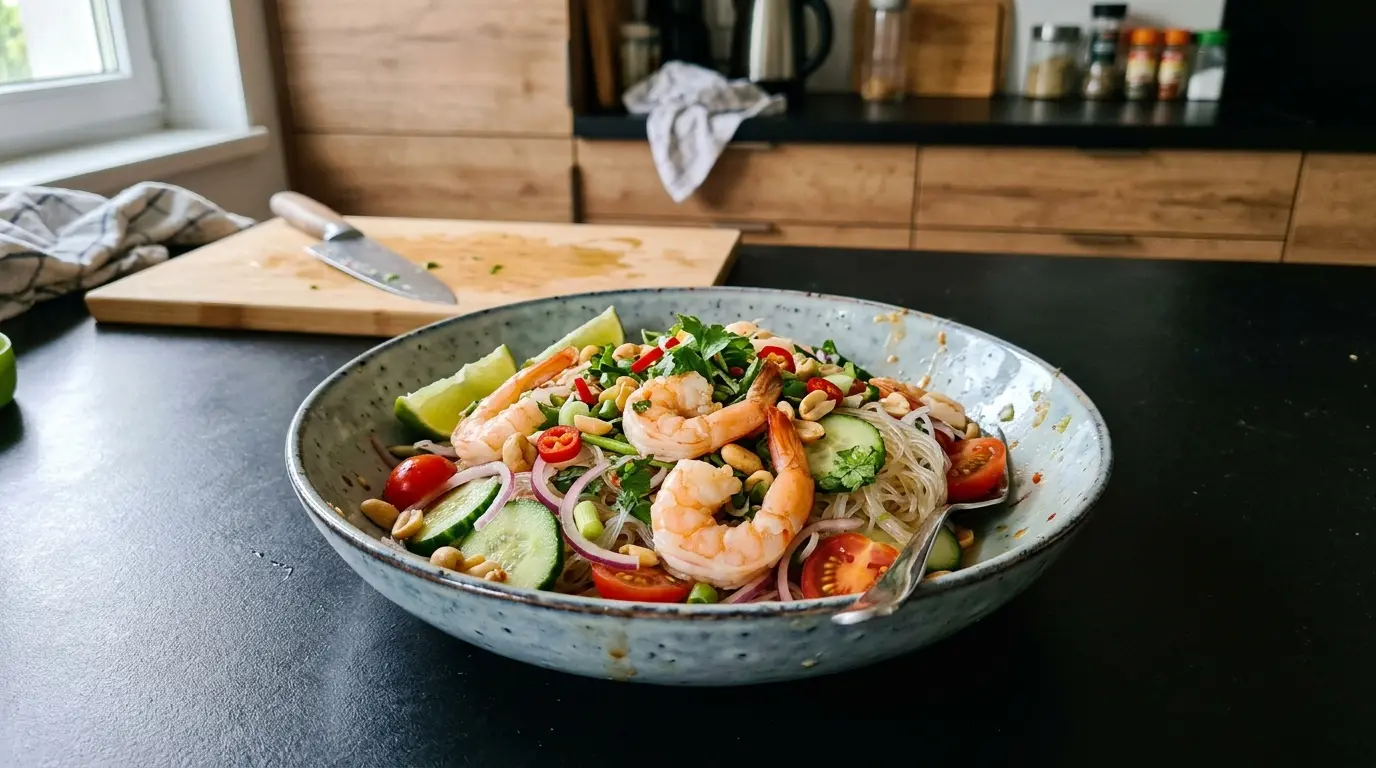
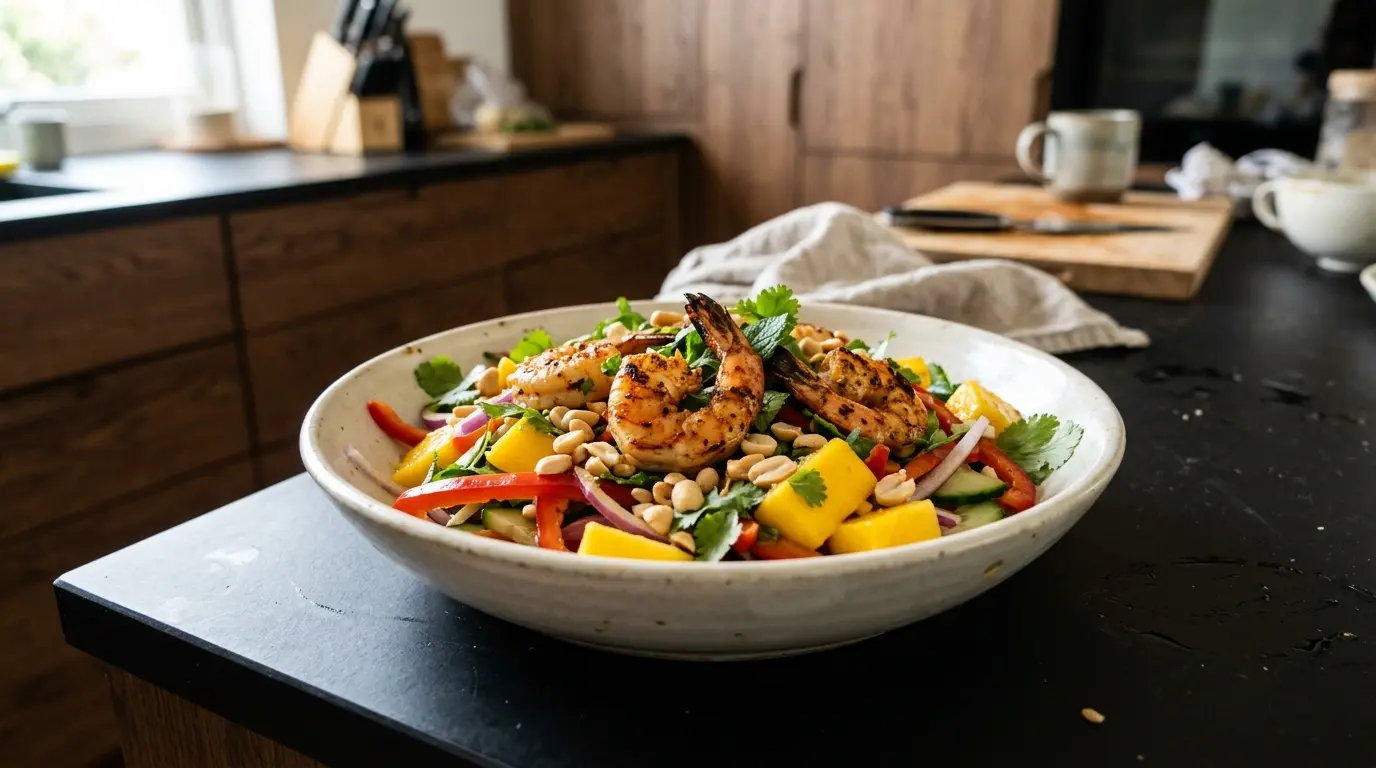
Korean Rice Noodle Salad with Shrimp Recipe
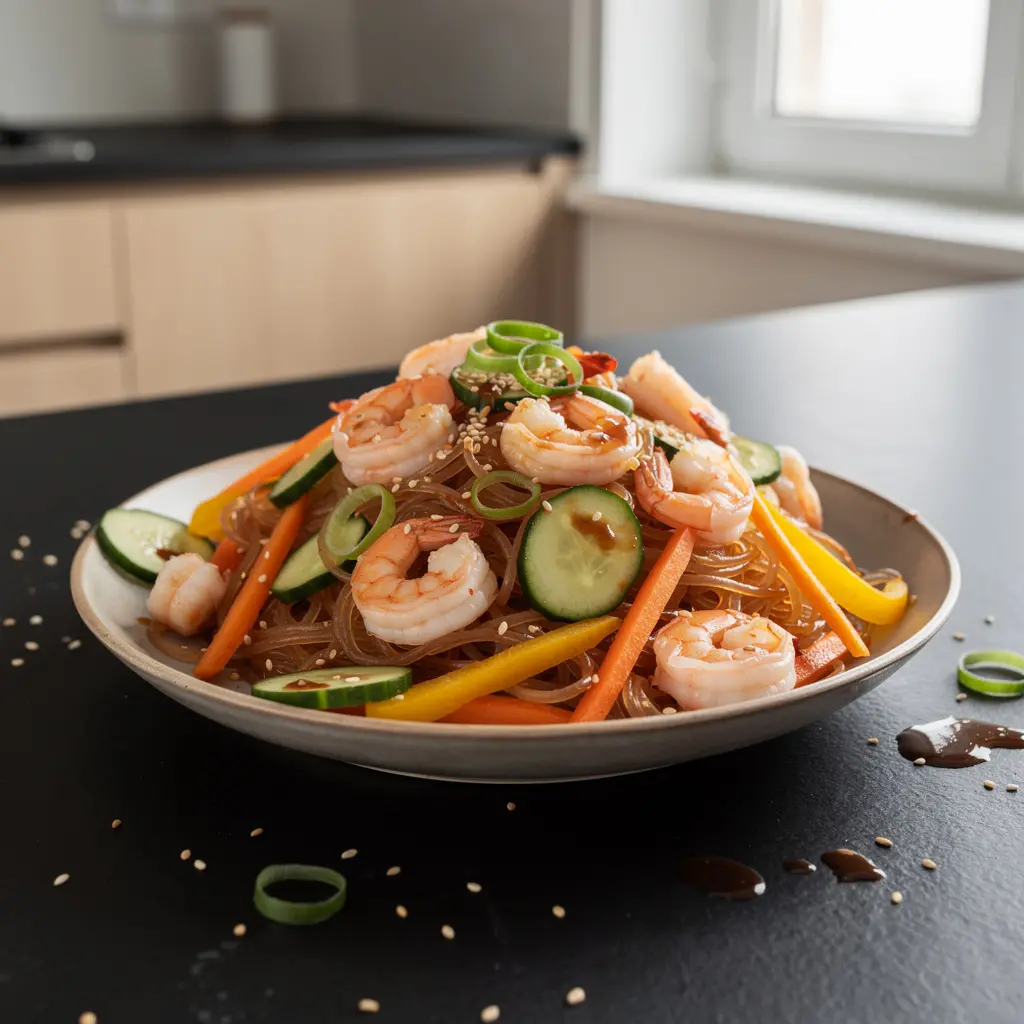
A light, colorful salad with rice noodles, juicy shrimp, and crunchy vegetables in a spicy-sour dressing. In Korea, seafood dishes are very popular, especially in coastal cities where fresh shrimp are an everyday staple. This salad is a bit like Thai noodle salads, but with a more sesame-and-soy character.
This salad combines Korean flavors with the lightness of a noodle salad: spicy gochujang, aromatic sesame oil, and soy sauce meet crunchy vegetables and juicy shrimp. It’s quick to make, looks impressive on the table, and is perfect for warm days when you want something refreshing but still satisfying.
Chef's tips
Don’t overcook the rice noodles or the shrimp—both should stay tender. If the noodles clump together after cooling, briefly rinse them with cold water and drain well before mixing with the dressing. Toast the sesame seeds in a dry pan just before serving for maximum aroma.
How to serve
Serve in deep bowls so the dressing collects at the bottom and coats the noodles well when mixed. You can add lime wedges on the side for extra acidity and a few extra chili flakes for those who like more heat.
Ingredients
- rice noodles thin, vermicelli type - 150 g
- shrimp peeled, raw or thawed if frozen - 250 g
- cucumber fresh - 1 piece
- carrot medium - 1 piece
- yellow bell pepper - 0.5 pieces
- spring onion - 3 pieces
- garlic - 2 cloves
- soy sauce for the dressing - 3 tablespoons
- rice vinegar - 2 tablespoons
- sesame oil toasted - 1.5 tablespoon
- gochujang paste for heat, you can use less - 1 tablespoon
- sugar or honey - 1 teaspoon
- vegetable oil for frying the shrimp - 1 tablespoon
- sesame seeds toasted - 1 tablespoon
- salt to taste
- black pepper to taste
Preparation
- Pour boiling water over the rice noodles in a large bowl, cover with a plate, and set aside for 5–7 minutes until softened. Drain in a colander and rinse with cold water to stop the cooking and prevent sticking.
- Pat the shrimp dry with paper towels and remove the tails if there are any. Lightly season with salt and pepper.
- Slice the cucumber into thin half-moons. Peel the carrot and cut into thin matchsticks or grate on a coarse grater. Cut the pepper into thin strips. Slice the spring onion.
- Finely chop the garlic or press it through a garlic press.
- In a small bowl, make the dressing: mix the soy sauce, rice vinegar, sesame oil, gochujang paste, sugar, and garlic. Stir until the paste and sugar dissolve.
- Heat the vegetable oil in a pan over medium-high heat. Add the shrimp and fry for 3–4 minutes, stirring, until they turn pink and opaque. Do not cook them too long or they will become rubbery. Set aside to cool slightly.
- In a large bowl, combine the rice noodles, cucumber, carrot, pepper, spring onion, and shrimp. Pour over the dressing and gently toss with tongs or two forks.
- Taste and, if needed, season with salt or a little more soy sauce. Sprinkle with toasted sesame seeds and serve immediately or after briefly chilling in the fridge.
Storage
No storage information available for this dish.
I like to make this salad for casual evenings with friends—it’s easy to scale up and can be served slightly chilled, so you don’t have to worry about last-minute cooking. It’s also a great way to introduce people to gochujang in a friendly, approachable way.