Korean Pork Meatballs in Tomato–Gochujang Sauce Recipe
These tender meatballs in a thick, lightly spicy tomato sauce are a Korean twist on the classic European meatballs in sauce. In Korea, dishes like this often appear in kids’ lunchboxes because they reheat well and taste great the next day too. The combination of tomatoes and gochujang gives the sauce depth and gentle heat, while still being friendly for family members who don’t enjoy very spicy food.
A familiar, comforting meatball dish lifted with Korean flavors: gochujang and soy sauce add depth and gentle heat without making the sauce overwhelmingly spicy, so it suits both adventurous eaters and kids.
Chef's tips
Knead the meat mixture well until it becomes sticky; this helps the meatballs hold their shape without adding too many breadcrumbs. Browning the meatballs thoroughly before simmering in the sauce builds extra flavor into the final dish.
How to serve
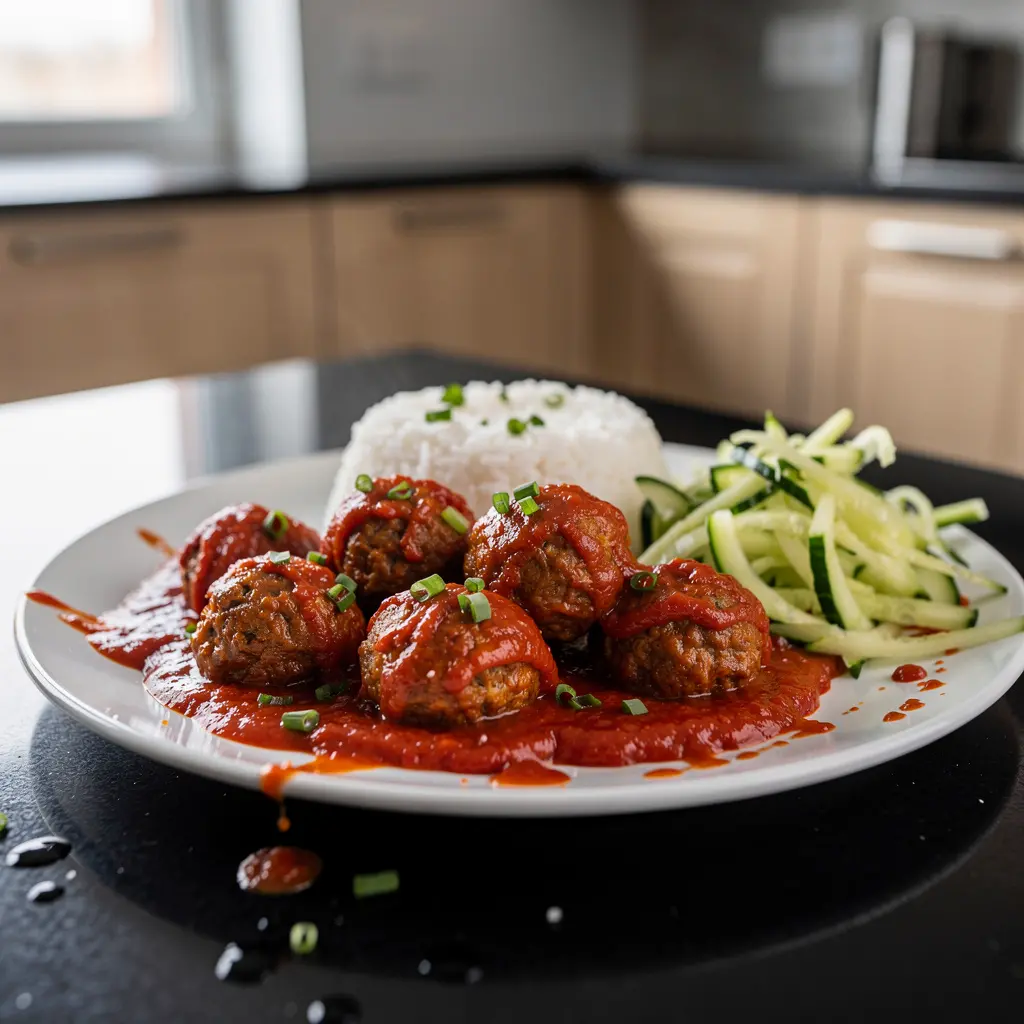
Serve in deep bowls with plenty of sauce over steamed rice, topped with fresh chives or spring onions. Add a quick cucumber salad with rice vinegar and sesame oil, or a simple cabbage slaw, for crunch and freshness.
Ingredients
- ground pork preferably from shoulder, not too lean - 500 g
- onion half for the meatballs, half for the sauce - 1 piece
- garlic finely chopped - 3 cloves
- breadcrumbs for thickening the meat mixture - 3 tablespoons
- egg to bind the meatballs - 1 piece
- salt half for the meat, the rest for the sauce - 0.75 teaspoons
- black pepper to season the meat and the sauce - 0.5 teaspoons
- tomato passata smooth sieved tomatoes - 400 ml
- gochujang Korean chili paste - 1.5 tablespoons
- soy sauce for the sauce - 2 tablespoons
- sugar balances the acidity of the tomatoes - 1 teaspoon
- vegetable oil for frying the meatballs and onion - 3 tablespoons
- water to thin the sauce - 100 ml
- chives chopped, for serving - 2 tablespoons
- rice cooked, for serving - 250 g
Preparation
- Finely chop half of the onion and transfer it to a large bowl. Add the ground pork, 1 clove of chopped garlic, breadcrumbs, egg, 0.5 teaspoon of salt and half of the pepper. Knead with your hand for 2–3 minutes, until the mixture is sticky and uniform.
- With wet hands, shape the meat mixture into small meatballs about the size of a walnut. Arrange them on a plate.
- Heat 2 tablespoons of oil in a large pan over medium heat. Place the meatballs in a single layer and fry for 6–8 minutes, turning gently, until browned on all sides. They don’t need to be fully cooked through yet; they will finish cooking in the sauce. Transfer them to a plate.
- Finely chop the remaining half of the onion. In the same pan, add 1 tablespoon of oil, add the onion and fry for 3–4 minutes over medium heat, until it softens and becomes slightly translucent. Add the remaining garlic and fry for 1 more minute.
- Pour in the tomato passata and water, add the gochujang, soy sauce, sugar, the remaining salt and pepper. Mix thoroughly so the gochujang paste dissolves. Bring the sauce to a gentle simmer.
- Add the browned meatballs to the sauce, reduce the heat to low and cook covered for 12–15 minutes. Every few minutes gently shake the pan so the sauce doesn’t stick and the meatballs don’t fall apart.
- When the sauce thickens to the consistency of heavy cream and lightly coats the meatballs, remove the pan from the heat. Taste and, if needed, adjust the seasoning with a little more salt or sugar.
- Serve the meatballs hot, sprinkled with chives, with cooked rice and a simple cucumber or cabbage slaw.
Storage
No storage information available for this dish.
These meatballs are a great way to introduce gochujang to people who are new to Korean flavors. The tomato base keeps the taste familiar, while the chili paste adds just enough character to make the dish feel special.