Korean Kimchi and Bacon Pancakes in a Pan Recipe
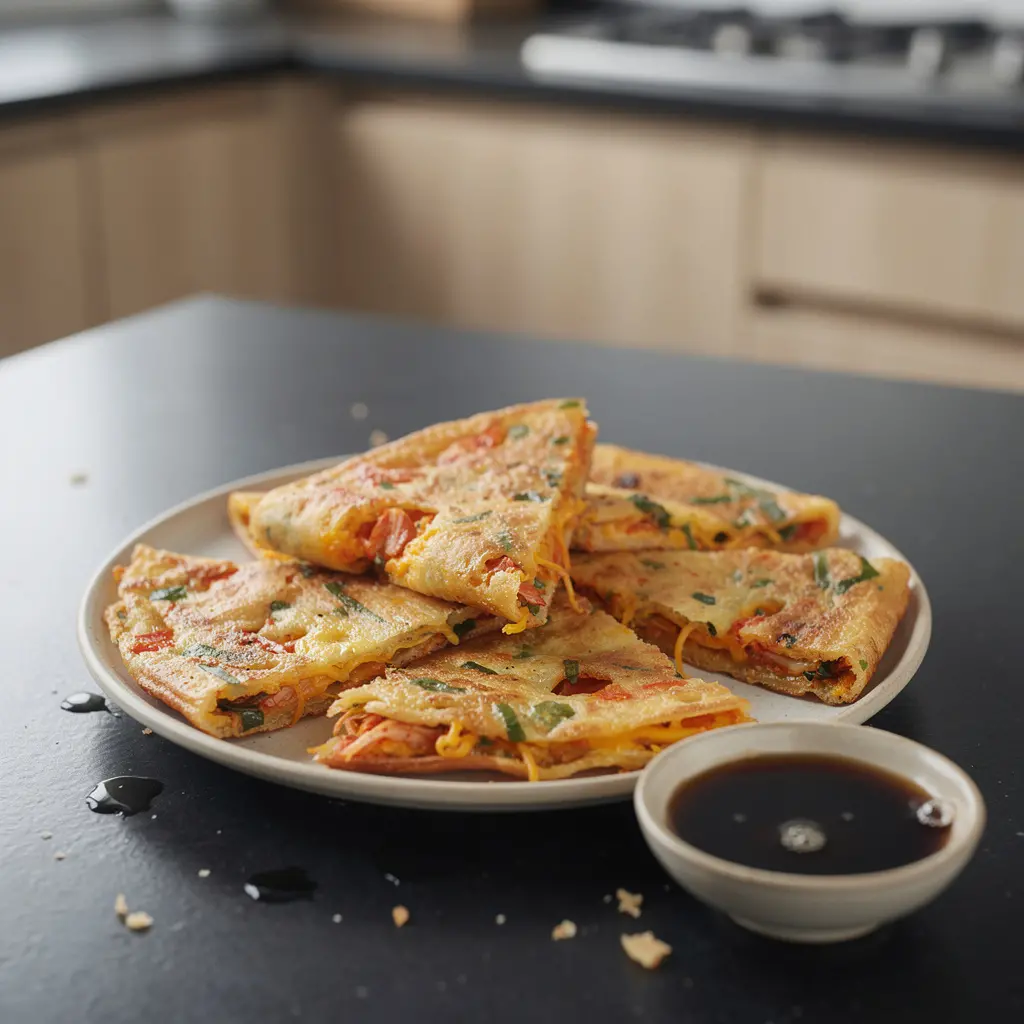
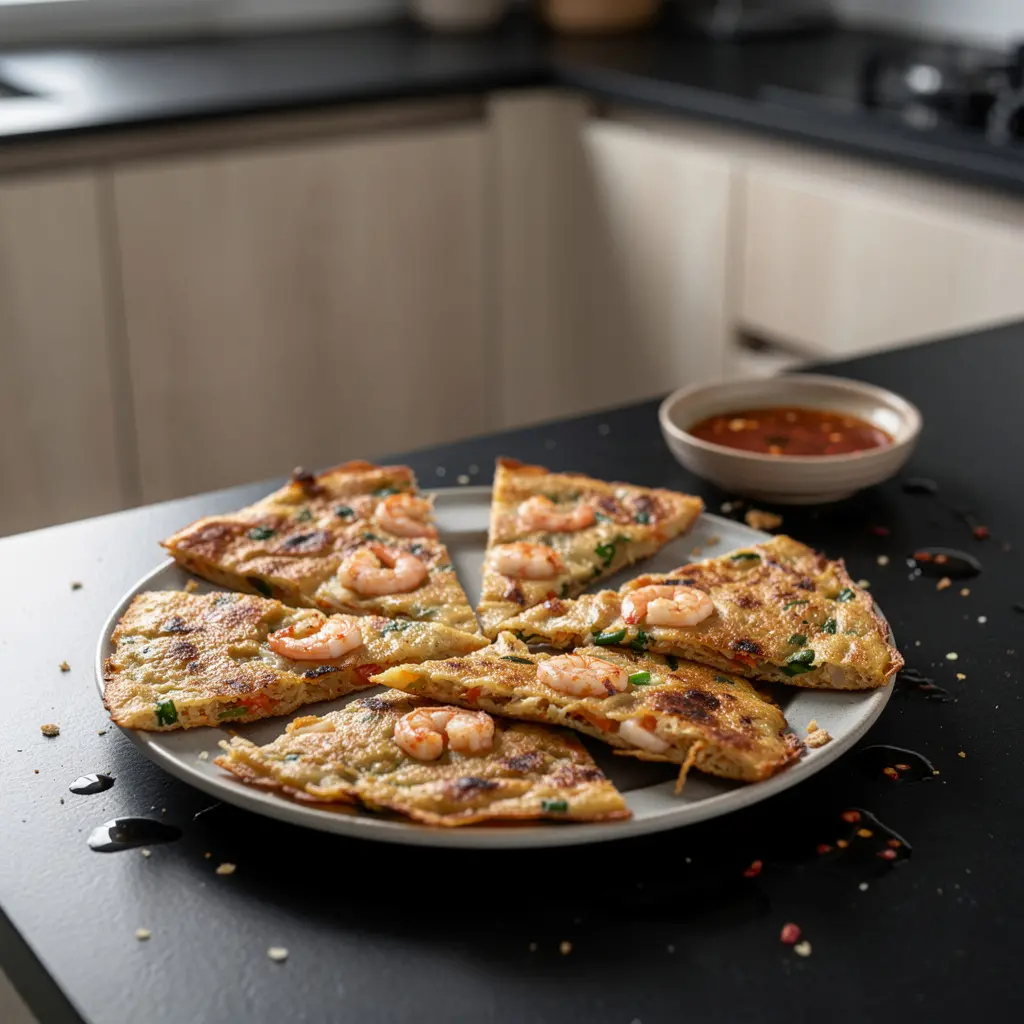
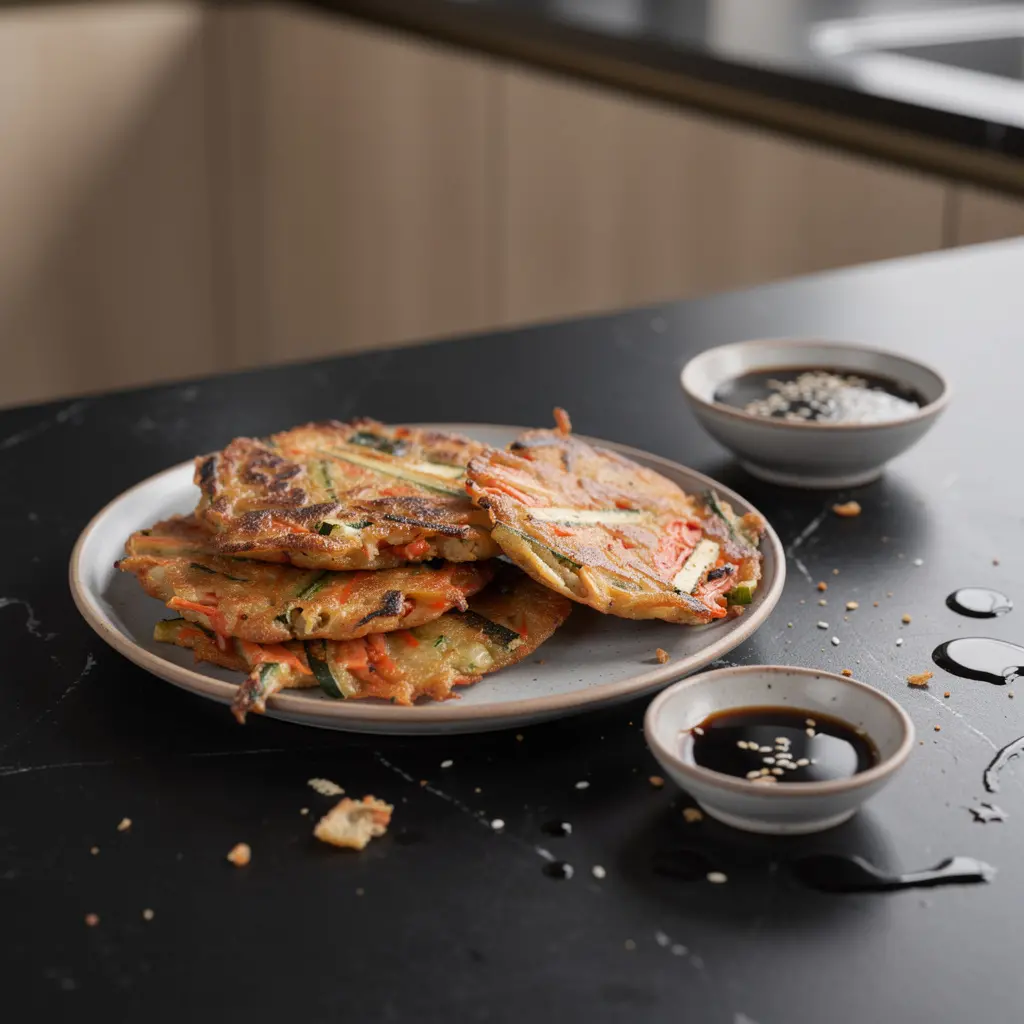
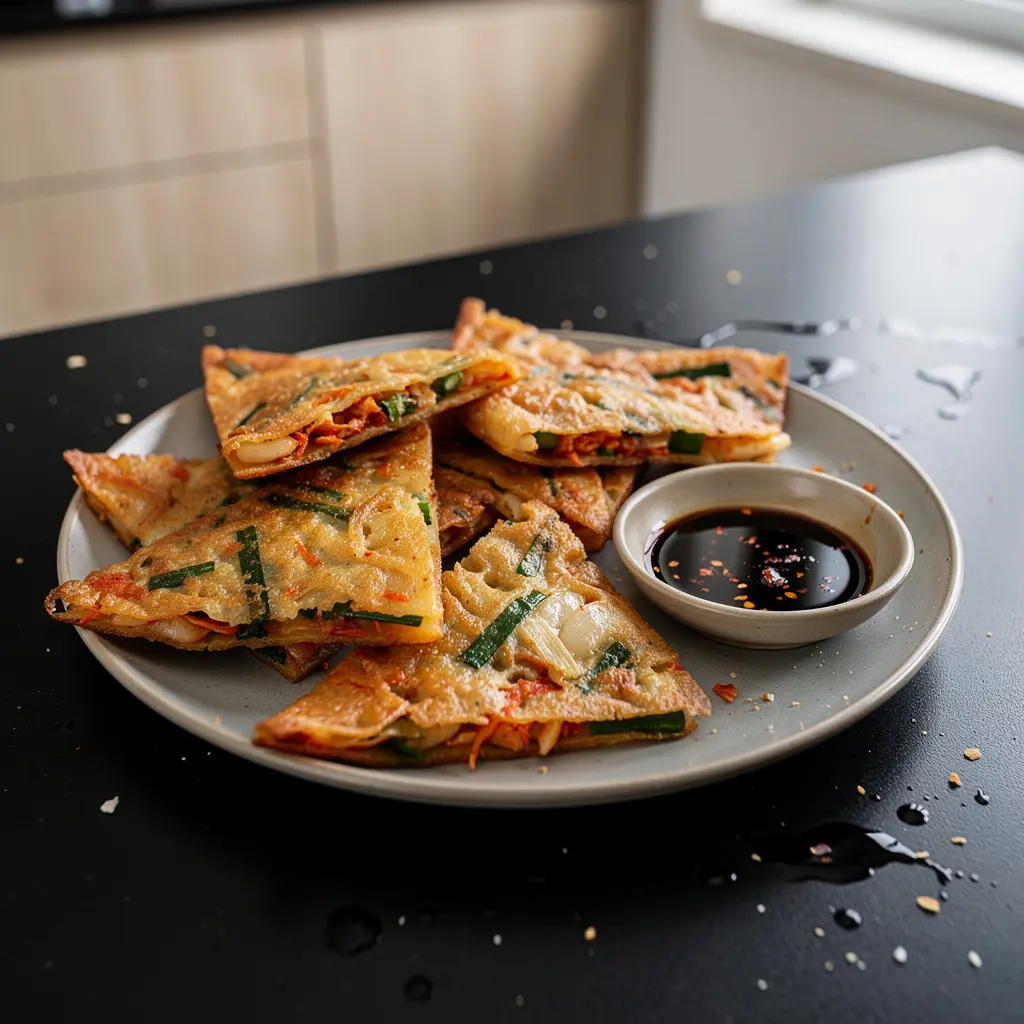
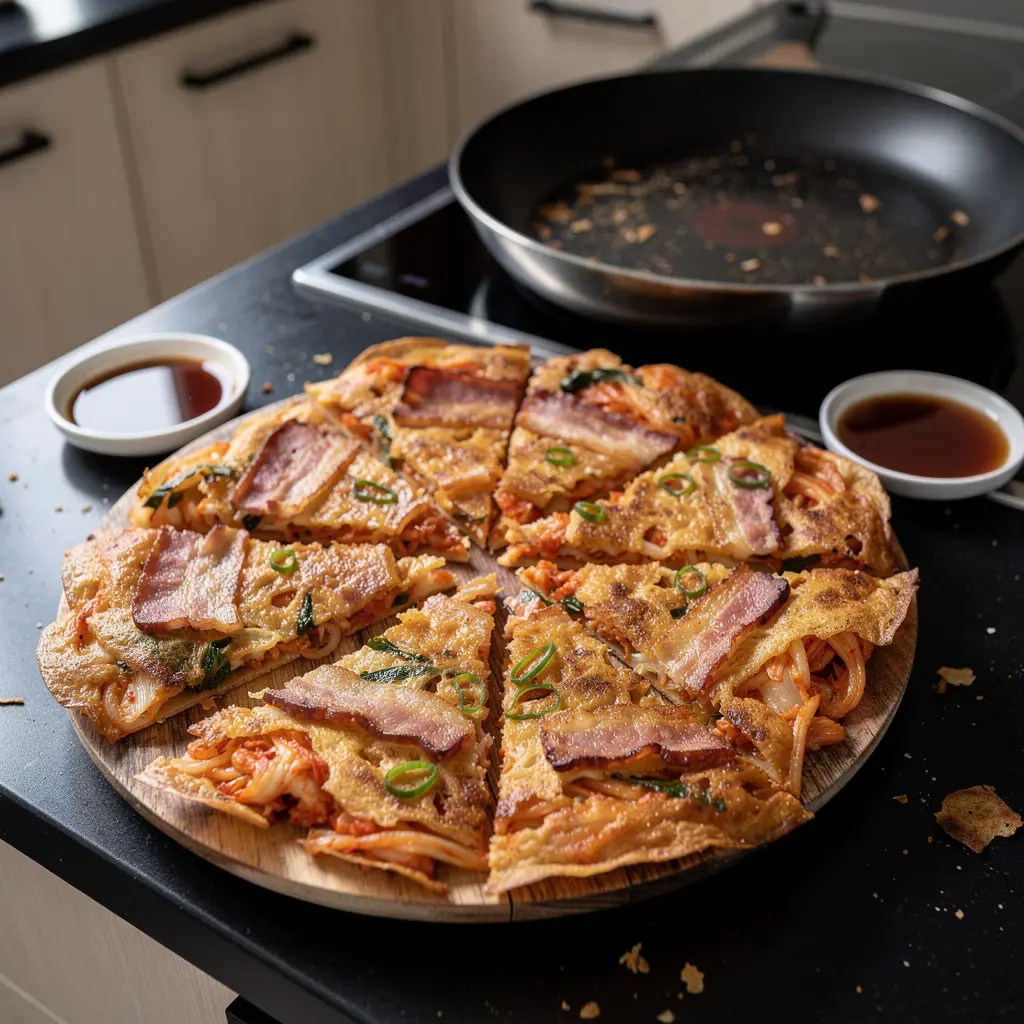
These hearty kimchi and bacon pancakes are more of a “one-pan dinner” than a delicate dessert. In Korea, this kind of pancake often appears on rainy days, when everyone craves something warm and a little greasy to share. The flavor is like a cross between a potato pancake and a thin-crust pizza, but in a spicy, cabbage-based version.
Kimchi jeon to domowy klasyk kuchni koreańskiej, często przygotowywany z lekko przefermentowanego kimchi, żeby zużyć zapasy. Placki smaży się na dużej patelni i kroi do wspólnego jedzenia przy jednym talerzu.
These Korean-style kimchi pancakes combine the comforting crispiness of a potato pancake with the umami depth of fermented cabbage and smoky bacon. They are perfect for sharing, easy to make in one pan, and ideal for using up leftover kimchi in a new, satisfying way.
Dlaczego ta wersja działa
- Mieszanka mąki pszennej i ziemniaczanej daje cienkie, ale sprężyste ciasto z chrupiącymi brzegami.
- Dodatek płynu z kimchi wzmacnia smak i kolor bez konieczności dodatkowych przypraw.
- Boczek układany na dnie patelni tworzy chrupiący, słony „spód” jak w pizzy.
Chef's tips
Use well-fermented, strong-tasting kimchi for the best flavor—the sourness and spice mellow slightly during frying. Adjust the amount of kimchi liquid depending on how thick your batter is; it should be pourable but not watery. A heavy, well-heated pan helps you get a deeply golden, crispy crust.
How to serve
Serve the pancakes cut into bite-sized pieces with a simple soy dipping sauce or your favorite Korean-style sauce. They work well as a snack with drinks, as a starter for an Asian-inspired dinner, or as a quick main dish with a side of fresh cucumber salad or pickled vegetables.
Na co uważać
- Zbyt gruby placek będzie miękki i gumowy w środku – rozprowadzaj ciasto cienko.
- Nie smaż na zbyt dużym ogniu, bo boczek się przypali, zanim środek zdąży się ściąć.
- Nie dodawaj zbyt dużo płynu z kimchi – zbyt rzadkie ciasto będzie się rwało przy obracaniu.
Zamienniki
- Boczek możesz zastąpić cienko krojonym surowym boczkiem wędzonym lub plasterkami bekonu.
- Mąkę ziemniaczaną da się zastąpić mąką kukurydzianą lub ryżową dla podobnej chrupkości.
- Jeśli chcesz wersję bezmięsną, pomiń boczek i dodaj trochę więcej oleju na patelnię.
Ingredients
- kimchi - 200 g
- bacon - 120 g
- wheat flour - 120 g
- potato starch - 20 g
- water - 220 ml
- egg - 1 piece
- onion - 0.5 pieces
- chives - 3 tablespoons
- soy sauce - 1 tablespoon
- vegetable oil - 3 tablespoons
- sesame oil - 1 teaspoon
- pepper - 0.25 teaspoons
Preparation
- Lightly squeeze excess liquid from the kimchi over a bowl, but do not discard the liquid. Cut the cabbage into smaller, bite-sized pieces.
- Peel the onion and slice it into thin wedges. Cut the chives into pieces about 2 cm long. Slice the bacon into strips about 1–2 cm wide.
- In a bowl, mix the wheat flour, potato starch, egg, water, soy sauce, sesame oil, and about 2 tablespoons of kimchi liquid. Stir until you get a smooth, fairly thin batter, similar to crepe batter.
- Add the chopped kimchi, onion, chives, and pepper to the batter. Gently mix so the ingredients are evenly distributed.
- Heat 1 tablespoon of oil in a large frying pan over medium heat. Place a few strips of bacon on the hot oil, forming a thin layer. Pour about 1/3 of the batter over the bacon, spreading it thinly over the entire surface of the pan.
- Fry the pancake for 4–5 minutes, until the bottom is golden and crispy and the edges start to curl slightly. Then carefully flip it to the other side, using a large spatula or a plate to help, and fry for another 3–4 minutes.
- Transfer the cooked pancake to a board and cut it into squares or triangles. Repeat with the remaining batter and bacon, adding a little oil to the pan each time.
- Serve the hot pancakes immediately after frying, preferably with a simple dipping sauce: mix 2 tablespoons soy sauce with 1 tablespoon water, 1 teaspoon rice vinegar, and a pinch of sugar.
Storage
Po schłodzeniu placki miękną, a brzegi tracą chrupkość. Najlepiej odgrzewać je na suchej patelni lub w piekarniku, aż znów staną się ciepłe i lekko chrupiące.
This dish is inspired by Korean pajeon and kimchi-jeon—classic rainy-day comfort foods. It’s a great introduction to cooking with kimchi at home and a fun way to bring a bit of Korean street-food atmosphere into your kitchen.