Korean Cold Rice Noodle Salad with Chicken Recipe
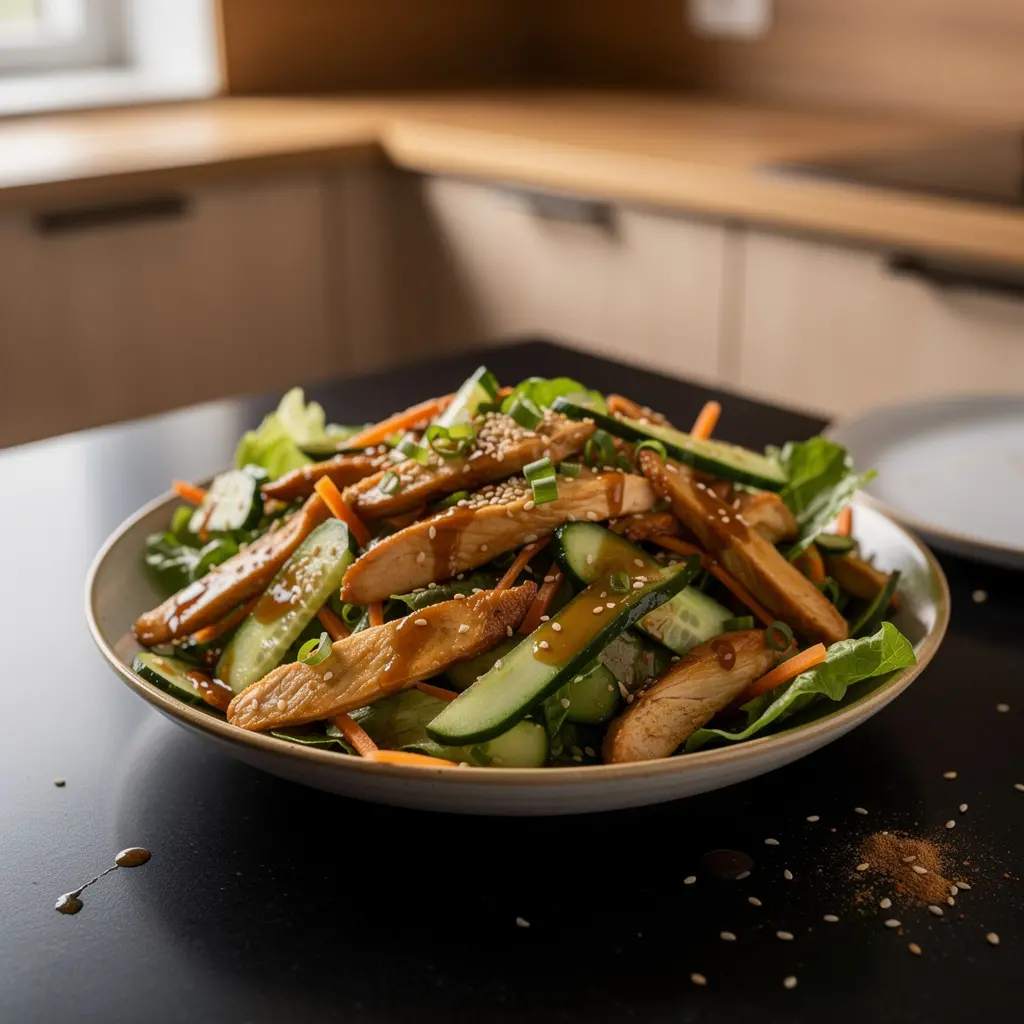
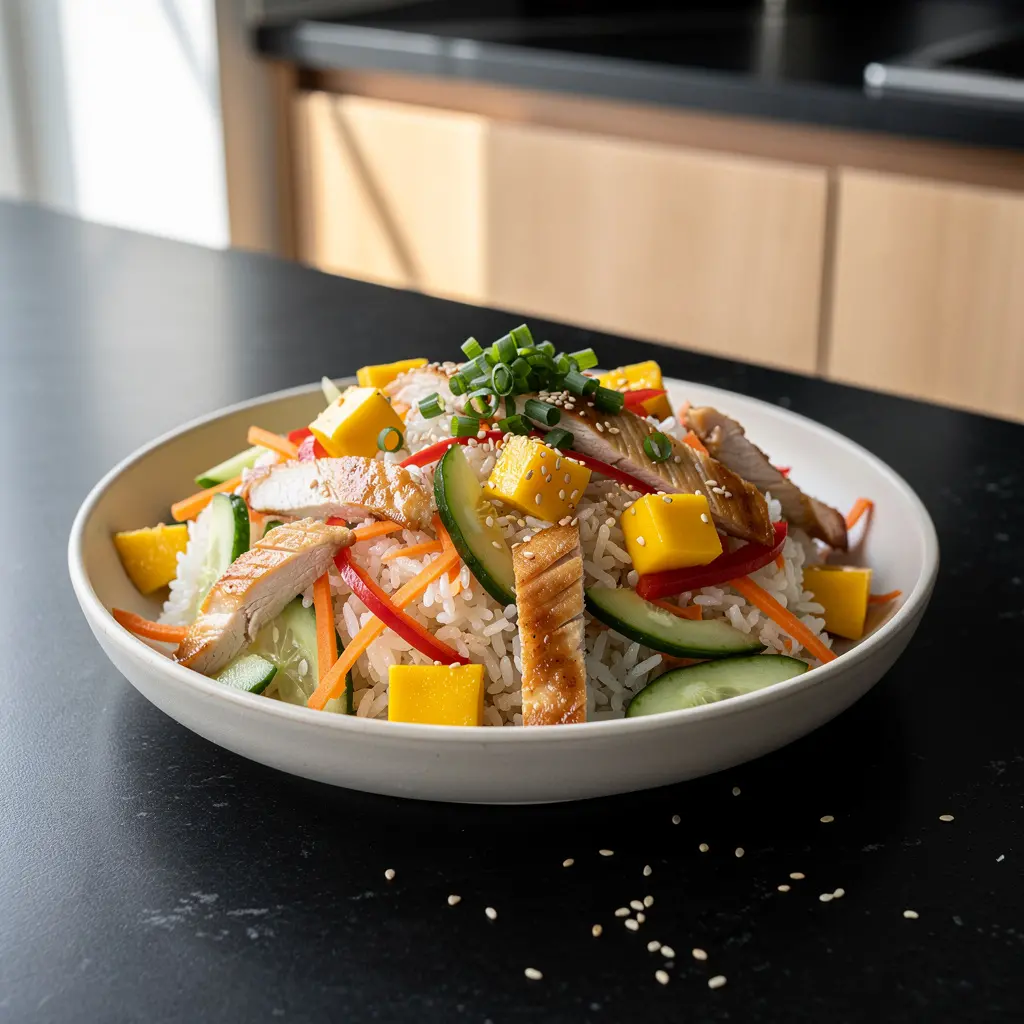
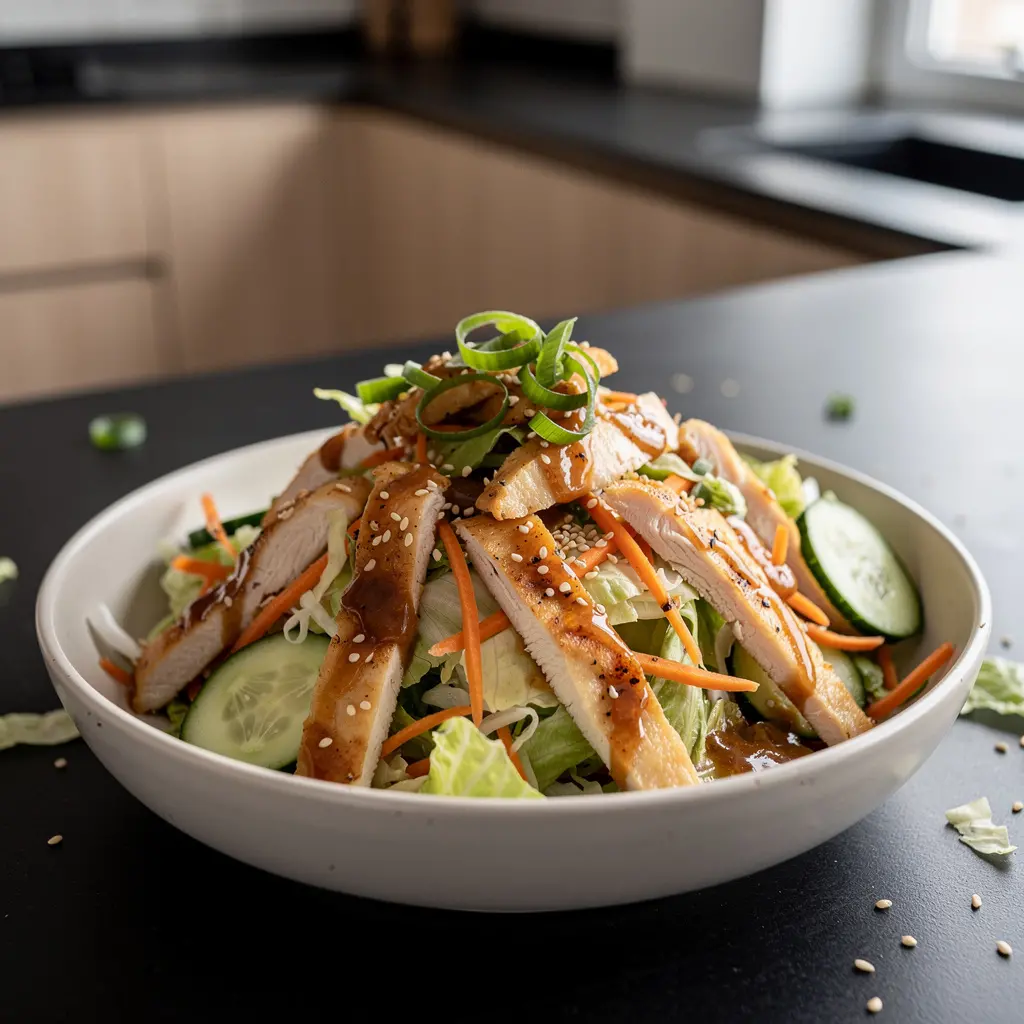
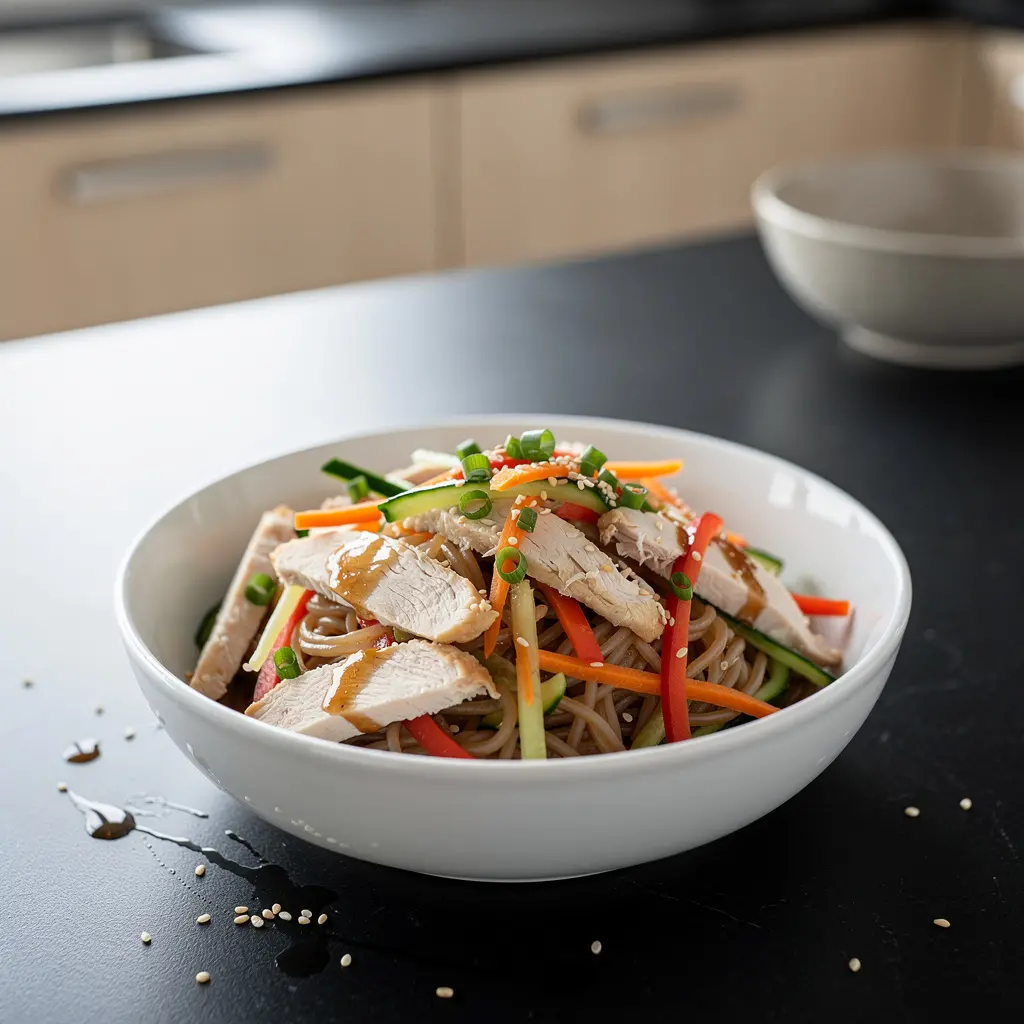
This refreshing salad with rice noodles, chicken, and vegetables is Korea’s answer to Mediterranean-style summer pasta with vegetables. In Korea, similar dishes are eaten during heatwaves, when no one feels like standing by the stove for long. A dressing based on soy sauce, vinegar, and a touch of chili makes the salad light yet full of flavor.
This salad combines the lightness of rice noodles with juicy chicken and crisp vegetables in a Korean-style soy and vinegar dressing. It’s quick to prepare, perfect for hot days, and offers a refreshing alternative to classic pasta salads.
Chef's tips
Do not overcook the rice noodles—keep an eye on them and rinse with cold water as soon as they soften so they stay pleasantly springy. For deeper flavor, you can briefly marinate the shredded chicken in a spoonful of the dressing before mixing it with the noodles and vegetables.
How to serve
Serve the salad well chilled, optionally with extra chili flakes and lime wedges on the side so everyone can adjust the acidity and heat to their taste. It also works well in lunch boxes; just keep the dressing separate and mix shortly before eating.
Ingredients
- chicken breast skinless, one large single breast - 250 g
- rice noodles thin, vermicelli type - 150 g
- cucumber fresh, cut into thin matchsticks - 1 piece
- carrot coarsely grated or cut into thin matchsticks - 1 piece
- bell pepper red or yellow, cut into thin strips - 0.5 pieces
- chives chopped - 2 tablespoons
- soy sauce for the dressing - 3 tablespoons
- rice vinegar adds acidity - 2 tablespoons
- honey or sugar - 1 tablespoon
- sesame oil for the dressing - 1 tablespoon
- chili flakes optional, for a mild heat - 0.5 teaspoons
- garlic grated or very finely chopped - 1 clove
- sesame seeds toasted in a dry pan - 1 tablespoon
- salt for cooking the chicken - 0.25 teaspoons
Preparation
- Place the chicken breast in a small pot, cover with water so it is fully submerged, and add a pinch of salt. Bring to a gentle boil, reduce the heat, and cook for 12–15 minutes, until the meat is no longer pink in the center. Remove the chicken and set aside to cool.
- Pour boiling water over the rice noodles in a large bowl and leave for 5–7 minutes (or according to the package instructions), until they soften. Drain in a colander and rinse with cold water to stop the cooking. Set aside to drain.
- Cut the cucumber into thin matchsticks. If the skin is very tough, you can peel it first. Coarsely grate the carrot or cut it into thin matchsticks. Cut the bell pepper into thin strips and chop the chives.
- In a bowl, mix together the soy sauce, rice vinegar, honey, sesame oil, grated garlic, and chili flakes. Stir until the honey dissolves and you have a smooth dressing.
- Shred the cooled chicken with your fingers or cut it into thin strips with a knife. This way it will absorb the dressing better.
- In a large bowl, combine the rice noodles, chicken, cucumber, carrot, and bell pepper. Pour over the prepared dressing and mix thoroughly with your hands or tongs so all the ingredients are coated.
- Sprinkle the salad with toasted sesame seeds and chopped chives. Refrigerate for at least 15 minutes to let the flavors meld, then serve chilled.
Storage
No storage information available for this dish.
I like to prepare this salad on days when it’s too hot to cook. The combination of cool noodles, crunchy vegetables, and a tangy, slightly spicy dressing always feels energizing without being heavy.