Korean Chicken and Cucumber Salad with Sesame Dressing Recipe
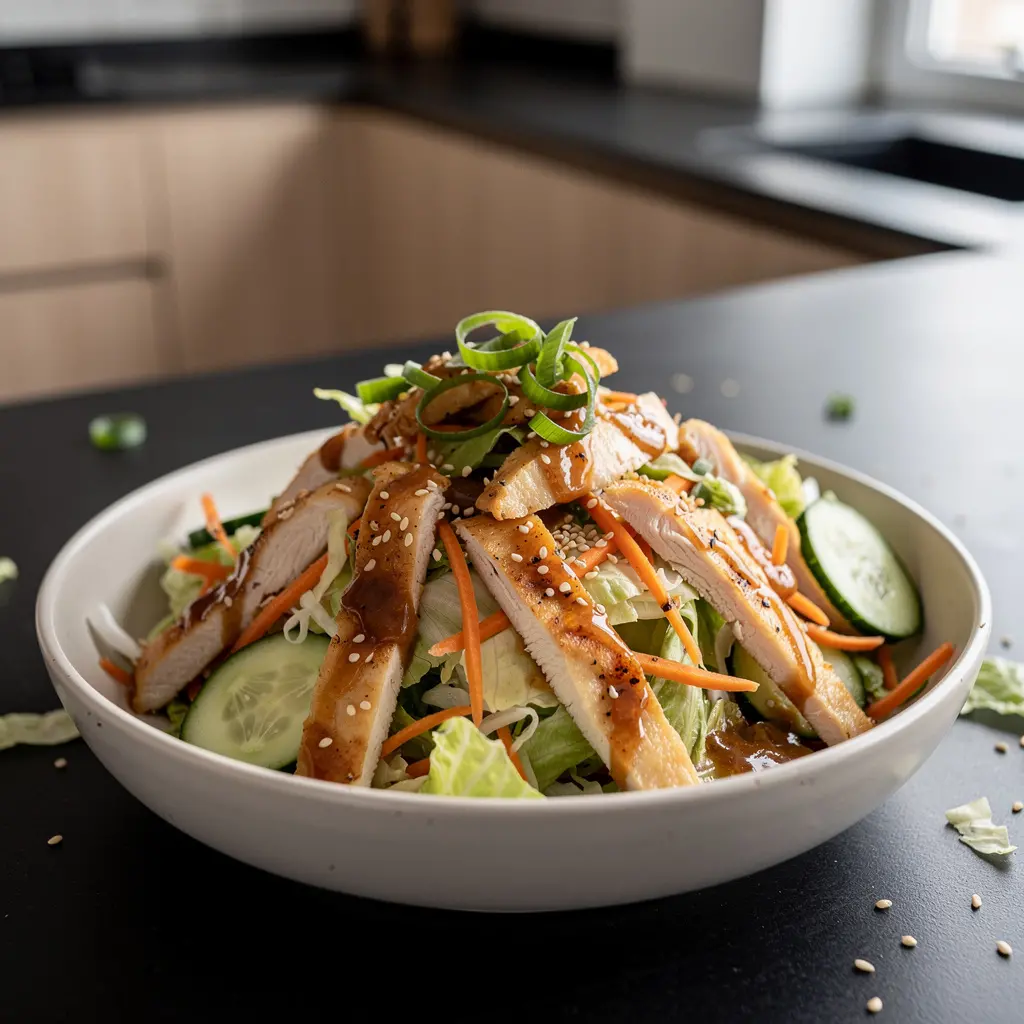
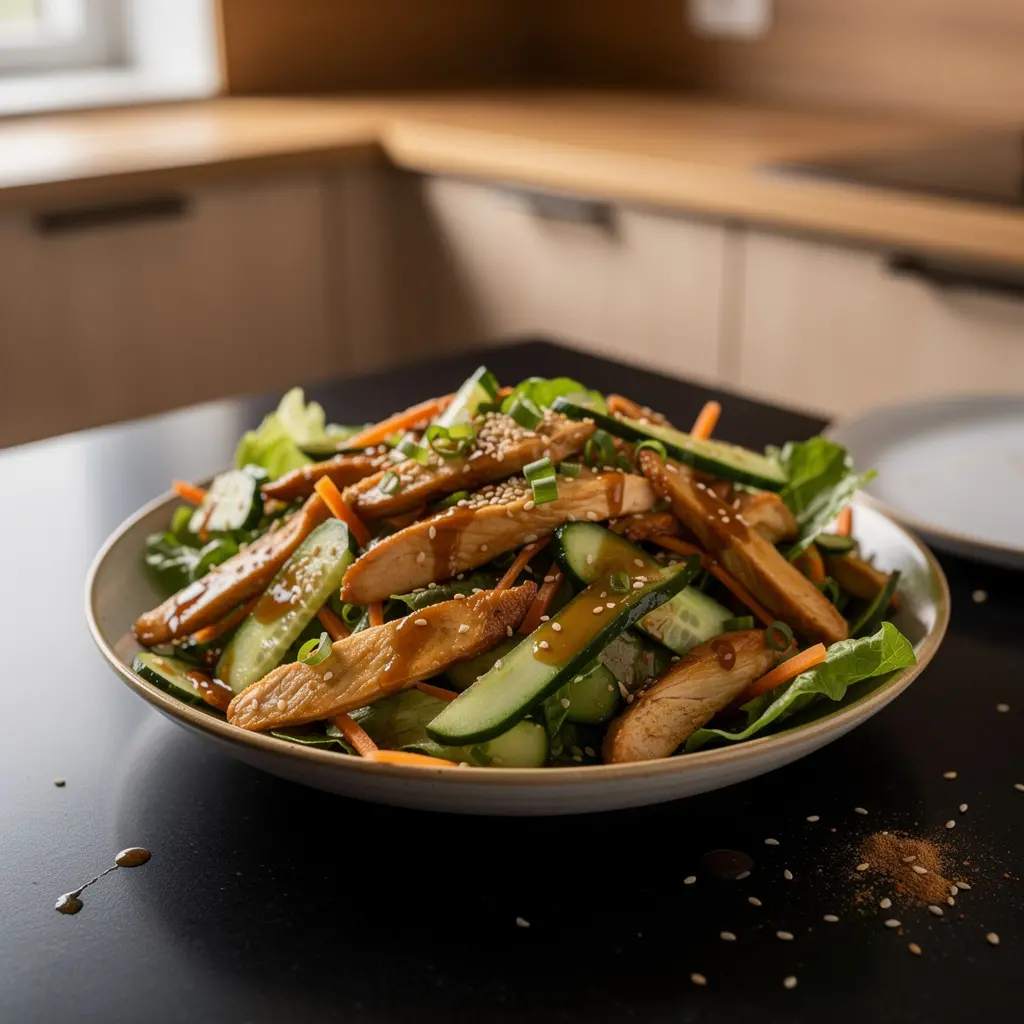
This light salad combines juicy chicken, crunchy cucumber and an aromatic sesame dressing. In Korea, similar dishes often appear as one of many small side dishes on the table, but in a European setting it can easily be a standalone lunch. The flavors are a bit like grilled chicken salads, but with a distinct sesame and soy sauce accent.
This salad combines Korean-inspired flavors with an easy, everyday preparation. The contrast of juicy chicken, crunchy vegetables and nutty sesame dressing makes it both light and satisfying, and it works equally well as a side dish or a standalone meal.
Chef's tips
For the best texture, cool the chicken slightly before mixing it with the vegetables so the lettuce doesn’t wilt too quickly. Removing the seedy center from the cucumber helps keep the salad crisp and prevents excess moisture from watering down the dressing.
How to serve
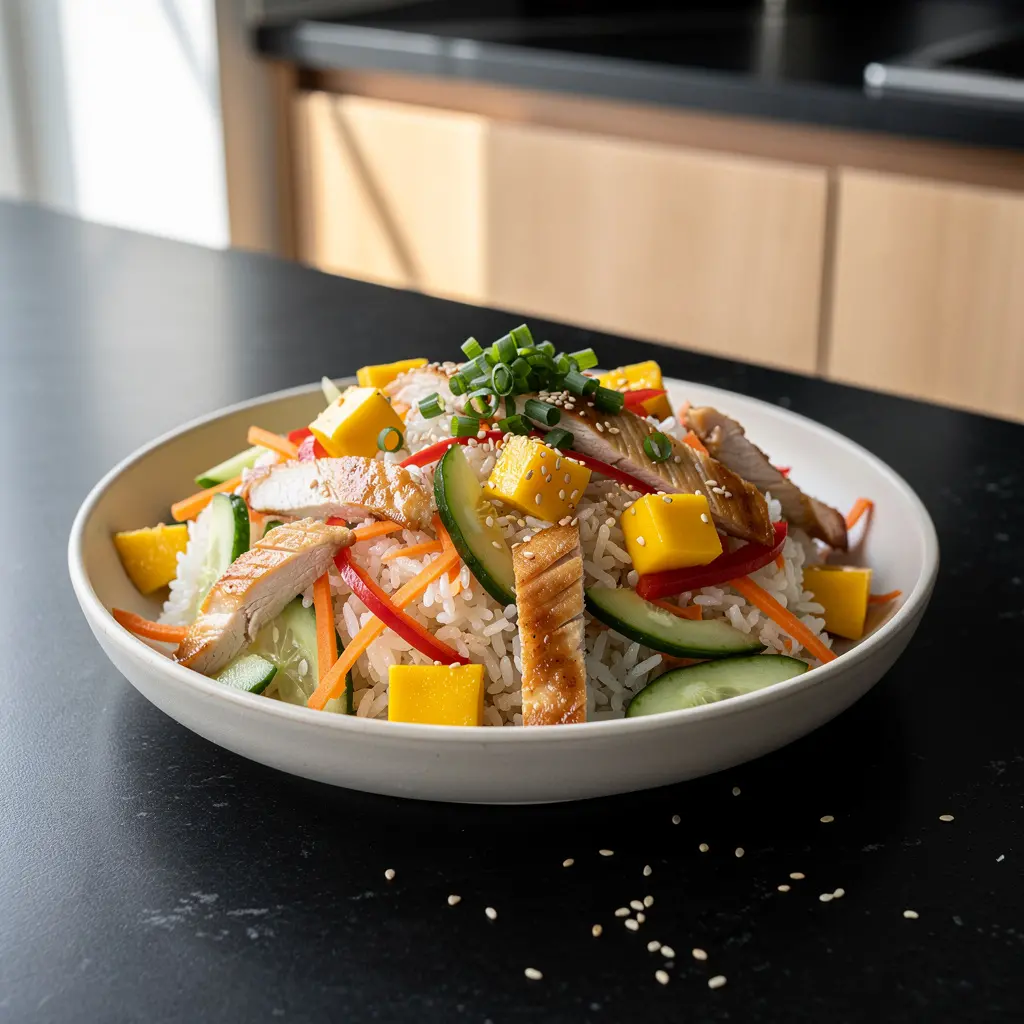
Serve in a large bowl family-style or portion into individual bowls over a small serving of warm rice. You can also pack the cooled chicken and chopped vegetables separately for lunch and add the dressing just before eating.
Ingredients
- chicken breast - 300 g
- cucumber - 1 piece
- carrot - 0.5 piece
- lettuce - 80 g
- chives finely chopped - 2 tablespoon
- soy sauce - 1.5 tablespoon
- sesame oil - 1.5 tablespoon
- rice vinegar - 1 tablespoon
- honey - 1 teaspoon
- garlic - 1 piece
- sesame seeds - 1 tablespoon
- oil for frying - 1 tablespoon
- salt - 0.25 teaspoon
- black pepper freshly ground - 0.25 teaspoon
Preparation
- Rinse the chicken breast, pat dry with a paper towel and cut into thin strips or small bite-sized pieces.
- Season the chicken with salt and pepper, mix well and set aside for a few minutes.
- Wash the cucumber, cut it in half lengthwise, scoop out the soft seedy center with a teaspoon, then slice the rest into thin half-moons or matchsticks.
- Peel the carrot and cut it into very thin matchsticks. Tear the lettuce into smaller pieces, wash and dry thoroughly (e.g. in a salad spinner or on a paper towel).
- Heat 1 tablespoon of oil in a pan over medium heat. Add the chicken pieces and fry for about 6–8 minutes, stirring often, until the meat is golden on the outside and completely white inside.
- Set the cooked chicken aside for a few minutes to cool slightly.
- In a small bowl, combine the soy sauce, sesame oil and rice vinegar. Add the honey and finely grated or pressed garlic. Mix thoroughly until the honey dissolves.
- Toast the sesame seeds in a dry pan over low heat for 2–3 minutes, stirring, until they become fragrant and lightly golden.
- In a large bowl, combine the lettuce, cucumber, carrot and cooled chicken. Pour over the sesame dressing and gently toss to avoid crushing the leaves.
- Sprinkle the salad with chopped chives and toasted sesame seeds. Serve immediately, before the lettuce softens from the dressing.
Storage
No storage information available for this dish.
This recipe is inspired by simple Korean side dishes but adapted to work as a quick, complete meal. It’s a great way to use up leftover cooked chicken and an easy introduction to sesame and soy-based dressings if you’re new to Korean flavors.