Kimchi jjigae with pork – spicy kimchi soup Recipe
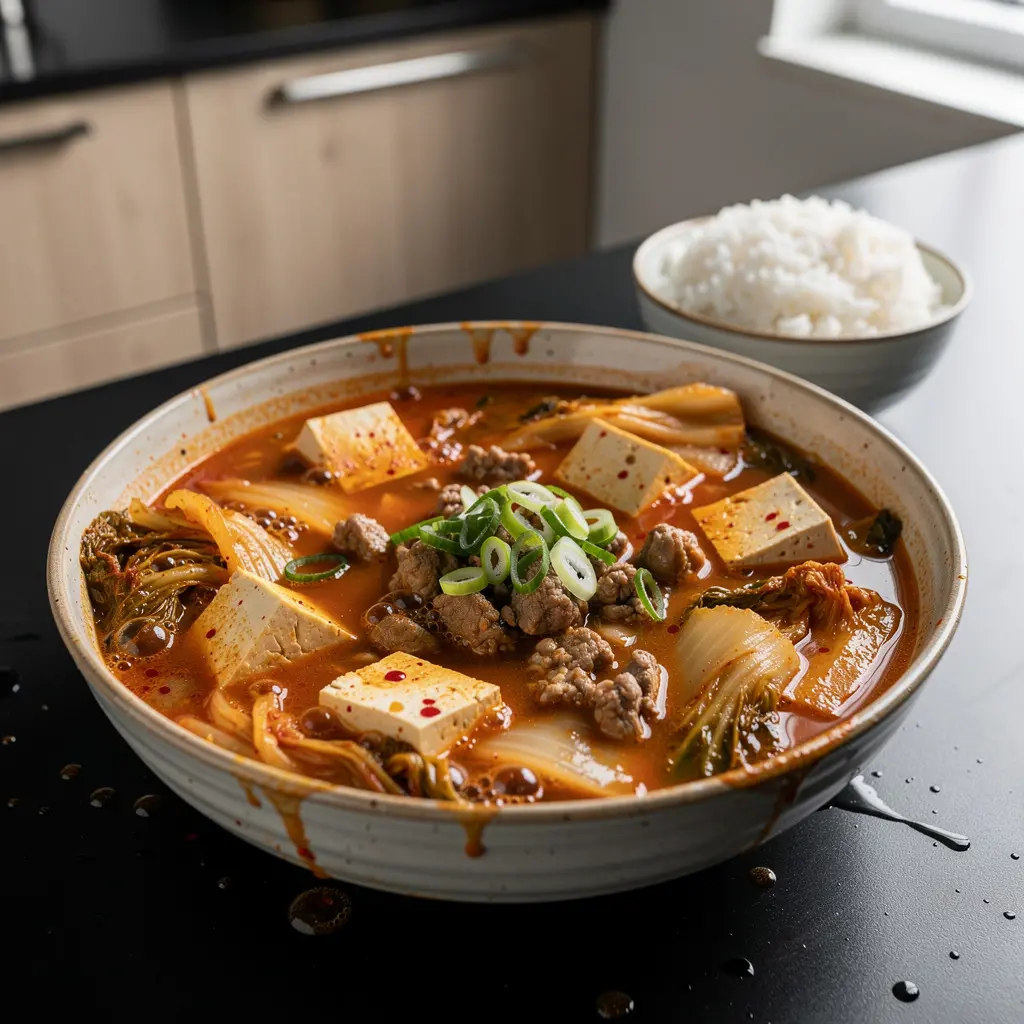
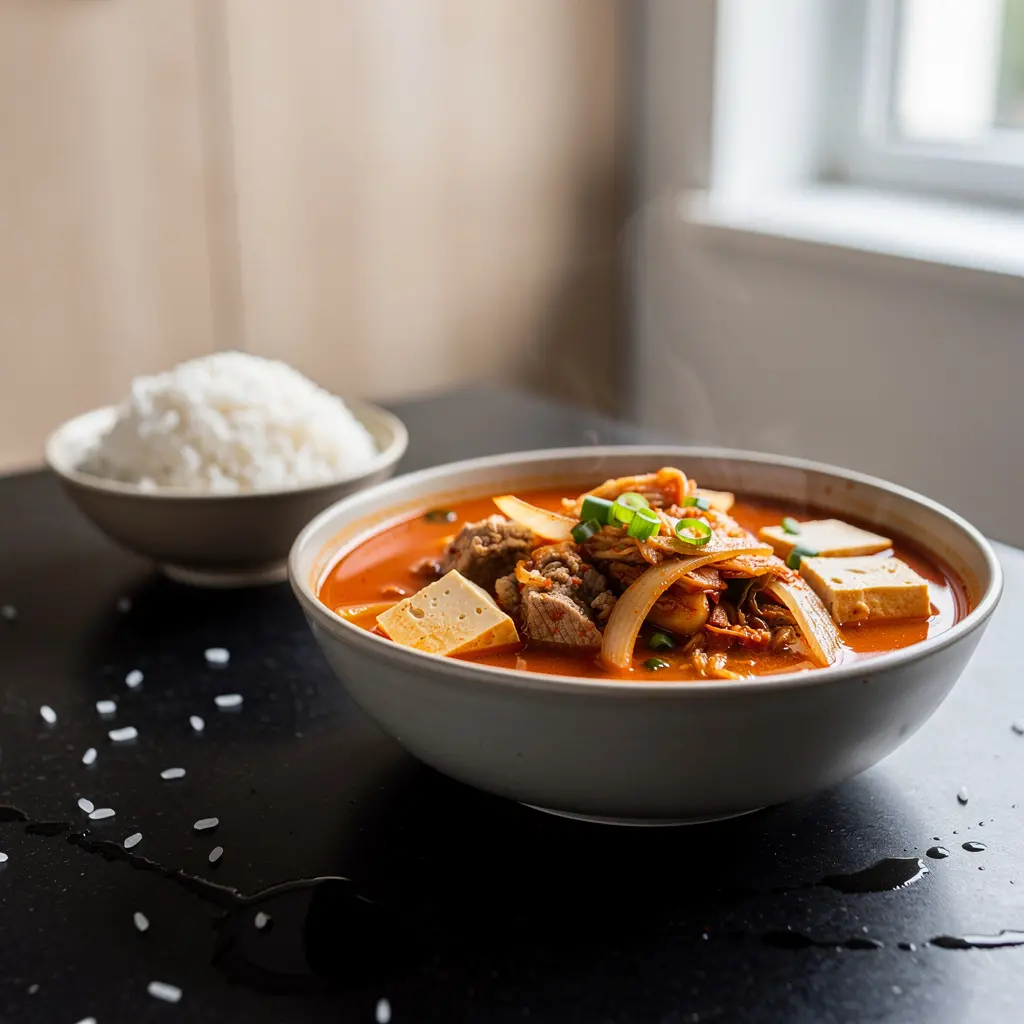
Kimchi jjigae is a thick, warming soup based on kimchi, often eaten in Korea on cooler days as a hearty main meal. The combination of sour, spicy cabbage with tender pork and tofu creates a flavor that’s hard to confuse with anything else. It’s a bit like a cross between bigos and a stew, but in a spicier, more aromatic version.
To typowe danie „z resztek” – w wielu domach gotuje się je wtedy, gdy w lodówce zostało już bardzo kwaśne, kilku‑tygodniowe kimchi, które solo jest zbyt intensywne.
This kimchi jjigae combines the deep umami of fermented kimchi with tender pork and silky tofu, creating a rich, comforting soup that warms you from the inside out. It’s simple to make, yet delivers complex, layered flavors reminiscent of both stew and hearty cabbage dishes.
Dlaczego ta wersja działa
- Podsmażenie wieprzowiny i kimchi przed dolaniem bulionu buduje smak podobny do długiego duszenia.
- Połączenie gochujang i płatków chili daje ostrość i lekką słodycz, bez potrzeby wielu przypraw.
- Dodanie tofu na końcu chroni je przed rozpadaniem się i zbyt gąbczastą teksturą.
Chef's tips
Use well-fermented, older kimchi for the best flavor – fresh kimchi will make the soup milder and less complex. Don’t skip lightly frying the kimchi with garlic and gochujang at the beginning; this step builds a deeper, roasted flavor base. If your stock is mild, you can boost the taste with a small splash of fish sauce or an extra spoon of soy sauce.
How to serve
Serve kimchi jjigae bubbling hot in individual bowls, with steamed rice on the side so everyone can add as much as they like. Offer extra kimchi, roasted seaweed and a simple cucumber salad as side dishes. A soft- or hard-boiled egg on top of the rice also works beautifully with the spicy broth.
Na co uważać
- Nie używaj świeżego, mało kwaśnego kimchi – zupa wyjdzie płaska i zbyt słodka.
- Zbyt mocne mieszanie po dodaniu tofu spowoduje jego kruszenie i mętną, „kaszowatą” zupę.
Zamienniki
- Wieprzowinę możesz zastąpić chudą łopatką wołową, wydłużając gotowanie o 10 minut.
- Bulion mięsny da się podmienić na warzywny, a białko uzupełnić większą ilością tofu.
- Jeśli nie masz gochujang, użyj pasty miso z dodatkiem ostrej papryki, smak będzie łagodniejszy.
Ingredients
- kimchi - 300 g
- pork - 300 g
- tofu - 200 g
- onion - 1 piece
- garlic - 3 cloves
- gochujang paste - 1.5 tablespoon
- chili flakes - 1 tablespoon
- soy sauce - 2 tablespoon
- stock - 800 ml
- vegetable oil - 1 tablespoon
- sugar - 1 teaspoon
- chives - 3 tablespoon
- rice - 250 g
Preparation
- Rinse the rice in cold water until the water is almost clear, then cook according to the instructions on the package.
- Cut the pork into thin slices or small bite-sized rectangles.
- Peel the onion and slice it into thin wedges. Finely chop the garlic.
- If the kimchi has very long pieces, cut them into smaller, easier-to-eat pieces.
- Heat the oil in a heavy-bottomed pot over medium heat. Add the pork and fry for 4–5 minutes, stirring, until the meat loses its raw color and starts to brown lightly.
- Add the onion and fry for another 3–4 minutes, until it softens and becomes slightly translucent.
- Add the garlic, kimchi, gochujang paste and chili flakes. Stir and fry for 2–3 minutes, until the kimchi releases a strong aroma and some of the excess liquid evaporates.
- Pour in the stock, add the soy sauce and sugar, and mix well. Bring to a boil, then reduce the heat to medium and cook for 15 minutes, until the flavors meld and the soup thickens slightly.
- Cut the tofu into cubes of about 2 cm. Gently add it to the soup and cook for another 5 minutes over low heat so it warms through without falling apart.
- Taste the soup and, if needed, season with more soy sauce or a little sugar if the kimchi is very sour.
- Serve the soup very hot in bowls, sprinkled with chopped chives, with a separate bowl of rice on the side that can be added to the soup gradually.
Storage
Kimchi jjigae gęstnieje w lodówce, a kwaśność kimchi jeszcze się zaokrągla – po podgrzaniu będzie głębsza w smaku, ale mniej ostra. Przechowuj do 3 dni, podgrzewaj na małym ogniu; tofu może stać się nieco bardziej miękkie.
Kimchi jjigae is one of those dishes that tastes even better the next day, when the flavors have had time to meld. Don’t worry too much about strict rules – adjust the level of heat and sourness to your taste, and use the vegetables and cuts of pork you have on hand. It’s meant to be a homestyle, comforting soup rather than a fussy restaurant dish.