Karaage – Crispy Japanese Fried Chicken Recipe
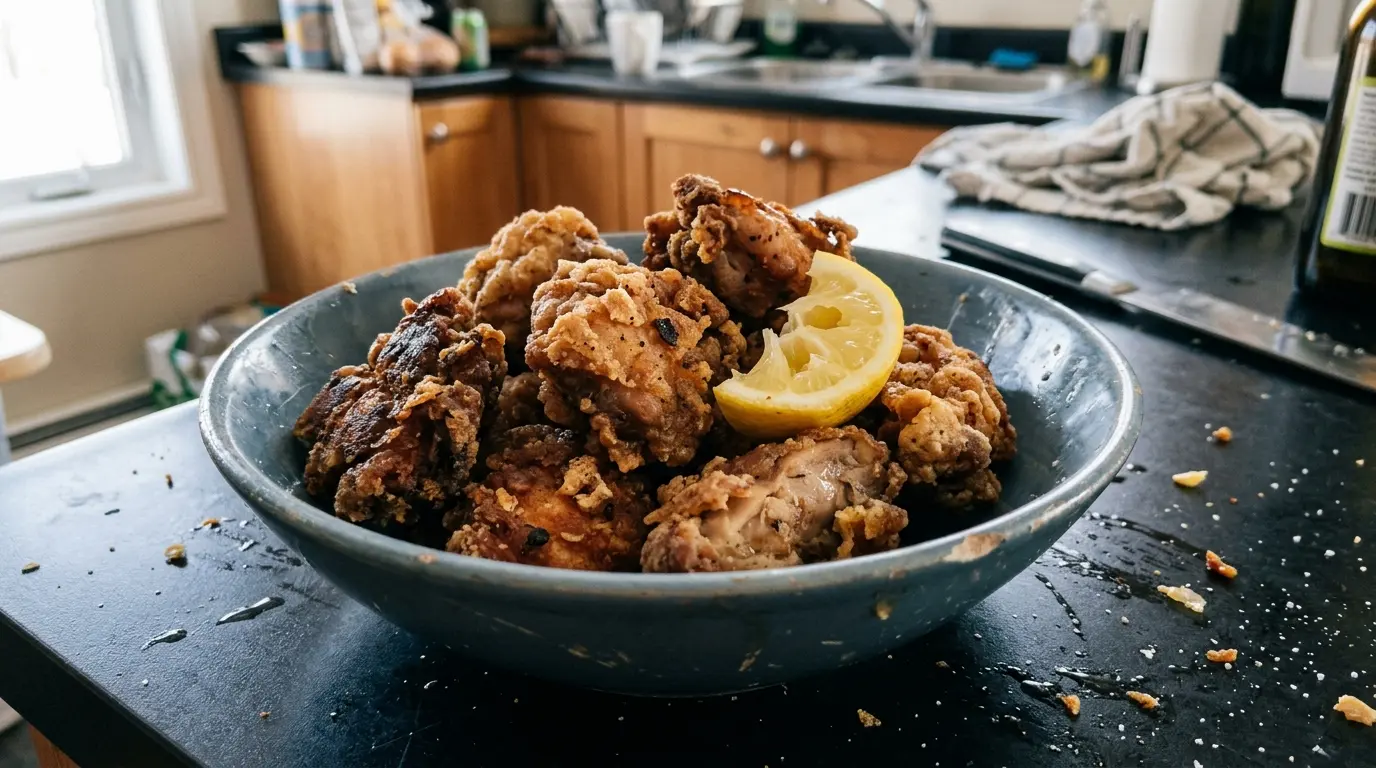
Karaage are pieces of chicken marinated in soy sauce and ginger, coated in starch and fried until golden. In Japan they end up in bento boxes, on party tables and in bars as a snack with beer. They taste like a cross between nuggets and KFC wings, but with a distinct soy-and-ginger aroma.
Karaage is a classic snack from Japanese izakaya bars and home dinners, often served with lemon and mayonnaise. In Japan it’s also eaten in bento boxes as cold, still‑crunchy chicken pieces.
Karaage delivers the comfort of familiar fried chicken with a distinctly Japanese twist: a soy-and-ginger marinade that seasons the meat all the way through and a light, ultra-crispy starch coating. It’s quick to prepare, perfect for sharing and works equally well as a main dish, bar snack or bento addition.
Why this version works
- The ratio of soy sauce to mirin gives a bold, izakaya-style flavor without needing extra sugar.
- A thin, well‑shaken-off layer of starch keeps the coating light and prevents it from separating from the meat.
- Checking the oil temperature with a “crumb test” makes frying easy even without a thermometer.
- Frying in loose batches prevents the chicken from soaking up fat and ensures even browning.
Chef's tips
Cut the chicken into similar-sized pieces so they cook evenly and stay juicy inside. Don’t rush the marinating time – even 30–60 minutes makes a big difference in flavor. Shake off excess marinade before coating so the starch doesn’t clump. Keep the oil at a steady medium-high temperature: too cool and the coating will soak up oil, too hot and it will brown before the inside is cooked.
How to serve
Serve karaage piled on a platter with lemon wedges, Japanese mayonnaise and a simple cabbage or cucumber salad. It’s great with steamed rice and miso soup for a full meal, or as part of a larger spread with edamame, pickles and other small dishes. For picnics or lunch boxes, pack it at room temperature with rice balls and raw vegetables.
Watch out for
- Don’t put wet pieces straight from the marinade into the starch – it will turn into a sticky batter and peel off.
- If the oil only gently “purrs” instead of clearly sizzling, wait; in oil that’s too cool, the chicken will soak up fat.
- If the coating turns brown after just a minute, the heat is too high – lower it so the inside can cook through.
Substitutions
- You can swap thighs for breast, shortening the frying time by 1–2 minutes and making sure the center is just slightly springy.
- Replace mirin with a tablespoon of white wine or water mixed with 1/2 teaspoon sugar for a gentle sweetness.
- You can substitute potato starch with cornstarch; the coating will be a bit less bubbly, but still very crispy.
Ingredients
- boneless chicken thigh skinless or with skin, as you prefer - 500 g
- soy sauce - 3 tablespoons
- mirin - 2 tablespoons
- garlic grated or very finely chopped - 2 cloves
- fresh ginger grated - 1 tablespoon
- potato starch for coating - 6 tablespoons
- vegetable oil for deep-frying, amount depends on the size of the pot - 700 ml
- lemon cut into wedges for serving - 0.5 piece
- iceberg lettuce for serving, optional - 4 leaves
Preparation
- Pat the chicken very dry with paper towels, trim any visible pieces of fat and cut into 3–4 cm chunks. Try to make the pieces a similar size so they all end up equally juicy after frying.
- In a bowl, mix the soy sauce, mirin, and finely grated garlic and ginger. Add the chicken and mix thoroughly, “massaging” the marinade into the meat until every piece is evenly coated and slightly sticky.
- Cover the bowl and chill in the fridge for at least 20 minutes, preferably 1 hour. After marinating, the meat should have darkened from the soy sauce and smell strongly of ginger and garlic.
- Pour oil into a pot or deep frying pan to a depth of 4–5 cm and start heating it over medium heat. Put the potato starch into a shallow dish, breaking up any lumps with your fingers so it’s loose and powdery.
- Take the chicken out of the marinade and lightly shake off the excess liquid from each piece. Dredge in a thin layer of starch, pressing it on well, then shake off any extra – the surface should be dry, matte and evenly white.
- Check the oil: drop in a pinch of starch or a small piece of chicken. If it immediately sizzles vigorously and quickly rises to the surface, the temperature is right (around 170–180°C / 340–355°F). If the bubbles are lazy, keep heating.
- Add the first batch of chicken (the pieces shouldn’t touch) and fry for 4–5 minutes. At first don’t stir, until the coating “sets” and looks dry; then turn every minute until it’s golden and firm to the touch.
- When you cut into a test piece and the meat inside is completely white and juicy, lift the fried pieces out with a slotted spoon onto a plate lined with paper towels. Lightly salt them right away if you like a bolder flavor.
- Before each new batch, let the oil come back up to temperature – it should sizzle loudly again when you add a piece. If the oil is too dark or starts to smoke, lower the heat and wait a moment.
- Serve the hot karaage on lettuce leaves with lemon wedges for squeezing over just before eating. The crust should stay crisp even after a few minutes on the plate and make a distinct “click” when you bite into it.
Storage
No storage information available for this dish.
This version of karaage is intentionally simple and home-style, relying on pantry ingredients like soy sauce, garlic and ginger. Once you get comfortable with the basic method, you can easily adjust the marinade to your taste and turn it into your go-to fried chicken recipe for parties and weeknight dinners alike.