Kimchi Tofu Jjigae – Warming Soup Recipe
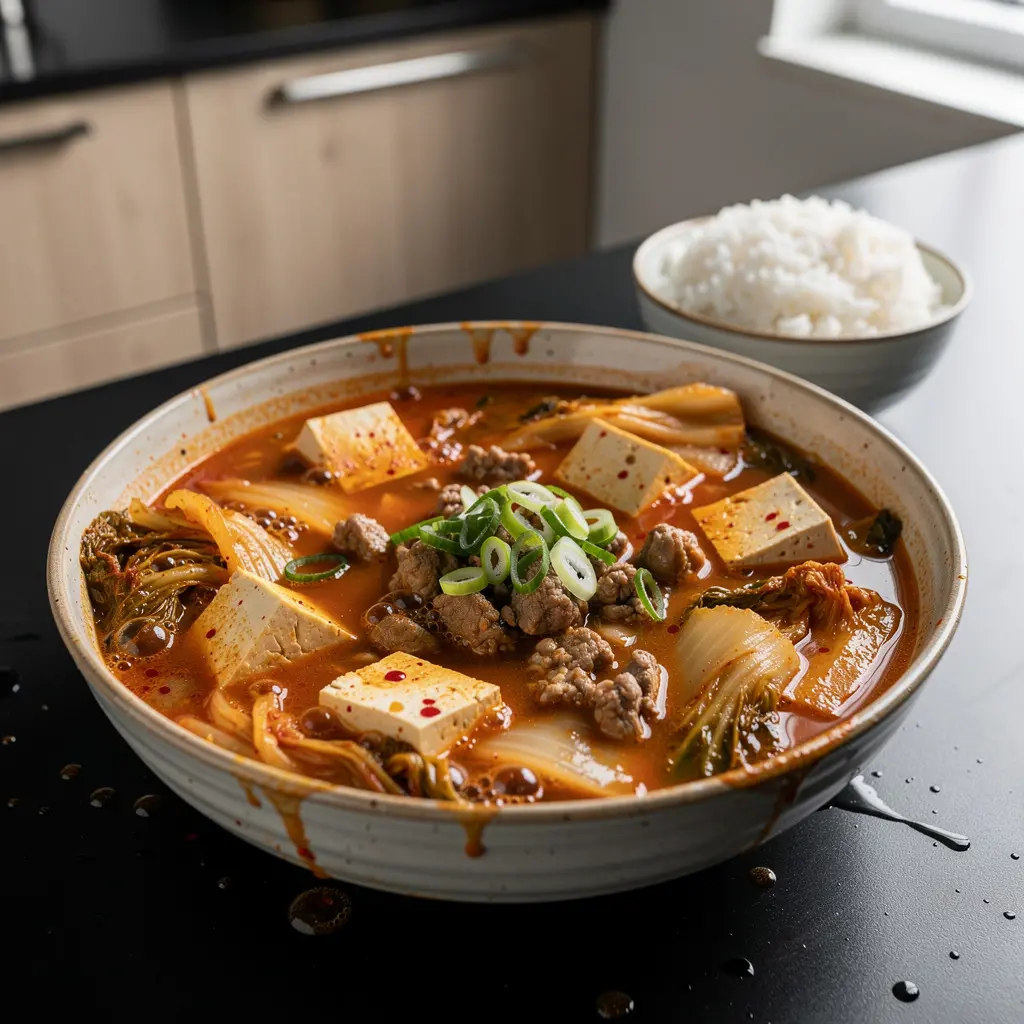
Kimchi tofu jjigae is a thick, spicy soup that in Korea is often eaten in winter or on rainy days, usually with a bowl of rice on the side. It’s a great way to use kimchi that has matured a bit and become more sour. The flavors are reminiscent of a mix between sauerkraut soup, a spicy stew, and delicate tofu.
This kimchi tofu jjigae is a perfect example of Korean comfort food: spicy, warming, and full of umami. It makes great use of well-fermented kimchi, turning it into a rich, satisfying soup that’s simple to prepare yet full of complex flavors.
Chef's tips
Use well-fermented kimchi – the more sour it is, the deeper and more interesting the flavor of the soup. Adjust the amount of gochugaru to your heat tolerance, and don’t skip the sesame oil at the end, as it adds a characteristic nutty aroma. If you’re using pork belly, render it slowly so the fat adds richness to the broth.
How to serve
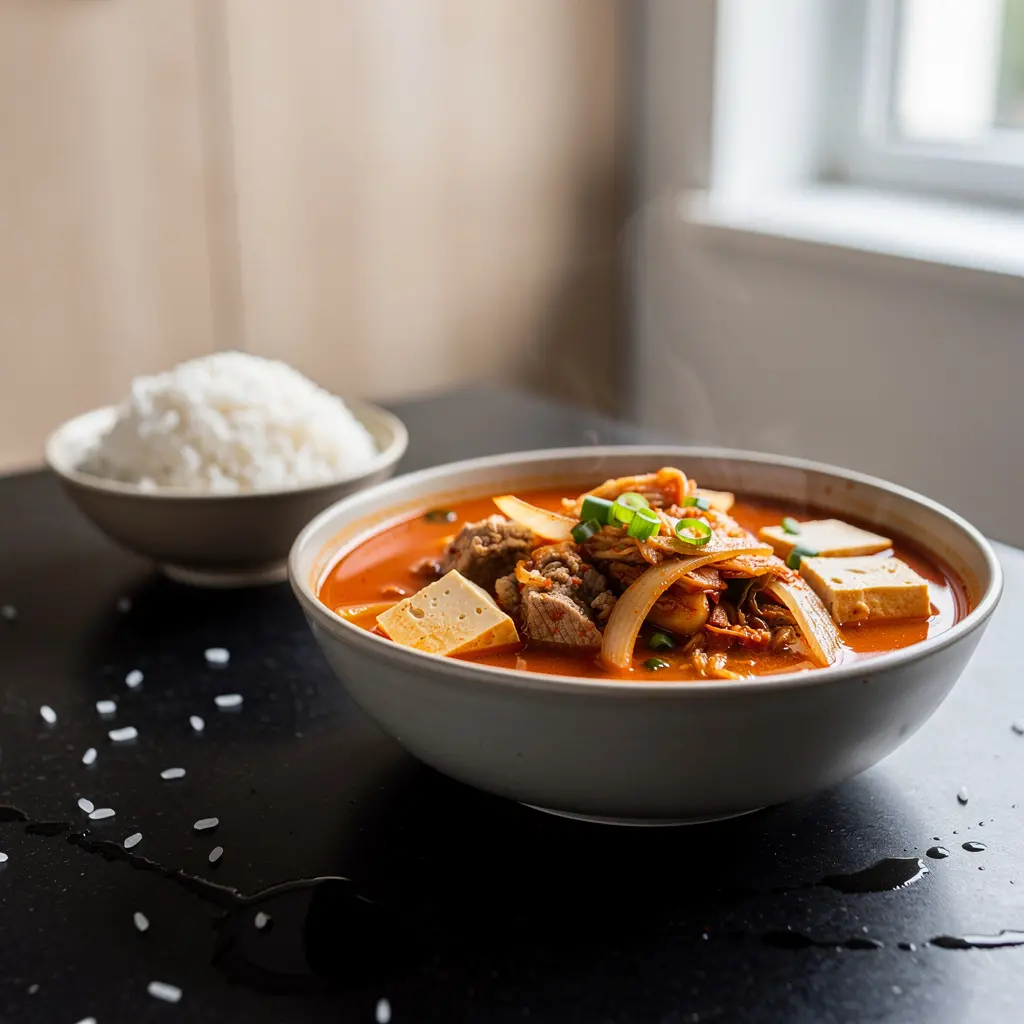
Serve the jjigae bubbling hot, in individual bowls, with steamed white rice on the side. Add a few Korean-style side dishes if you have them, such as pickled cucumbers, kimchi, or simple vegetable salads. You can also garnish with extra spring onion or toasted sesame seeds for more texture.
Ingredients
- kimchi preferably well-fermented, made with napa cabbage - 200 g
- tofu plain, firm, cut into cubes - 300 g
- pork e.g. belly or shoulder, cut into thin strips; can be omitted - 150 g
- onion sliced into thin wedges - 1 piece
- garlic finely chopped - 3 clove
- vegetable oil - 1 tablespoon
- gochujang paste - 1 tablespoon
- gochugaru chili flakes for a spicier version, you can reduce the amount - 1 tablespoon
- soy sauce - 1 tablespoon
- vegetable stock or chicken stock - 700 ml
- sugar balances the acidity of the kimchi - 0.5 teaspoon
- sesame oil - 1 teaspoon
- chives chopped - 2 tablespoon
Preparation
- Cut the kimchi into smaller pieces if the leaves are very long. Also keep the kimchi juice – it will add a lot of flavor.
- Heat the oil in a pot over medium heat. Add the pork and fry for 4–5 minutes, until the meat is browned and some fat has rendered out.
- Add the onion and fry for another 3–4 minutes, until it softens and becomes slightly translucent, without strong browning.
- Add the chopped garlic, kimchi, and kimchi juice and fry everything together for 3–4 minutes, stirring, until you smell an intense aroma.
- Add the gochujang paste and chili flakes, mix thoroughly, and fry for 1 more minute.
- Pour in the stock, add the soy sauce and sugar, and stir. Bring to a boil, then reduce the heat and simmer for 10 minutes so the flavors meld.
- Gently add the tofu cubes and cook for another 5 minutes on low heat so the tofu warms through without falling apart.
- Finally, drizzle the soup with sesame oil, sprinkle with chopped chives, and serve very hot, preferably with a small bowl of cooked rice on the side.
Storage
Zupa następnego dnia smakuje jeszcze lepiej, bo smaki się przegryzają. Przy mrożeniu tofu może zmienić konsystencję na bardziej gąbczastą, ale nadal będzie smaczne.