Gyoza – Japanese Dumplings with Meat and Cabbage Recipe
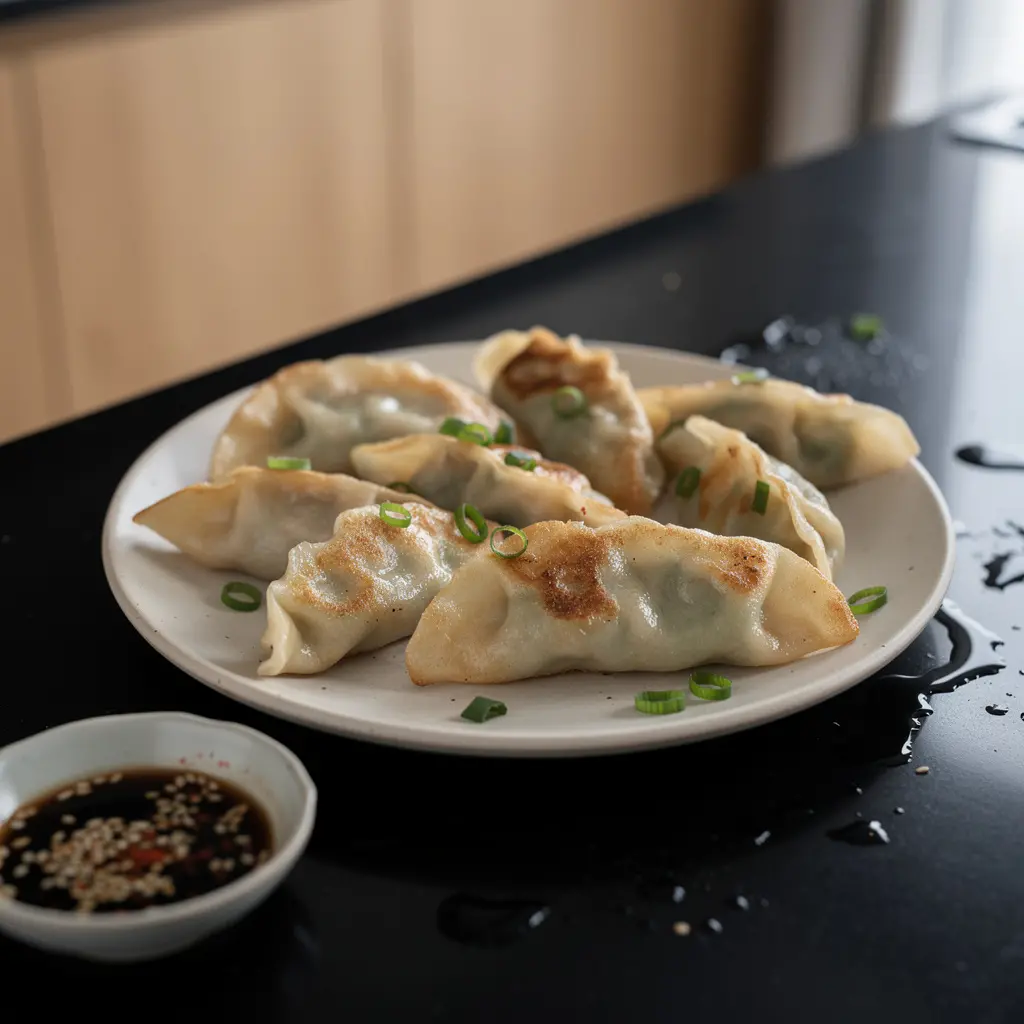
Gyoza are thin dumplings filled with minced meat and cabbage, first pan-fried until golden, then steamed with a splash of water. In Japan they’re often ordered as a side to a bowl of ramen or as a snack with beer. The taste is reminiscent of a mix between Polish pierogi and Chinese jiaozi, but with a characteristic, slightly crispy bottom.
Gyoza came to Japan from China after World War II and quickly became a popular bar snack served with beer. At home they’re often made in big batches and frozen for quick weeknight dinners.
This recipe brings the classic Japanese gyoza experience to your kitchen with a thin, elastic homemade wrapper and a juicy pork-and-cabbage filling. The combination of pan-frying and steaming gives you the signature contrast between a tender top and a deeply golden, crispy bottom.
Why this version works
- Dough scalded with hot water is more elastic and can be rolled thinner than dough made with cold water.
- Thoroughly squeezing the cabbage prevents the filling from becoming watery and the bottoms from turning soggy.
- Longer mixing of the filling binds the proteins so the stuffing is springy instead of crumbly.
- The three‑stage fry–steam–fry method gives you a soft top and a crisp, golden bottom at the same time.
Chef's tips
Knead the dough thoroughly – it should be smooth and elastic, not sticky. Make sure to squeeze as much liquid as possible out of the cabbage so the filling stays firm and doesn’t make the wrappers soggy. When pleating, don’t overfill the dumplings; a small teaspoon of filling is enough to keep them neat and easy to seal.
How to serve
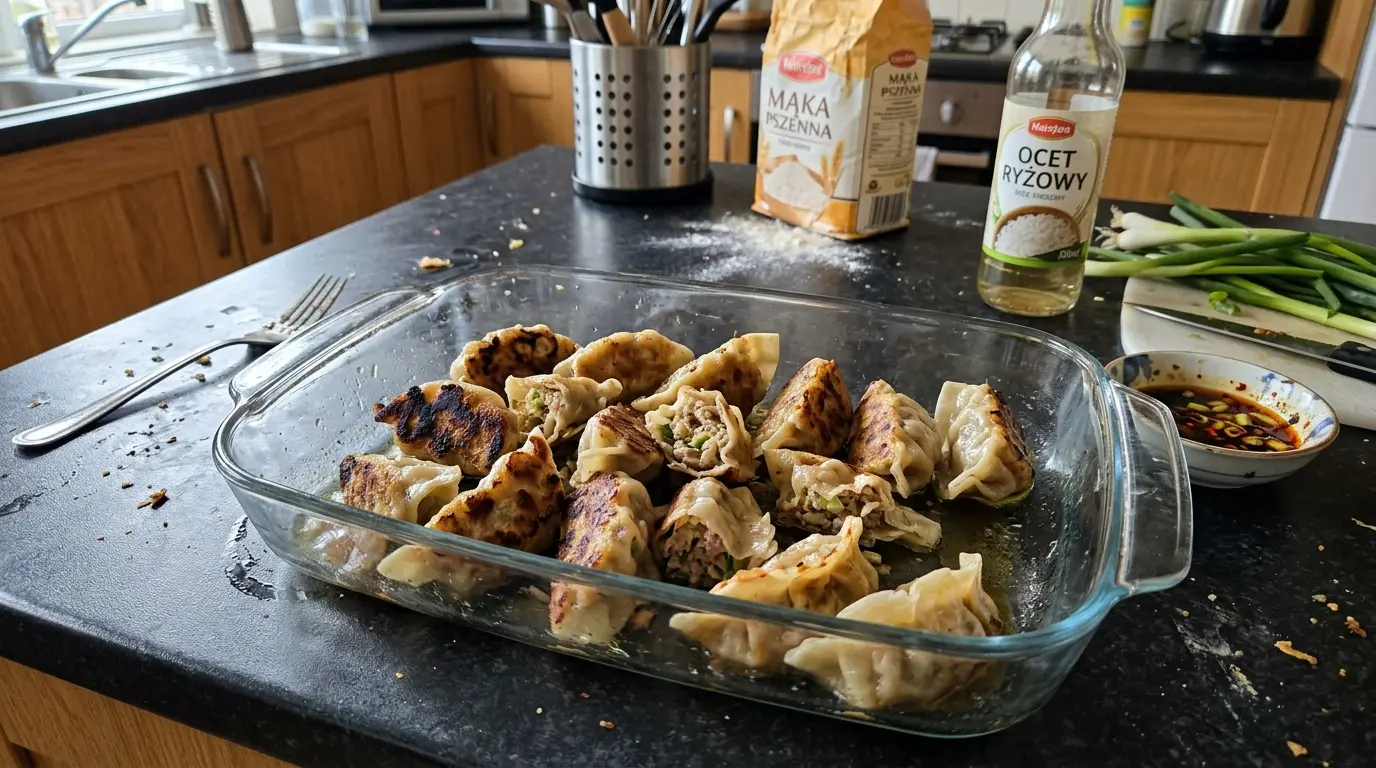
Serve gyoza straight from the pan while the bottoms are still crisp. Pair them with a simple soy–rice vinegar dipping sauce, optionally with chili or a few drops of sesame oil. They go well with light Japanese beer, green tea, or as a side to ramen, miso soup, or stir-fried vegetables.
Watch out for
- Don’t overfill the dumplings – the edges need to overlap freely so they seal properly.
- Too much flour used for rolling will burn in the pan and add a bitter taste.
- When frying, adding too much water will make the wrappers soggy and stop them from crisping up again.
- Don’t force the gyoza off the pan – if they’re still sticking, give them a little longer without the lid.
Substitutions
- You can replace the pork with a 50/50 mix of pork and chicken for a lighter filling.
- Napa cabbage can be swapped for finely chopped, briefly blanched white cabbage.
- You can substitute rice vinegar with mild apple cider vinegar diluted with water 1:1.
Ingredients
- wheat flour - 250 g
- water - 130 ml
- salt - 3 g
- ground pork - 250 g
- Chinese cabbage - 150 g
- spring onion - 20 g
- garlic - 2 clove
- ginger - 10 g
- soy sauce - 20 ml
- sesame oil - 5 ml
- vegetable oil - 20 ml
- rice vinegar - 20 ml
- chili - 1 g
Preparation
- Put the flour and salt into a bowl, pour in the hot (70–80°C) water and mix until clumps form. When the dough cools slightly, knead for 5–7 minutes, until it’s smooth, elastic and, when stretched, doesn’t tear but gently springs back.
- Shape into a ball, cover with a damp cloth or plastic wrap and leave for 20–30 minutes. After resting the dough should feel noticeably softer and less “resistant” when you press it with a finger.
- Finely chop the cabbage, sprinkle with a pinch of salt and set aside for 10 minutes, until you see beads of water. Then squeeze it very firmly in your hands or in a cloth – after squeezing it shouldn’t release any more juice when pressed.
- Finely chop or grate the garlic and ginger; slice the spring onion into thin rounds. In a bowl combine the meat, squeezed cabbage, garlic, ginger, spring onion, soy sauce and sesame oil until everything is evenly distributed.
- Work the filling with your hand or a spoon for 2–3 minutes, until it becomes sticky and uniform. Well‑mixed filling will “stretch” a little and won’t fall straight out if you turn the bowl upside down.
- Divide the dough into 2 pieces and roll each into a log about 2 cm in diameter. Cut into 8–10 g pieces, flatten into disks and roll out into 8–9 cm circles, dusting with just a little flour; the edges can be slightly thinner than the center so you can see a faint translucency.
- Place about 1 level teaspoon of filling in the center of each circle. Moisten the edges with water, fold in half and seal, making small pleats along one side and pressing them firmly – the finished gyoza should stand steadily on its flat side without tipping over.
- Heat oil in a large non‑stick frying pan over medium heat. Arrange the dumplings flat side down without crowding them and fry for 2–3 minutes, until the bottoms are evenly golden; gently lift one dumpling to check the color.
- Pour in about 100 ml water (to a depth of 3–4 mm), cover immediately and steam for 5–6 minutes. The tops of the dumplings should become semi‑translucent and elastic, with no dry, floury spots, and the water should be steaming vigorously.
- When the water has almost evaporated and you hear a loud sizzle again, remove the lid and fry for another 1–2 minutes. The bottoms are done when they are a deep golden color and the dumplings release from the pan on their own without tugging.
- In a small bowl mix soy sauce with rice vinegar and chili, adjusting the heat to taste. Serve the gyoza immediately, crispy side up, with the dipping sauce on the side.
Storage
Store cooked gyoza in an airtight container in the fridge for up to 2 days. Reheat in a covered pan with a splash of water, then uncover at the end to re-crisp the bottom. Frozen raw gyoza can be cooked straight from the freezer, adding a couple of minutes to the steaming time.
Homemade gyoza take a bit of time to fold, but the process is relaxing and perfect for cooking together with friends or family. Once you get the hang of pleating, you can easily double the batch and keep a stash in the freezer for quick, comforting meals.