Goi cuon – fresh Vietnamese spring rolls with shrimp Recipe
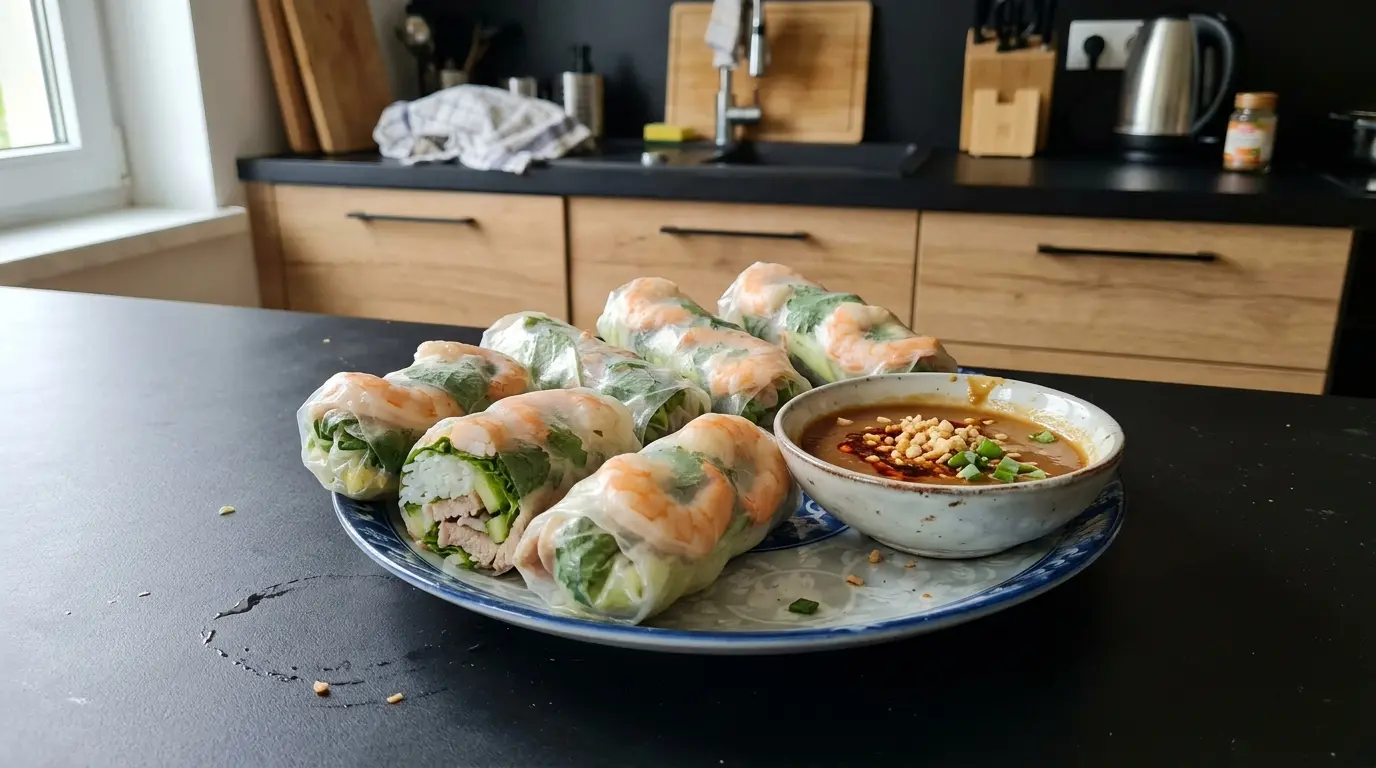
Light, non-fried rice paper rolls filled with herbs, vegetables, rice noodles and shrimp. In Vietnam they’re a popular snack on hot days, like a salad wrapped in edible “paper”. Perfect for parties: you can prepare a platter of colorful rolls and serve them with an aromatic dipping sauce.
These rolls combine freshness, crunch and creaminess in one bite – cool herbs and vegetables, tender shrimp and a rich peanut sauce. They’re light yet satisfying and look impressive on the table.
Chef's tips
Don’t over-soak the rice paper – it should still feel a bit firm when you take it out of the water, otherwise it will tear easily. Keep all the fillings prepared and within reach so rolling goes quickly and smoothly.
How to serve
Serve with extra fresh herbs, lime wedges and sliced chili. They pair well with iced green tea or sparkling water with lime and mint.
Ingredients
- rice paper round, medium size - 12 piece
- shrimp peeled, cooked or quickly blanched - 250 g
- thin rice noodles soaked and cooked according to the instructions - 100 g
- lettuce leaves torn into smaller pieces - 0.5 head
- fresh cucumber cut into thin sticks - 1 piece
- carrot cut into thin sticks or ribbons - 1 piece
- fresh mint leaves - 10 g
- fresh coriander leaves - 10 g
- chives long stalks, optional - 10 g
- smooth peanut butter for the sauce - 40 g
- hoisin sauce for the sauce - 40 ml
- water for the sauce - 30 ml
- fish sauce for the sauce, optional - 10 ml
- garlic finely chopped, for the sauce - 1 clove
- peanuts chopped, for sprinkling the sauce - 15 g
- lukewarm water for soaking the rice paper - 500 ml
Preparation
- Cook the rice noodles according to the instructions on the packet: usually it’s enough to pour boiling water over them for a few minutes until they soften. Drain and rinse with cold water to prevent sticking.
- If the shrimp are raw, drop them into boiling water for 2–3 minutes, until they turn pink and opaque. Drain and cut larger pieces in half lengthwise.
- Prepare the vegetables: tear the lettuce into smaller pieces, cut the cucumber and carrot into thin sticks. Rinse and dry the herbs.
- Make the sauce: in a small saucepan mix the peanut butter, hoisin sauce, water, fish sauce and chopped garlic. Heat over low heat, stirring, until you get a smooth, slightly thick sauce. Add a little water if needed. Pour into a bowl and sprinkle with chopped peanuts.
- Prepare a large plate or shallow bowl with lukewarm water. Dip the first sheet of rice paper for about 5–7 seconds, until it softens but is still slightly springy. Place it on a clean board or plate – it will soften further after a moment.
- On the lower part of the paper, place a piece of lettuce leaf, some rice noodles, a few cucumber and carrot sticks and a few mint and coriander leaves.
- A bit higher, closer to the center of the sheet, arrange 2–3 shrimp halves, pink side down – this way they will be nicely visible once rolled.
- Fold the sides of the paper over the filling. Then start rolling from the bottom up, fairly tightly, like cabbage rolls, so that the shrimp end up on the top of the roll.
- If using chives, tuck a few long stalks into one end of the roll before the final fold so they stick out decoratively.
- Repeat soaking the paper and rolling until you’ve used up all the ingredients. Arrange the finished rolls on a plate so they don’t touch too closely, as they can stick together.
- Serve immediately with a bowl of peanut dipping sauce.
Storage
Fresh spring rolls are best eaten the day they’re made. If you need to store them, wrap each roll tightly in cling film and keep in the fridge for up to 1 day, then bring to room temperature before serving.
I love serving goi cuon when it’s too hot to cook – you only need a bit of boiling water for the noodles and shrimp, and the rest is just chopping and rolling. It’s also a fun activity to do together at the table.