Polpette di melanzane – eggplant meatballs Recipe
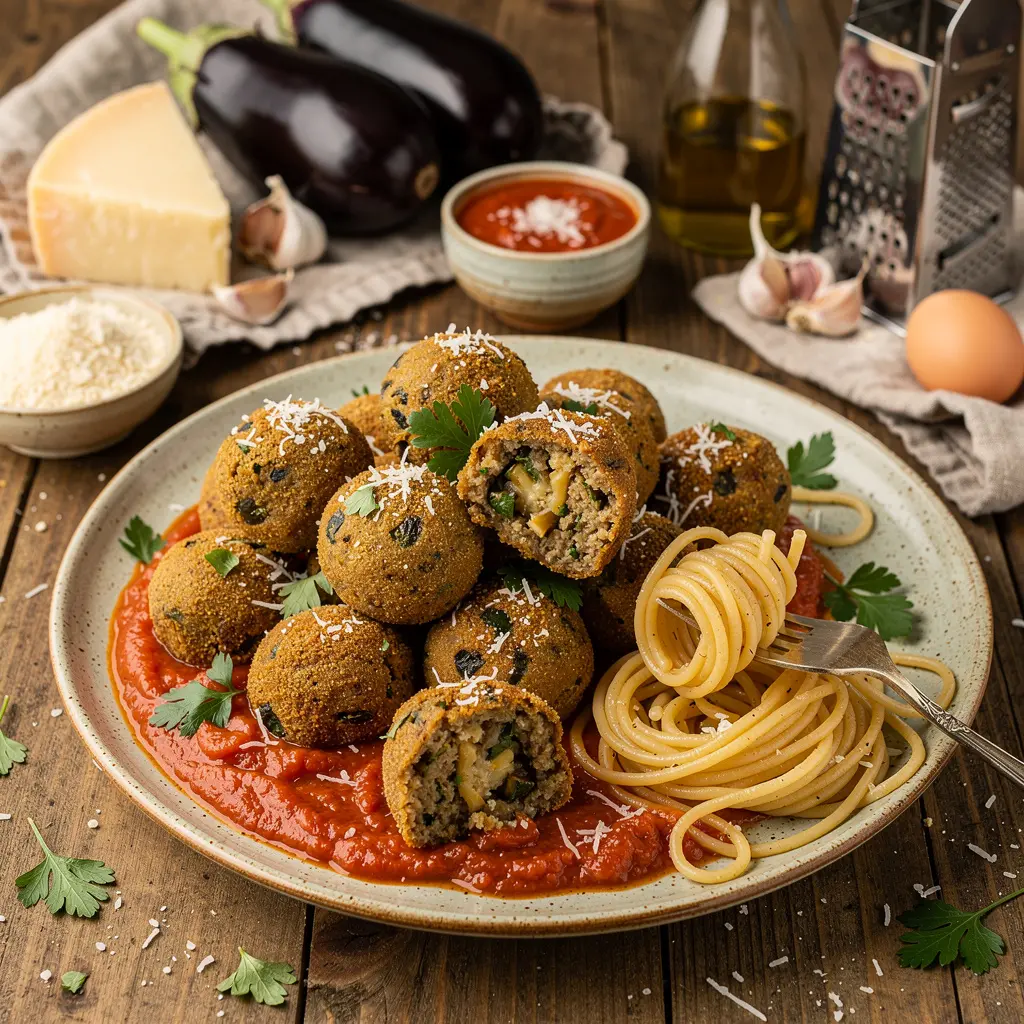
Polpette di melanzane are vegetarian eggplant meatballs, especially popular in southern Italy. They’re soft inside, crispy on the outside, and full of cheese and herbs. You can serve them as a party snack, a side for pasta, or a vegetarian alternative to classic meatballs.
In southern Italy, polpette di melanzane often replace meatballs on meatless days or in summer, when eggplants are at their peak. They’re served both with tomato sauce and on their own, as a warm antipasto.
Polpette di melanzane are the essence of southern Italy packed into small, crispy meatballs – lots of herbs, cheese and sweet eggplant. They’re soft and aromatic inside, with a distinct cheesy umami note, and on the outside they have a golden, pleasantly crunchy breadcrumb crust. It’s a great way to show that vegetarian “meatballs” can be just as satisfying as meat ones.
Why this version works
- Roasting the eggplant concentrates its flavour and limits the amount of fat it would absorb if you fried it.
- The combination of Parmesan and mozzarella gives you both a strong, cheesy flavour and a slightly stretchy, creamy centre.
- Chilling the mixture allows the breadcrumbs to absorb the moisture so the meatballs don’t fall apart in the pan.
Chef's tips
It’s best to bake or stew the eggplants until they’re completely soft – pieces that are too firm will make it harder to shape the meatballs and they’ll fall apart in the pan. Be sure to let the mixture cool before adding the egg and cheese; that way it’s easier to judge the consistency and add more breadcrumbs if needed. Fry the meatballs over medium heat, not too high, so they have time to heat through in the centre before the coating browns.
How to serve
Serve them with a garlicky tomato sauce and basil as a vegetarian replacement for classic pasta meatballs. For a party, they’re great on cocktail sticks with a bowl of garlic-yogurt sauce or aioli for dipping. They also make a nice addition to a mezze-style meal: alongside roasted vegetables, olives and good ciabatta.
Watch out for
- If you don’t squeeze out the eggplant enough, the mixture will be watery and you’ll have to add lots of breadcrumbs, which will dilute the flavour.
- Don’t fry over very high heat – the coating will darken quickly while the inside stays too soft and doughy.
- If the meatballs crack while frying, the mixture was too dry – next time add a tablespoon of olive oil or use a larger egg.
Substitutions
- You can replace Parmesan with Grana Padano or another hard, aged cheese with a pronounced flavour.
- Swap the mozzarella for provolone or another mild cheese that melts well and becomes slightly stretchy.
- Replace part of the breadcrumbs with fine oat flakes ground in a blender for a lighter version.
Ingredients
- eggplants about 600–700 g total - 2 piece
- breadcrumbs plus a bit more for coating - 80 g
- grated Parmesan or other hard cheese - 50 g
- cheese cut into small cubes; can be omitted - 60 g
- egg - 1 piece
- garlic clove finely chopped - 1 piece
- fresh parsley chopped - 2 tablespoons
- dried oregano - 0.5 teaspoons
- olive oil or vegetable oil for frying; you can also bake them in the oven - 80 ml
- salt and pepper to taste
Preparation
- Preheat the oven to 200°C (top and bottom heat). Wash and dry the eggplants, then prick them in a few places with a fork so the steam can escape. Arrange them on a baking tray lined with baking paper, leaving space between them so they bake evenly.
- Bake the eggplants for 30–40 minutes, until the skin is deeply wrinkled, darkened in spots, and the eggplants are very soft and slightly collapse when pressed with a finger. Remove from the oven and set aside until they are cool enough to handle.
- Cut the eggplants in half and scoop out the soft flesh with a spoon, leaving the skin behind. Transfer the flesh to a sieve or cheesecloth set over a bowl and gently squeeze out the excess juice – it should be clearly moist but not dripping in a steady stream.
- Finely chop the squeezed flesh with a knife or pulse briefly in a blender – the mixture should be fairly uniform but with some small pieces still visible. Transfer it to a large bowl.
- Add the breadcrumbs, grated Parmesan, small mozzarella cubes, egg, finely chopped garlic, chopped parsley, oregano, salt and pepper. Mix thoroughly with your hand or a spoon until everything is evenly combined and there are no dry pockets of breadcrumbs.
- Check the consistency: it should be thick, moist and easy to shape into balls without spreading or cracking. If the mixture is too loose and sticks heavily to your hands, add breadcrumbs 1 tablespoon at a time; if it’s crumbly and dry, add 1 tablespoon of olive oil.
- Cover the bowl and place the mixture in the fridge for 20–30 minutes so the breadcrumbs can absorb the moisture. After chilling, it should resemble a meatball mixture: soft, cohesive and without a pool of liquid at the bottom of the bowl.
- Shape walnut-sized balls from the mixture, pressing them lightly so there are no cracks on the surface. Coat each one thinly in breadcrumbs and shake off the excess so the coating adheres well during frying.
- Heat a layer of olive oil or neutral oil (about 0.5 cm deep) in a frying pan over medium heat. Drop in 1 test meatball – it should sizzle gently and turn evenly golden in 1–2 minutes without darkening too quickly. Adjust the heat if necessary.
- Fry the meatballs in batches for 3–4 minutes on each side, until golden and crispy and slightly springy, not spongy, when lightly pressed. Transfer to a plate lined with paper towels to drain off excess oil.
Storage
Store cooled meatballs in an airtight container in the fridge for up to 3 days. Reheat gently in a pan or oven; you can also reheat them directly in tomato sauce. For longer storage, freeze them first on a tray, then transfer to a bag or container.
At first I made these meatballs just to use up too many eggplants from a discount-store haul, and now I buy eggplants especially when I’m planning a vegetarian lunch for friends. I sometimes fry a double batch and freeze part of it – they’re a lifesaver on a busy day.