Dorayaki – pancakes with sweet red bean filling Recipe
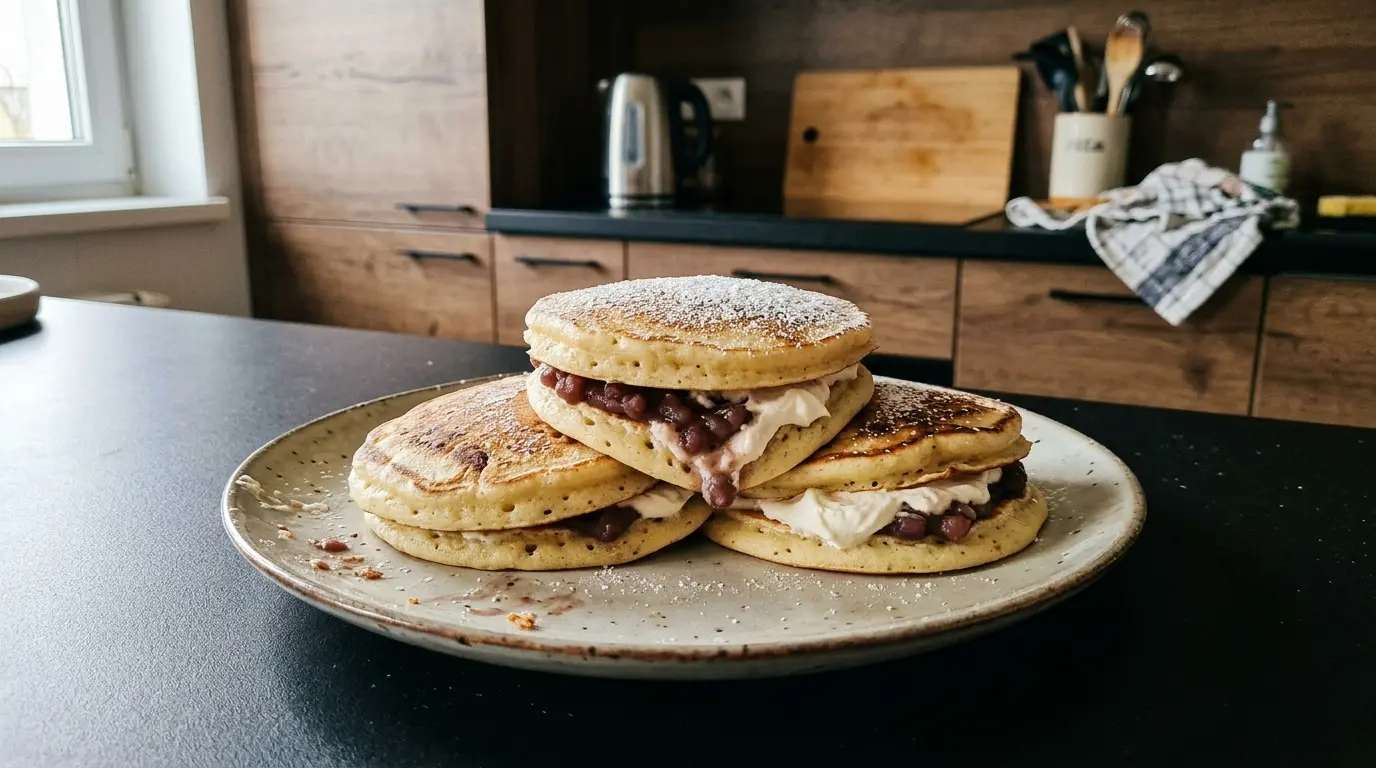
Dorayaki are two fluffy pancakes sandwiched with sweet red bean paste, popular in Japanese convenience stores and snack vending machines. They taste like a cross between a crêpe and a sponge cake, and the bean filling is sweet and creamy, a bit like a thick jam. They make a great dessert with tea or a sweet snack for a lunchbox.
Dorayaki are associated with the Kansai region and are often sold in specialist wagashi shops alongside other traditional Japanese sweets. Modern versions may be filled with matcha cream, whipped cream or chestnuts, but anko remains the most classic filling.
This recipe lets you recreate a classic Japanese convenience-store treat at home with simple ingredients. The pancakes are soft and fluffy, and the sweet red bean filling gives them an authentic dorayaki character that’s different from typical Western desserts.
Why this version works
- Resting the batter lets the baking powder work evenly, so the pancakes rise higher and have a fine, sponge‑like crumb.
- A very thin layer of fat and low heat give an even, golden‑caramel colour without dark spots or burnt edges.
- Spreading the anko on still slightly warm pancakes lets the filling gently meld into the crumb and helps the dorayaki hold together better.
- Loosening anko that’s too thick with a little water makes it easier to spread evenly and prevents mounds that push the filling out to the sides.
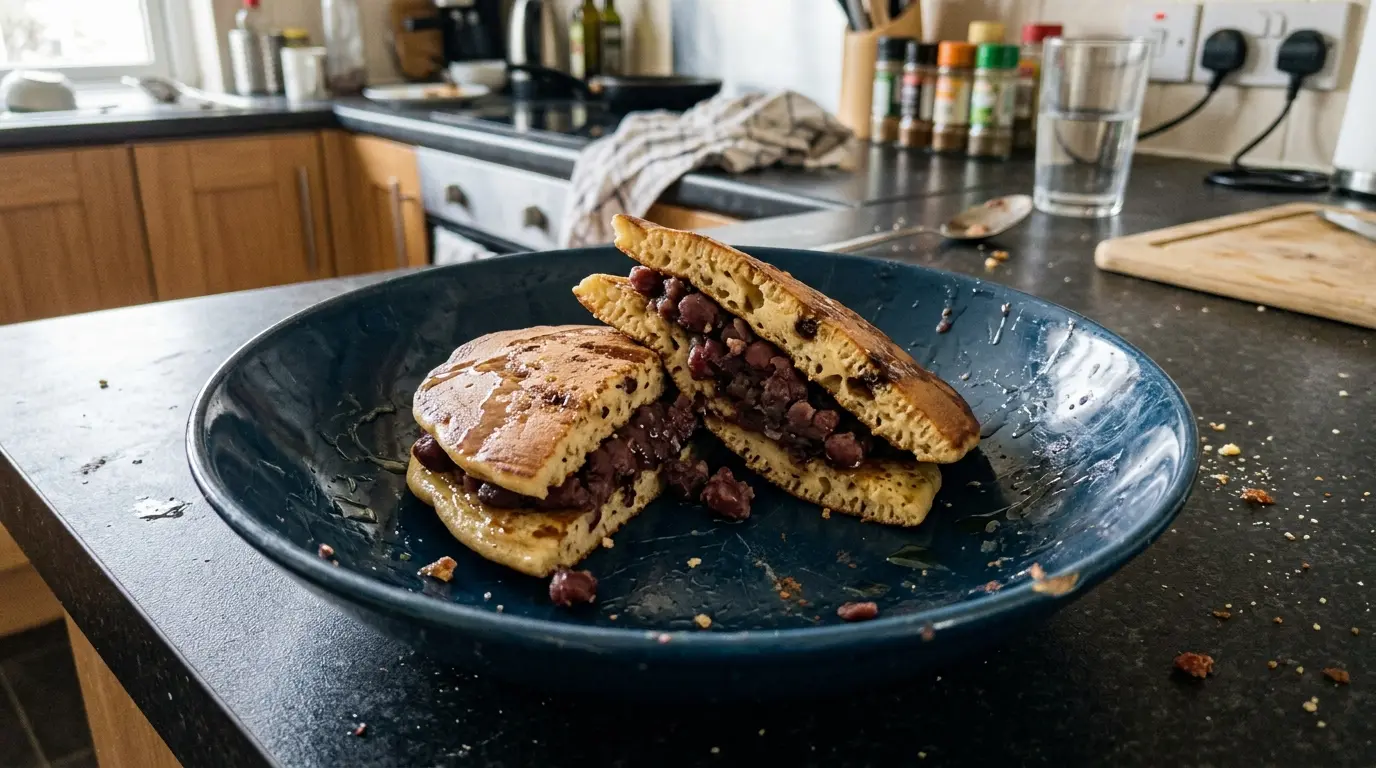
Chef's tips
Use a non-stick pan and keep the heat on the lower side so the pancakes cook through without burning. Wiping off excess oil is important – too much fat will prevent the characteristic even, golden surface. If your first pancake doesn’t brown evenly, adjust the heat and give the batter another gentle stir before continuing.
How to serve
Serve dorayaki with hot green tea, matcha latte, or lightly sweetened black tea. For a more indulgent version, add a thin layer of whipped cream together with the anko, or serve with a scoop of vanilla or matcha ice cream.
Watch out for
- Don’t mix the batter for too long after adding the flour – overdeveloped gluten will make the pancakes chewy.
- If the pan is too hot, the edges will darken quickly while the centre stays wet and stodgy – lower the heat.
- Too thick a layer of anko makes the dorayaki slide apart when you eat them; the filling should form a flat disk.
- Don’t grease the pan with more oil for each batch – excess fat creates dark, uneven spots on the underside.
Ingredients
- wheat flour - 150 g
- egg at room temperature - 2 piece
- sugar - 70 g
- honey - 1 tablespoon
- baking powder - 1 teaspoon
- water add a little more if needed - 40 ml
- vegetable oil for greasing the pan - 1 teaspoon
- sweet red bean paste anko ready-made, smooth or with chunks - 200 g
Preparation
- In a bowl, whisk the eggs with the sugar and honey for 2–3 minutes, until the mixture becomes noticeably paler and thicker and falls off the whisk in a wide ribbon. This means it’s well aerated and the pancakes will rise nicely.
- Add the sifted flour and baking powder. Mix only until combined and no dry lumps remain – the batter should be smooth and fairly thick, but still pourable. Don’t mix longer than necessary so you don’t over‑activate the gluten.
- Gradually add the water until you get the consistency of a thick crêpe batter that runs off the spoon in a slow, steady stream. Cover the bowl and set aside for 10–15 minutes; the batter will thicken slightly and small bubbles will appear on the surface.
- Heat a non‑stick pan over low–medium heat. Brush it very lightly with oil and wipe thoroughly with a paper towel – the surface should look almost dry, with no visible droplets of fat.
- Spoon portions of batter onto the pan (about 2 tablespoons per pancake), holding the spoon close to the surface and not spreading the batter, so it keeps a round shape. Cook for 1.5–2 minutes, until the edges set, small bubbles appear on the surface and the bottom is evenly caramel‑golden.
- Carefully flip the pancakes and cook for about 1 minute, until the second side is golden. When you gently press the surface with a finger, the pancake should spring back without leaving a wet mark of raw batter.
- Transfer the cooked pancakes to a plate and cover with a clean cloth so they don’t dry out. Continue cooking until you use up all the batter – you should get about 12 similar‑sized rounds; if later batches brown faster, reduce the heat.
- If the anko paste is very thick, loosen it with 1–2 tablespoons of water so it spreads more easily. When the pancakes have cooled to “warm hand” temperature, spread 1–1.5 tablespoons of anko on half of them, leaving about a 5 mm border all around.
- Cover each pancake with filling with another pancake and gently press in the centre until you feel the anko spread almost to the edges but not squeeze out. Leave the assembled dorayaki for 10–15 minutes so the filling slightly soaks into the crumb and “sandwiches” stick together.
Storage
No storage information available for this dish.
I love making dorayaki when I want something a bit different from standard pancakes. The batter comes together quickly, and using ready-made anko makes the recipe very approachable, even if you’re new to Japanese sweets.