Bibimbap with Beef and Vegetables Recipe
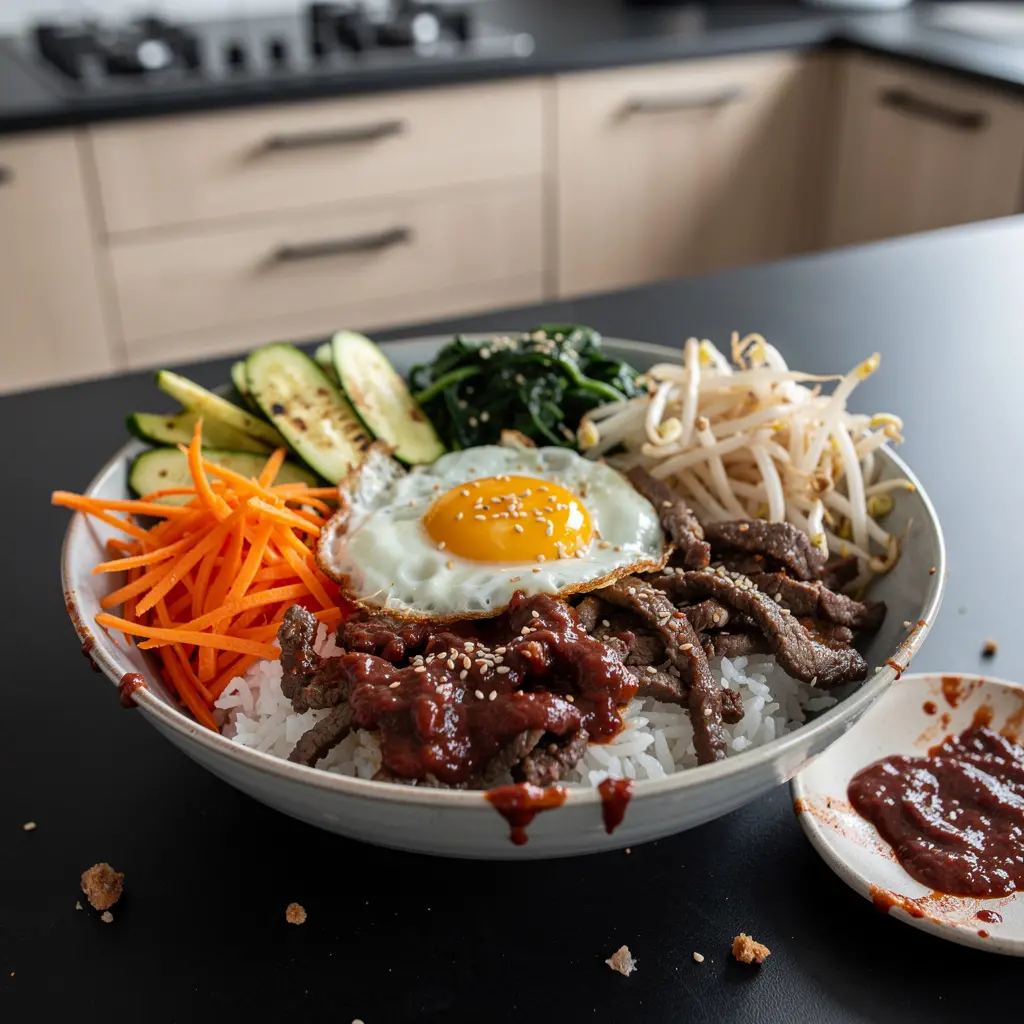
Bibimbap is a colorful Korean rice bowl with vegetables, meat, and egg that you mix together only right before eating. In Korea it’s often eaten as a quick weekday lunch or dinner, because it’s an easy way to use up leftover vegetables from the fridge. It’s a bit like a Polish “one-pot meal”, only served in a bowl and seasoned with spicy gochujang sauce.
This bibimbap is a complete, balanced meal in a single bowl: warm rice, marinated beef, crisp vegetables, and a silky egg, all brought together with a spicy-sweet gochujang sauce. It’s also a great way to use up leftover vegetables while still feeling like you’re eating something colorful and fresh.
Chef's tips
Prepare the vegetables and sauce in advance and cook the rice and eggs just before serving. Don’t skip toasting the sesame seeds—they add a lot of aroma. When frying the beef, use a large pan and high heat so it sears instead of stewing in its own juices.
How to serve
Serve bibimbap piping hot in heavy bowls. Put the gochujang sauce on the table so everyone can adjust the spiciness to their taste. It pairs well with simple kimchi, pickled radish, or a light miso or seaweed soup on the side.
Ingredients
- rice short-grain sushi rice or other sticky rice - 240 g
- water - 360 ml
- beef thinly sliced, e.g. sirloin or boneless ribeye - 250 g
- carrot cut into thin matchsticks - 1 piece
- zucchini cut into thin strips - 0.5 piece
- spinach fresh, leaves - 100 g
- mung bean sprouts soybean sprouts also work - 80 g
- vegetable oil for frying the vegetables and meat - 3 tablespoon
- sesame oil for seasoning the vegetables and meat - 2 teaspoon
- garlic finely chopped - 2 clove
- soy sauce - 3 tablespoon
- sugar - 1 teaspoon
- gochujang paste Korean spicy chili pepper paste - 2 tablespoon
- rice vinegar - 1 tablespoon
- egg one per serving - 3 piece
- sesame seeds toasted in a dry pan - 1 tablespoon
- fresh cucumber cut into thin half-slices - 0.5 piece
- salt to taste
- black pepper to taste
Preparation
- Rinse the rice thoroughly in cold water several times until the water is almost clear. Cover with the measured amount of water, cover the pot and cook over low heat for 12–15 minutes, until the water is absorbed. Set aside, covered, for another 10 minutes.
- In a bowl, mix the beef with 1 tablespoon soy sauce, half of the chopped garlic, 1 teaspoon sesame oil, the sugar, and a pinch of pepper. Set aside to marinate for at least 10 minutes.
- Put the spinach into a pot of boiling water for about 30 seconds, until wilted, then drain and rinse with cold water. Squeeze out the excess water with your hands, cut any thicker leaves, and mix with a little salt, 1 teaspoon sesame oil, and a bit of garlic.
- Pour boiling water over the bean sprouts and let stand for 1–2 minutes, then drain, rinse with cold water, and mix with a little salt and 1 teaspoon soy sauce.
- Heat 1 tablespoon oil in a pan. Fry the carrot for 3–4 minutes over medium heat, until slightly softened but still crisp. Transfer to a small bowl and lightly salt.
- In the same pan, sauté the zucchini for 3–4 minutes, until it softens and is lightly browned. Transfer to a separate bowl and season with a pinch of salt.
- In a small bowl, mix the gochujang paste with the rice vinegar, 1 tablespoon soy sauce, and 1–2 tablespoons water to make a thick but pourable sauce. Taste and add a little sugar if needed, if it’s too spicy.
- Heat 1 tablespoon oil in a pan. Fry the marinated beef for 3–5 minutes over fairly high heat, stirring, until the meat is no longer pink and is lightly browned.
- In a separate pan, heat a little oil and fry the eggs sunny-side up so that the whites are set and the yolks remain runny (about 3–4 minutes over medium heat).
- Spoon hot rice into bowls and gently flatten the surface. Arrange small separate piles of carrot, zucchini, spinach, sprouts, cucumber, and beef on top. Place a fried egg in the center, sprinkle with sesame seeds, and serve with the gochujang sauce on the side or directly on top. Mix everything thoroughly in the bowl before eating.
Storage
Ryż z warzywami i mięsem przechowuj w szczelnym pojemniku, jajka sadzone przygotuj świeże przed podaniem. Podgrzewaj na patelni lub w kuchence mikrofalowej, sos gochujang trzymaj osobno.