Zaru soba – cold buckwheat noodles with dipping sauce Recipe
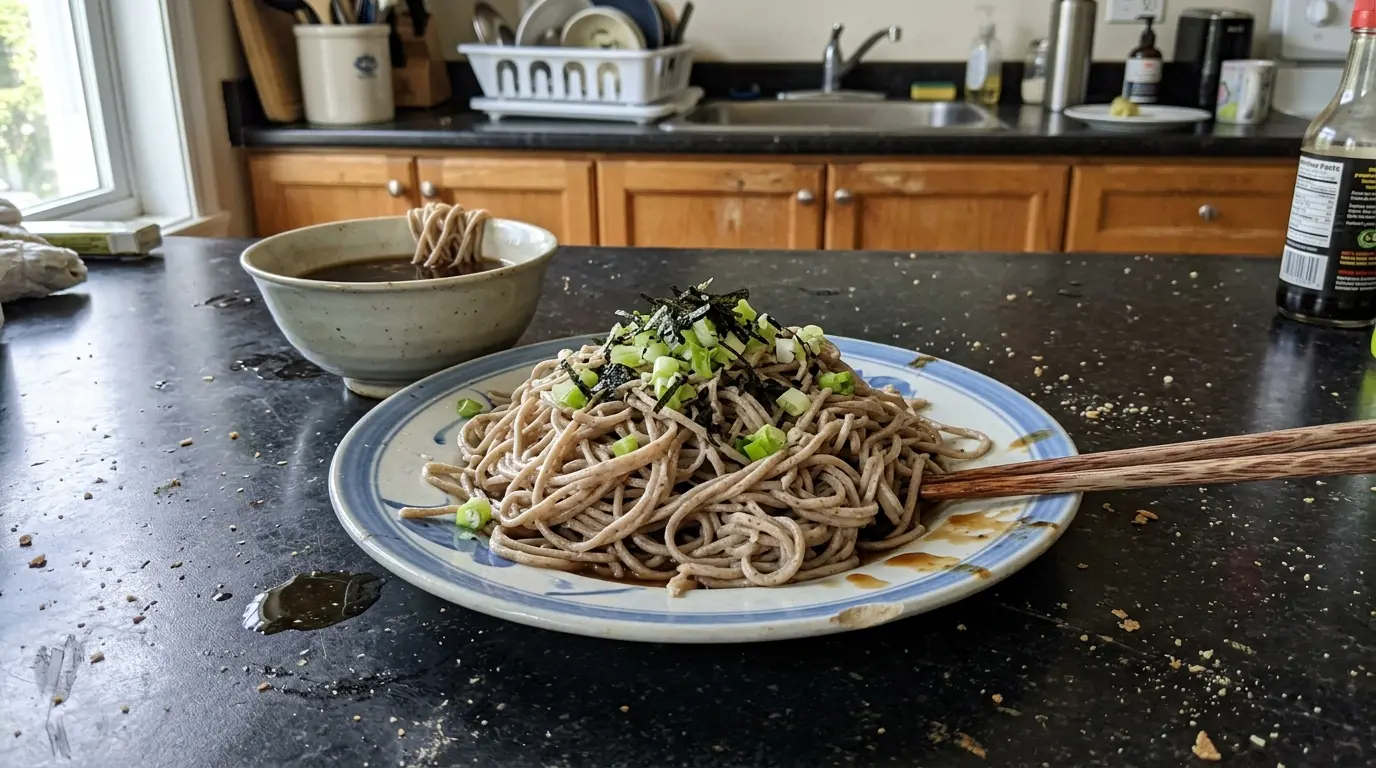
Zaru soba is chilled buckwheat noodles served on a bamboo tray or plate, with a separate bowl of aromatic dipping sauce. In Japan it’s eaten mainly in summer, when it’s hot and no one feels like heavy, steaming dishes. The taste is refreshing, slightly nutty from the buckwheat, with a distinct note of soy sauce and smoky dashi broth.
Zaru soba is a classic hot-weather dish in Japan and often appears both in soba bars and at home as a quick, cooling meal. It is served on a bamboo tray (zaru), which helps drain excess water from the noodles.
This classic Japanese dish showcases the pure, nutty flavor of buckwheat noodles and the umami depth of dashi in a simple, refreshing way that’s ideal for hot weather. The contrast between chilled noodles and intensely flavored dipping sauce makes every bite bright and satisfying.
Why this version works
- Ready-made dashi simplifies the dipping sauce while keeping its characteristic umami.
- Thorough rinsing and chilling in ice-cold water creates smooth, springy strands.
- Chilling the sauce and noodles separately makes every bite distinctly cold.
- Minimal toppings highlight the buckwheat flavor instead of covering it up.
Chef's tips
Use good-quality soba with a high buckwheat content for the best flavor and texture. Don’t skip the thorough rinsing under cold water – it removes excess starch and keeps the noodles pleasantly firm and bouncy. Chill both the noodles and the sauce well before serving; temperature is key to the character of zaru soba.
How to serve
Serve zaru soba with green tea or cold barley tea, and add simple sides like edamame, pickled vegetables, or a small bowl of rice for a more filling meal. You can also offer extra toppings such as grated daikon, shredded shiso leaves, or toasted sesame seeds so everyone can customize their bowl.
Watch out for
- Don’t cut the rinsing short – cloudy water means the noodles will stick together.
- Don’t boil the sauce over high heat; a hard boil flattens the aroma of the dashi and mirin.
- Don’t put very wet soba on the plate, or it will dilute the sauce when you dip.
Substitutions
- If you don’t have ready-made dashi, use a light vegetable stock with a splash of fish sauce.
- You can replace mirin with a mix of white wine and a pinch of sugar.
- Instead of nori, use toasted sesame seeds if you prefer milder toppings.
Ingredients
- soba noodles - 270 g
- soy sauce - 80 ml
- mirin - 60 ml
- dashi broth - 200 ml
- sugar - 5 g
- spring onion - 10 g
- wasabi - 5 g
- nori - 0.5 piece
Preparation
- In a large pot bring plenty of unsalted water to a boil (3–4 times the volume of the noodles). Add the soba and cook for 4–6 minutes according to the package, gently stirring so the strands can move freely and don’t clump together.
- 30–60 seconds before the stated cooking time ends, taste a strand: it should be tender but springy in the center, with no chalky core. As soon as it reaches this point, immediately drain the noodles in a large colander, without leaving them in the hot water, as they overcook quickly.
- Rinse the soba at once under very cold running water, moving the strands with your hand as if “washing” them until the water is no longer cloudy. This means the starch has been rinsed off and the noodles are becoming smooth and slippery rather than sticky.
- Transfer the noodles to a bowl of ice-cold water for 1–2 minutes, until they feel distinctly cold to the touch. Lift them out, shake the colander well and leave for 5–10 minutes, until the strands are just slightly damp – they shouldn’t drip when you lift them.
- In a small saucepan combine the soy sauce, mirin, dashi and sugar. Heat over low heat, stirring just until the sugar has fully dissolved; the sauce should be hot but not at a rolling boil so it keeps the fresh aroma of the dashi.
- Remove the pan from the heat, cool the sauce to room temperature, then chill it in the fridge for at least 30 minutes. The finished mentsuyu should be clear, intensely flavored and distinctly cold.
- Slice the spring onion into thin rings. Briefly toast the nori sheet over a flame or in a dry pan until it softens slightly and becomes fragrant, then cut it into thin strips with scissors.
- On bamboo trays or flat plates, form loose nests of soba, lifting portions with chopsticks and giving them a slight twist. The noodles should sit lightly and springily; if you see compact clumps, gently loosen them with your fingers.
- Pour the chilled sauce into small bowls. Add some spring onion and a dab of wasabi at the side so they can be mixed in gradually – the sauce should gain a gentle heat but remain clear.
- Scatter the nori strips over the noodles. Eat by picking up small portions of soba with chopsticks and quickly dipping them in the sauce just before eating – the strands should be evenly coated in mentsuyu but not swimming in it.
Storage
No storage information available for this dish.
Zaru soba is one of those dishes that proves how little you need to feel truly satisfied: a handful of good ingredients, attention to texture and temperature, and a moment to slow down and enjoy dipping each bite. It’s a great introduction to Japanese home-style cooking and a reliable go-to when it’s too hot to stand over the stove.