Yakisoba – Fried Noodles with Vegetables and Pork Recipe
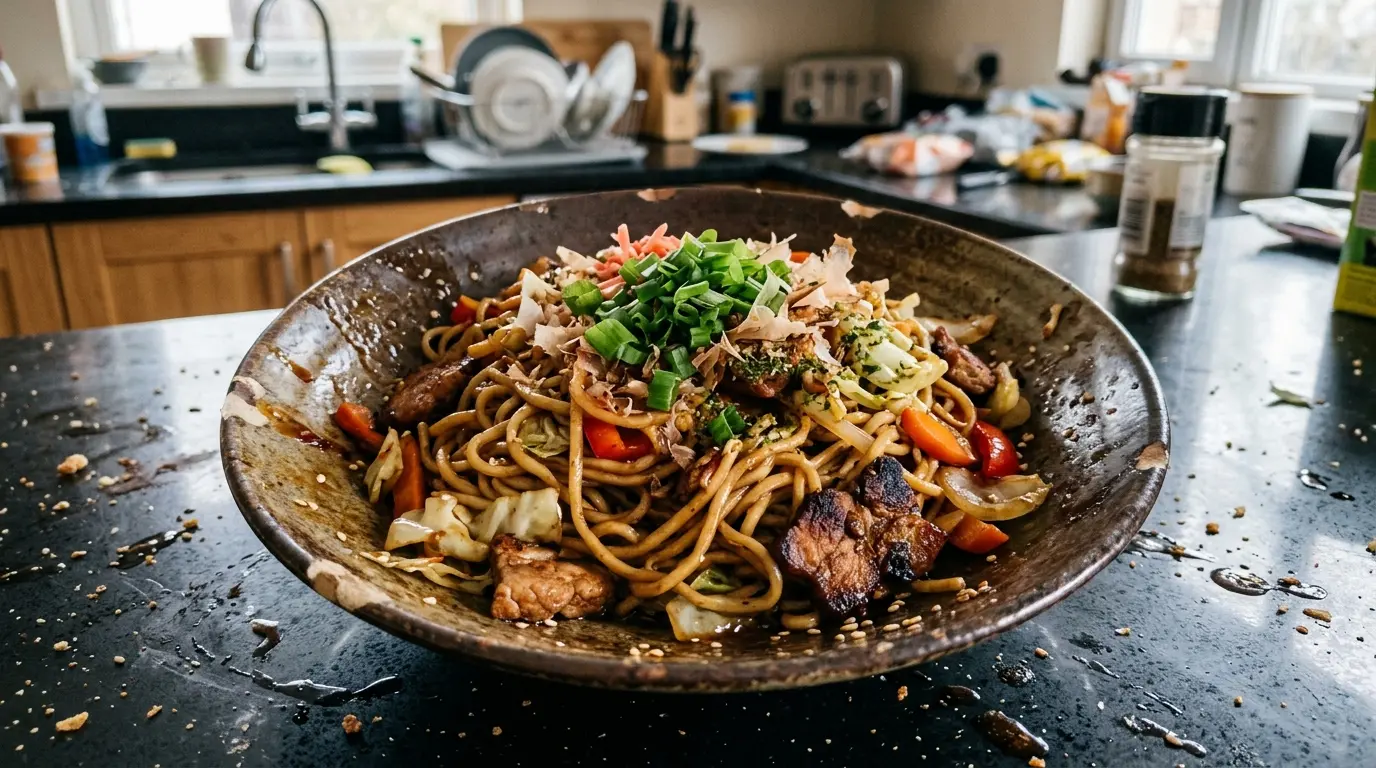
Yakisoba is classic Japanese festival street food: stir-fried noodles with vegetables and meat in a sweet-salty sauce. It’s a bit like a cross between Chinese chow mein and a Polish “clean-out-the-fridge skillet.” A perfect one-pan dish for a quick lunch or dinner when you want to use up vegetables lingering in the fridge.
Yakisoba comes from Japanese yatai street stalls, where it’s fried on large teppan griddles and served in paper boxes or on foam trays. It’s often finished with aonori flakes and pickled ginger (beni shoga), which highlight the sweet–savory sauce.
This yakisoba is a flexible, one-pan meal that turns simple noodles, basic vegetables, and a few pantry sauces into a deeply flavorful dish. It’s ideal for using up odds and ends from the fridge while still feeling like proper Japanese-style street food.
Why this version works
- A homemade sauce based on soy sauce, oyster sauce, and ketchup closely mimics bottled yakisoba sauce without any special shopping.
- Shorter cooking of the noodles and quick stir-frying over high heat keep them bouncy instead of overcooked and sticky.
- Separately searing the noodles over high heat adds the lightly charred aroma you get from street stalls.
- Adding the sauce in batches lets you control saltiness and thickness, so the dish doesn’t end up watery or overly salty.
Chef's tips
Slice the meat as thinly as possible so it cooks quickly and stays tender. Have all ingredients prepped before you start frying—yaki-style dishes cook fast, and you won’t have time to chop once the pan is hot. Don’t overcrowd the pan; if your pan is small, fry the meat in two batches so it browns instead of steams.
How to serve
Serve the yakisoba straight from the pan while it’s still sizzling. Top with extra chives or spring onion, toasted sesame seeds, or a drizzle of Japanese mayonnaise. If you like, add pickled ginger on the side for a more authentic Japanese touch.
Watch out for
- Don’t overcrowd the pan—if the ingredients sit in a thick layer, they’ll start steaming, release water, and lose their caramelization.
- Cooked noodles stick together quickly; if they sit for more than 2–3 minutes, immediately toss them with a little oil.
- Don’t pour in all the sauce at once—over high heat it will reduce fast and can make the noodles too salty and sticky.
Substitutions
- You can replace the pork with chicken thigh or breast, cut into thin strips and fried just like the pork.
- Instead of meat, use thinly sliced oyster mushrooms or smoked tofu to get a fuller, vegetarian version.
- You can swap green cabbage for Napa cabbage, adding it later, as it softens much faster and is easy to overcook.
- If you don’t have oyster sauce, add 1 extra tablespoon of soy sauce and 1/2 teaspoon of rice or apple vinegar.
Ingredients
- wheat noodles e.g. ramen noodles or thick egg noodles - 250 g
- pork thinly sliced pork loin or pork neck - 200 g
- white cabbage shredded into strips - 150 g
- carrot cut into thin matchsticks - 1 piece
- onion sliced into thin wedges - 1 piece
- vegetable oil for frying - 2 tablespoons
- soy sauce - 2 tablespoons
- oyster sauce for deeper flavor - 1 tablespoon
- ketchup - 1 tablespoon
- sugar - 1 teaspoon
- pepper freshly ground - 0.25 teaspoons
- chives for sprinkling - 2 tablespoons
Preparation
- Cook the noodles according to the package instructions, but shorten the cooking time by 1 minute so they stay slightly springy. Drain and briefly rinse under cold water to keep them from sticking together.
- In a small bowl, mix the soy sauce, oyster sauce, ketchup, and sugar until the sugar dissolves. Set aside.
- Heat 1 tablespoon of oil in a large frying pan or wok over high heat. Add the sliced pork and stir-fry for 3–4 minutes, until browned and no longer raw.
- Add the onion and fry over medium heat for 3–4 minutes, until it softens and turns slightly translucent but does not brown.
- Add the carrot and cabbage, increase the heat, and stir-fry for 4–5 minutes, stirring often, until the vegetables soften but remain slightly crunchy.
- Push the vegetables and meat to one side of the pan, pour the remaining 1 tablespoon of oil onto the empty side, and add the cooked noodles. Stir-fry for 1–2 minutes to heat through.
- Pour the prepared sauce over the noodles and vegetables and mix everything thoroughly with tongs or two spoons so the sauce coats all the ingredients evenly. Fry for another 2 minutes.
- Season with freshly ground pepper, taste, and add a little more soy sauce if needed. Serve immediately, sprinkled with chopped chives.
Storage
No storage information available for this dish.
Yakisoba is one of the easiest ways to bring Japanese festival vibes into your kitchen. Once you learn the basic sauce and technique, you can swap in whatever meat and vegetables you have on hand and still get a satisfying, comforting meal.