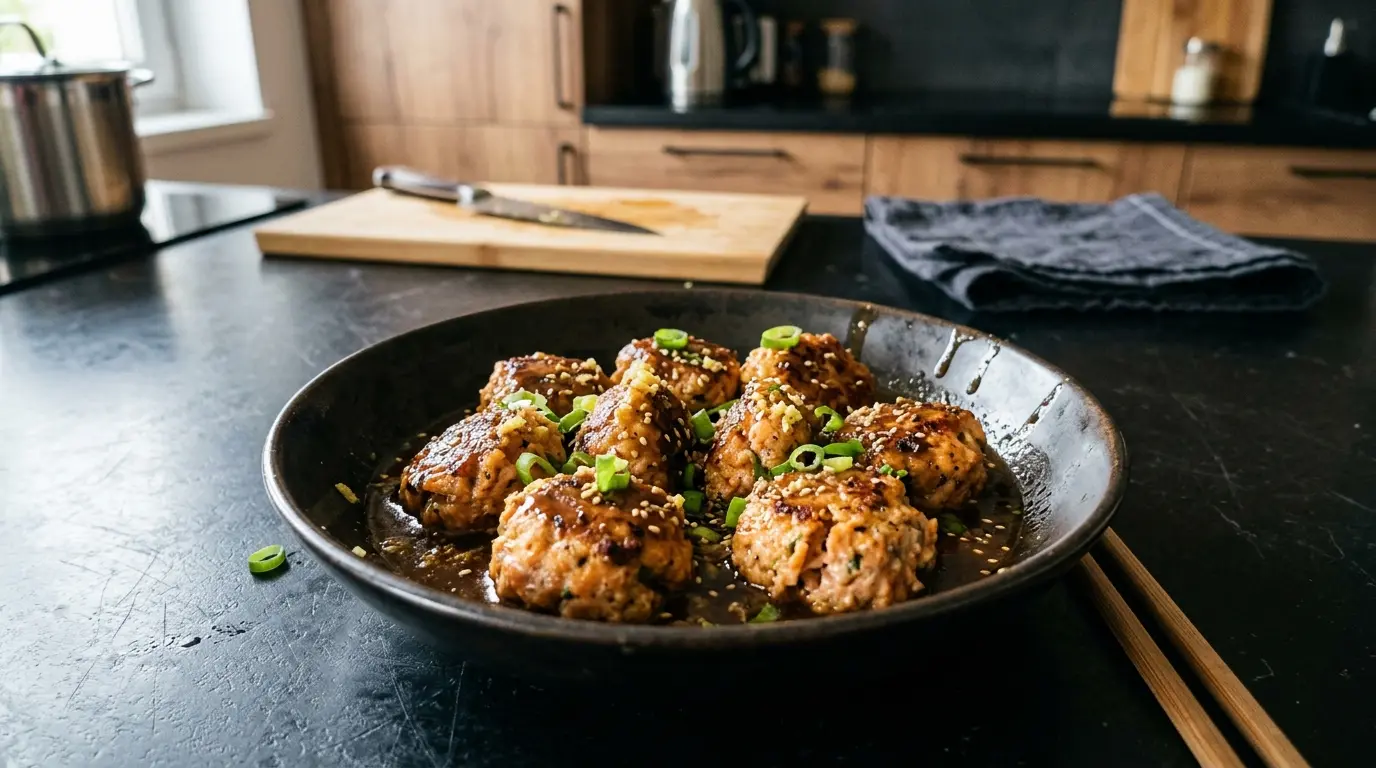
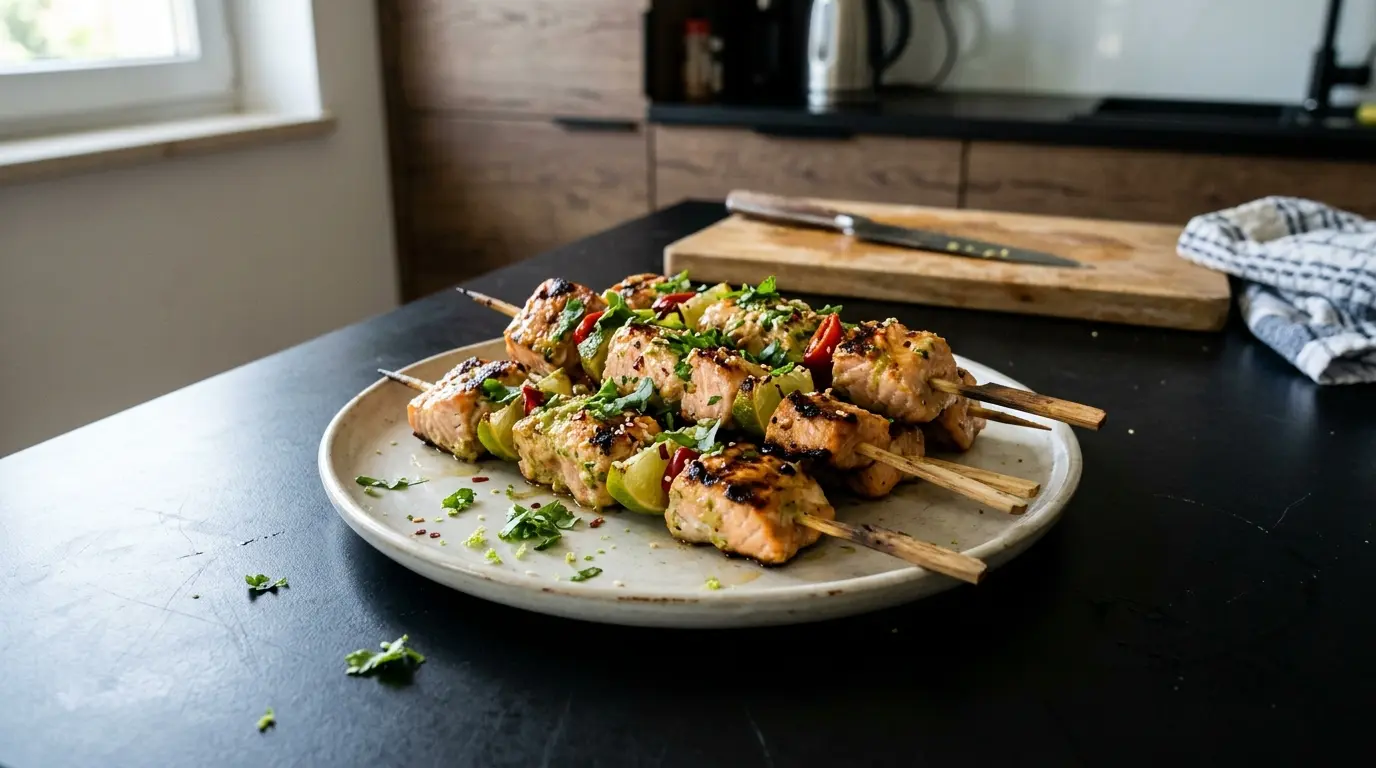
Yakisake – Salmon Baked in Soy-Butter Sauce Recipe
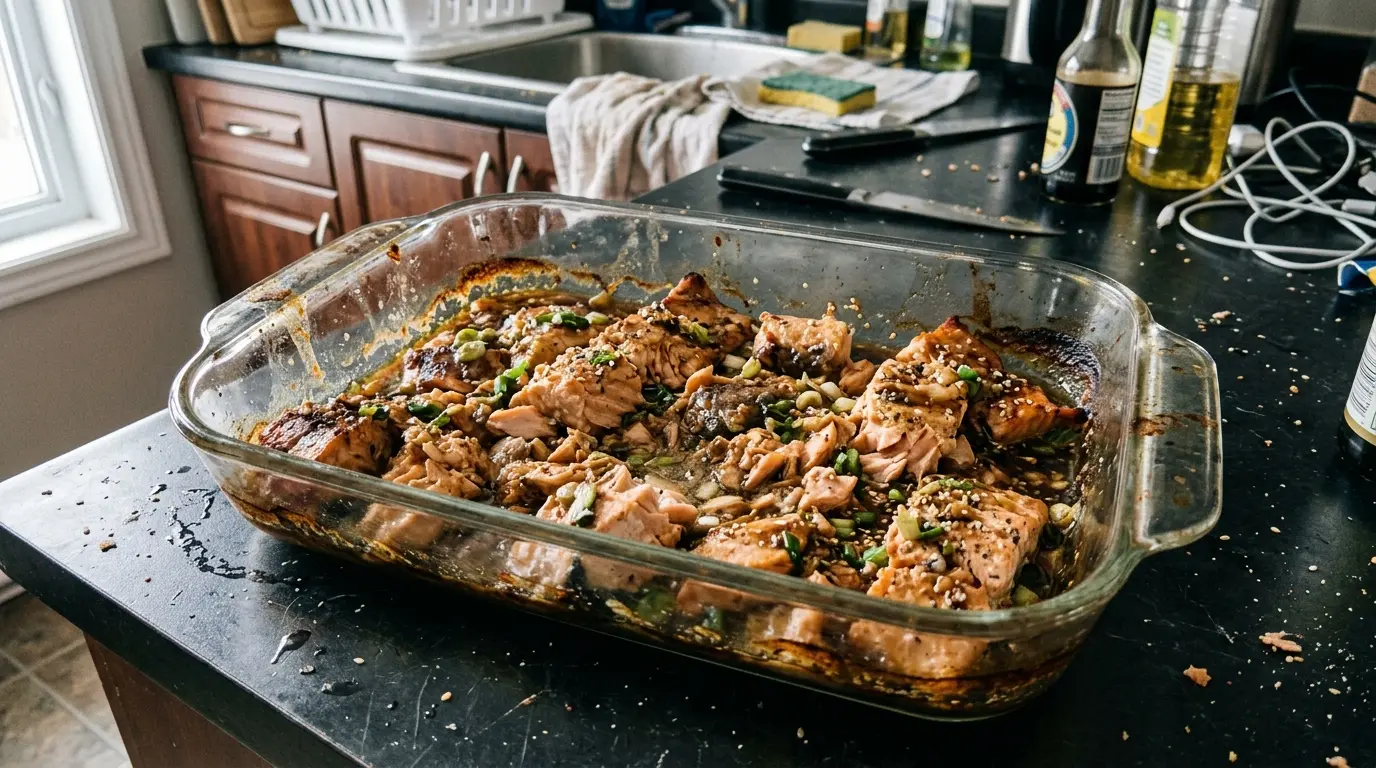
Yakisake is a simple salmon dish inspired by Japanese cuisine – the fish is briefly marinated, then baked or grilled with butter and soy sauce. In Japan, similar dishes are often served in small portions alongside rice and miso soup for breakfast or lunch. The combination of buttery aroma with slightly salty soy sauce creates a very addictive flavor.
In Japan, grilled salmon is a common part of home breakfasts and teishoku set meals, usually served with rice and pickles. This oven‑baked version imitates the flavour of yakimono, but is more convenient for a kitchen without a traditional grill.
This recipe delivers restaurant-level Japanese-inspired flavor with minimal effort: a short marinade, a quick bake, and a rich, glossy soy-butter sauce that practically makes itself on the tray.
Why this version works
- A short marinade enhances the flavour of the salmon but doesn’t “cook” the surface or make the fish too salty.
- Baking the fish skin‑side down with butter on top acts as a shield against drying out and creates a sauce at the same time.
- The oven provides even heat and reduces the risk of burning the marinade, which contains sugar.
Chef's tips
Don’t overmarinate the salmon – 10–15 minutes is enough, otherwise the soy sauce can dominate the flavor and start to cure the surface of the fish. Watch the baking time closely; slightly underbaked salmon will be juicier than overbaked. If your fillets are very thick, add 2–3 minutes and check the doneness in the thickest part.
How to serve
Serve the salmon over hot rice, spooning plenty of tray sauce on top. Add pickled vegetables or a quick cucumber salad with rice vinegar for freshness. For a more substantial meal, serve with steamed green beans, broccoli, or pak choi.
Watch out for
- Don’t marinate the salmon much longer than 20–25 minutes at room temperature, as soy sauce can start to “tighten” the surface of the flesh and the fish will turn out too salty.
- Don’t exceed the baking time – the salmon will continue to cook in its own residual heat after you take it out of the oven, so remove it when the centre is still slightly moist.
- If you’re using very thin portions, start checking for doneness after just 8 minutes so you don’t dry the fish out.
Substitutions
- You can replace mirin with a tablespoon of white wine or water with a pinch of sugar.
- Instead of fresh ginger, use 1/3 teaspoon ground ginger, added directly to the marinade.
- You can replace salmon with rainbow trout of similar thickness, reducing the baking time by 1–2 minutes.
Ingredients
- salmon - 450 g
- soy sauce - 3 tablespoons
- mirin - 2 tablespoons
- butter - 40 g
- garlic - 1 clove
- ginger - 10 g
- lemon - 0.5 piece
- sugar - 0.5 teaspoons
- oil - 1 teaspoon
- spring onion - 1 piece
Preparation
- Preheat the oven to 200°C (top and bottom heat). Line a baking tray with baking paper and lightly brush it with oil.
- Rinse the salmon and pat dry with a paper towel. Cut into 3 portions, leaving the skin on if there is any.
- Finely chop the garlic, peel the ginger and grate it on a fine grater. Slice the spring onion into thin rounds.
- In a bowl, mix the soy sauce, mirin, sugar, garlic and ginger. Place the salmon pieces in the marinade, coat thoroughly and set aside for 10–15 minutes at room temperature.
- After this time, place the salmon on the prepared tray, skin side down. Put a small slice of butter on each piece and distribute the remaining butter between the pieces.
- Place the tray in the preheated oven and bake for 10–12 minutes, until the salmon is opaque on top and just begins to flake when pressed gently with a fork.
- For the last 2–3 minutes you can turn on the grill function so the top browns slightly, but be careful not to dry out the fish.
- After removing from the oven, drizzle the salmon with lemon juice and sprinkle with spring onion. Serve immediately, spooning over the sauce that has collected on the tray.
Storage
No storage information available for this dish.
This is one of those recipes I reach for when I want something comforting but not time-consuming. The soy-butter combination feels luxurious, yet the method is simple enough for a weeknight. It’s also very forgiving – as long as you don’t overbake the fish, the result is always satisfying.