Vegetable futomaki sushi for beginners Recipe
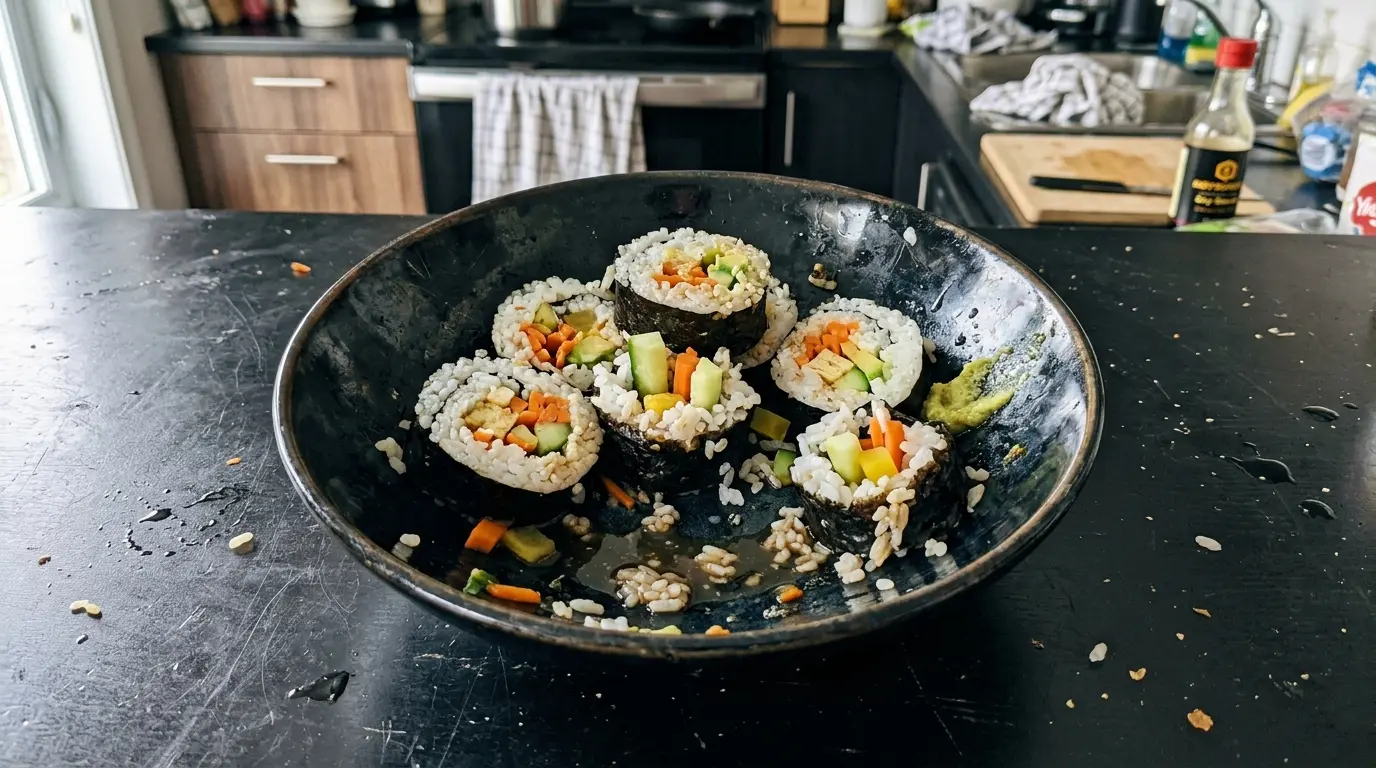
Homemade futomaki are thicker sushi rolls filled with colorful vegetables that are easy to prepare without any special equipment. In Japan, these rolls often appear in bento, the lunch boxes taken to work or school. They’re a great way to try Japanese flavors in a mild, family‑friendly version.
Futomaki appears more often at casual home gatherings than in elegant sushi bars – it’s a kind of family-style “assemble your own” sushi at the table. In Japan it’s also often packed into colorful bento boxes for trips and school lunches.
This recipe shows how to make thick, colorful futomaki rolls at home without any special tools, using simple vegetables and mild flavors that suit both beginners and children. It’s a gentle introduction to sushi that still feels authentic and fun to share.
Why this version works
- The ratio of rice to filling is calculated for thick rolls, so it’s easier to roll them without cracking.
- Blanched carrot keeps its color and crunch, and doesn’t make the rice soggy from the inside.
- Cream cheese softens the sharpness of wasabi and soy sauce, so even kids tend to enjoy these futomaki.
- The described rice and nori temperatures minimize the problem of tearing sheets.
Chef's tips
Use short‑grain rice labeled for sushi if possible, as it has the right stickiness. Don’t rush cooling the rice: spreading it out and gently folding in the vinegar mixture gives the best texture and shine. Keep a small bowl of water nearby to wet your hands and knife; this prevents the rice from sticking and helps you get neat, even slices.
How to serve
Serve the futomaki as a light lunch or part of a larger Japanese‑style spread with miso soup, edamame and a simple cucumber salad. For parties, arrange different fillings on one platter and add extra pickled ginger and wasabi so everyone can adjust the flavor to their liking.
Watch out for
- If the rice is still hot when you season it, it will easily turn into mush once you add the vinegar mixture.
- Overly wet vegetables (not dried after washing) will soften the nori from the inside and the roll will fall apart.
- Your knife has to be really sharp – a dull one will squash the roll and squeeze the filling out the sides.
Substitutions
- You can replace the cream cheese with light philadelphia-style cheese if you prefer a lighter version.
- Swap the greenhouse cucumber for a fresh field cucumber, carefully scooping out the seeds.
Ingredients
- rice - 300 g
- water - 360 ml
- rice vinegar - 60 ml
- sugar - 20 g
- salt - 3 g
- nori - 5 piece
- cucumber - 0.5 piece
- carrot - 1 piece
- avocado - 1 piece
- cream cheese - 80 g
- sesame seeds - 2 tablespoons
- soy sauce - 60 ml
- wasabi - 5 g
- pickled ginger - 30 g
Preparation
- Rinse the rice thoroughly in cold water 4–5 times, until the water is almost clear, then leave it in a sieve for 15 minutes to drain.
- Transfer the rice to a pot, pour in the measured water, cover with a lid and bring to a boil over medium heat. When it starts bubbling vigorously, reduce the heat to low and cook for 10 minutes without lifting the lid.
- After 10 minutes, turn off the heat and leave the pot covered for another 10 minutes so the rice can finish steaming.
- In a small saucepan, gently heat the rice vinegar with the sugar and salt, stirring until the sugar dissolves, but do not let it boil. Set aside to cool slightly.
- Transfer the hot rice to a wide bowl or shallow dish, drizzle with the vinegar seasoning and gently mix with a wide spatula, spreading out the rice until it looks slightly glossy and is almost at room temperature.
- Cut the cucumber lengthwise, remove the soft core with seeds and slice into long thin strips. Peel the carrot and cut into thin sticks, then drop into boiling water for 1–2 minutes until slightly softened and quickly transfer to cold water.
- Halve the avocado, remove the pit, peel and cut into long strips. Prepare the cream cheese, sesame seeds, soy sauce, wasabi and pickled ginger for serving.
- Place a sheet of nori shiny side down on a bamboo mat or a clean tea towel. Moisten your hands with water, spread a thin layer of rice over the nori, leaving about a 2 cm strip free at the top edge.
- Arrange strips of cucumber, carrot and avocado in a line across the middle of the rice, sprinkle with sesame seeds and add small teaspoonfuls of cream cheese in a few spots.
- Start rolling from the edge closest to you, using the mat or towel to help and pressing fairly firmly to form a tight roll. Lightly moisten the free strip of nori with water at the end so it seals.
- Place the finished roll seam‑side down on a board. Using a very sharp knife moistened with water, cut the roll into 8 pieces with quick, decisive strokes.
- Repeat with the remaining ingredients. Serve the futomaki with soy sauce in small bowls, a little wasabi and pickled ginger.
Storage
No storage information available for this dish.
Futomaki were my first successful homemade sushi rolls: the larger size is much more forgiving than thin maki, and vegetable fillings are easy to prepare with what you already have in the fridge. Once you feel confident with this version, you can start experimenting with new combinations and bolder flavors.