Vanilla and Cocoa Zebra Cake Recipe
Vanilla and cocoa zebra cake is a two‑colour sponge‑style butter cake that was popular in Polish homes in the 1990s, usually baked in a springform tin. Its light, moist texture thanks to oil and the alternating pouring of batters create distinct stripes that are visible from the very first slice.
Zebra was one of the most popular cakes in Polish apartment blocks in the 1990s because simple ingredients produced an eye‑catching cross‑section without any creams. It still often appears at name days and school fairs as a “safe” cake for children.
Vanilla and cocoa zebra cake is a throwback to homemade 1990s baking, when on Saturday afternoons apartment blocks smelled of cocoa and vanilla. The characteristic stripes are created solely by alternating layers of light and dark batter, with no special tins or colourings. The flavour is simple but addictive – lightly buttery, moist and perfect with a mug of tea.
Why this version works
- Beating the eggs with sugar for a long time aerates the mixture, so there’s no need to whip the whites separately.
- Oil instead of butter keeps the cake soft and moist even the next day.
- Matching the thickness of the light and dark batters guarantees even, distinct stripes without distortion.
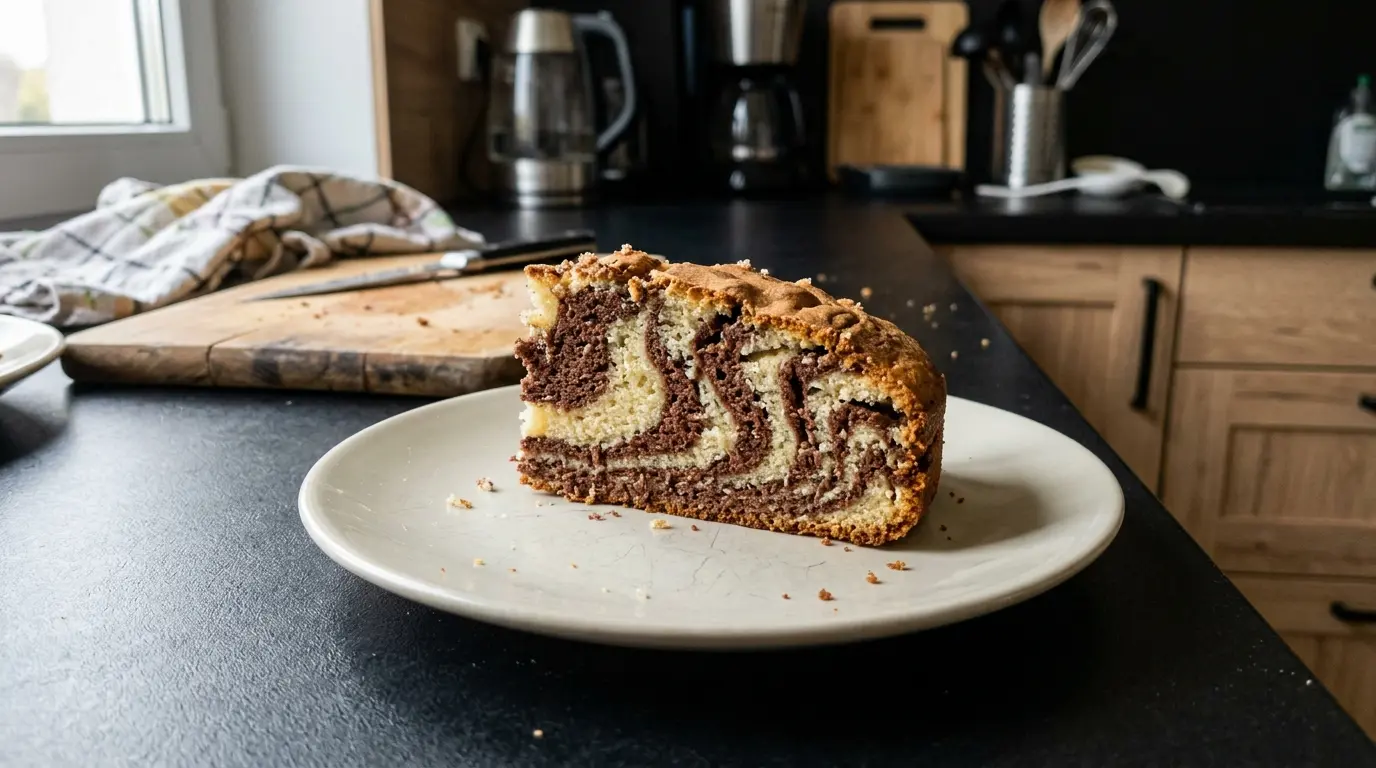
Chef's tips
If you want a very regular pattern, start by adding just 1 tablespoon of each batter; once a clear circle forms, increase the amount., The most common mistake is batter that’s too thick on the cocoa side – if it starts to stretch like pudding, add a little milk until it flows freely off the spoon again., Before removing the cake from the tin, always run a knife around the edge – a stuck crust can tear off part of the pattern.
How to serve
Serve in thick slices with tea and lemon or a mug of cocoa, especially on cooler afternoons., For trips, pack sliced pieces in a container – they travel well and don’t make your hands messy with cream., For children’s parties you can cover the top with a simple chocolate glaze and sprinkle with colourful sprinkles.
Watch out for
- Don’t shorten the egg‑beating time – a batter that’s too runny will give a low, dense cake.
- When adding the flour, mix only until combined, otherwise the gluten will develop and the zebra will turn rubbery.
- Don’t open the oven in the first 30 minutes, or the cake may sink and crack in the middle.
Substitutions
- You can replace part of the milk with natural yoghurt, which adds a slight tang and extra moisture.
- Instead of vanillin sugar, use vanilla extract or vanilla paste for a more intense aroma.
Ingredients
- wheat flour - 300 g
- sugar - 200 g
- egg - 4 piece
- oil - 200 ml
- milk - 200 ml
- baking powder - 12 g
- cocoa - 2 tablespoons
- vanillin sugar - 8 g
- salt - 1 pinch
- butter - 10 g
- breadcrumbs - 10 g
Preparation
- Lightly grease a 24 cm springform tin with butter and dust with breadcrumbs or line with baking paper. Preheat the oven to 170°C, top and bottom heat, and place the rack in the middle so the cake bakes evenly.
- Crack the eggs into a large bowl, add the sugar and vanillin sugar. Beat with a mixer on high speed for 5–7 minutes, until the mixture is very pale, thick and at least doubled in volume; when you lift the beaters, it should fall in a thick ribbon.
- Pour the oil into the beaten mixture in a thin stream, then add the milk, mixing on low speed just until combined. The foam should remain clearly fluffy – if it collapses and becomes watery, you’re mixing for too long.
- Mix the flour with the baking powder and a pinch of salt. Add to the wet ingredients in 2–3 additions, mixing briefly on low speed or folding with a spatula until no dry flour remains; the batter should be smooth but still light and aerated.
- Divide the batter into two equal parts. Add the cocoa to one bowl and mix thoroughly until the batter is evenly dark with no lumps. If this part is noticeably thicker than the light one, add 1–2 tablespoons of milk so both batters fall from the spoon at a similar rate.
- Pour 2 tablespoons of light batter into the centre of the prepared tin, then 2 tablespoons of dark batter into the centre of the light circle. Repeat alternately, always aiming for the exact centre of the previous portion, until you use all the batter and concentric rings form.
- Finally, very gently tap the tin on the counter 1–2 times to release larger air bubbles without blurring the pattern. The surface should be level and the batter should spread almost to the edges of the tin.
- Place the tin in the preheated oven and bake for 40–45 minutes. When the zebra is done, the top will spring back when lightly pressed with a finger and a skewer inserted in the centre will come out dry or with a few crumbs.
- Remove the baked cake from the oven and leave it in the tin for 10 minutes to release some steam. Then turn it out onto a rack and leave to cool completely – if sliced while warm it crumbles easily and the stripes can get squashed.
Storage
Store the cake covered at room temperature for up to 2 days, then in the fridge so it doesn’t dry out. Over time the top dries slightly, but the centre stays moist; frozen slices are a bit more crumbly after thawing but still slice well.
My favourite moment is the first cut, when you find out whether the stripes are perfect or a bit wild. I often bake a double batch in a rectangular pan so there’s enough for the whole weekend – for coffee at home and “to go”.