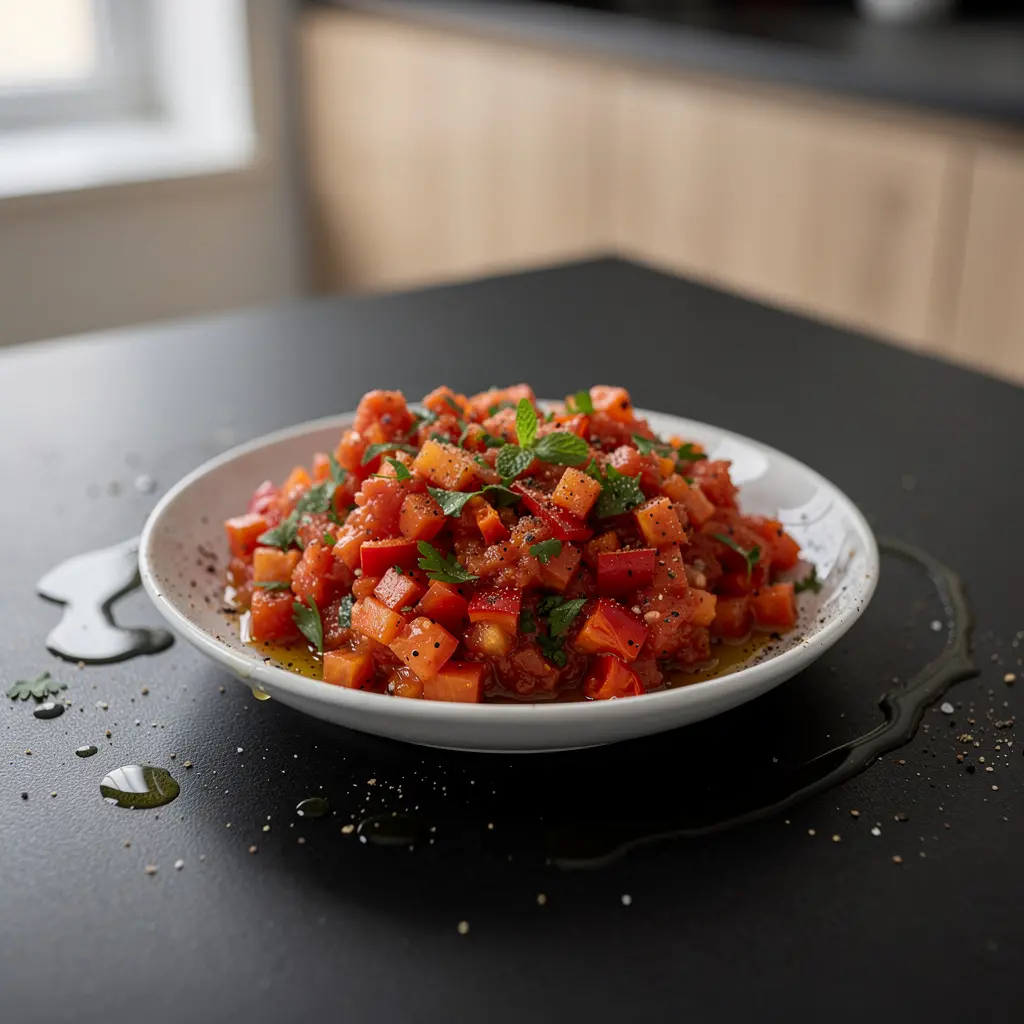
Tomato rasam – spicy, thin broth from South India Recipe
This tomato rasam is a thin, rustic South Indian broth with softened tomato pulp, coarsely crushed pepper, cumin, and garlic, and a sharp tamarind finish. Its aroma comes from mustard seeds, curry leaves, and dried chili bloomed separately in hot oil, while fresh coriander keeps the finished rasam bright.
Rasam belongs to a broad family of thin, sour, spiced broths prepared across South India, with recipes varying by region and household. Tomato versions commonly combine fresh tomato with tamarind, pepper, cumin, and a final oil tempering. Rasam may be ladled over rice as part of a meal or served on its own as a warm, savory drink.
Pepper and cumin give this rasam a direct, warming bite, but the flavor is not heavy because the spices are only coarsely crushed and the broth is diluted with 800 ml water. Cooking the tomatoes down first builds body, while the last-minute mustard, curry leaf, and chili tempering supplies the characteristic roasted aroma.
Why this version works
- Using approximately 450–500 g tomatoes gives enough pulp and acidity without turning the rasam into a thick tomato soup.
- Coriander stalks cook with the tomatoes for depth, while the leaves are added off the heat so their fresh aroma is not lost.
- The recipe assumes standard ready-to-use tamarind paste, making the intended sourness clearer than an unspecified concentrate.
- Blooming mustard seeds, curry leaves, and dried chili separately prevents them from becoming waterlogged and carries their aroma through the broth.

Chef's tips
Crush the pepper and cumin to a gritty texture rather than a fine powder; the uneven pieces create small bursts of spice in the broth. Before serving, stir from the bottom because the tomato pulp and crushed spices naturally settle as the rasam rests.
How to serve
Serve the rasam steaming hot in small bowls or mugs, or spoon it over hot rice as part of a South Indian meal. Let it rest for 3–5 minutes after tempering so the curry leaf and mustard aromas spread through the broth, then stir before portioning.
Watch out for
- Tamarind products vary greatly. Do not use a full tablespoon of a highly concentrated extract as though it were ordinary ready-to-use paste.
- Dry the curry leaves before adding them to hot oil; wet leaves can cause forceful splattering.
- Keep the tomatoes moving during the first few minutes, when they are most likely to catch on the bottom of the pan.
- Remove the tempering from the heat if the dried chili turns black or the mustard seeds smell burnt; scorched spices will make the entire pot bitter.
- Avoid a vigorous, prolonged boil after adding the water, which can reduce the broth too far and mute its fresh tomato character.
Substitutions
- For a lemon-based version already suggested by this preparation, omit the tamarind. After turning off the heat, stir in 1 1/2 tablespoons lemon juice, taste, and increase to 2 tablespoons if needed; do not boil after adding it.
- If the tamarind is labeled three-times concentrated, mix 1 teaspoon concentrate with 2 teaspoons water to replace the listed tablespoon of ready-to-use paste.
Ingredients
- tomatoes ripe - 4 piece
- garlic - 3 cloves
- black peppercorns - 1 teaspoon
- cumin seeds - 1 teaspoon
- fresh coriander - 0.25 bunch
- tamarind paste - 1 tablespoon
- turmeric - 0.25 teaspoons
- curry leaves - 8 piece
- vegetable oil - 1.5 tablespoons
- mustard seeds - 0.5 teaspoons
- whole dried chilies - 1 piece
- water - 800 ml
- salt
Preparation
- Use 4 medium tomatoes, about 450–500 g total, and chop them into 2 cm pieces. Rinse and dry the 1/4 bunch of coriander, about 10–15 g. Finely chop the tender stalks and roughly chop the leaves, keeping them separate.
- Crush the peppercorns, cumin seeds, and peeled garlic in a mortar until the garlic forms a rough paste but flecks of pepper and cumin remain visible. The spices are not toasted for this version.
- Put the tomatoes, turmeric, coriander stalks, crushed spice mixture, and 1/2 teaspoon salt in a medium saucepan. Cook over medium heat for 6–8 minutes, stirring frequently, until the tomatoes have collapsed and released their juices. If they begin sticking before softening, add 2 tablespoons from the measured 800 ml water.
- Whisk the tablespoon of ready-to-use tamarind paste into about 100 ml of the measured water, then add it to the pan with the remaining water. Bring the rasam just to a boil, lower the heat, and simmer uncovered for 8–10 minutes. It should remain thin, with small pieces of tomato suspended in the broth, and smell distinctly peppery and sour.
- Heat the vegetable oil in a small saucepan over medium heat. Add the mustard seeds and cook for 30–60 seconds, until they begin popping steadily. Add the dry curry leaves and the dried chili, broken into two pieces, then fry for 15–20 seconds. The leaves should turn crisp and glossy, while the chili should darken slightly without blackening.
- Carefully pour the hot tempering into the rasam; stand back because the oil may spit. Stir, simmer for 1 minute, and turn off the heat. Add most of the chopped coriander leaves, reserving a little for serving, then let the rasam stand for 3 minutes.
- Taste and add more salt as needed. Serve hot, including a little tomato pulp and tempered spices in each bowl or mug.
Storage
Rasam becomes even more aromatic after reheating. Before serving, stir it well and add a little water if it has reduced too much.
I prefer this rasam with some tomato pulp left intact rather than strained smooth. Those soft pieces give the otherwise light broth just enough texture, especially when it is served over rice.