Thai Sticky Coconut Rice with Grilled Pineapple Recipe
This dessert is inspired by Thai sweets from street stalls. Instead of classic mango, we use grilled pineapple, which is easier to find year-round in Europe. Sweet, fragrant coconut rice and lightly caramelised pineapple make a combination that can easily compete with ice cream.
This is a version inspired by mango sticky rice, a dessert that in Thailand is served mainly during mango season, often from street carts. Here mango is replaced with pineapple, which better matches the year-round availability of fruit in Europe.
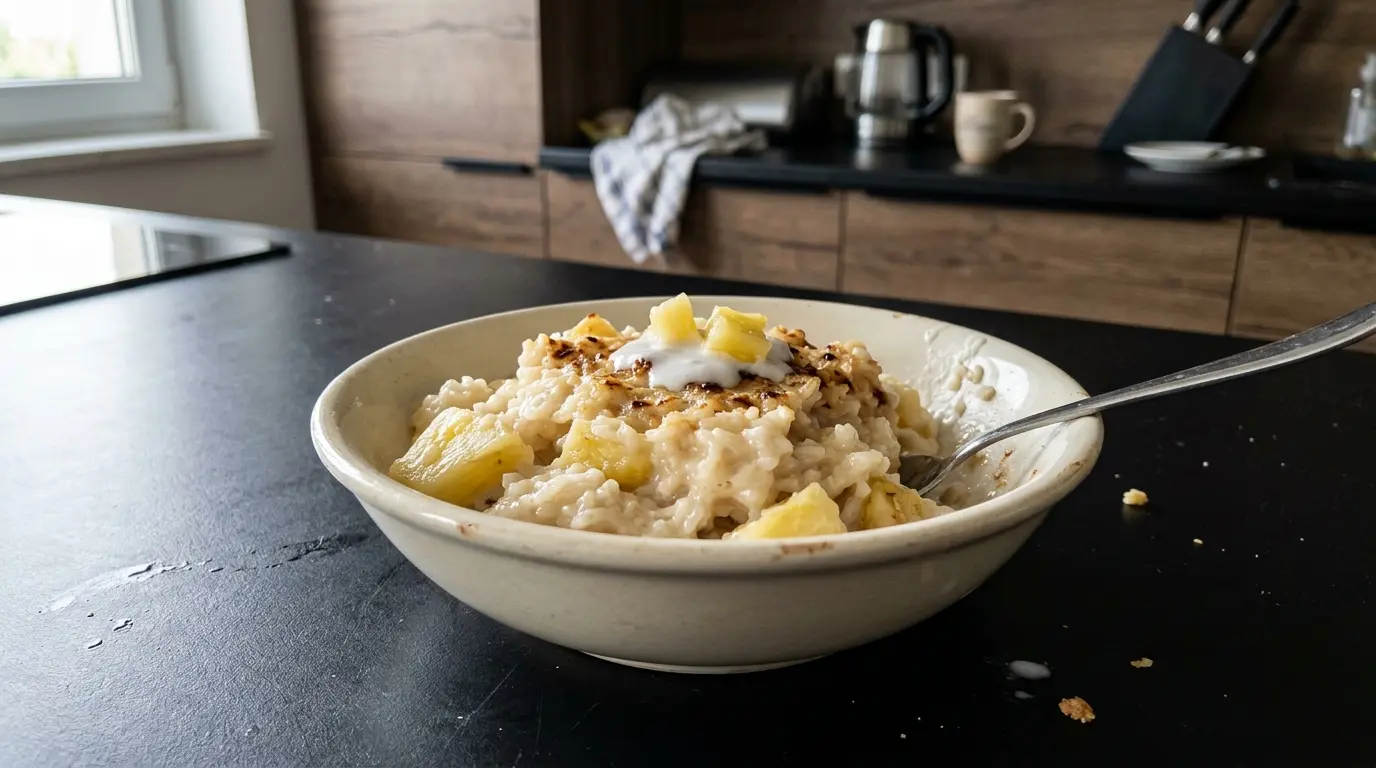
Thai sticky coconut rice with grilled pineapple combines a creamy, coconutty base with lightly smoky, caramelised fruit. Instead of harder-to-find mango, it uses pineapple, making it easier to prepare in a European kitchen all year round without losing its exotic character.
Why this version works
- Soaking the rice before cooking gives evenly soft, springy grains.
- Dividing the coconut milk into a portion for absorption and a portion for drizzling creates a creamy, layered texture.
- Grilled pineapple with sugar forms a natural caramel without extra sauces.
- Gently heating the coconut milk without boiling prevents the fat from curdling.
Chef's tips
Cook the rice over very low heat, covered, without stirring – this way the grains stay sticky but don’t break down into mush. Add the coconut milk gradually and mix well with the sugar and a pinch of salt, which enhances the sweetness; if you’re using regular sushi rice, give it a bit longer to rest covered after turning off the heat. Grill the pineapple on a very hot grill pan or barbecue until dark stripes appear and the juice starts to thicken slightly.
How to serve
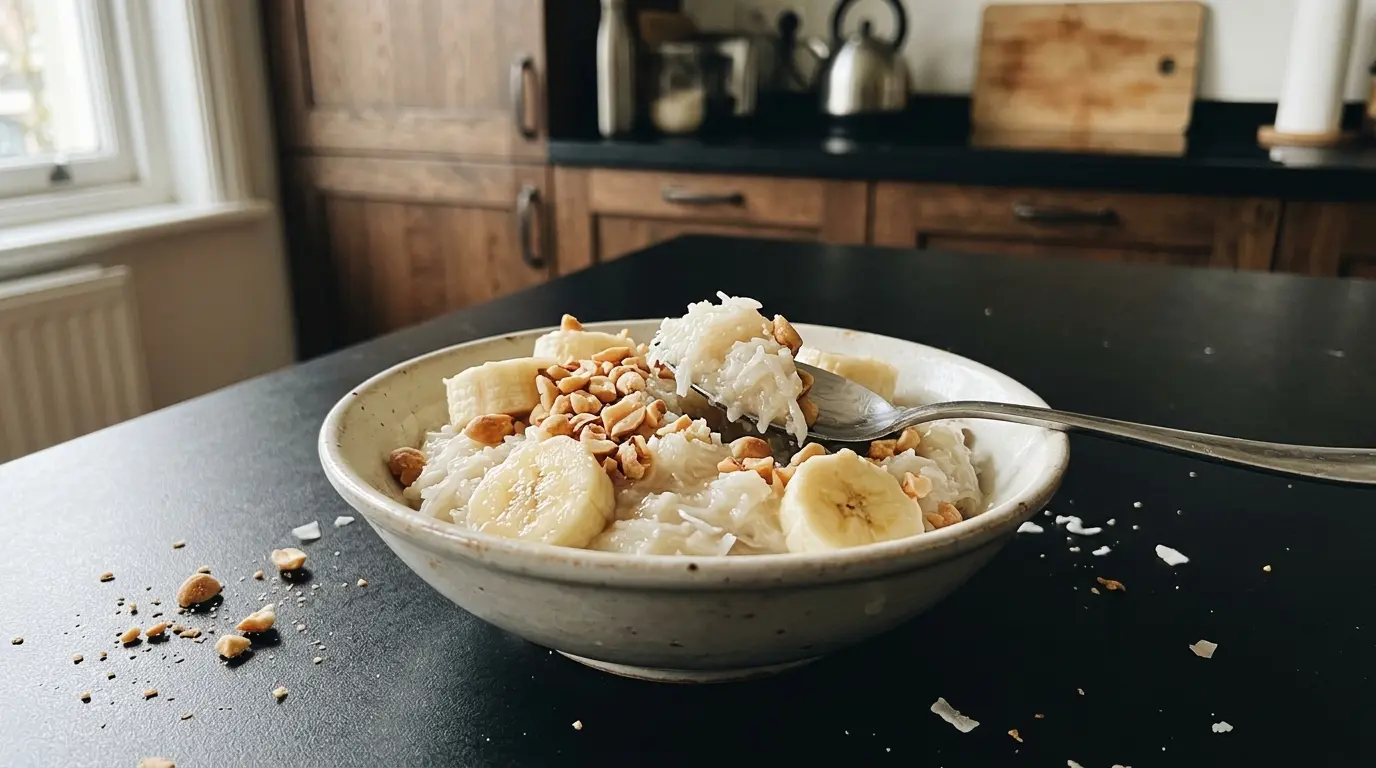
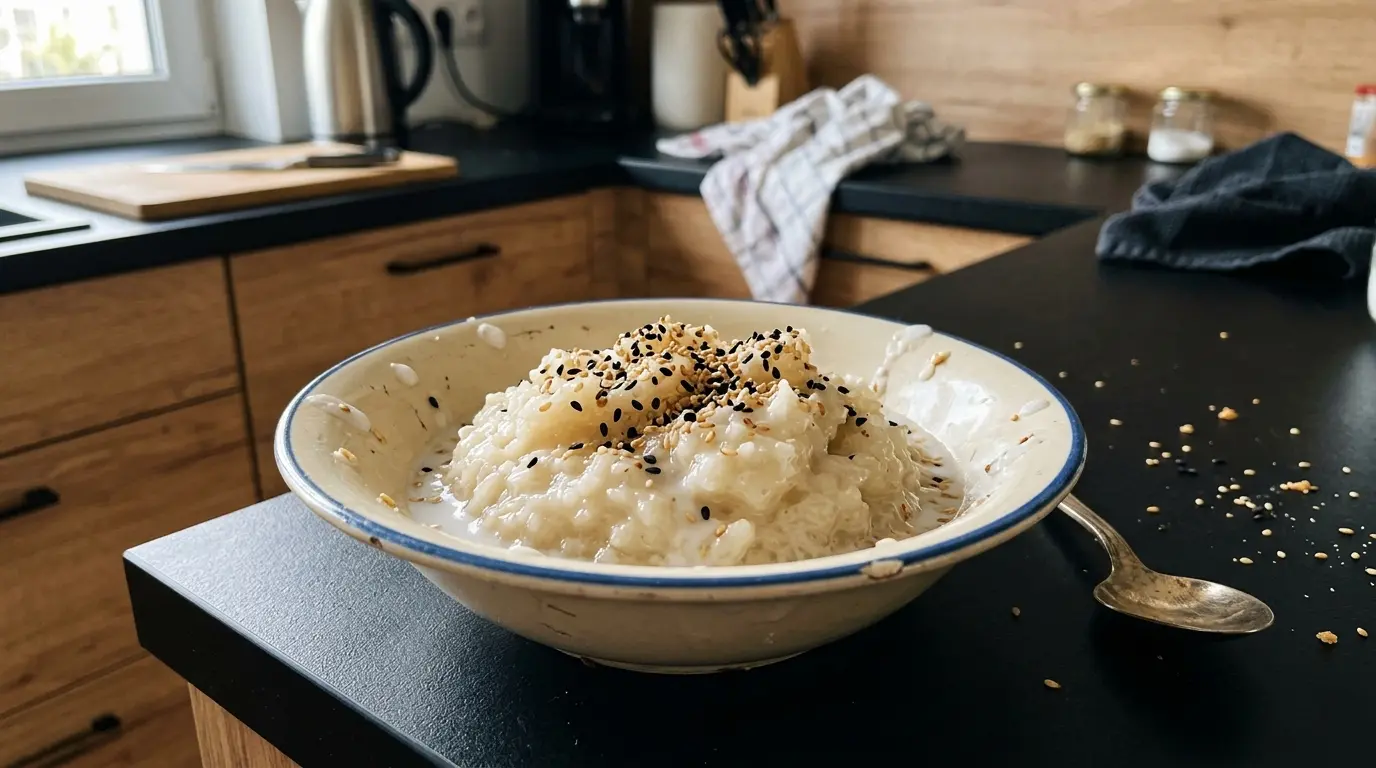
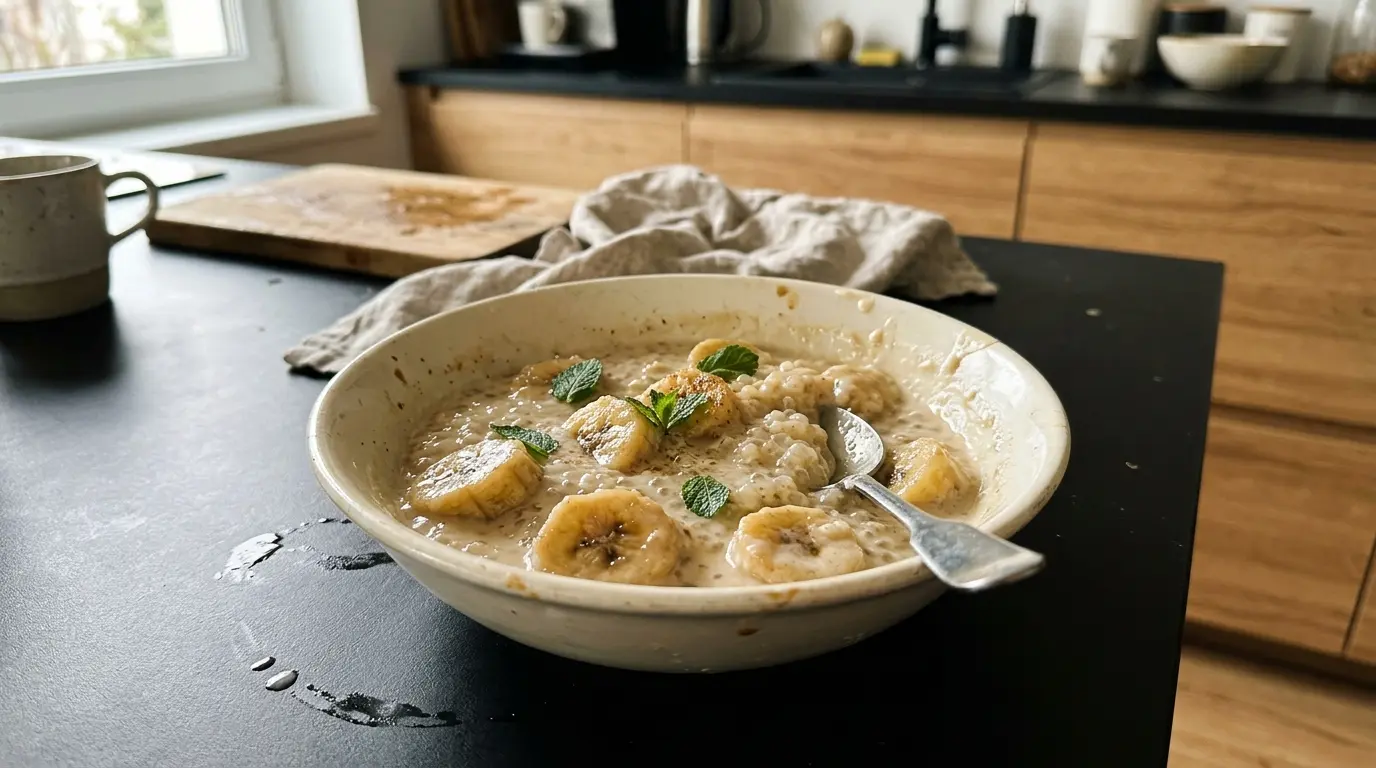
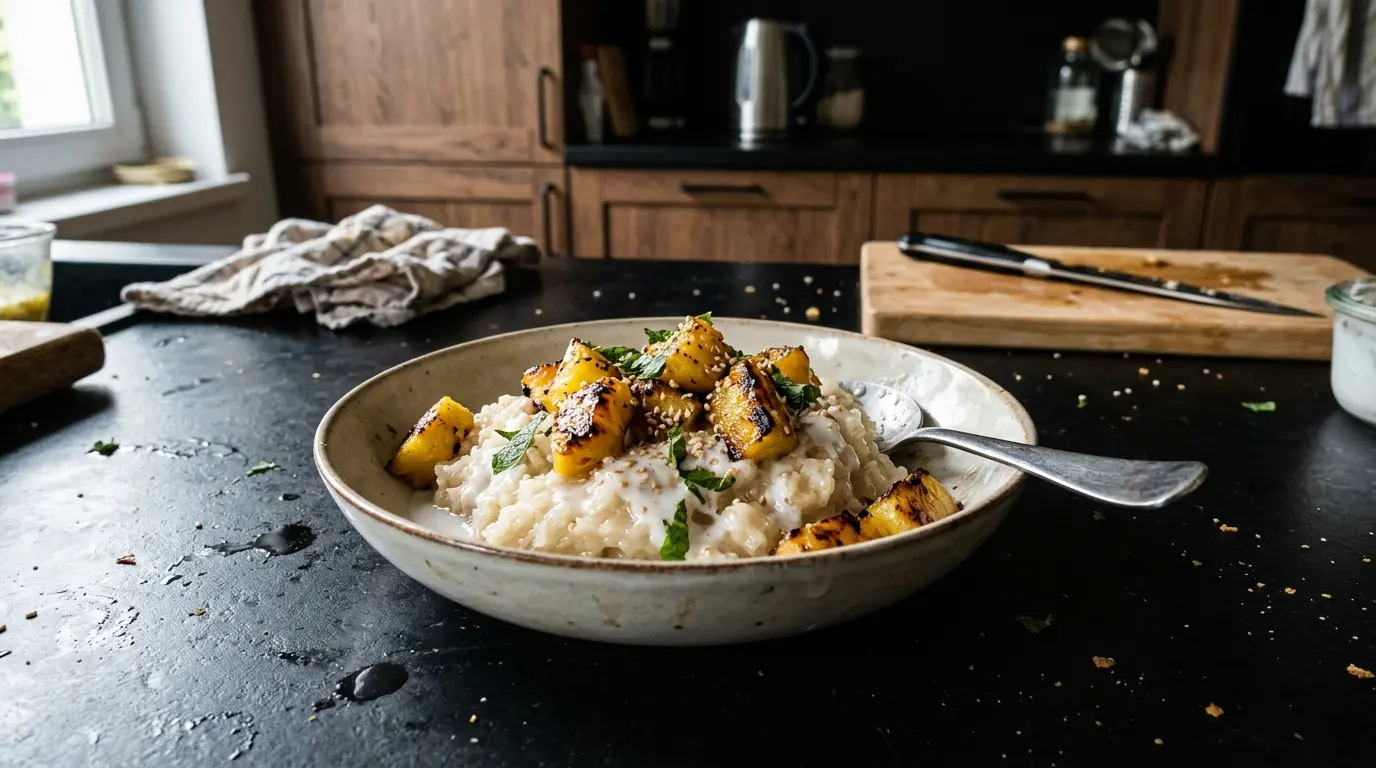
Serve the rice still slightly warm, with hot pineapple slices on top and a sprinkle of toasted coconut flakes or sesame seeds. Strong espresso or jasmine green tea pairs beautifully, cutting through the sweetness. It’s the perfect finale to a summer barbecue when the grill is already hot and you just need to throw on a few pineapple slices.
Watch out for
- Do not stir the rice while it cooks in water – it can easily turn into a mushy paste.
- Do not bring the coconut milk to a boil, as it may split into fat and water.
- Do not fry the pineapple for too long, or it will become fibrous and dry instead of juicy.
- If the rice is too runny after mixing with the milk, cover it and give it a few minutes to absorb more liquid.
Substitutions
- You can replace glutinous rice with sushi rice, extending the covered resting time slightly.
- Sesame seeds can be swapped for shredded coconut, lightly toasted in a dry pan.
- Instead of fresh pineapple, use canned slices in light syrup, well drained before grilling.
Ingredients
- sticky rice (for sushi or special sticky rice) you can use regular jasmine rice, but it will be less sticky - 200 g
- coconut milk 1 can - 400 ml
- sugar about 4 tablespoons - 60 g
- salt - 0.25 teaspoon
- fresh pineapple peeled, cut into slices - 0.5 piece
- butter or coconut oil for frying the pineapple - 1 tablespoon
- brown sugar - 1 tablespoon
- white or black sesame seeds toasted in a dry pan - 1 tablespoon
- kaffir lime leaf or lime zest (optional) for aroma - 1 piece
Preparation
- Rinse the rice several times in cold water, rubbing the grains with your hand, until the water is almost clear. Cover with fresh water and leave to soak for at least 30 minutes, until the grains noticeably swell, then drain thoroughly until no drops remain.
- Cook the soaked rice by steaming or in a small amount of water: transfer it to a pot, cover with water reaching about 1 cm above the level of the rice, cover and cook over very low heat for 12–15 minutes, until it absorbs the water. The grains should be soft but still keep their shape and not burst.
- Remove the pot from the heat and leave the rice covered for 10 minutes to finish cooking in its own steam. After this time the grains should be sticky and tender, but not overcooked into a uniform mass.
- In a small saucepan, heat the coconut milk with the sugar, salt and kaffir lime leaf or strips of lime zest. Warm over low heat, stirring, until the sugar dissolves and you can smell a delicate citrus aroma; the milk should be hot but not boiling.
- Remove the leaf or zest from the coconut milk. Pour about 2/3 of the warm milk over the cooked rice. Gently stir from the edges towards the centre until the rice absorbs most of the liquid and becomes very moist and sticky, but does not float in the milk. Cover and set aside for 10–15 minutes.
- In a dry pan, toast the sesame seeds over medium heat for 2–3 minutes, until they become very fragrant and lightly golden. Immediately transfer to a bowl so they don’t continue to cook on the hot pan and turn black.
- Peel the pineapple, remove the hard core and cut into slices or thick half-slices. Sprinkle them with brown sugar on both sides. Heat the butter or coconut oil in a grill pan or regular pan over medium-high heat until the fat is liquid and gently sizzling.
- Fry the pineapple slices for 2–3 minutes on each side, until golden, with some darker stripes here and there, and the juice starts to thicken and smell like caramel. Remove from the pan when the fruit is soft in the middle but still holds its shape and doesn’t fall apart.
- Keep the remaining coconut milk covered so it stays warm and fluid. If needed, rewarm it very gently, without bringing it to a boil, so it doesn’t curdle.
- To serve, place a portion of sticky rice in a bowl or on a plate. Arrange 1–2 slices of hot pineapple next to it, drizzle with 1–2 tablespoons of warm coconut milk and sprinkle with toasted sesame seeds just before serving, while the rice is still slightly warm.
Storage
Store the rice and pineapple separately in the fridge. Reheat the rice gently with a splash of coconut milk or water so it becomes soft and creamy again.
I usually make this dessert after weekend shopping at the market, when I come home with a big, fragrant pineapple under my arm. I sometimes serve it on Sundays instead of cake when my family visits – everyone is surprised that “such simple rice” can taste like a holiday in Asia.