Thai Rice Noodles with Duck and Fragrant Orange Recipe
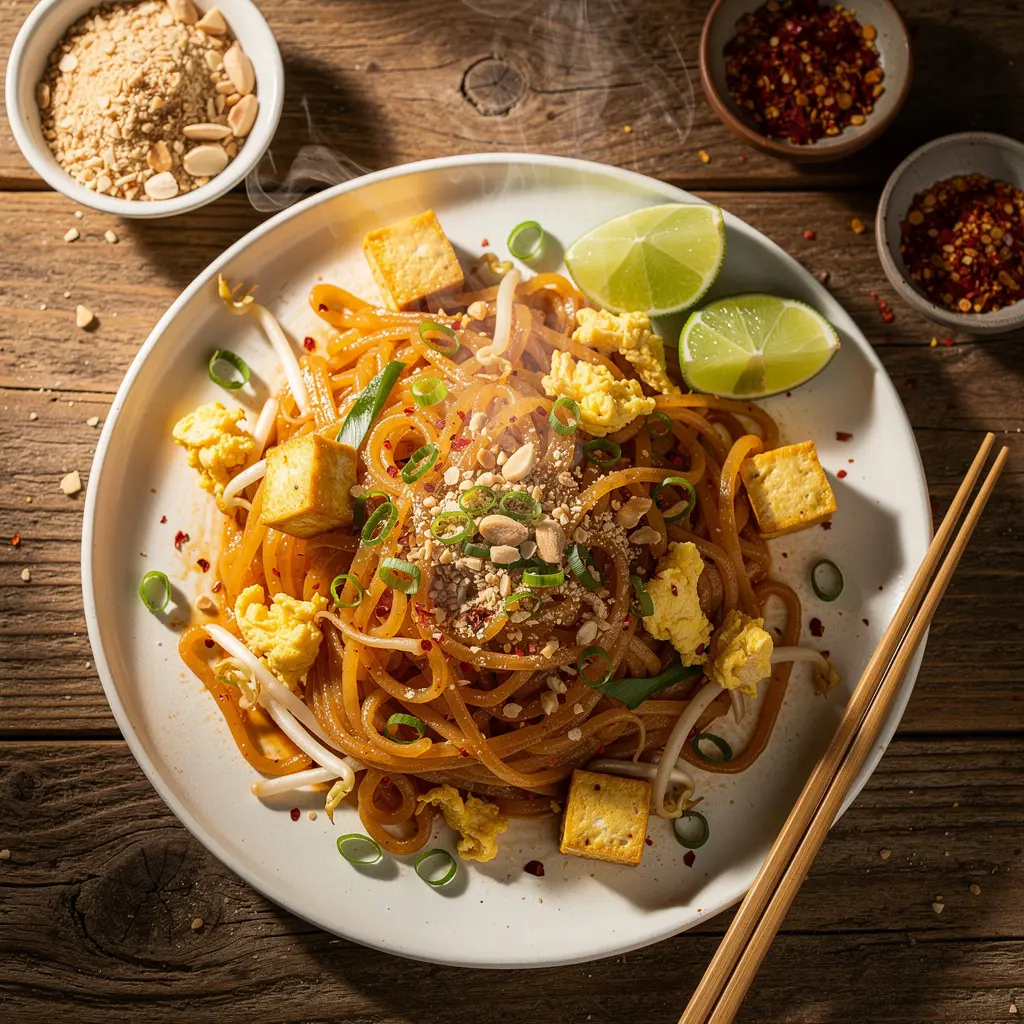
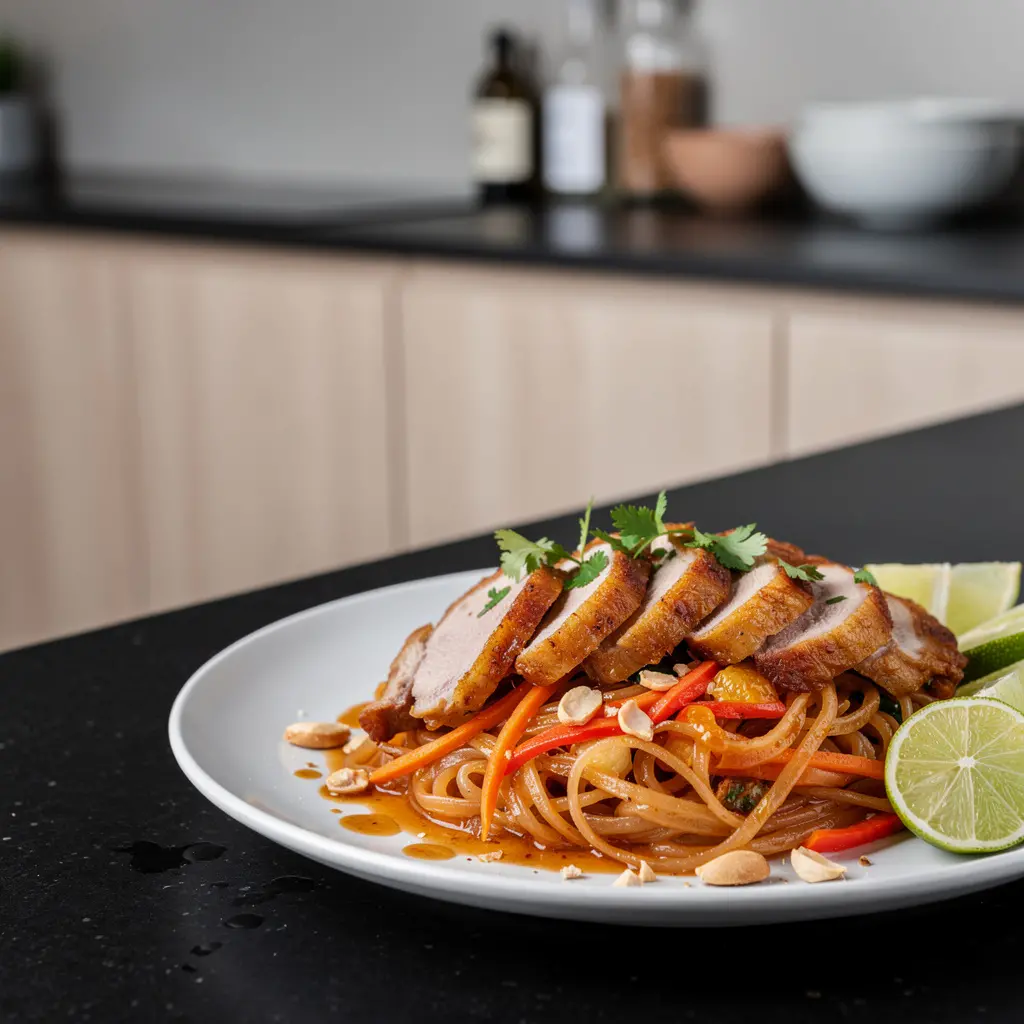
This dish is a home-style version of Thai duck with rice noodles – juicy meat, slightly crispy skin, a salty-sweet sauce with notes of orange and lime. In Thailand, duck often appears on special occasions, but at home you can make it simply for Sunday lunch instead of a traditional roast.
To danie łączy europejskie wyobrażenie „kaczki z pomarańczą” z tajskim podejściem do makaronu ryżowego – jest tu i chrupiąca skórka, i soczyste mięso, i wyraźna cytrusowa świeżość. Słono-słodki sos z nutą pomarańczy i limonki pięknie otula makaron, a pikantne akcenty równoważą naturalną słodycz owocu. To świetny sposób, by spróbować tajskiej kuchni w wersji „comfort food”, ale z odświętnym charakterem.
Chef's tips
Kaczkę piecz lub smaż tak, by najpierw dobrze wytopić tłuszcz spod skóry – skórka powinna być wyraźnie rumiana i chrupiąca, ale nie spalona; jeśli zaczyna mocno ciemnieć, zmniejsz ogień. Sos redukuj na tyle, by lekko gęstniał i oblepiał makaron – gdy łyżka zaczyna się delikatnie „obrastać” sosem, to dobry moment, by dodać makaron. Uważaj, by nie przegotować makaronu ryżowego: po namoczeniu lub krótkim gotowaniu odcedź go od razu, inaczej stanie się kleisty i ciężki.
How to serve
Podaj z prostą sałatką z ogórka, kolendry i limonki, która odświeży podniebienie między kęsami kaczki. Do picia świetnie pasuje jasne piwo w azjatyckim stylu albo domowa lemoniada z limonką i listkami mięty. To danie idealnie sprawdza się na niedzielny obiad z rodziną, kiedy chcesz podmienić tradycyjnego schabowego na coś bardziej egzotycznego, ale nadal sycącego.
Ingredients
- duck legs with skin - 4 pieces
- rice noodles ryżowy szeroki - 250 g
- soy sauce sojowy jasny - 4 tablespoons
- fish sauce rybny - 2 tablespoons
- orange juice - 120 ml
- lime juice - 2 tablespoons
- brown sugar trzcinowy - 2 tablespoons
- garlic - 3 cloves
- fresh ginger - 2 cm
- red chili pepper - 1 pieces
- carrot - 1 pieces
- bell pepper czerwona - 1 pieces
- oil roślinny - 3 tablespoons
- fresh coriander - 3 tablespoons
- unsalted peanuts - 3 tablespoons
Preparation
- Wash the duck and pat dry with paper towel. Score the skin in a criss-cross pattern with a sharp knife, trying not to cut into the meat. Lightly salt on both sides.
- In a large frying pan or wok heat 1 tablespoon of oil over medium heat. Place the duck legs skin-side down and fry for 8–10 minutes, until the skin is golden and some of the fat has rendered. Turn over and fry for another 5–7 minutes, until the meat is almost cooked through.
- Transfer the duck to an ovenproof dish, cover with aluminium foil and place in an oven preheated to 160°C for about 15–20 minutes so the meat finishes cooking and becomes tender.
- Meanwhile, pour very hot water over the rice noodles in a large bowl. Leave for 8–10 minutes, until they soften but are still springy. Drain and rinse with cold water to prevent sticking.
- In the pan where the duck was fried, leave 1–2 tablespoons of fat (pour off the excess). Add the garlic, ginger and chili. Fry for 30–40 seconds over medium heat, stirring constantly, until very fragrant but not burnt.
- Add the carrot and bell pepper. Stir-fry for 3–4 minutes until the vegetables soften slightly but remain crisp.
- In a small bowl mix the soy sauce, fish sauce, orange juice, lime juice and brown sugar until the sugar dissolves.
- Add the soaked rice noodles to the vegetables. Pour in the prepared sauce. Toss gently for 2–3 minutes over medium heat until the noodles absorb some of the sauce and everything is hot.
- Remove the duck from the oven. Slice the meat, trying to keep some skin on each piece.
- Divide the noodles with vegetables between plates. Arrange the duck slices on top. Sprinkle with chopped coriander and peanuts. Serve immediately, ideally with an extra lime wedge for squeezing over.
Storage
Makaron z kaczką przechowuj w szczelnym pojemniku w lodówce do 2 dni. Podgrzewaj na patelni z odrobiną wody lub soku pomarańczowego, mieszając, aż makaron zmięknie i całość będzie gorąca.