Thai Pork Curry with Eggplant and Thai Basil Recipe
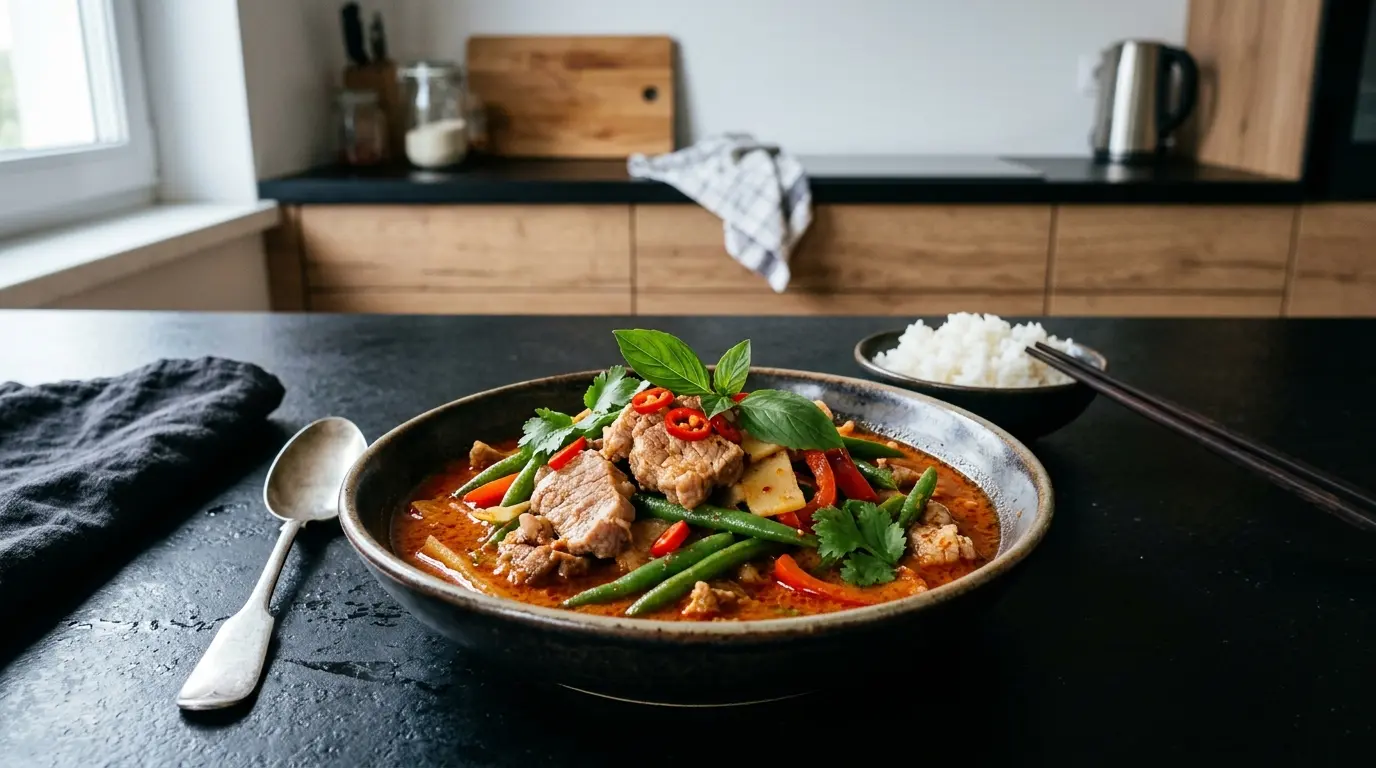
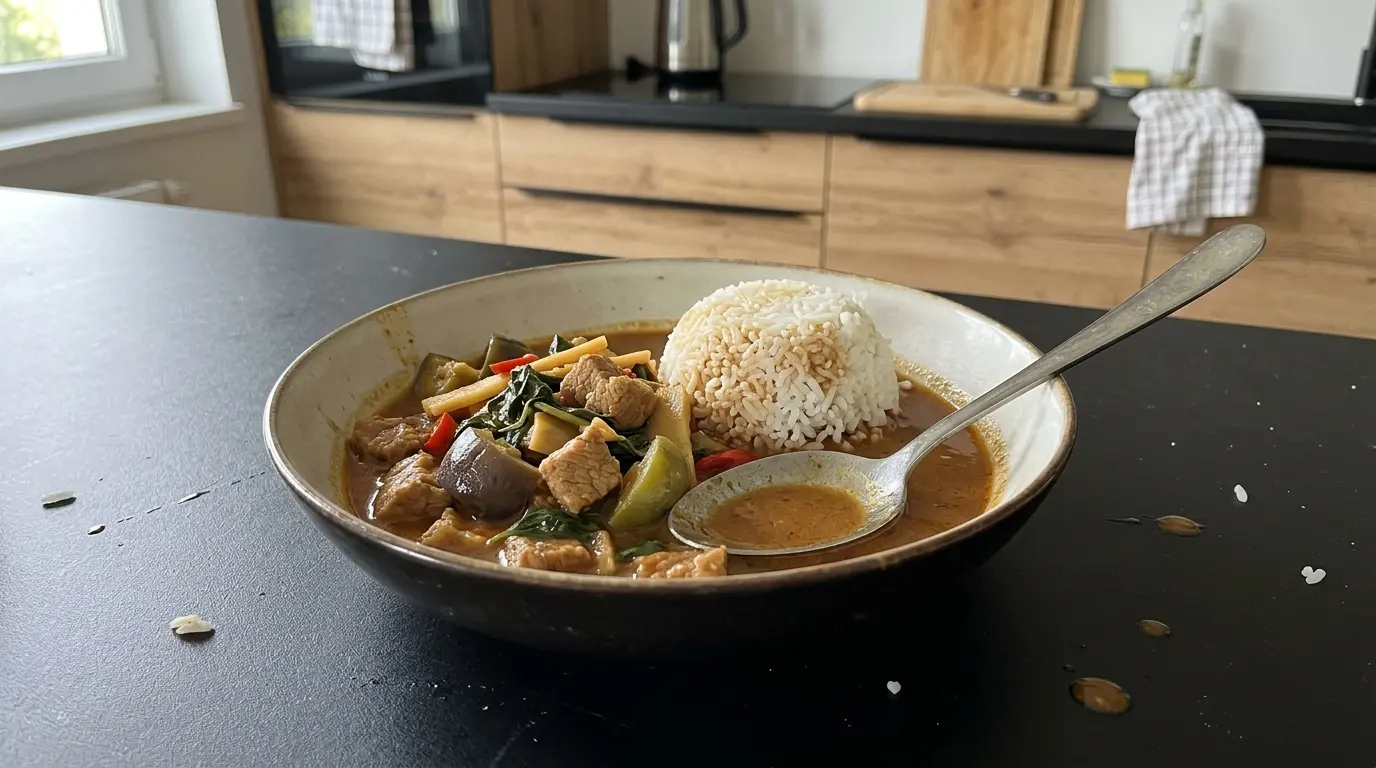
This aromatic curry with pork, eggplant and Thai basil is hearty and full of umami flavour. In Thailand, similar dishes are often served in small bowls alongside rice, much like we serve stew. Thanks to coconut milk and herbs, even an ordinary day at home can smell like a holiday in Asia.
This dish is close to Thai gaeng phet, or red curry, but simplified to ingredients that are easy to find in Poland and most Western countries. The “bowl of curry + bowl of rice” format mirrors Thai home meals, where everyone adjusts the heat level on their own plate with extra chili, lime and herbs.
This curry combines classic Thai technique with a format familiar from Polish-style stew: a bowl of thick sauce next to rice that you mix together on your plate. Instead of many different vegetables, there’s one carefully treated star – eggplant – which turns into a creamy carrier for the sauce. The recipe is a good bridge between “restaurant-style” Thai curry and home cooking with ingredients you can actually find in regular shops.
Why this version works
- Frying the curry paste in the thick top layer of coconut milk brings out the aroma of the spices without burning them.
- Thinly sliced pork softens faster and gets coated more evenly in the sauce than large chunks.
- Long, uncovered cooking of the eggplant naturally thickens the sauce and gives it a creamy texture without any starch thickeners.
- Seasoning at the end with fish sauce and sugar makes it easy to balance saltiness, heat and sweetness.
Chef's tips
If you’re using very fatty pork, pour off 1–2 tablespoons of rendered fat after browning, otherwise the sauce will feel heavy with an oily layer on top. Don’t keep the curry covered for long – it needs to reduce so it becomes thick and silky; a good sign is when it leaves a clear coating on the back of a spoon. Watch the color: the sauce should be a vivid orange‑red, not dull or greyish, which would mean there’s too much water.
How to serve
Serve the curry with hot jasmine or sticky rice, topped with fresh Thai basil and thin slices of chili. It goes very well with a simple cucumber salad with lime and a touch of sugar to refresh your palate between bites, plus jasmine tea or lime water to drink.
Watch out for
- Don’t add all the coconut milk at once – without the step of frying the paste in the thick part, the flavor will be flat.
- Too high a heat can cause the coconut milk to curdle and split into grainy clumps instead of a smooth sauce.
- Don’t cut short the cooking time for the eggplant – undercooked, it will be spongy and slightly bitter.
- Be careful with salt: fish sauce and curry paste are both salty, so you often won’t need any extra salt.
Substitutions
- If you can’t get Thai basil, use a mix of fresh basil and mint in a 2:1 ratio.
- You can swap Asian eggplant for regular purple eggplant, cutting it into slightly smaller cubes.
- If you don’t have kaffir lime leaves, use very thin strips of lime zest without the white pith.
- You can replace the pork with chicken breast, reducing the simmering time by a few minutes.
Ingredients
- pork shoulder or neck - 400 g
- eggplant - 1 piece
- coconut milk kokosowe z puszki - 400 ml
- red curry paste - 2 tablespoons
- fish sauce rybny - 2 tablespoons
- palm sugar or brown sugar - 1 tablespoon
- kaffir lime leaves - 3 piece
- Thai basil or regular basil - 1 handful
- oil roślinny - 1 tablespoon
- water - 150 ml
- chili pepper - 1 piece
- rice jaśminowy ugotowany -
- salt -
Preparation
- Cut the eggplant into large cubes. If it is bitter, lightly salt it, leave for 15 minutes, then rinse and pat completely dry – the cubes should look matte, not wet or slippery.
- Slice the pork into thin strips across the grain so it softens faster. Tear the kaffir lime leaves into smaller pieces, slice the chili into rounds, and strip the basil leaves from the stems just before using.
- In a wide pot or deep pan, heat the oil over medium heat. Add the red curry paste and fry for 1–2 minutes, until it becomes very fragrant and slightly darker in color, but not sticking to the bottom or smoking.
- Pour in about one-third of the coconut milk (the thick part from the top of the can). Stir for 2–3 minutes, until the sauce thickens slightly, turns smooth, and small droplets of coconut oil appear on the surface.
- Add the pork strips. Fry and simmer for 5–7 minutes, stirring, until the pieces are completely white and no longer pink inside, and there is no raw meat juice at the bottom.
- Pour in the remaining coconut milk and the water, then add the sugar, fish sauce, and kaffir lime leaves or thin strips of lime zest. Bring to a gentle simmer – you want small, steady bubbles rather than a rolling boil.
- Add the eggplant cubes. Simmer over low heat for 15–18 minutes, uncovered, stirring every few minutes, until the eggplant is very soft and breaks apart easily under light pressure from a spoon and the sauce has clearly thickened.
- Taste the sauce. If needed, add more fish sauce for saltiness or a little sugar to round out the heat; if the curry is too thick, stir in a few tablespoons of water until the sauce flows smoothly off a spoon.
- Finally, add the Thai basil leaves and chili slices. Cook for another 1–2 minutes, until the basil softens and becomes very fragrant, but the leaves stay bright green, not dull or greyish.
- Serve the curry very hot in bowls alongside cooked jasmine rice, or spooned directly over the rice so the grains soak up some sauce without turning into mush.
Storage
No storage information available for this dish.
This is one of those curries I honestly prefer the next day – the sauce thickens to a cream‑like consistency and clings to the rice like a sponge. I usually cook a double batch and portion it into containers for quick, warming weekday lunches.