Simit – Turkish Sesame Bagels Recipe
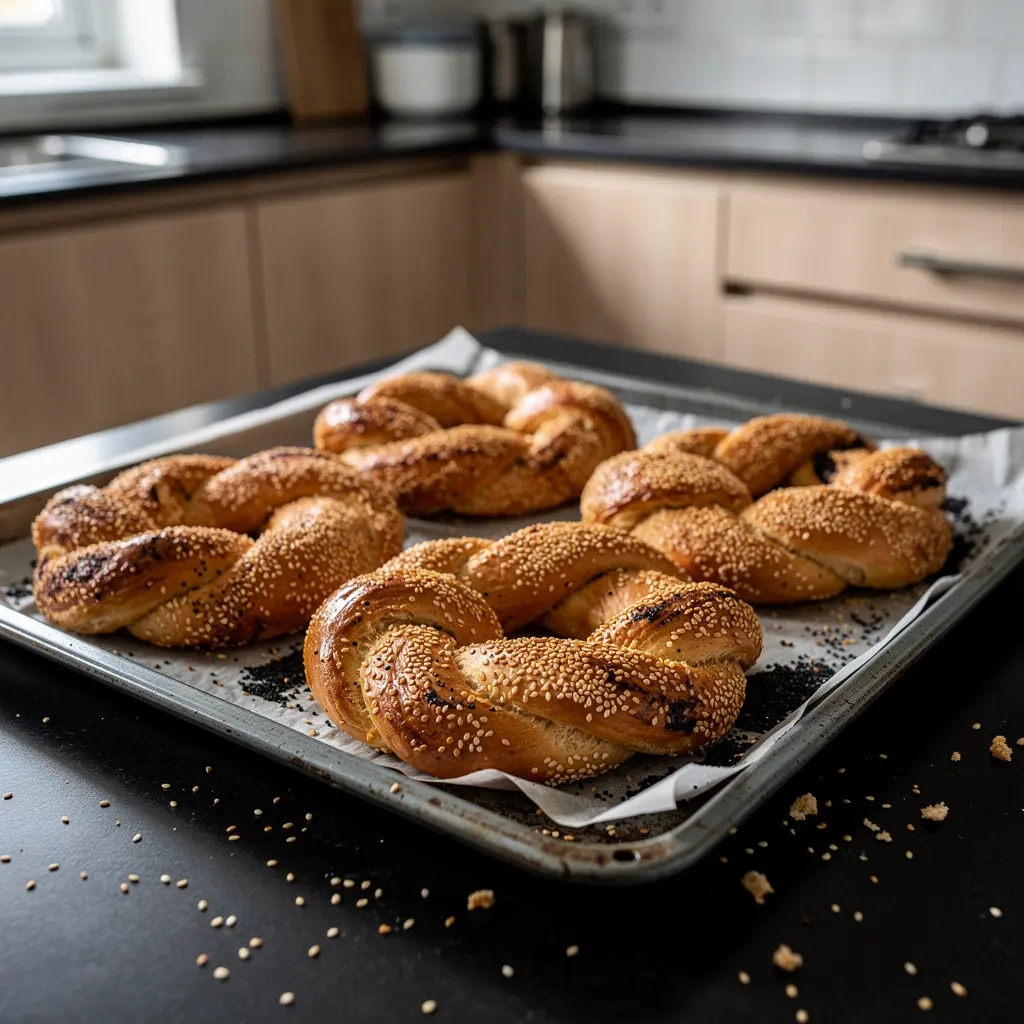
Simit are crisp on the outside, soft on the inside ring-shaped breads generously coated in sesame seeds, sold from street carts in Turkey from early morning. They’re most often eaten for breakfast or as a snack on the way to work, with tea served in small glasses. The taste is reminiscent of a cross between a bagel and challah, but lighter and more sesame-forward.
This homemade simit recipe brings the flavor of Turkish street food into your kitchen: a light, fluffy crumb, deeply toasted sesame crust, and a subtle sweetness from grape molasses that gives the characteristic color and aroma.
Chef's tips
Don’t rush the kneading – well-kneaded dough is key to getting an elastic texture and a nice open crumb. If your kitchen is cool, let the dough rise in a slightly warmed (but turned off) oven. Toasting the sesame seeds beforehand intensifies their flavor and makes the simit taste much closer to the ones sold from Turkish street carts.
How to serve
Serve warm or at room temperature with feta or other brined white cheese, olives, sliced tomatoes and cucumbers, and strong black tea. They’re also delicious split and filled like a sandwich with cheese, cold cuts, or grilled vegetables.
Ingredients
- wheat flour type 550 or all-purpose - 500 g
- instant yeast or 20 g fresh yeast - 7 g
- water lukewarm, not hot - 280 ml
- sugar - 1 tablespoon
- salt - 1.5 teaspoons
- vegetable oil - 3 tablespoons
- grape molasses for the glaze, can be replaced with honey - 3 tablespoons
- water to mix with the molasses - 3 tablespoons
- sesame seeds seeds, preferably lightly toasted - 120 g
Preparation
- Put the flour, instant yeast, sugar, and salt into a large bowl. Mix with a spoon.
- Add the lukewarm water (it should feel like a pleasant warm bath, not hot) and the oil. Knead the dough by hand for about 8–10 minutes, until smooth, elastic, and no longer sticking to your hands. If needed, add a little flour or water.
- Shape the dough into a ball, place it in a lightly oiled bowl, cover with a kitchen towel, and leave in a warm place for about 45–60 minutes, until doubled in size.
- Meanwhile, pour the sesame seeds into a dry pan and toast over low heat for 3–4 minutes, stirring often, until lightly golden and fragrant. Transfer to a plate to cool.
- In a small bowl, mix the molasses with the water until you get a thin syrup.
- Turn the risen dough out onto a lightly floured work surface and divide into 8 equal pieces.
- Roll each piece into a rope about 50 cm long. Fold each rope in half, twist the two strands together like a rope, then join the ends to form a ring. Pinch the seam well so it doesn’t open.
- Dip each ring into the molasses–water mixture, let the excess drip off, then coat thoroughly in sesame seeds, pressing lightly so the seeds stick well.
- Place the rings on a baking tray lined with baking paper, leaving some space between them. Cover with a kitchen towel and leave for 15–20 minutes to puff up slightly.
- Meanwhile, preheat the oven to 220°C (top and bottom heat).
- Bake the simit for 15–18 minutes, until nicely golden-brown. If they bake unevenly, rotate the tray after 10 minutes.
- Remove from the oven and cool on a wire rack for at least 10 minutes before eating so the crumb can set.
Storage
No storage information available for this dish.
Simit are one of those simple but unforgettable street foods – the smell of toasted sesame and fresh dough instantly brings back memories of early mornings in Istanbul. Once you make them at home, you’ll see they’re surprisingly straightforward and quickly become a breakfast favorite.