Potato Dumplings with a Dimple and Onion Sauce Recipe
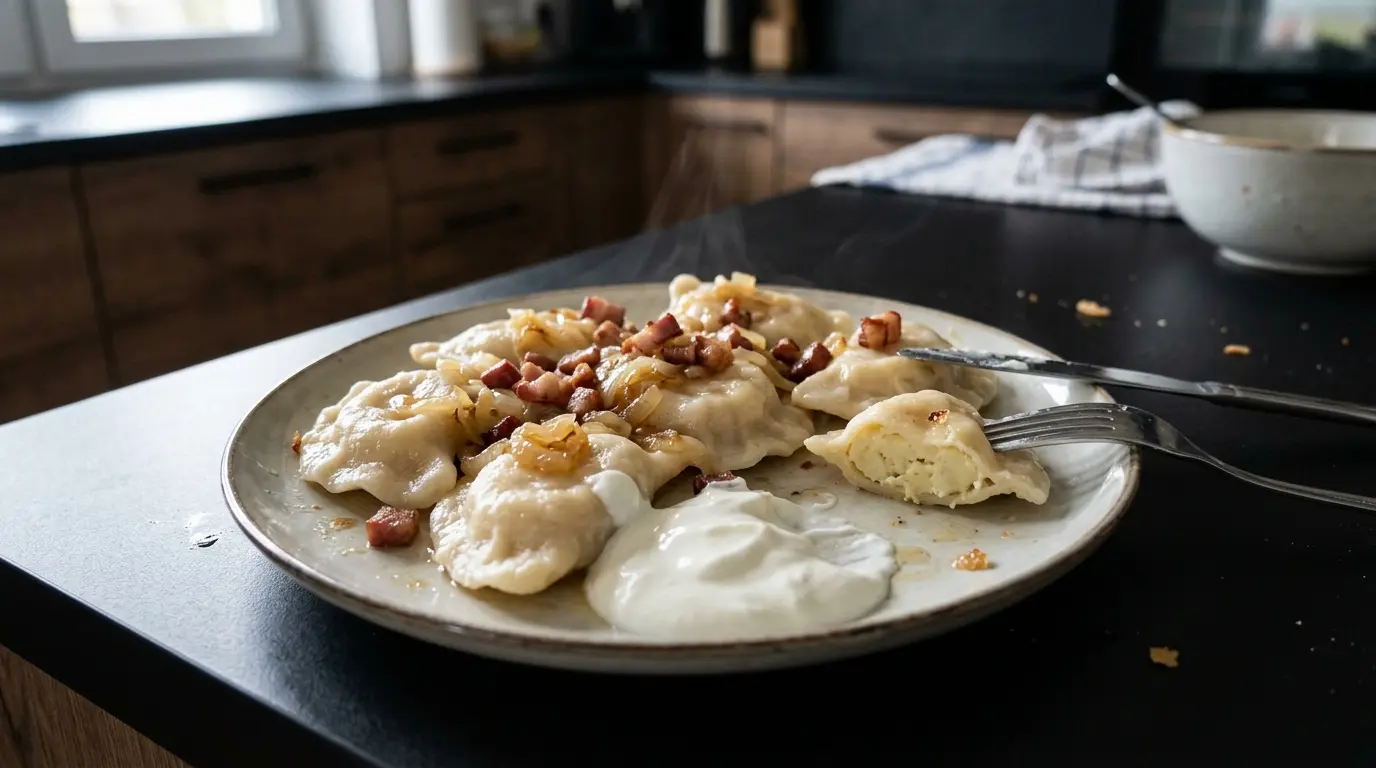
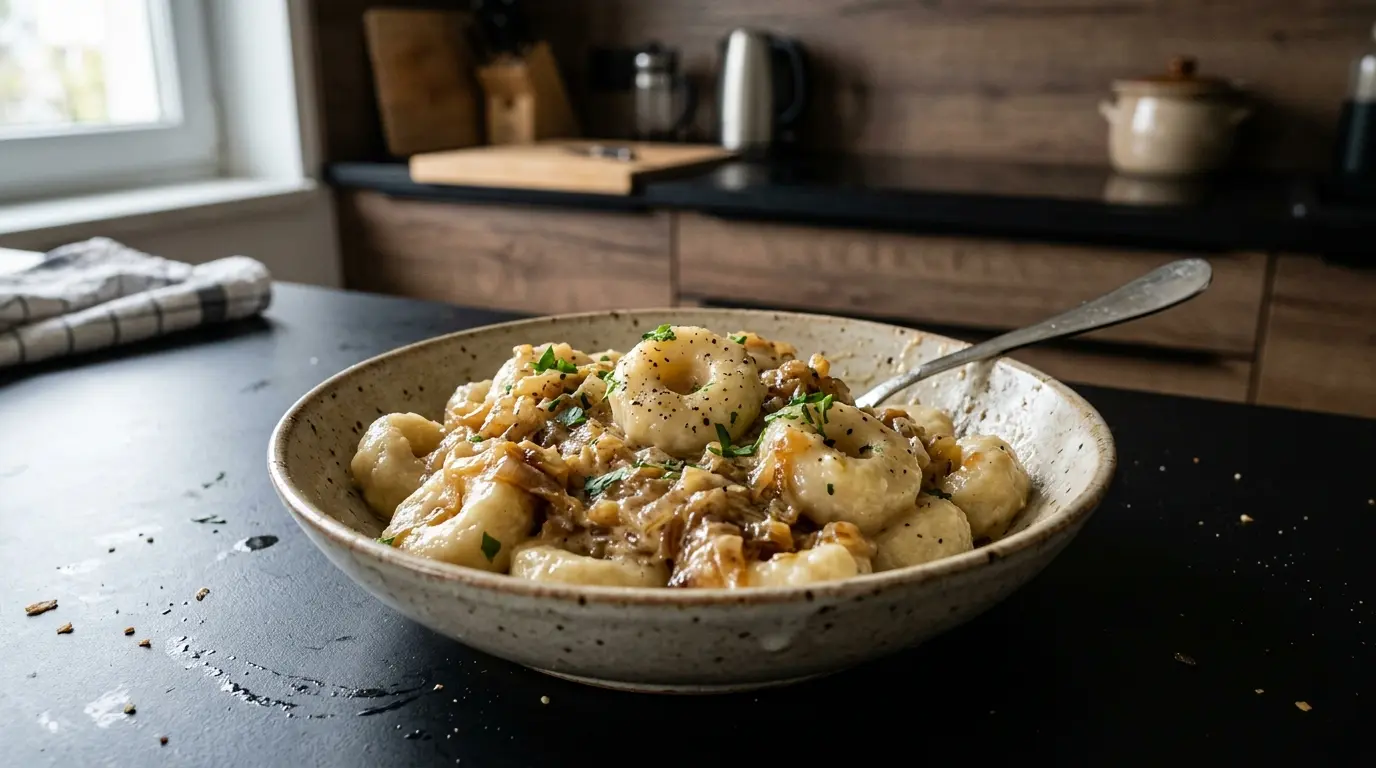
Potato dumplings with a dimple and onion sauce are a Silesian–Lesser Polish dish made from boiled potatoes, served in a meatless but very hearty version. Springy dumplings with a deep dimple perfectly hold the thick, golden sauce made from long-caramelized onions. The recipe is based on the classic rule of “1/4 flour to potatoes”, so it’s easy to use up yesterday’s boiled potatoes.
Dumplings with a dimple are close cousins of Silesian dumplings, often appearing in homes in southern Poland as a way to use up leftover potatoes from the previous day. In the version with only onion sauce they make a cheap, meatless meal with a deep, almost “meaty” flavor without any meat.
This dish shows how to turn a few cheap ingredients into a filling, umami-rich meal without meat. Long-caramelized onions give the sauce an almost meaty character that contrasts beautifully with the delicate dumplings. It’s perfect as a warming dinner when you have only potatoes and onions in the fridge.
Why this version works
- The “1/4 flour to potatoes” method automatically adjusts the amount of flour to the potatoes’ moisture.
- Thoroughly drying and cooling the potatoes prevents the dumplings from falling apart in the water.
- A roux made from flour with butter and oil gives the sauce thickness without lumps and a long, oniony aftertaste.
Chef's tips
The most common mistake is working with still-warm potatoes – the dough then becomes loose and it’s tempting to add too much flour, which makes the dumplings tough. The potatoes should be cool and dry to the touch, and the dough soft, slightly elastic, not stiff like modeling clay., When making the sauce, watch the color of the onions: they should be evenly golden, without dark brown, bitter bits.
How to serve
Serve the dumplings immediately after cooking, generously topped with hot onion sauce, with a salad of sauerkraut, grated carrot or beets., The dish reheats well, so it also works as a “for tomorrow” dinner – just briefly reheat the dumplings in salted water and the sauce in a saucepan with a little water or stock.
Watch out for
- Don’t make the dimple too shallow – the sauce will run down the sides instead of pooling inside.
- If the dumplings start to fray in the water, immediately remove that batch and add a little more flour to the next ones.
- Don’t cover the onions while frying, or they will steam and stay pale, and the sauce will be less aromatic.
Substitutions
- Instead of vegetable stock you can use chicken stock for a more pronounced flavor.
- You can omit the cream for a lighter version or replace it with milk, cooking a bit longer to thicken.
- Butter in the sauce can be replaced with clarified butter if you want a deeper, nutty aroma and better resistance to burning.
Ingredients
- starchy potatoes (e.g. type C) - 800 g
- potato starch - 120 g
- egg - 1 piece
- salt
- onion - 3 piece
- butter - 40 g
- oil vegetable - 1 tablespoon
- vegetable stock or water - 250 ml
- flour wheat - 1 tablespoon
- 18% cream for soups and sauces - 50 ml
- freshly ground pepper
Preparation
- Peel the potatoes, cut into even pieces, cover with cold water, lightly salt and cook for 15–20 minutes, until a fork goes in without resistance. Drain and leave over low heat or uncovered for 2–3 minutes, until the surface is dry and matte.
- Mash the cooked potatoes thoroughly or press them through a ricer until completely smooth, with no lumps detectable under a spoon. Spread in a thin layer on a plate or board and leave to cool completely – the mixture should feel cool to the touch.
- Transfer the cold potatoes to a bowl, level the surface and divide into 4 equal parts with a knife. Remove one quarter, fill the empty space with potato starch up to the height of the missing part, put the reserved potatoes back in, add the egg and salt.
- Quickly knead into a smooth, soft dough. It should stick slightly to your hands but still be easy to roll into logs; if it stretches like purée, add a little more potato starch, just until it starts to come away from your hands.
- On a lightly floured surface, tear off portions of dough and roll into logs about 2 cm thick. Cut into pieces about 2 cm long, form balls and make a clear, deep dimple in each one with your finger – the edge around it should be smooth, without cracks.
- Bring a large pot of well-salted water to a boil (it should taste like a lightly salty soup). Add the dumplings in batches, stir gently so they don’t stick to the bottom. Cook for 2–3 minutes after they float to the surface, until they feel springy to the touch, not soft like purée.
- Lift the dumplings out with a slotted spoon onto a plate or platter, drizzle lightly with oil and gently shake the dish so they don’t stick together. Cover loosely so they don’t dry out but also don’t steam and turn sticky.
- Peel the onions and cut into thin slices or small dice, depending on whether you want noticeable pieces or a smoother sauce. Try to cut them evenly so they soften and brown at the same time.
- Heat the oil with the butter in a pan over medium heat. Add the onion and fry for 8–10 minutes, stirring often, until it softens well, reduces in volume by at least half and takes on an even golden color without dark, burnt spots.
- Sprinkle the onion with wheat flour, mix quickly and fry for about 1 minute, until the flour no longer smells raw. Gradually pour in the warm stock or water, stirring constantly, until you get a thick, smooth sauce that lightly coats the spoon.
- Simmer the sauce for 3–4 minutes over low heat until it thickens a bit more. Pour in the cream (if using), heat for 1–2 minutes without letting it boil hard so it doesn’t curdle, then season with salt and freshly ground pepper.
- Serve the hot dumplings immediately after cooking, generously topped with the boiling onion sauce. If you like, sprinkle with chopped parsley – the greens should just wilt slightly from the heat of the sauce while keeping a fresh color.
Storage
Store the dumplings separately from the sauce, lightly drizzled with oil, in the fridge for up to 2 days or frozen for up to 2 months; after chilling they become firmer and need to be briefly reheated in hot water. Onion sauce thickens and sets in the fridge, so when reheating add a little water or stock so it becomes silky again.
I most often make these dumplings when a bowl of yesterday’s potatoes is piling up in the fridge – I immediately plan a double batch of sauce, because everyone always asks for extra “for the dimple”.