Potato and Cheese Pierogi with Onion and Sour Cream Recipe
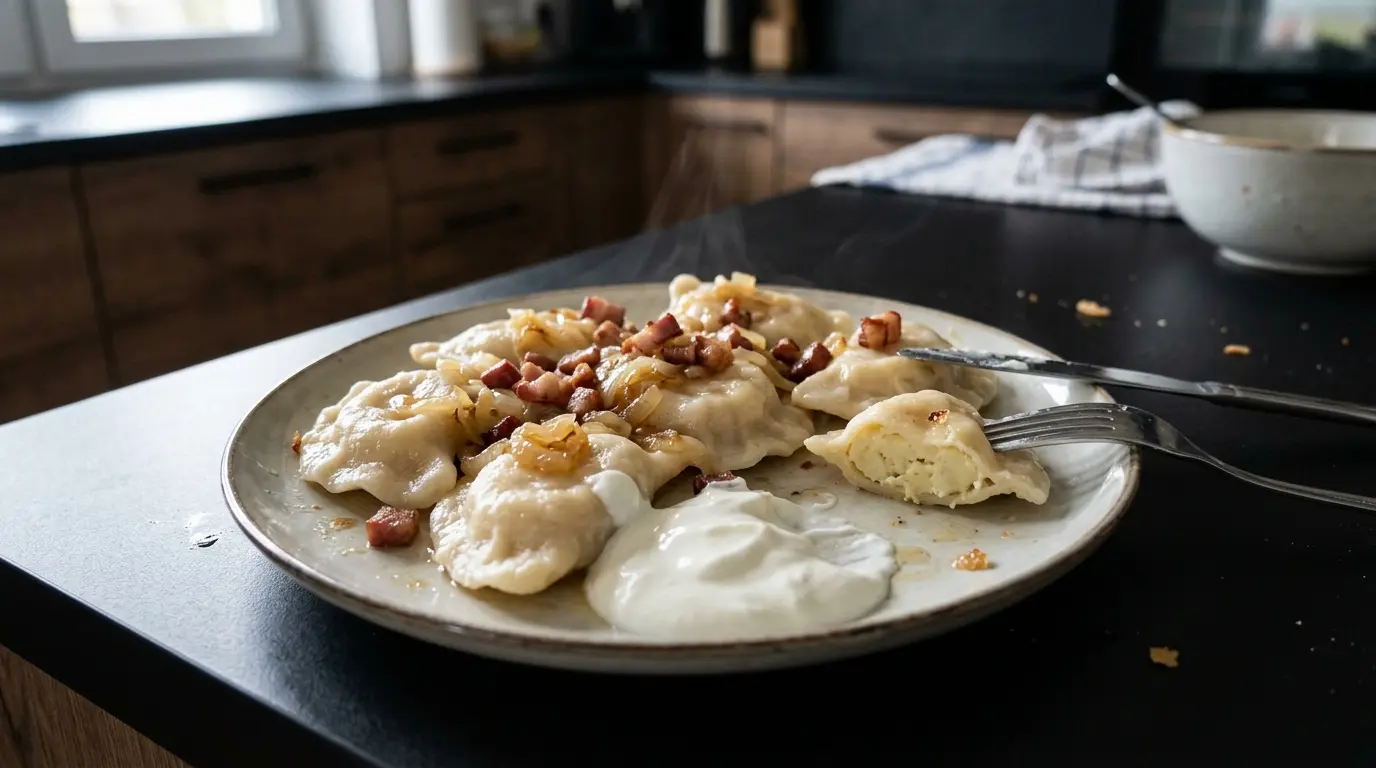
Potato and cheese pierogi with onion and sour cream are a classic of Polish and borderland cuisine, filled with mashed potatoes and twaróg (Polish fresh cheese). Thin, elastic dough wraps a thick, well‑seasoned filling with sautéed onion that stays flavourful and creamy after boiling. This version focuses on springy dough, a boldly seasoned filling and plenty of golden onion on top.
Potato and cheese pierogi (pierogi ruskie) come from the historic borderlands and originally had nothing to do with Russia – the name refers to Red Ruthenia. In many homes they are a must for Christmas Eve or Sunday family dinners, often made in big batches to freeze for later.
This version of potato and cheese pierogi focuses on thin yet sturdy dough that doesn’t tear and on a filling that doesn’t turn bland after cooking. The peppery filling contrasts nicely with the mild sour cream on top. Thanks to the detailed instructions it’s easy to get great results even on your first try.
Why this version works
- Dough with a bit of oil is elastic and easier to roll out thinly without tearing.
- Thoroughly drying the potatoes gives a firm, creamy filling that doesn’t make the dough soggy.
- Boiling a test pieróg lets you adjust the seasoning of the filling before shaping the whole batch.
- Two portions of onion – in the filling and on top – boost the buttery, homely flavour.
Chef's tips
I always cook 2–3 test pierogi – if the filling tastes too mild after boiling, I immediately season the rest more strongly., Keep the work surface only lightly floured: too much flour will absorb water from the dough and make it tough., When pan‑frying, add the pierogi to well‑heated butter – they should sizzle right away instead of soaking up fat.
How to serve
Serve the pierogi straight after boiling with plenty of golden onion and a generous spoonful of thick sour cream as a main course., They pair perfectly with simple slaws made from sauerkraut, carrot or fresh cucumber., For family gatherings you can serve a platter of pan‑fried pierogi as a warm snack alongside small cups of clear beetroot borscht.
Watch out for
- Don’t overfill the dough – overstuffed pierogi are harder to seal and more likely to burst while boiling.
- If the dough is too thick it will be tough after cooking; aim for about 2 mm thickness.
- Don’t cover freshly boiled pierogi tightly – steam will collect under the lid and make them soggy.
Substitutions
- You can replace semi‑fat twaróg with full‑fat, increasing the amount of potatoes by about 100 g.
- Swap regular butter for clarified butter if your onion tends to burn easily.
- Replace part of the boiled potatoes with mashed roasted potatoes for a more nutty flavour in the filling.
- Use flour type 650 for the dough if you like it a bit more springy and slightly less delicate.
Ingredients
- flour wheat - 500 g
- warm water - 250 ml
- egg - 1 piece
- oil vegetable - 1 tablespoon
- salt - 1 teaspoon
- potatoes - 700 g
- semi‑fat twaróg (Polish fresh cheese) - 400 g
- onion - 2 piece
- butter - 40 g
- pepper ground black - 0.5 teaspoons
- sour cream 18% - 200 g
Preparation
- Peel the potatoes, cut into even pieces, cover with cold water, lightly salt and cook for 15–20 minutes, until a fork slides in without resistance. Drain and set aside for a few minutes so the surface dries slightly.
- Meanwhile peel the onions. Finely chop one for the filling and slice the other into slivers or dice for serving, so the pieces are similar in size and cook evenly.
- Heat half of the butter in a pan over medium heat. Add the finely chopped onion and sauté for 5–7 minutes, until it softens, turns translucent and golden at the edges but not dark brown.
- Mash the cooked potatoes thoroughly with a masher or press them through a ricer so there are no lumps. Add the twaróg and sautéed onion, then work the mixture by hand or with a spoon into a uniform, thick mass with no visible dry bits.
- Season the filling with salt and a generous amount of pepper, ideally while it is still slightly warm. Taste – it should be distinctly salty and peppery, as the flavour will mellow after boiling.
- In a large bowl combine the flour and salt, add the egg, oil and warm water. Knead a soft, smooth dough for 8–10 minutes, until it is elastic, not sticky and doesn’t tear immediately when stretched.
- Cover the dough with a bowl or cloth and let it rest for 10–15 minutes. After resting it should be smoother, soft to the touch and noticeably easier to roll out.
- Divide the dough into 2–3 portions. On a lightly floured surface roll each portion into a sheet about 2 mm thick – the dough should be thin but not see‑through. Cut out circles with a glass or cutter, making sure the edges are even.
- Place about 1 teaspoon of filling on each circle. Fold in half and seal the edges carefully, pushing out any air with your fingers; the seam should be smooth, with no cracks or spots where the filling leaks out.
- Bring a large pot of water with 1 teaspoon of salt to a boil. Add the pierogi in batches, gently stir with a wooden spoon so they don’t stick to the bottom. Cook for 2–3 minutes after they float to the surface, until they are soft but springy when lightly pressed.
- Lift the cooked pierogi out with a slotted spoon onto a platter lightly brushed with butter or drizzled with oil so they don’t stick together. They should hold their shape and the dough should not tear when lifted.
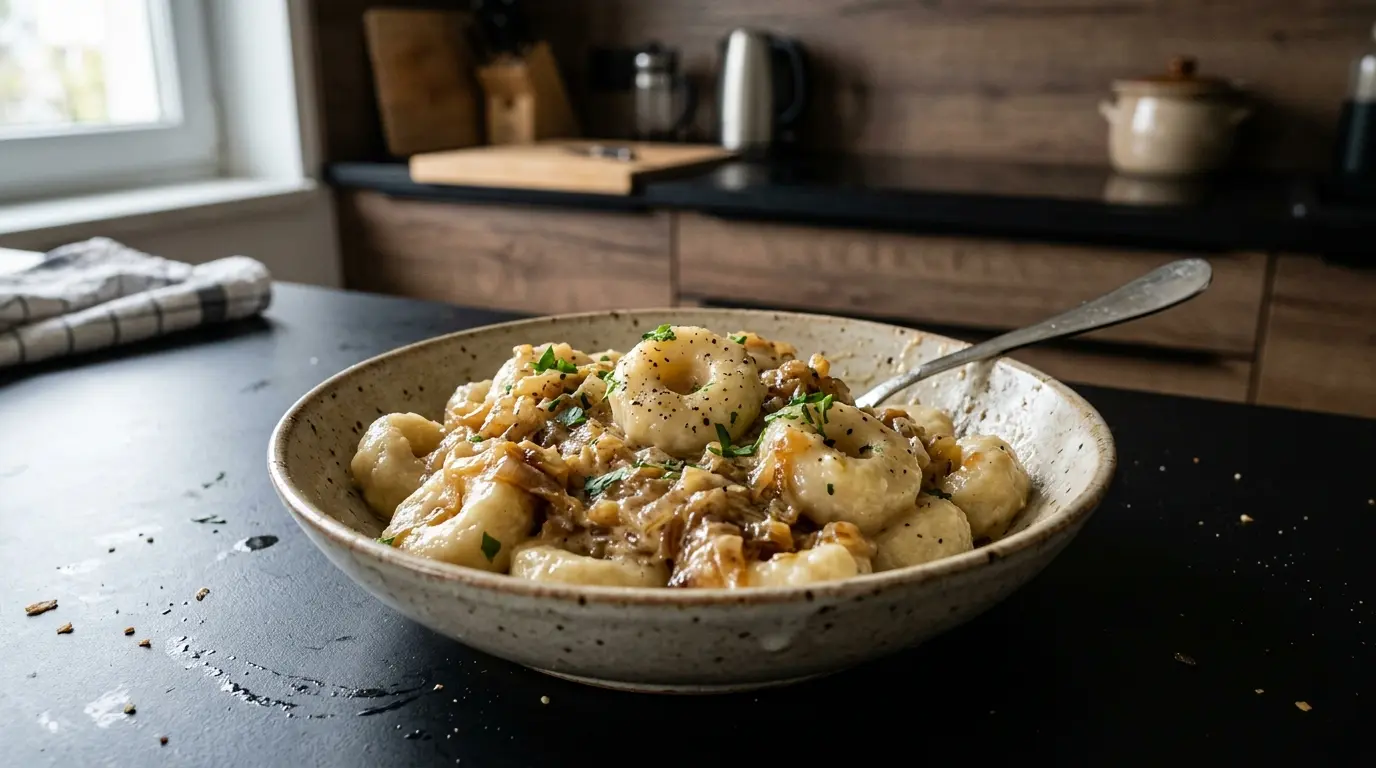
- Heat the remaining butter in a pan. Add the sliced or diced onion and sauté for 8–10 minutes over medium heat, until golden, soft and slightly crisp in places. Serve the hot pierogi topped with the onion and a dollop of sour cream.
Storage
Boiled pierogi firm up slightly in the fridge and lose some of their springiness, but they are excellent pan‑fried in butter or oil. Store them for up to 2 days, lightly greased, in a single layer or separated with plastic wrap; you can freeze raw pierogi on a tray and then transfer them to a bag.
I find it easiest to shape pierogi at a large table, so I always make a big batch and freeze them right away on a tray in a single layer. Any leftover filling gets spread on toast and baked with onion on top – like little open‑faced pierogi.