Risotto with Peas, Lemon and Mint Recipe
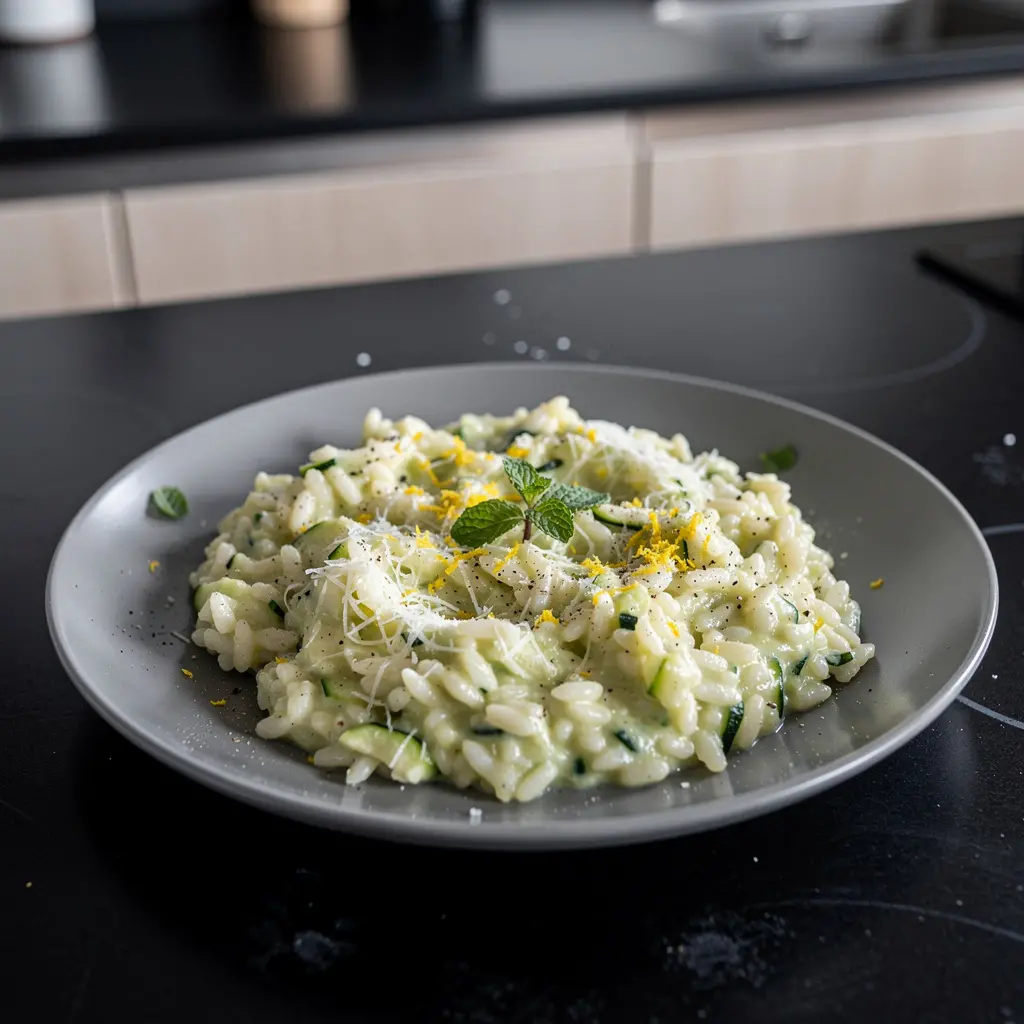
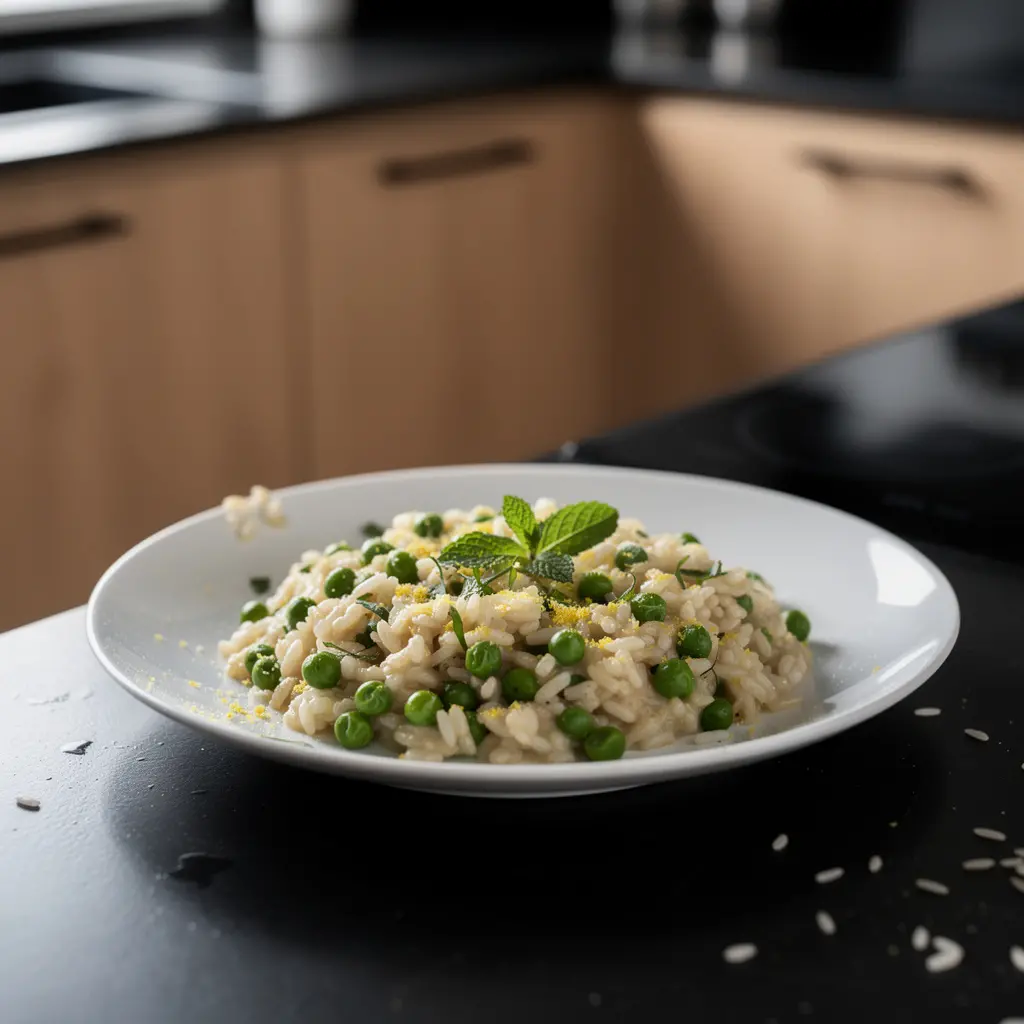
A light green, spring risotto with peas, lemon, and fresh mint is a dish that in Italy is associated with the beginning of warm days. It’s creamy yet very fresh in flavor. It’s a great way to bring a bit of sunshine to your plate even on a cloudy day.
In the Lombardy and Veneto regions, risotto is an everyday main course, often enriched with seasonal vegetables like peas and fresh herbs. Lemon and mint make for a lighter, fresher twist compared with classic versions based mainly on butter and Parmesan.
This risotto combines a classic creamy base with a very fresh, spring character – peas, lemon, and mint make the dish both comforting and refreshing. The light green color and citrus aroma evoke the first warm days in Italy, when young peas appear at the markets. It’s a great example of how to turn simple rice into a dish that feels like a little midweek celebration.
Why this version works
- Warm stock added gradually lets the starch from the rice create a naturally creamy sauce without any cream.
- Peas added near the end of cooking keep their bright color and a light bite.
- Lemon and mint go into the pot only at the very end, so their aroma stays fresh instead of turning bitter.
- The combination of olive oil and butter gives depth of flavor while keeping the texture rich but not heavy.
Chef's tips
Add the stock to the rice in small portions, waiting until the previous one is almost completely absorbed – this “add and stir” stage is what builds the creamy consistency without cream. Add the peas only towards the end of cooking so they keep their color and slight crunch; frozen peas don’t need to be thawed. Add the lemon and mint gradually, tasting as you go – too much can overpower the delicate flavor of the rice and stock.
How to serve
Serve the risotto immediately after cooking, while it is still slightly loose and “spreads” on the plate – after a few minutes it thickens, so it’s not worth keeping it in the pot. A glass of dry white wine, such as Pinot Grigio, pairs beautifully with this dish, or simply water with lemon slices and mint leaves. I often serve it as the main course at a spring dinner, preceded by a simple tomato and mozzarella starter.
Watch out for
- Don’t leave the rice without stirring for more than 1–2 minutes, as it easily sticks and burns on the bottom.
- Don’t cook the risotto over too high a heat – the liquid will evaporate too quickly and the centers of the grains will stay hard.
- Add the lemon gradually and keep tasting – too much juice will overpower the delicate flavor of the stock.
- Don’t dry out the risotto at the end – if it doesn’t gently spread on the plate, add a little more stock.
Substitutions
- Instead of arborio rice you can use carnaroli, extending the cooking time by 2–3 minutes.
- You can replace frozen peas with fresh ones, reducing their cooking time to 2–3 minutes.
- Parmesan can be swapped for grana padano, which has a similar texture and flavor.
Ingredients
- risotto rice (arborio or carnaroli) about 1.5 cups - 240 g
- vegetable stock hot - 900 ml
- frozen green peas or fresh, shelled - 200 g
- onion - 1 piece
- butter 15 g for frying, 15 g at the end - 30 g
- olive oil - 1 tablespoon
- dry white wine optional, can be omitted and replaced with more stock - 80 ml
- Parmesan cheese or Grana Padano, grated - 40 g
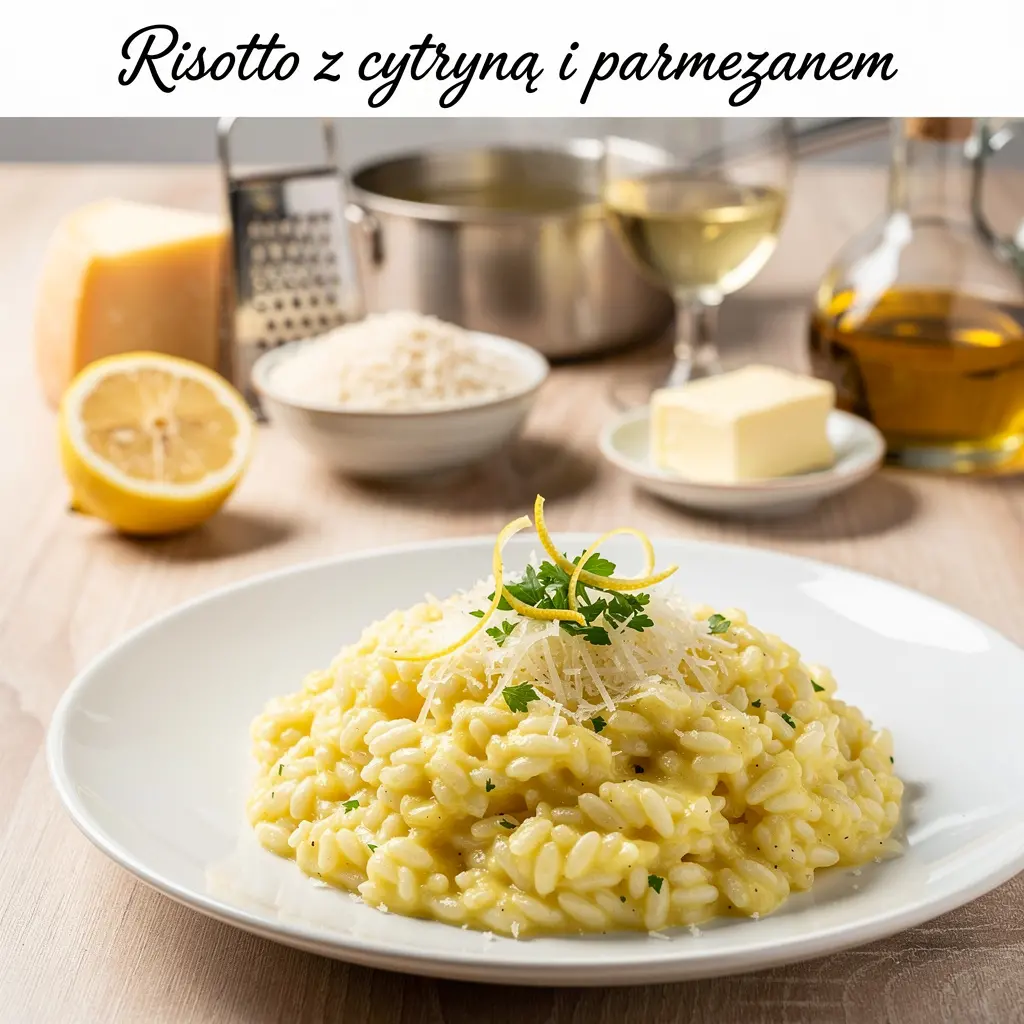
- grated lemon zest only the yellow part - 1 teaspoon
- lemon juice freshly squeezed - 1 tablespoon
- fresh mint chopped - 2 tablespoons
- salt to taste
- pepper to taste
Preparation
- Heat the vegetable stock in a small pot and keep it over very low heat so it stays hot and only gently steams. Stock that is too cool will slow down the cooking of the rice and the release of starch.
- Finely chop the onion or shallot. In a large saucepan heat the olive oil and 15 g butter over medium heat until the butter foams but does not brown – the foam should stay pale.
- Add the onion and sauté for 3–4 minutes, stirring often, until it softens and turns translucent. If it starts to color, reduce the heat – it should stay pale, without brown edges.
- Add the rice and cook for 1–2 minutes, stirring, until every grain is coated in fat and looks slightly glossy. Don’t let brown spots form on the bottom, as this will give the rice a bitter taste.
- Pour in the white wine and stir for 2–3 minutes until it almost completely evaporates – the liquid should clearly reduce and the smell of alcohol should disappear, leaving a delicate aroma.
- Add the first ladle of hot stock so it just covers the rice. Cook over medium heat, stirring often, until the liquid is almost absorbed and, when you drag a spoon across the bottom, it briefly exposes the pan.
- Continue adding the stock one ladle at a time, stirring frequently for about 15 minutes. The rice should soften but still be slightly firm in the center – taste a few grains; they should offer a gentle resistance.
- After about 15 minutes add the frozen peas. Stir, add more stock if needed, and cook for another 5–7 minutes, until the peas are a vibrant green and the rice is tender but springy.
- Remove the pot from the heat. Add the remaining 15 g butter, grated Parmesan, lemon zest and juice, and chopped mint. Stir vigorously for 30–40 seconds, until the butter and cheese melt and the rice becomes very creamy and slightly flowing.
- Taste and season with salt and pepper. If the risotto is too thick and sits in a mound, add a little hot stock and briefly stir to get a thick, wave-like consistency that slowly spreads on the plate.
Storage
Store leftover risotto in an airtight container in the fridge for up to 2 days. Reheat gently in a pan with a splash of stock or water, or shape into patties, bread, and fry as suggested in the tips.
I most often cook this risotto on Monday evenings, when after the weekend I’m left with a piece of lemon and an open bunch of mint in the fridge. I like stirring it with the window slightly open, when you can feel the first warm air outside and it really feels like spring is entering the kitchen together with the steam from the pot.