Pasta alla Norma with Eggplant Recipe
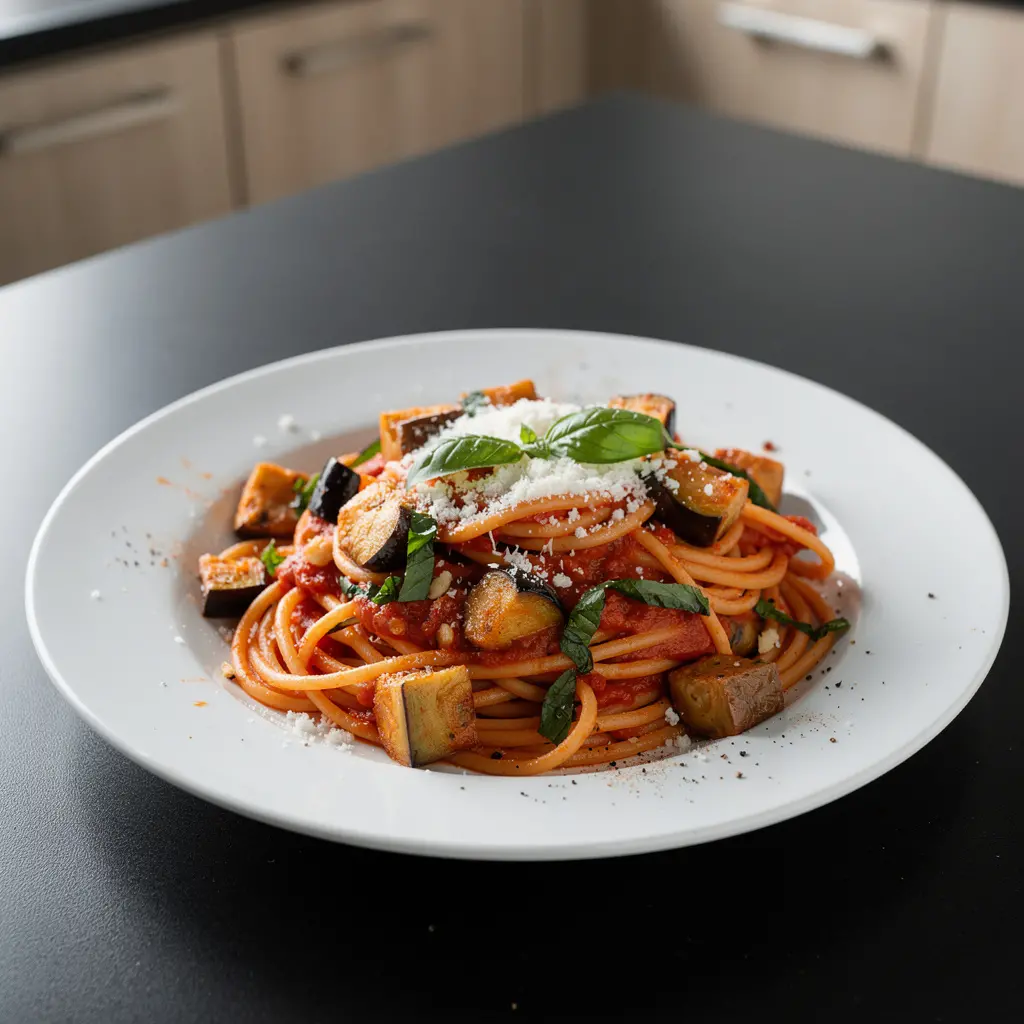
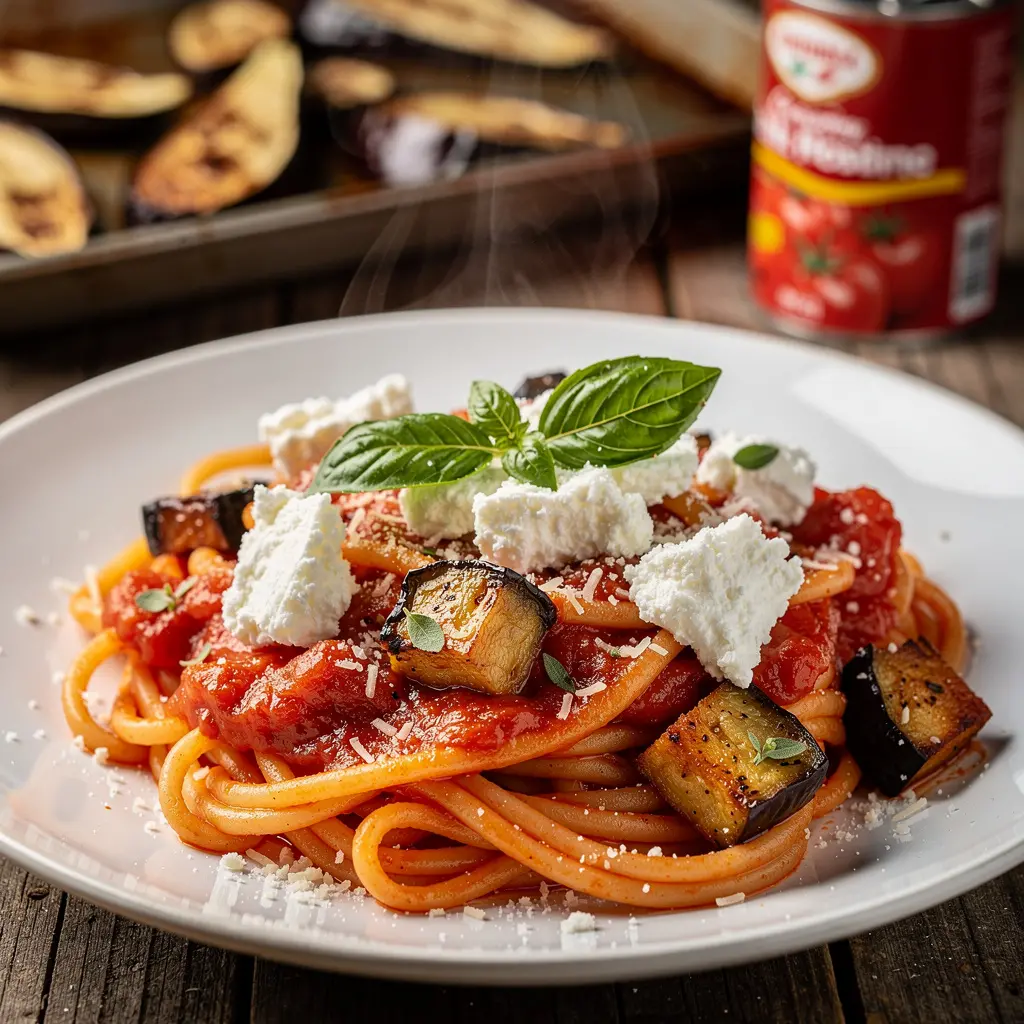
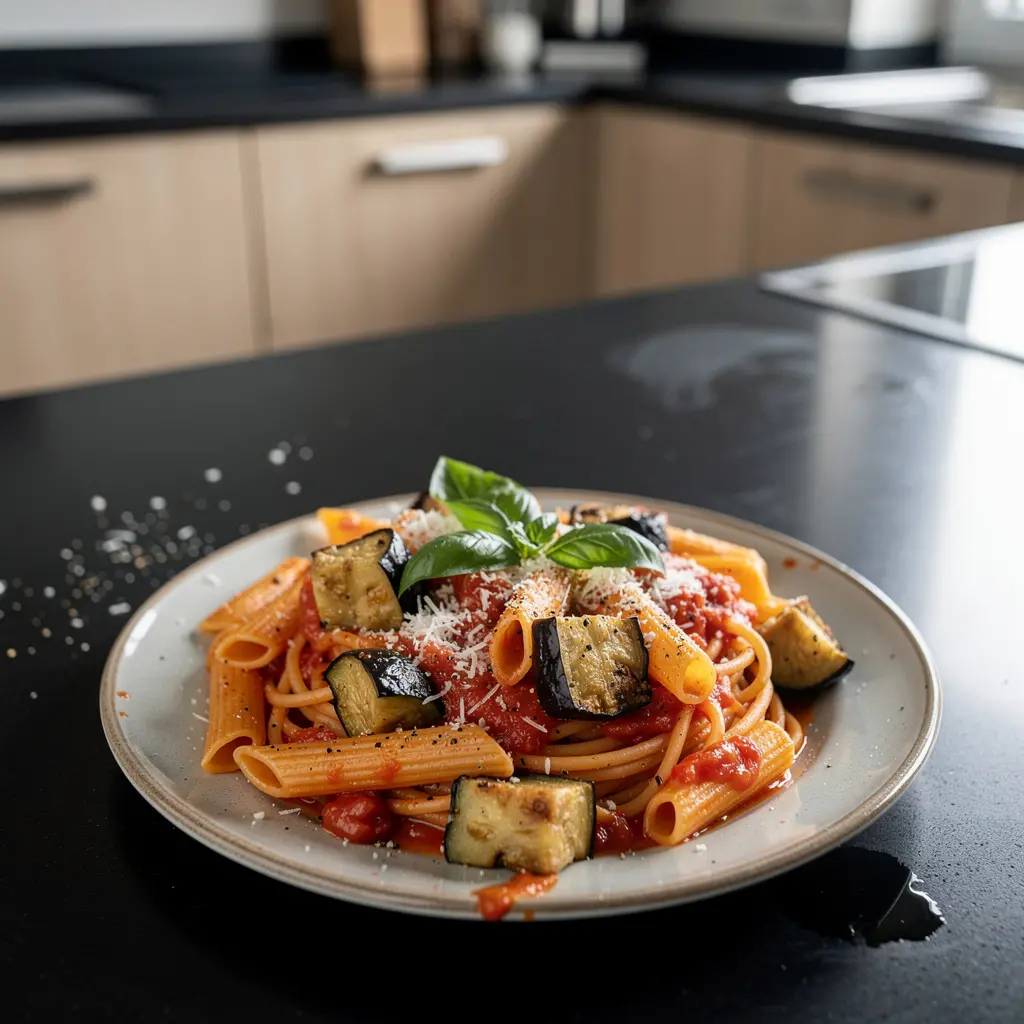
Pasta alla Norma is a classic dish from Sicily – pasta with tomato sauce, fried eggplant and cheese. The name supposedly refers to Bellini’s opera “Norma”, because the dish is “as perfect as the opera”. It’s a great way to discover Italian vegetarian cooking: simple, but very aromatic.
Pasta alla Norma comes from Catania, and its name is a tribute to Bellini’s opera “Norma” – supposedly the dish was so good that it was hailed as a “true Norma.” Traditionally it’s served with ricotta salata, but outside Sicily it is often replaced with another hard sheep’s cheese.
Pasta alla Norma is the essence of Sicilian cooking: sweet-tart tomatoes, soft eggplant and salty cheese create a sauce with deep, intensely umami flavour. The eggplant acts like a sponge for olive oil and aromas, so every bite is full and comforting, while the whole dish remains vegetarian yet very satisfying.
Why this version works
- Salting and thoroughly drying the eggplant reduces bitterness and prevents it from absorbing too much oil.
- Frying the eggplant before adding it to the sauce gives it a smoky, deep flavor and a golden crust.
- Cooking the sauce uncovered thickens it and concentrates the tomato flavor without adding sugar.
- Adding pasta water combines the starch with the oil, creating a silky sauce that clings well to the pasta.
Chef's tips
Be sure to salt the eggplant well and leave it for at least 20–30 minutes so it releases its bitterness and absorbs less oil; dry it thoroughly before frying. Fry the slices or cubes in a well-heated pan until clearly golden – pale eggplant is rubbery and bland. Give the tomato sauce time to bubble away uncovered until it thickens and sweetens slightly – that’s when the flavours really round out.
How to serve
Serve with a simple salad of rocket and red onion and a glass of Sicilian red wine, such as Nero d’Avola. It’s a perfect pasta for a lazy Saturday dinner with friends, when you want something impressive without spending half the day in the kitchen. Put extra grated cheese and fresh basil on the table so everyone can finish their plate to taste.
Watch out for
- Do not overcrowd the pan with eggplant – the cubes must lie in a single layer, otherwise they will turn out rubbery.
- Do not brown the garlic until it’s dark; once it turns brown, the sauce will develop a bitter taste.
- Add the pasta to the sauce while it’s still clearly al dente – it will cook for another 1–2 minutes in the pan.
Substitutions
- Instead of ricotta salata, use a hard sheep’s cheese or well-aged pecorino.
- If you don’t have fresh basil, add a small pinch of dried basil at the end, in a smaller amount.
- You can roast the eggplant in the oven with a little olive oil instead of frying it for a lighter version.
Ingredients
- pasta (e.g. penne, rigatoni, spaghetti) - 320 g
- eggplant medium; about 500–600 g total - 2 piece
- chopped canned tomatoes 2 cans - 800 g
- garlic - 3 cloves
- olive oil some for frying the eggplant, some for the sauce - 6 tablespoons
- dried oregano - 1 teaspoon
- fresh basil leaves - 1 handful
- cheese can be replaced with Parmesan or Pecorino - 60 g
- salt to taste and for salting the eggplant
- freshly ground black pepper to taste
Preparation
- Wash the eggplants and cut them into cubes about 1.5–2 cm. Transfer to a large sieve or bowl, sprinkle generously with salt, toss and set aside for 20 minutes so they release their bitter juices.
- After this time, rinse the eggplant under running water and pat very dry with paper towels. This is important so they fry properly instead of stewing.
- Heat 4 tablespoons of olive oil in a large frying pan over medium-high heat. Add the eggplant and fry for 10–12 minutes, stirring often, until the cubes are soft inside and golden on the outside. If necessary, fry in batches so you don’t overcrowd the pan. Transfer the fried eggplant to a plate lined with paper towels.
- Meanwhile, bring a large pot of salted water to the boil for the pasta. Cook the pasta according to the packet instructions until al dente. Reserve about 1/2 cup of the cooking water, then drain the rest.
- In the same pan you used for the eggplant, add 2 tablespoons of olive oil (if needed). Peel the garlic, lightly crush it with a knife and add to the pan. Fry for 1–2 minutes over low heat until fragrant but not browned.
- Add the canned tomatoes, dried oregano, some salt and pepper. Simmer the sauce over medium heat for 12–15 minutes, stirring occasionally, until it thickens slightly.
- Add the fried eggplant to the sauce and gently stir. Taste and adjust the seasoning with more salt and pepper if needed. Add torn basil leaves (reserve a few for garnish).
- Add the cooked pasta to the sauce and toss so it’s well coated. If the sauce seems too thick, add a little of the reserved pasta cooking water.
- Serve immediately, sprinkling each portion with grated cheese and extra fresh basil.
Storage
Store leftover pasta in an airtight container in the fridge for up to 2 days. Reheat gently in a pan with a splash of water or a little extra tomato passata so the sauce loosens. The dish is not suitable for freezing once mixed with pasta, but the sauce alone can be frozen for up to 3 months.
I most often make this pasta on Mondays, when I’m left with an open can of tomatoes from weekend cooking and one slightly “sad” eggplant in the fridge. It’s one of those dishes that save me after a long day at work, because in half an hour I have something that smells like a little trattoria.