No-Bake German Cheesecake Käsekuchen Recipe
Käsekuchen is a German cheesecake, usually baked, but the no-bake version is quicker and perfect for warm days. It tastes like a mix of a light cheesecake and a yogurt dessert on a buttery biscuit base. In Germany, cakes like this often appear with afternoon coffee, the so‑called Kaffee und Kuchen.
Käsekuchen is a classic of German patisseries, usually baked and served in the afternoon with coffee. No-bake versions became popular once fridges appeared in homes and people started looking for desserts that didn’t require turning on the oven.
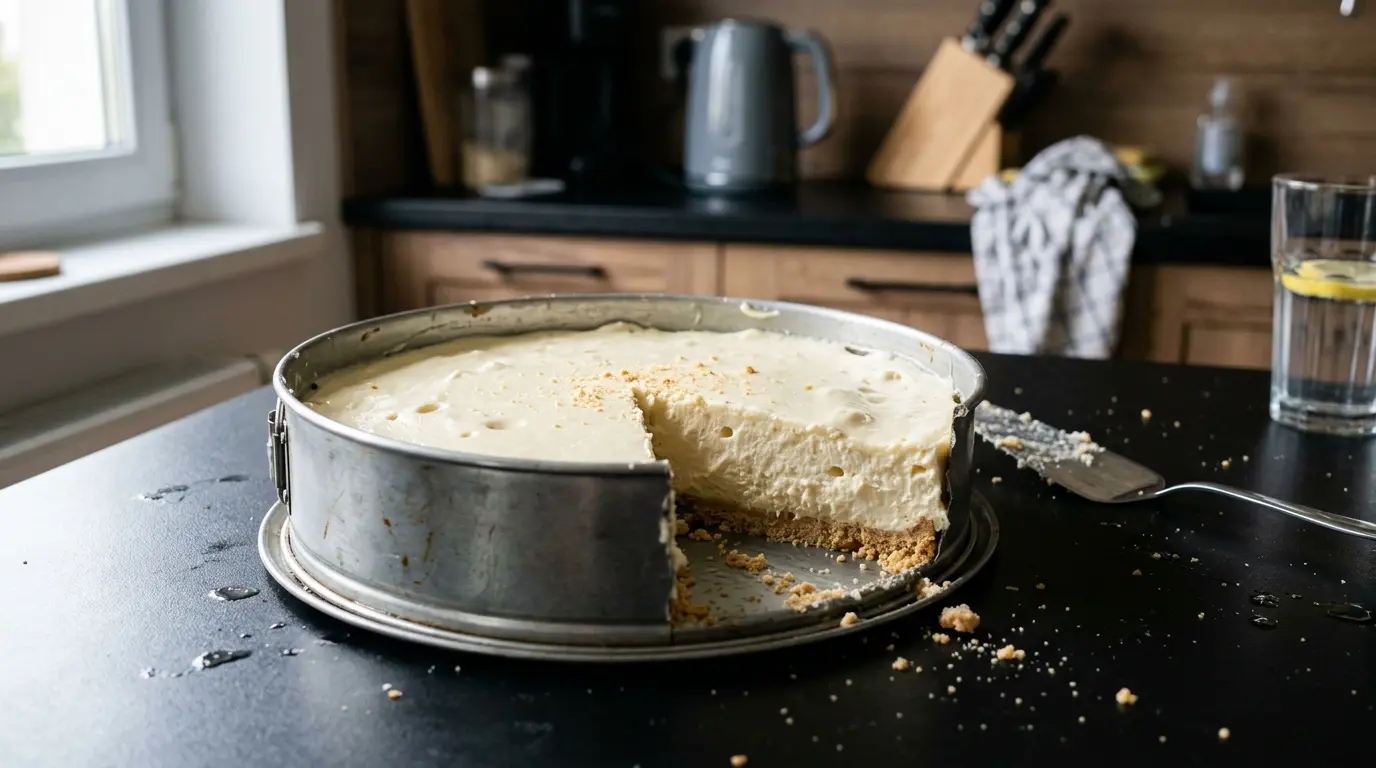
This no-bake German Käsekuchen combines a delicate curd-and-yogurt cream with citrus freshness, making it much lighter than a typical baked cheesecake. The crisp buttery biscuit base recalls classic German cakes served with afternoon coffee – exactly in the spirit of Kaffee und Kuchen. It’s a dessert that tastes like a mix of cheesecake, yogurt and a light mousse, so it’s perfect when you’re not in the mood for heavy bakes.
Why this version works
- Combining curd cheese with yogurt gives a light yet distinctly cheesecake-like flavour.
- Firmly pressing down the biscuit base ensures it doesn’t crumble when sliced.
- Tempering the gelatine with part of the filling prevents lumps and helps the cheesecake set evenly.
Chef's tips
Before making the filling, it’s a good idea to press the curd cheese through a sieve or briefly blend it so the cream turns out perfectly smooth and lump-free. Press the biscuit base down very firmly with a spoon or the bottom of a glass; otherwise, it will crumble when sliced. Be sure to give the cake at least 4 hours in the fridge (ideally overnight) – if you cut it too early, the cheesecake will ooze and lose its neat shape.
How to serve
Serve well chilled with a cup of strong coffee or cappuccino, just like in the German Kaffee und Kuchen custom. It pairs beautifully with black tea with lemon or homemade lemonade, especially on a hot day on the balcony or in the garden. You can top it with fresh seasonal fruit – raspberries, strawberries or blueberries will add colour and even more freshness.
Watch out for
- Don’t let the gelatine boil, as it will lose its gelling properties.
- Curd cheese that is too runny will loosen the mixture – choose a thick one or add more gelatine.
- If the cheesecake is chilled for too short a time, it will smear on the knife and lose its shape.
Substitutions
- You can replace natural yogurt with thick Greek yogurt for an even creamier filling.
- Canned peaches can be swapped for canned apricots or mandarins, well drained.
- Replace part of the sugar with honey or agave syrup if you prefer a milder sweetness.
Ingredients
- butter biscuits - 200 g
- butter melted - 80 g
- ground curd cheese for cheesecake, smooth - 500 g
- plain yogurt thick - 200 g
- sugar - 120 g
- vanillin sugar - 1 package
- lemon juice freshly squeezed - 2 tablespoons
- powdered gelatine or 6 sheets - 12 g
- water for dissolving the gelatine - 60 ml
- canned peaches drained, sliced - 300 g
Preparation
- Line the bottom of a springform tin about 24 cm in diameter with baking paper. Crush the biscuits very finely – you can put them in a bag and crush with a rolling pin or blitz them in a food processor until they resemble wet sand with no larger chunks.
- Melt the butter and let it cool slightly. Mix thoroughly with the crushed biscuits until everything is evenly moistened and, when squeezed in your hand, the mixture clumps together instead of falling apart.
- Transfer the biscuit mixture to the springform tin, spread it out in an even layer and press down firmly with a spoon or the bottom of a glass, especially around the edges. The base should be compact and smooth. Place in the fridge while you prepare the cheesecake filling.
- Put the gelatine into a small saucepan or bowl, pour over 60 ml of cold water, stir and leave for 5–10 minutes to bloom and absorb all the water, forming a thick gel with no dry granules.
- In a large bowl mix the curd cheese, yogurt, sugar, vanillin sugar and lemon juice until the mixture is smooth and uniform. If you see any curd cheese lumps, briefly blend with a hand blender until they disappear and the filling is creamy.
- Gently heat the bloomed gelatine, stirring, just until completely dissolved – the liquid should be clear but must not boil. Set aside for 2–3 minutes to cool slightly.
- Add 2–3 tablespoons of the cheesecake mixture to the warm gelatine and mix quickly to temper it. Pour this mixture into the rest of the cheesecake filling, whisking constantly until the texture is uniform, with no lumps or streaks.
- Remove the springform tin from the fridge. Pour the cheesecake mixture over the chilled base and smooth the top with a spatula. Drain the peaches very well, pat dry with paper towel, slice and arrange on top, pressing them lightly into the filling.
- Chill the cheesecake in the fridge for at least 4 hours, preferably overnight, until the filling is springy to the touch and a knife slides in cleanly without smearing. When slicing, dip the knife in hot water and wipe it after each cut.
Storage
Keep leftover cheesecake in the fridge, covered, and eat within a few days. Slices can be wrapped individually and chilled so they don’t dry out. Freezing is possible but may slightly change the texture after thawing.
I most often make this cheesecake when a heatwave is forecast and no one at home even wants to hear about turning on the oven – this dessert then saves me when unexpected guests show up. I also sometimes prepare it in the evening before a long trip so that after we get back there’s a ready, perfectly chilled slice of something sweet waiting in the fridge.