Matcha Latte with Plant Milk Recipe
Matcha latte is a drink made from Japanese powdered green tea, frothed milk, and a touch of sweetness. In Japan, matcha has a long history in the tea ceremony, and in its modern latte form it has made its way into cafés all over the world. It tastes a bit like a combination of green tea and white chocolate, with a delicate bitterness and a creamy foam.
Matcha latte is a Western, coffee‑shop style way of serving traditional Japanese matcha, which is usually drunk without milk. In Japan it appears more often in desserts and in drinks in the classic “kissaten” café style.
This matcha latte highlights the delicate, slightly sweet flavor of Japanese green tea while staying fully plant-based. It’s a gentle, creamy alternative to coffee that still offers a subtle energy boost from the tea’s natural caffeine and L-theanine.
Why this version works
- Making a paste with a small amount of water is easier to smooth out perfectly than starting with the full amount of liquid.
- Moderately hot water brings out the flavor of matcha without a burnt bitterness.
- Plant milk that is heated, not boiled, foams better and doesn’t separate.
- The matcha‑to‑milk ratio gives a clear tea flavor without overwhelming bitterness.
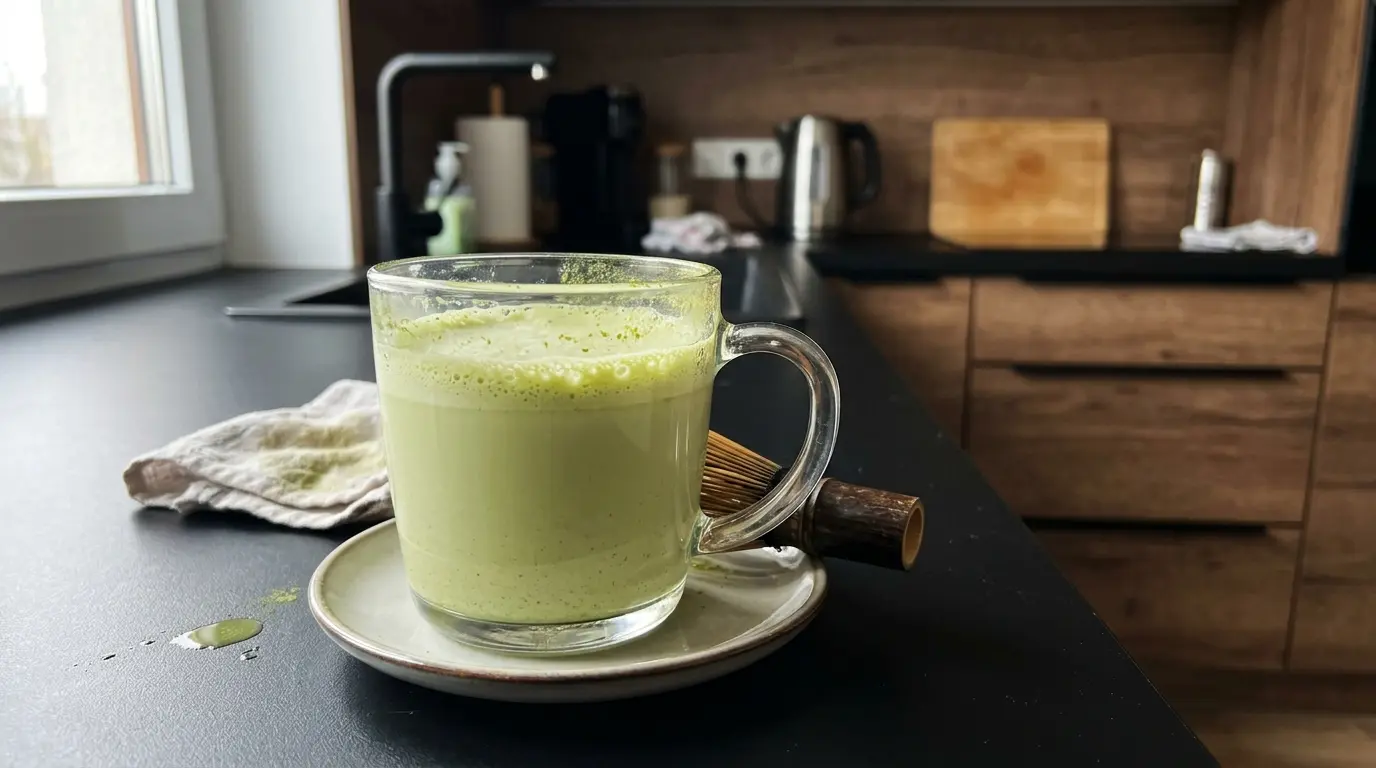
Chef's tips
Use the best matcha you can find—ceremonial grade will give you a brighter color and smoother taste, while culinary grade is more affordable but slightly more bitter. Always avoid boiling water, as it can make the drink harsh and overly bitter. If you don’t have a whisk or frother, shake the matcha with water in a tightly closed jar.
How to serve
Serve in pre-warmed mugs so the drink stays hot longer. For a café-style look, dust a tiny pinch of matcha powder on top of the foam or drizzle a little maple syrup in a spiral. It also works well alongside Japanese-style sweets like mochi or dorayaki.
Watch out for
- If the milk starts to “rise” along the sides of the pot, it’s a sign it’s about to boil – lower the heat immediately.
- If the foam has large bubbles that pop quickly, froth for a shorter time but more intensively, holding the tip closer to the surface.
Substitutions
- Replace honey with maple or agave syrup if you want a vegan version – add gradually, as they are sweeter.
- Instead of oat milk, use soy or almond milk; oat is the creamiest, soy is neutral, almond slightly nutty.
Ingredients
- matcha powder good quality - 2 teaspoons
- water hot but not boiling (about 80°C) - 60 ml
- plant milk e.g. oat, soy, or almond - 350 ml
- honey or maple syrup - 1.5 tablespoons
Preparation
- Put the matcha powder into a small bowl and break up any lumps with a teaspoon.
- Pour a small amount of hot water (about 2–3 tablespoons) over the matcha and whisk vigorously with a small whisk or milk frother for 20–30 seconds, until the powder is completely dissolved and a light foam appears on the surface.
- Add the remaining hot water and briefly mix again to get a smooth, intensely green liquid.
- In a small saucepan, heat the plant milk with the honey over medium heat until hot but not boiling. If you have a frother, froth the milk to create foam.
- Pour half of the dissolved matcha into each of two mugs, then gently add the hot milk, holding the mug slightly tilted so that a layer of foam forms on top.
- Serve immediately, stirring before drinking if the matcha has settled at the bottom.
- Serve immediately when the matcha latte is hot and the foam is springy. If after a few minutes the powder starts settling at the bottom, gently stir with a teaspoon or swirl the mug.
Storage
No storage information available for this dish.
I like to start with a slightly milder amount of matcha and adjust to taste—once you get used to the flavor, you may find yourself craving a stronger, more intense cup. Different plant milks change the character of the drink: oat milk is naturally sweet and creamy, soy milk is more neutral, and almond milk adds a subtle nutty note.