Roast Turkey with Marjoram and Garlic Recipe
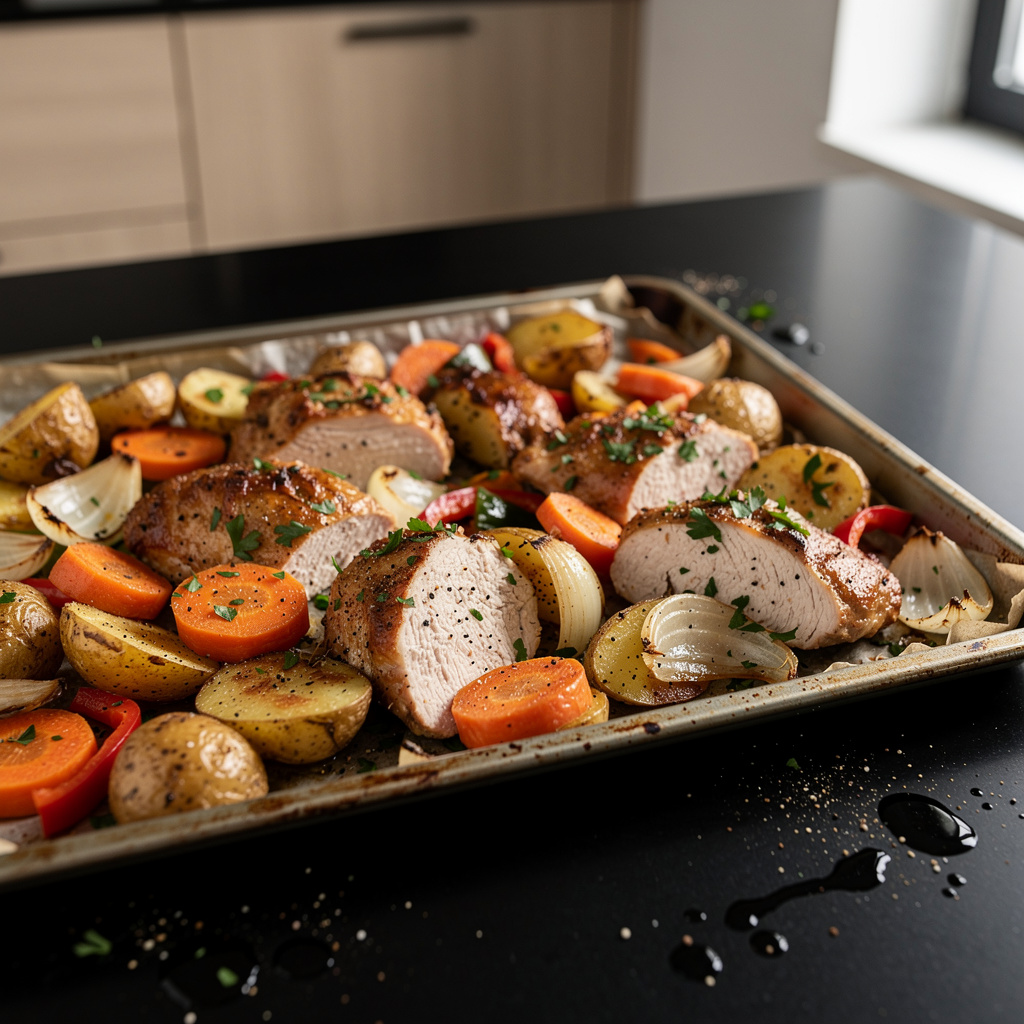
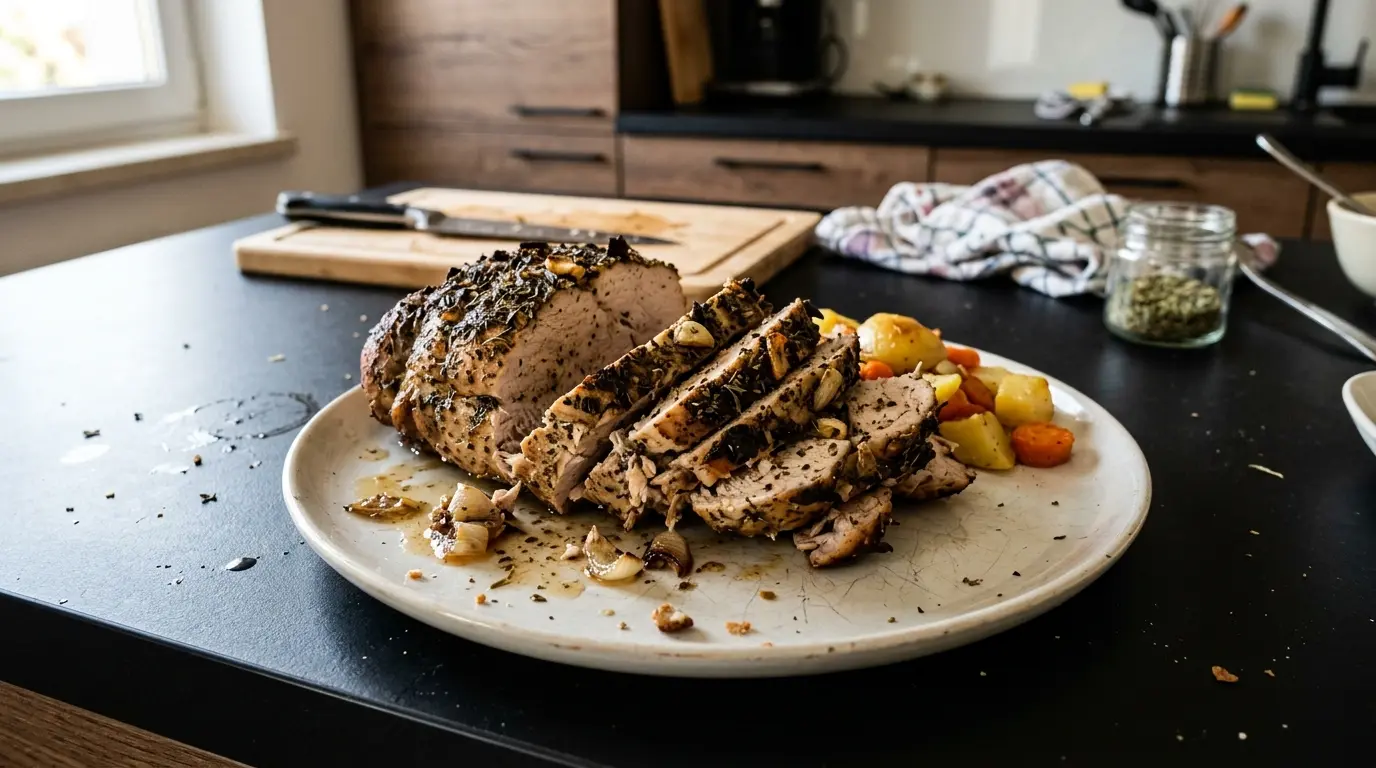
Roast turkey with marjoram and garlic is a lighter take on Polish roast meat, great both as a main course and as homemade cold cuts. The tender breast roasted with onion has a distinct herb‑and‑garlic aroma and a natural pan sauce. This version relies on a simple marinade and gentle roasting that guarantee juicy meat.
Turkey breast roasted this way is a modern, lighter answer to traditional Polish pork or beef roasts., Thanks to marjoram and garlic it keeps that familiar “Sunday dinner” flavour but is more delicate and less fatty.
This roast combines a simple list of ingredients with a technique that gives you a result reminiscent of grandma’s Sunday dinner, but in a lighter version., It has a pronounced herb‑and‑garlic aroma, and thanks to the onion the sauce is naturally sweet and full‑flavoured., It works both hot and cold, so one roast can cover several meals.
Why this version works
- Marinating in oil with spices seasons the meat evenly and protects it from drying out.
- Roasting first covered and then uncovered combines a juicy interior with a lightly browned surface.
- Onion and water create a natural, aromatic sauce without any extra thickening.
Chef's tips
The most common mistake is overcooking – if after about 50 minutes the meat is already well browned, shorten the uncovered roasting time., Watch the sauce: it should be golden and slightly thickened, not dark brown and burnt; if needed, add a few tablespoons of water., When I plan this roast for sandwiches, I bake it the day before and slice it only when well chilled – the slices come out neat and even.
How to serve
Serve hot with mashed potatoes, buckwheat groats or rice and a sauerkraut slaw or beetroot salad., Cold, it’s great on wholemeal bread with mustard and pickled cucumber or horseradish., It’s a good choice for a family dinner, but also for a festive table or a home buffet with thinly sliced pieces.
Watch out for
- Don’t roast at a higher temperature to “speed things up” – turkey dries out quickly.
- Don’t slice the roast immediately after taking it out of the oven, or the juices will run out onto the board.
- Be careful with the amount of salt in the marinade, especially for long marinating times.
Substitutions
- Instead of sweet paprika you can use smoked paprika for a lightly smoky aroma.
- Replace part of the water with chicken stock if you want a more intense sauce.
- Rapeseed oil can be swapped for a neutral, mild olive oil.
Ingredients
- turkey breast, whole - 1 kg
- garlic - 4 cloves
- dried marjoram - 2 teaspoons
- paprika sweet, ground - 1 teaspoon
- oil rapeseed - 3 tablespoons
- salt - 1.5 teaspoons
- pepper ground black - 0.5 teaspoons
- water - 150 ml
- onion - 1 piece
Preparation
- Peel the garlic and press it through a garlic press or chop finely. Peel the onion and slice into thin wedges or half‑moons so that it softens in the oven and browns slightly at the edges.
- In a bowl, mix the oil, garlic, marjoram, paprika, salt and pepper until you have a thick, uniform paste. It should spread easily over the meat without sliding off.
- Pat the turkey breast thoroughly dry with paper towels. If one side is noticeably thicker, make a shallow cut in the thickest part without cutting all the way through so the meat roasts more evenly.
- Rub the meat with the marinade on all sides, working it into the cuts as well. Place the breast in an ovenproof dish, cover and leave for at least 30 minutes, preferably several hours in the fridge, until the meat darkens slightly from the spices.
- Preheat the oven to 180°C, top and bottom heat. Take the meat out of the fridge about 20 minutes before roasting so it doesn’t feel ice‑cold to the touch – the centre will then cook more evenly.
- Add the sliced onion to the dish with the meat, arranging it around the breast. Pour about 150 ml water into the bottom, just enough to thinly cover the base without washing the marinade off the meat.
- Cover the dish with a lid or foil and place in the preheated oven. Roast for about 50 minutes, until the sauce on the bottom thickens slightly and turns golden, and the meat near the edges looks set when pierced.
- After 50 minutes, remove the cover and roast for another 15–20 minutes, basting the meat with the pan juices every 5–10 minutes. The top should brown evenly to a golden colour but not darken to deep brown.
- Check doneness: when pierced in the thickest part, the juices should run clear, with no pink tinge. With a thermometer, aim for 72–75°C in the centre; the meat will be juicy but no longer raw.
- Remove the roast from the oven, loosely cover with foil and rest for 10–15 minutes so the juices redistribute. Slice across the grain and serve with the soft, lightly caramelised onion and the pan sauce.
Storage
Once cooled, store the roast in the fridge for 3–4 days, ideally already sliced and tightly covered, as the edges dry out quickly., Reheat briefly, preferably in the sauce or covered, just until the centre is warm; otherwise the meat will become stringy.
When I roast this breast on a Saturday, I immediately plan which slices will go on the plate with potatoes and which on workday sandwiches – usually the “sandwich” ones disappear first.