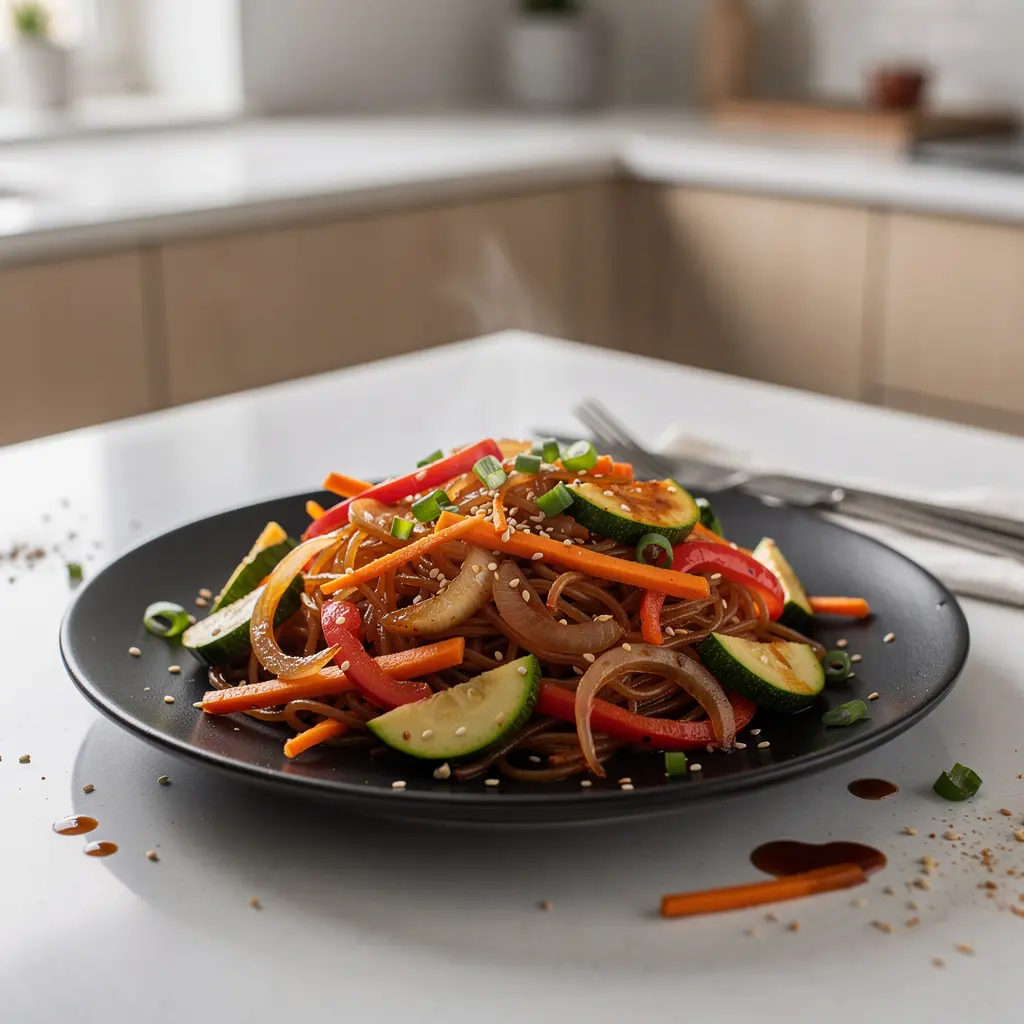
Korean Vegetable Stir-Fry with Rice Noodles Recipe
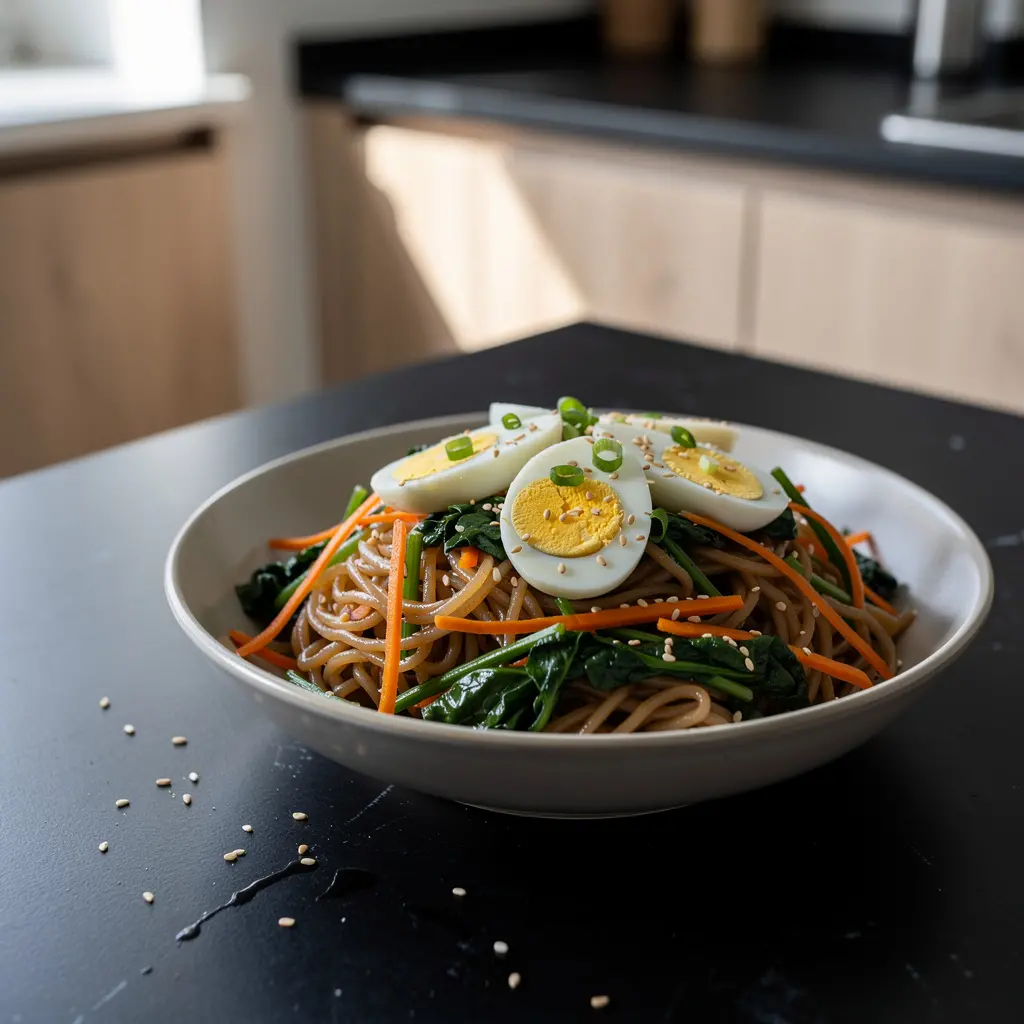
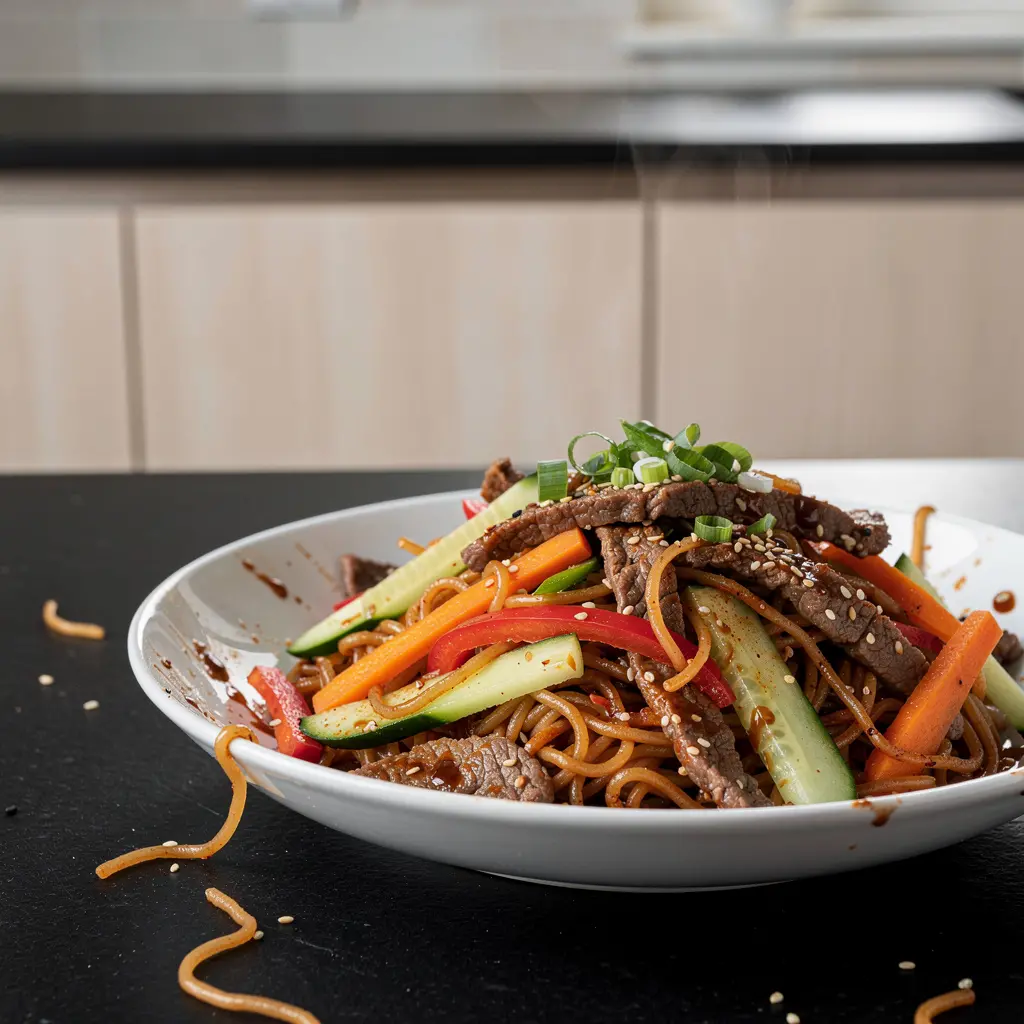
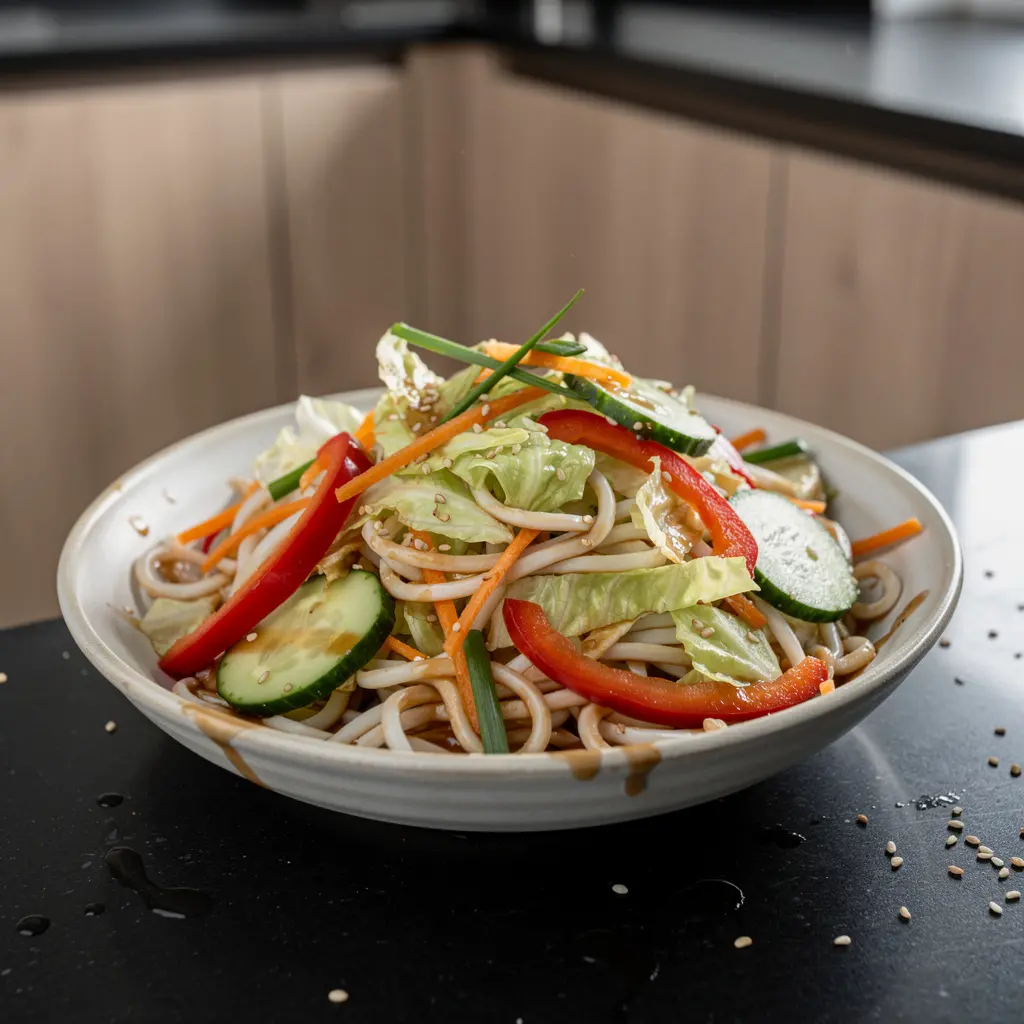
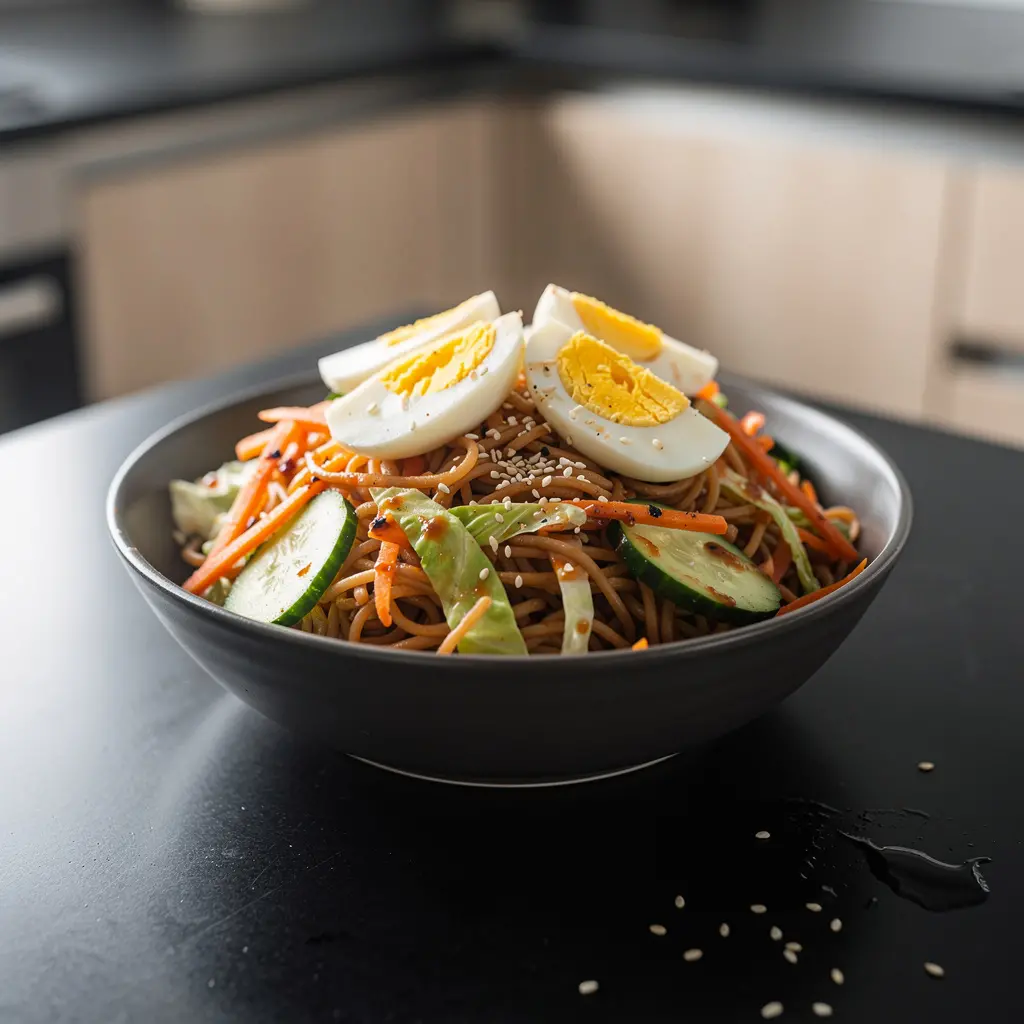
This quick pan dish is a bit like an Asian stir-fry, but with a milder, lightly sesame-flavoured sauce. In Korea, such vegetable and noodle mixes often appear on the table alongside other dishes; at home they can easily play the main role in a vegetarian lunch or dinner. Springy rice noodles and crunchy vegetables make the bowl disappear surprisingly fast.
A quick, colourful one-pan meal that combines Korean-inspired flavours with simple vegetables and rice noodles. The mild, sesame-scented sauce makes it approachable even for those who don’t usually go for spicy food.
Chef's tips
Don’t overcook the vegetables – their crunch is what makes this dish so satisfying. Adjust the amount of gochujang to your heat tolerance, and taste the sauce before adding it to the pan so you can tweak the saltiness with a bit more soy sauce or water.
How to serve
Serve as a standalone main dish or alongside simple Korean-inspired sides like kimchi, pickled vegetables or a light cucumber salad. A sprinkle of extra toasted sesame seeds at the table adds both aroma and texture.
Ingredients
- rice noodles flat or vermicelli, as you prefer - 160 g
- carrot cut into thin matchsticks - 60 g
- red bell pepper cut into strips - 70 g
- zucchini cut into thin half-slices - 70 g
- onion thinly sliced - 60 g
- garlic finely chopped - 2 clove
- soy sauce - 25 ml
- gochujang paste for a gentle heat - 8 g
- vegetable oil for frying - 20 ml
- sesame oil - 5 ml
- sesame seeds toasted - 5 g
- chives chopped - 8 g
- water to thin the sauce - 30 ml
Preparation
- Prepare the rice noodles according to the instructions on the package: pour boiling water over them for a few minutes or cook briefly until soft but springy. Drain and rinse with cold water to keep them from sticking together.
- In a small bowl, mix the soy sauce, gochujang paste, water and sesame oil until you get a smooth sauce.
- Heat the vegetable oil in a large frying pan or wok over medium-high heat. Add the onion and fry for 2–3 minutes, until it softens.
- Add the carrot and bell pepper and fry for another 3–4 minutes, stirring, until the vegetables soften slightly but are still crunchy.
- Add the zucchini and garlic and fry for 2–3 minutes, until the zucchini softens but does not start to fall apart.
- Add the cooked rice noodles to the pan. Pour in the prepared sauce and mix thoroughly with tongs or two spoons so that the noodles and vegetables are evenly coated. Fry for another 1–2 minutes, until everything is hot.
- Remove the pan from the heat, sprinkle the dish with toasted sesame seeds and chives. Serve immediately.
Storage
No storage information available for this dish.
This is my go-to dish when I’m craving something Asian-style but don’t want to spend a lot of time in the kitchen. It’s very forgiving: you can swap in almost any crunchy vegetables you have in the fridge and still end up with a satisfying bowl.