Korean Stir-Fried Vegetables with Rice Noodles Recipe
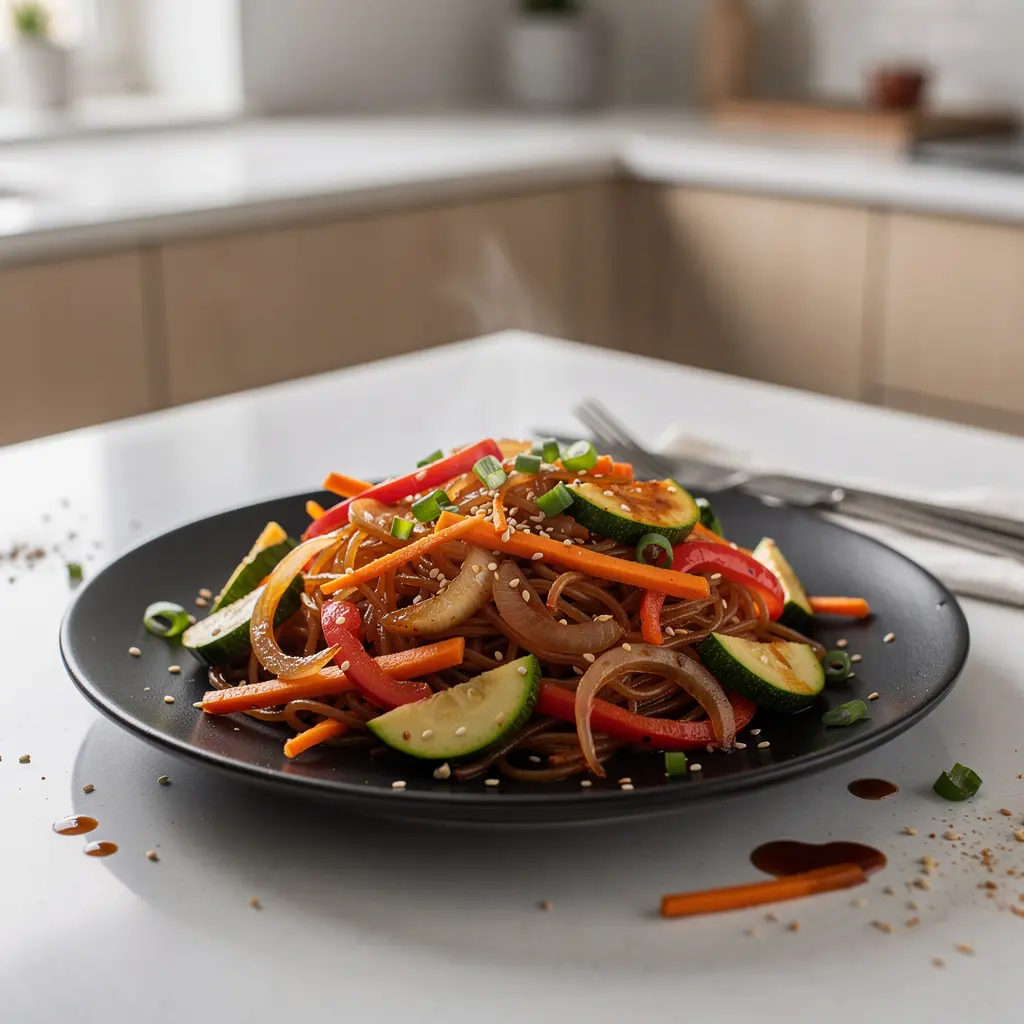
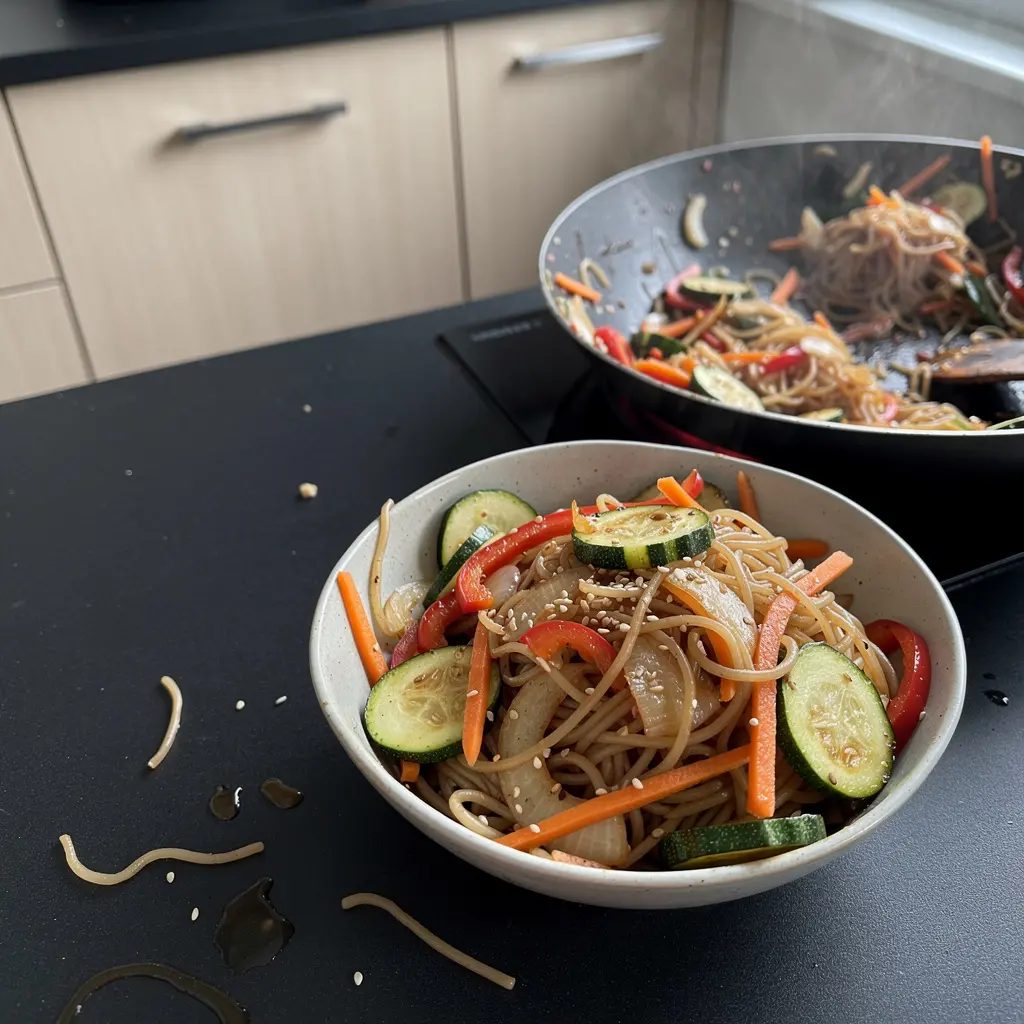
A quick skillet dish: colorful vegetables, soft rice noodles, and a soy-sesame sauce with a hint of garlic. In Korea, similar noodle stir-fries often appear as a “whatever’s in the fridge” meal – perfect for the end of the week when you want to use up leftover vegetables. The flavor is reminiscent of Chinese vegetable noodles, but lighter and more sesame-forward.
This dish combines the comfort of soft rice noodles with the crunch of fresh vegetables and the deep aroma of sesame, while staying light and easy to digest. It’s also a perfect way to use up leftover vegetables in a Korean-inspired way.
Chef's tips
Don’t overcook the vegetables – their slight crunch gives the dish texture and keeps it from becoming mushy. If your noodles start to stick together, briefly rinse them under warm water and drain well before adding to the pan.
How to serve
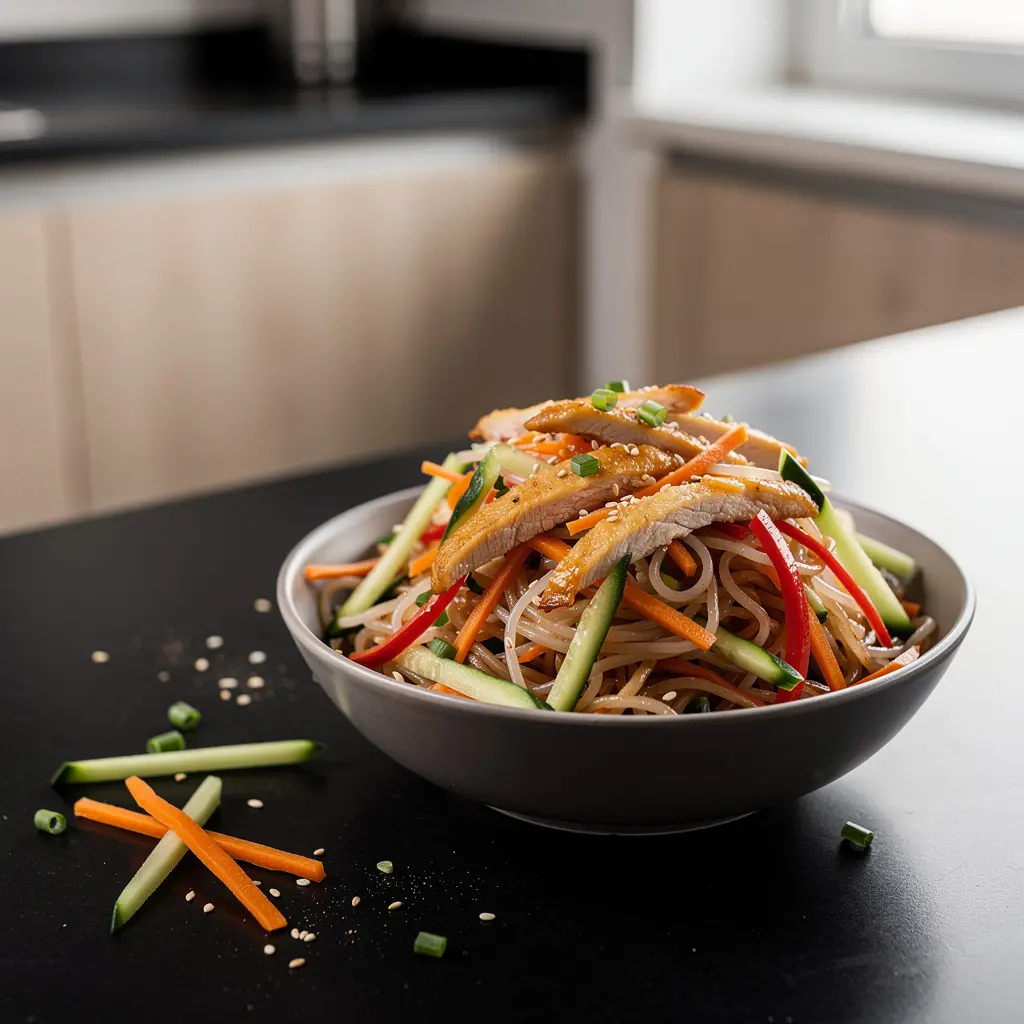
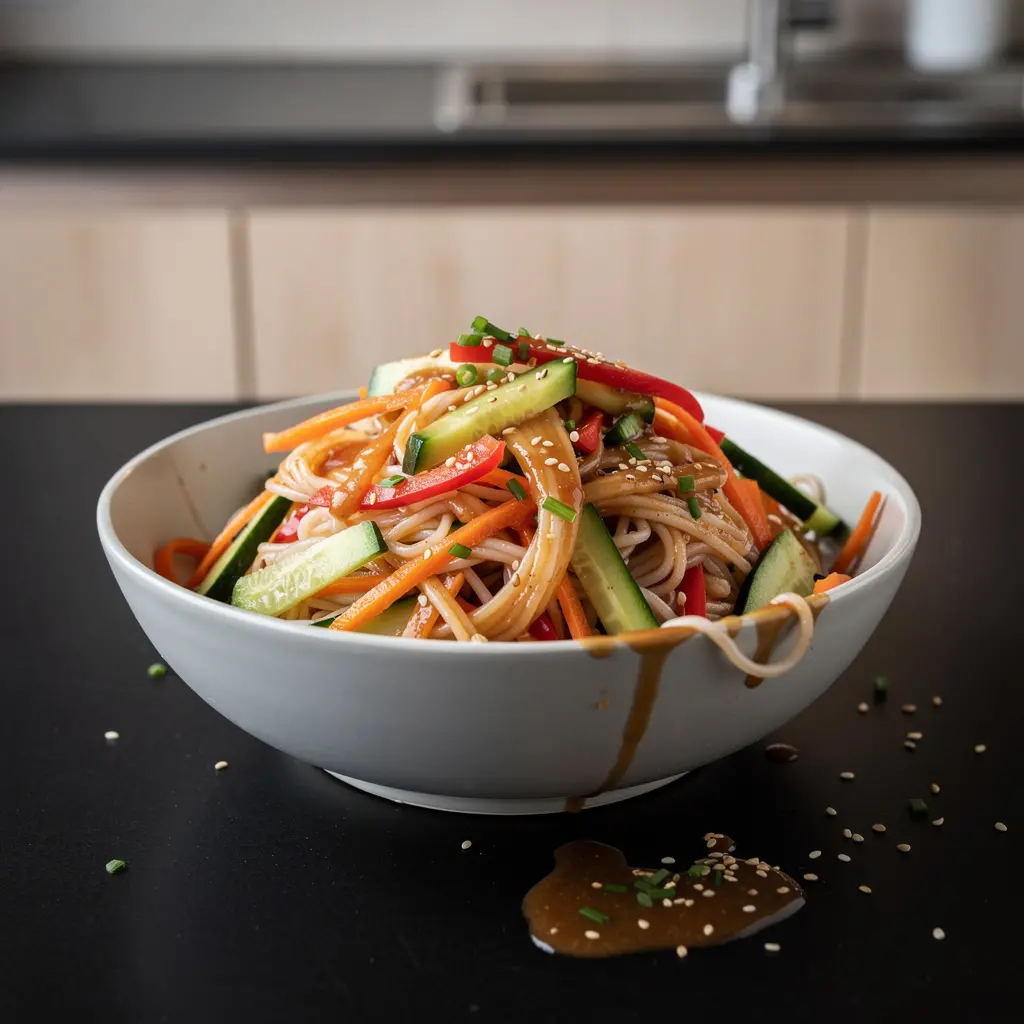
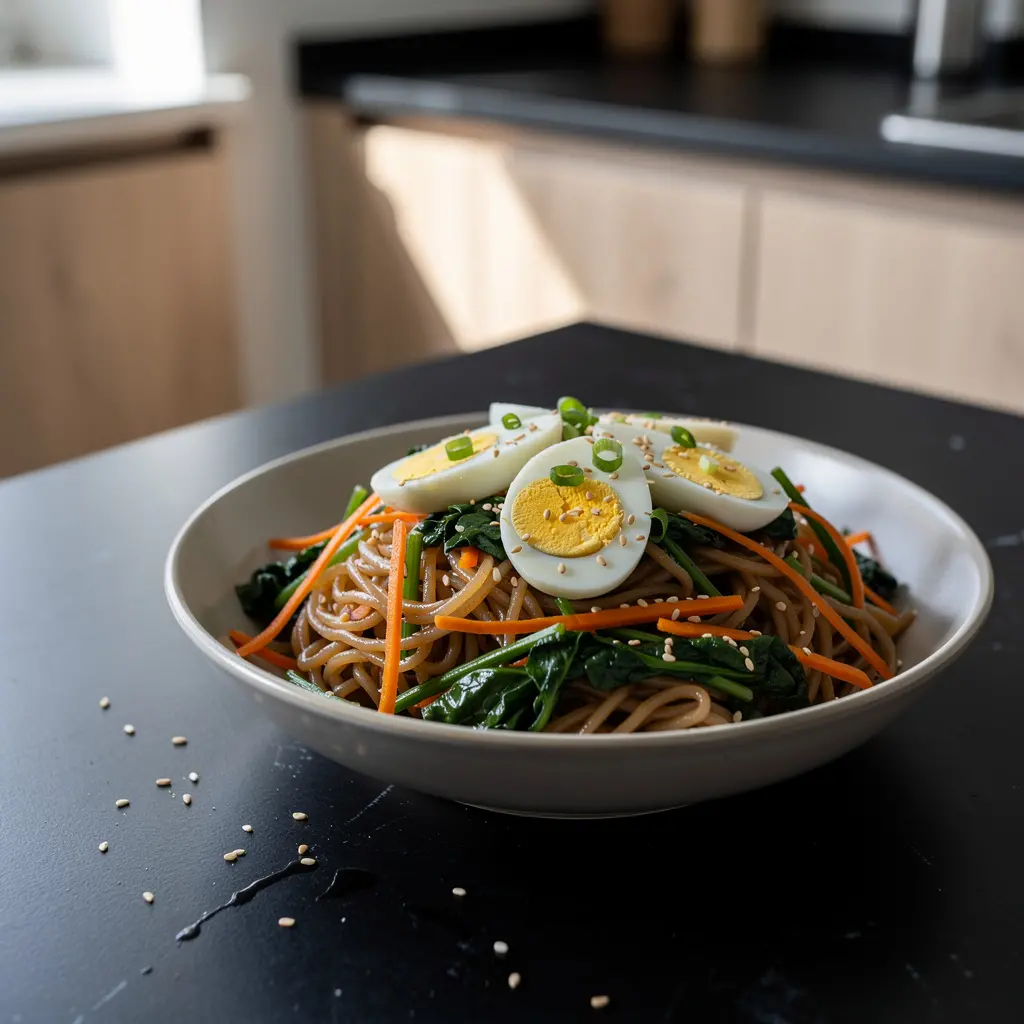
Serve in deep bowls with extra sesame seeds and a drizzle of sesame oil. For more protein, top with a fried egg, marinated tofu, or thinly sliced grilled meat. A side of kimchi or spicy pickled cucumbers will add a nice kick and balance the richness of the sesame.
Ingredients
- rice noodles - 200 g
- bell pepper - 1 piece
- zucchini - 1 piece
- carrot - 1 piece
- onion - 0.5 pieces
- garlic - 2 cloves
- soy sauce - 4 tablespoons
- sesame oil - 1.5 tablespoons
- vegetable oil - 2 tablespoons
- sesame seeds - 1 tablespoon
- black pepper - 0.25 teaspoons
Preparation
- Cook or soak the rice noodles according to the package instructions until soft but springy. Drain and rinse with cold water to prevent sticking. Set aside to drain.
- Remove the seeds from the bell pepper and cut it into thin strips. Wash the zucchini and slice into half-moons. Peel the carrot and cut into thin matchsticks. Slice the onion into thin wedges and finely chop the garlic.
- Heat the vegetable oil in a large frying pan or wok over medium-high heat. Add the onion and fry for 2–3 minutes, until softened and slightly translucent.
- Add the carrot and fry for 3 minutes, stirring. Then add the bell pepper and zucchini and fry for another 4–5 minutes, until the vegetables are tender but still slightly crisp.
- Add the garlic and fry for about 30 seconds, until fragrant. Pour in the soy sauce and sesame oil, add the pepper, and mix well.
- Add the cooked rice noodles to the pan. Toss gently with tongs or two spoons for 2–3 minutes, until the noodles are heated through and well coated in the sauce.
- Sprinkle the dish with sesame seeds and serve immediately, preferably in deep bowls.
Storage
No storage information available for this dish.
I like to treat this recipe as a flexible base: I use whatever vegetables I have on hand and adjust the amount of soy sauce and sesame oil to taste. It’s one of those dishes that feels special, even though it’s made from simple pantry and fridge staples.