Korean Spinach Salad Sigeumchi Namul Recipe
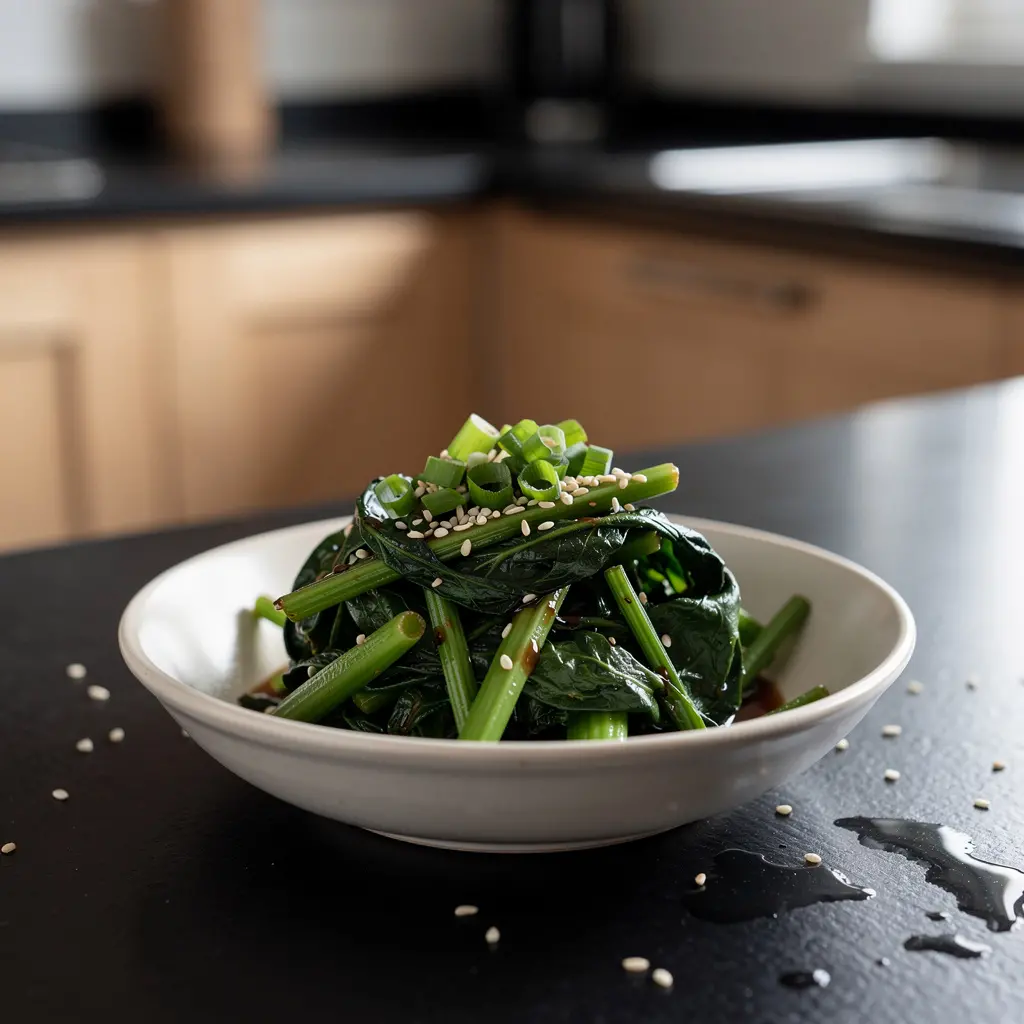
This simple salad made from blanched spinach, garlic, and sesame is one of the typical small side dishes served alongside rice in Korean homes. It tastes fresh, lightly nutty, and is perfect for cutting through richer, meat-based dishes. You can treat it as a quick, healthy side for almost any lunch or dinner.
This classic Korean banchan shows how a handful of simple ingredients can turn plain spinach into a fragrant, umami-rich side dish. Quick blanching keeps the leaves bright and tender, while sesame oil and garlic add depth and aroma.
Chef's tips
Do not overcook the spinach—30–40 seconds is enough. Overcooked spinach becomes dull in color and mushy in texture. Squeeze it gently but thoroughly so the seasoning clings well and the salad doesn’t become watery. Adjust the salt depending on how salty your soy sauce is.
How to serve
Serve as part of a Korean-style spread with rice, kimchi, and other small side dishes. It also works well in a lunchbox, alongside grilled meat, tofu, or baked fish. You can place it on top of a bowl of steamed rice with a fried egg for a quick, simple meal.
Ingredients
- fresh spinach preferably baby spinach leaves, but regular spinach is fine too - 300 g
- salt for the water and for seasoning - 1 teaspoon
- garlic finely grated - 1 clove
- soy sauce - 1.5 tablespoons
- sesame oil - 1 tablespoon
- white sesame seeds toasted in a dry pan - 1 tablespoon
- chives finely chopped, optional - 1 tablespoon
Preparation
- In a large pot, bring water with 0.5 teaspoon of salt to a boil.
- Wash the spinach thoroughly, remove damaged leaves and thick stems if they are very tough.
- Add the spinach to the boiling water and cook for only 30–40 seconds, until the leaves wilt and turn a vibrant green.
- Immediately drain the spinach in a colander and rinse with very cold water, or ideally plunge it briefly into a bowl of ice water to stop the cooking.
- Drain the spinach, then take small portions in your hands and gently squeeze out the excess water.
- Chop the squeezed spinach into 2–3 cm pieces and transfer to a bowl.
- Add the grated garlic, soy sauce, sesame oil, the remaining 0.5 teaspoon of salt (or less, to taste), and half of the sesame seeds.
- Mix thoroughly with your hand or chopsticks, separating the leaves so the seasoning reaches everywhere.
- Taste and, if needed, adjust the seasoning with a little more salt or soy sauce.
- Transfer the salad to a small bowl, sprinkle with the remaining sesame seeds and chives. Serve immediately or after a brief chill.
Storage
No storage information available for this dish.
Sigeumchi namul is one of those sides that disappear from the table faster than you expect. Once you get used to blanching and seasoning the spinach, you can easily adjust the flavors to your taste—more garlic, more sesame, or a touch of chili.