Korean Rice Porridge with Vegetables and Chicken Recipe
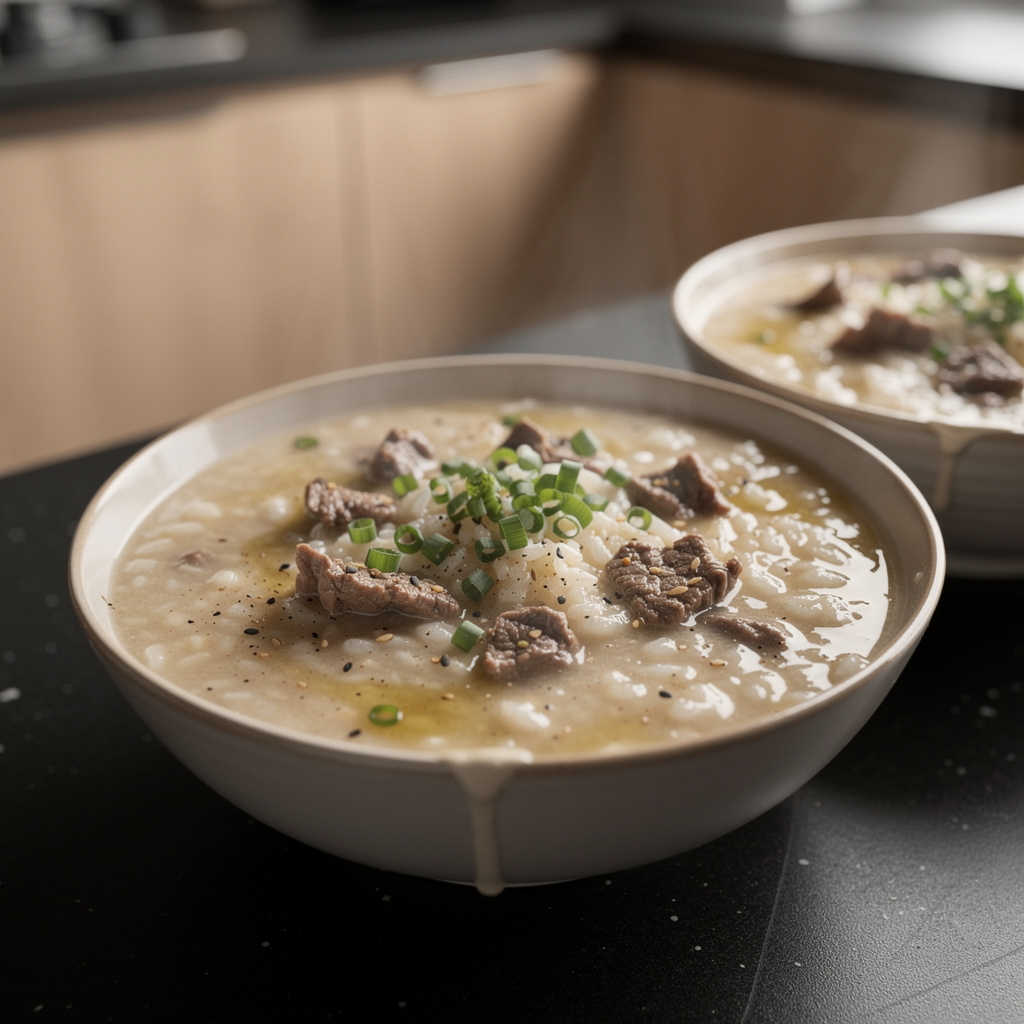
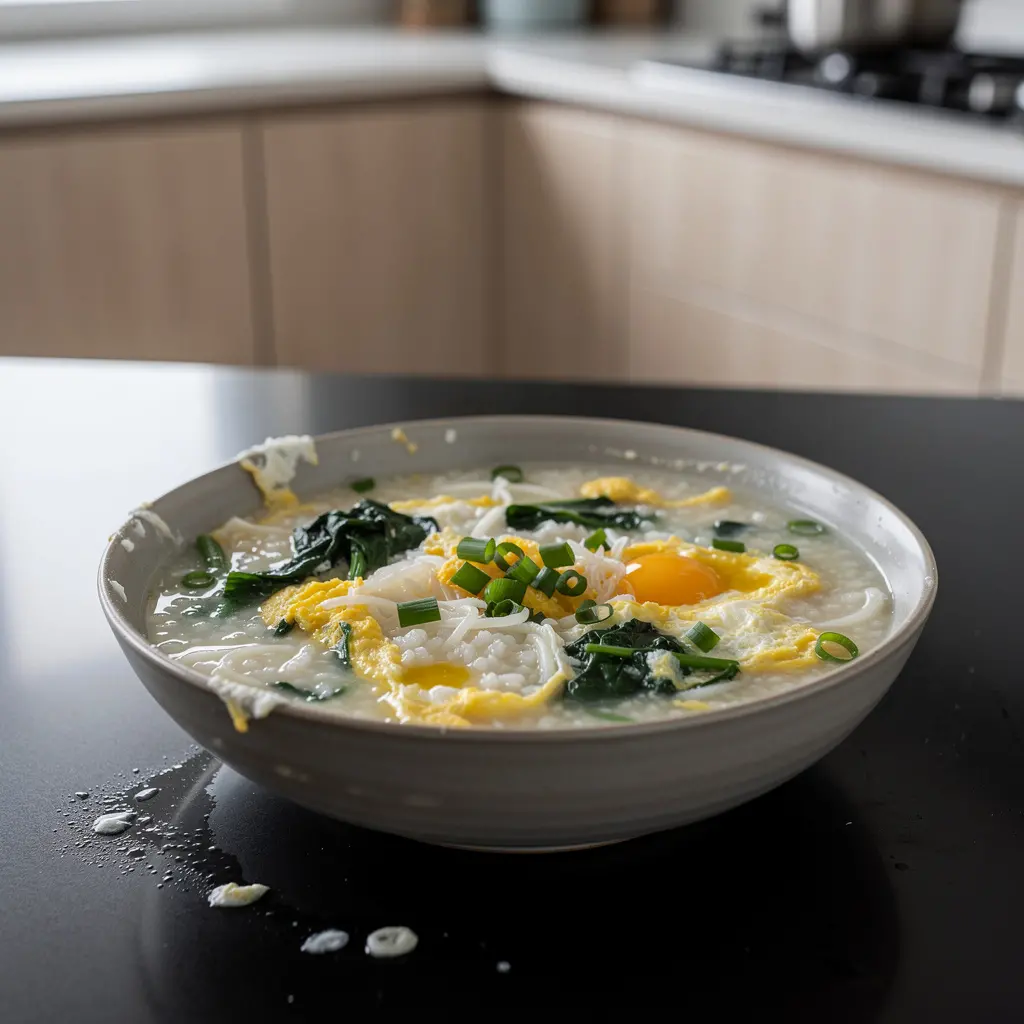
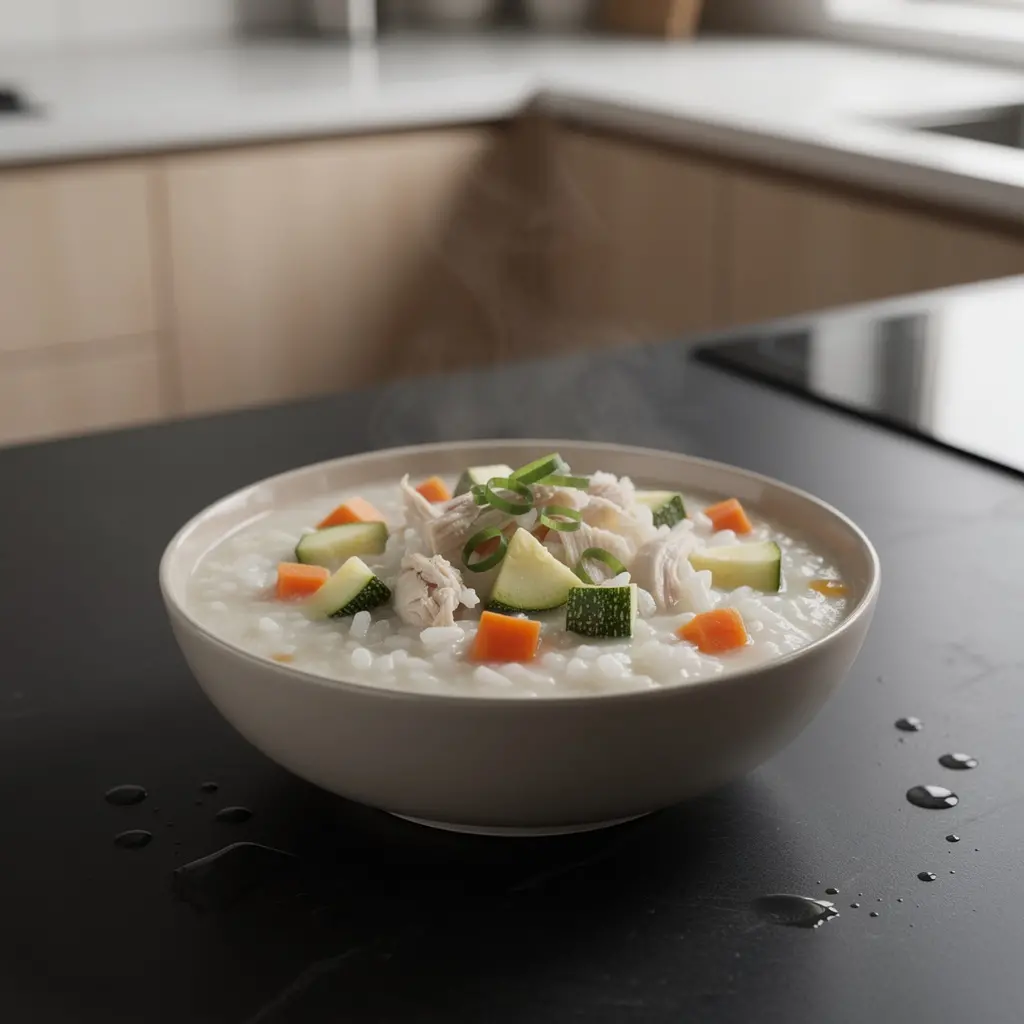
This thick rice porridge with chicken and vegetables is a cozy bowl meal, something between a risotto and a very thick soup. In Korea, similar dishes are eaten for breakfast or dinner, especially when someone needs a light but nourishing meal. The flavor is mild, gently garlicky, and the texture is creamy without any cream added.
This Korean-style rice porridge is soothing, easy to digest, and naturally creamy without any dairy. It’s perfect for days when you want something gentle on the stomach but still satisfying, and it uses simple pantry ingredients to create a nourishing, one-pot meal.
Chef's tips
Stir the porridge regularly, especially towards the end of cooking, to prevent sticking and to help the rice break down into a creamy texture. Adjust the amount of water depending on how thick you like your porridge – it should be thicker than soup but still spoonable. Use low-sodium soy sauce so you can better control the salt level at the end.
How to serve
Serve very hot in deep bowls, topped with chopped chives or spring onions. Add kimchi, pickled vegetables, or a fresh cucumber salad on the side for contrast. For extra protein, serve with a soft- or hard-boiled egg, or sprinkle with roasted sesame seeds and a drizzle of extra sesame oil.
Ingredients
- rice - 150 g
- chicken breast - 200 g
- carrot - 1 piece
- zucchini - 0.5 piece
- onion - 0.5 piece
- garlic - 2 clove
- water - 1.2 l
- soy sauce - 1.5 tablespoon
- sesame oil - 1 tablespoon
- salt - 0.25 teaspoon
- black pepper - 0.25 teaspoon
- chives - 2 tablespoon
Preparation
- Rinse the rice several times in cold water until the water is less cloudy. Cover with fresh water and set aside for 10–15 minutes, then drain.
- Rinse and pat dry the chicken breast, then cut it into small cubes. Peel the carrot and dice finely. Wash the zucchini, cut it in half lengthwise, remove the soft core with seeds, and cut the rest into cubes of a similar size.
- Peel the onion and chop it finely. Peel the garlic and chop it or press it through a garlic press.
- Heat the sesame oil in a heavy-bottomed pot over medium heat. Add the onion and sauté for 3–4 minutes, stirring, until it softens and becomes slightly translucent without browning.
- Add the garlic and cook for about 30 seconds more, until it becomes very fragrant.
- Add the diced chicken and cook for 4–5 minutes, stirring, until the meat turns white on all sides.
- Add the carrot and rice, stir, and cook for 2–3 minutes so the rice grains toast lightly and are coated with the fat.
- Pour in 1.2 liters of water, add the soy sauce, stir, and bring to a boil. Reduce the heat so the mixture is just gently simmering.
- Cook uncovered for about 25–30 minutes, stirring every few minutes so the rice does not stick to the bottom. The porridge should thicken and the rice should start to break down.
- After about 20 minutes of cooking, add the zucchini. Continue cooking until the vegetables are soft and the consistency is creamy. If the porridge is too thick, add a little hot water.
- Season with salt and pepper to taste at the end. Serve hot, sprinkled with chopped chives.
Storage
No storage information available for this dish.
This dish is inspired by Korean juk, a comforting rice porridge often eaten when someone is feeling under the weather or simply wants something warm and gentle. It’s a great way to use up leftover vegetables, and it reheats well, making it ideal for meal prep.